Artwork
Moara
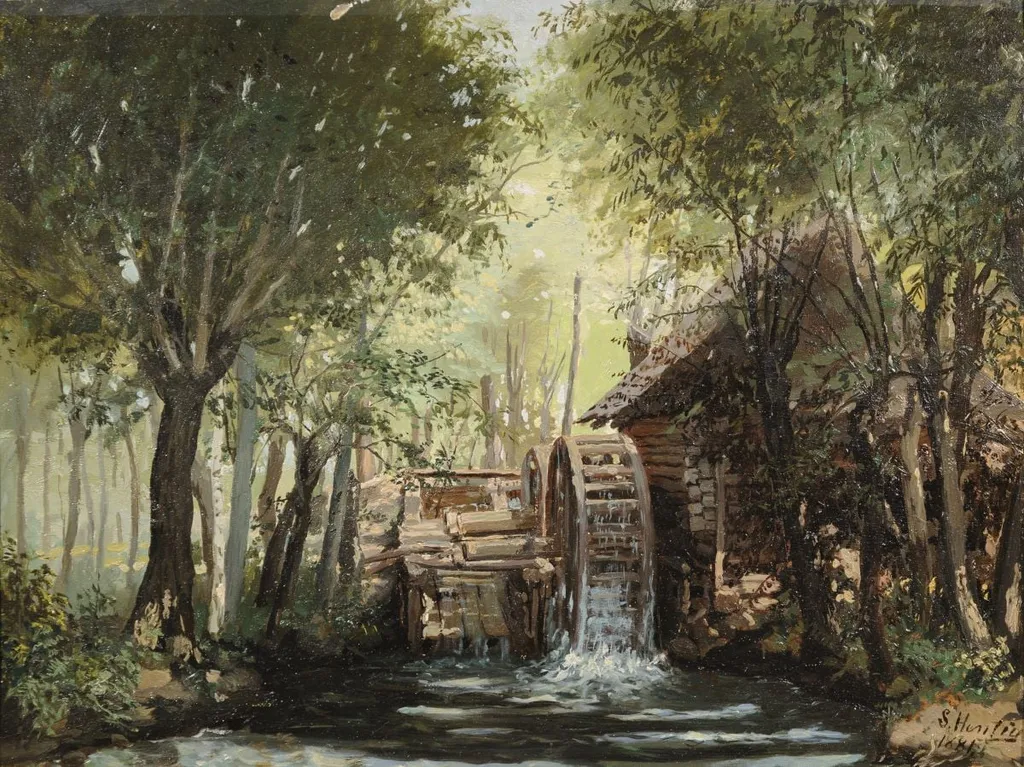
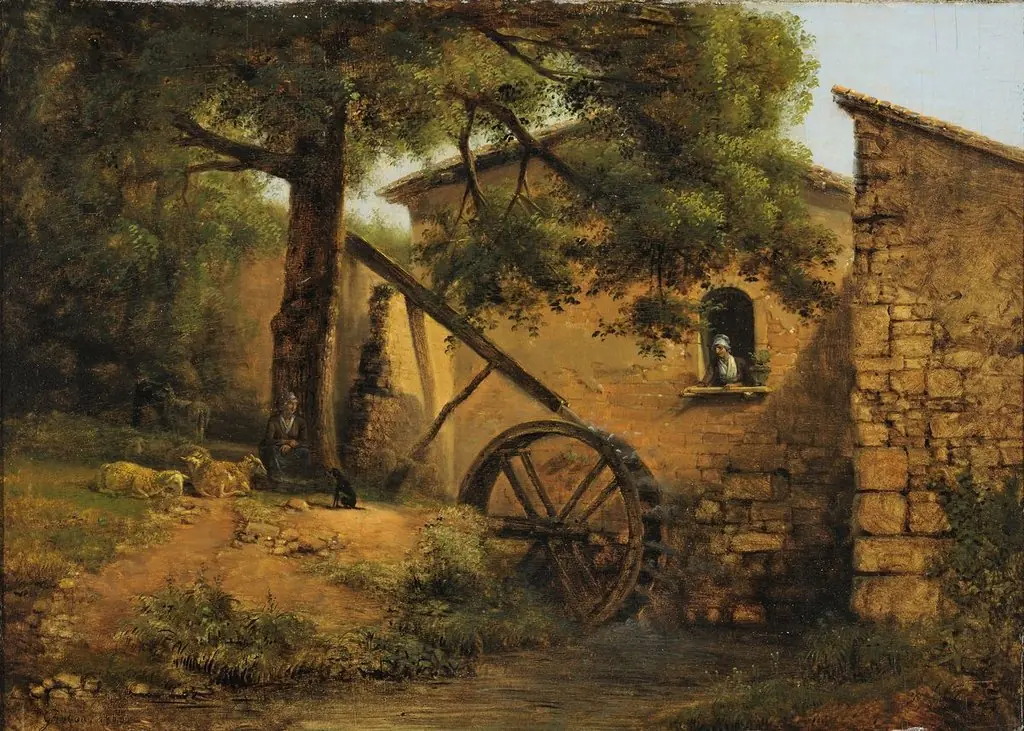
Moara is a print by the Impressionist artist Sava Henția. It dates from 1881 and is held in the collection of the National Museum of Art of Romania.
About this work
Overview
Sava Henția, born in the Austrian Empire and active in Romania, painted *Moara* in 1881 as part of his broader engagement with rural themes.
Sava Henția, born in the Austrian Empire and active in Romania, painted *Moara* in 1881 as part of his broader engagement with rural themes. The work belongs to a period when Romanian artists increasingly turned to local landscapes and labor as subjects. Henția’s background in illustration and decoration informed his attention to detail and atmospheric tone, distinguishing his approach within the regional art scene of the time.
Subject & Meaning
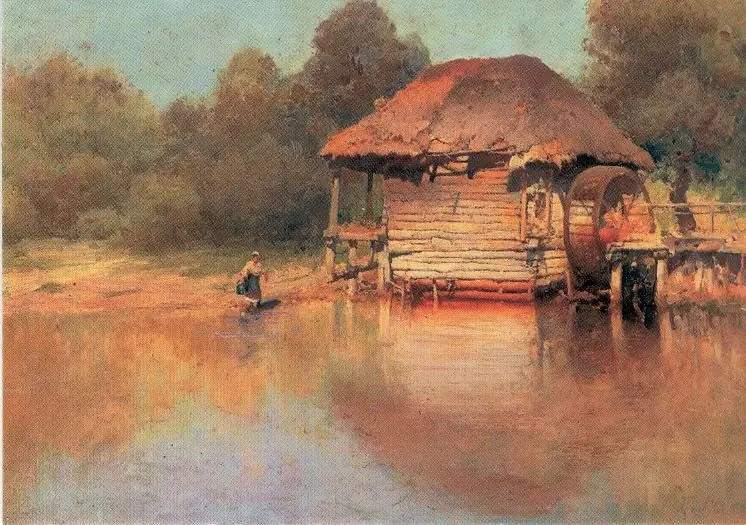
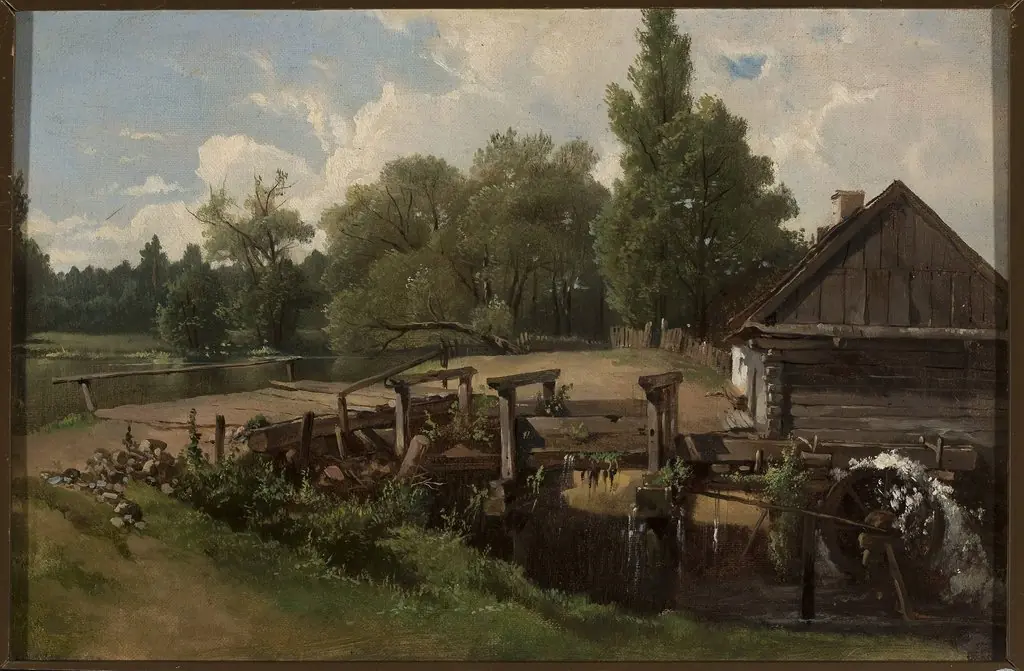
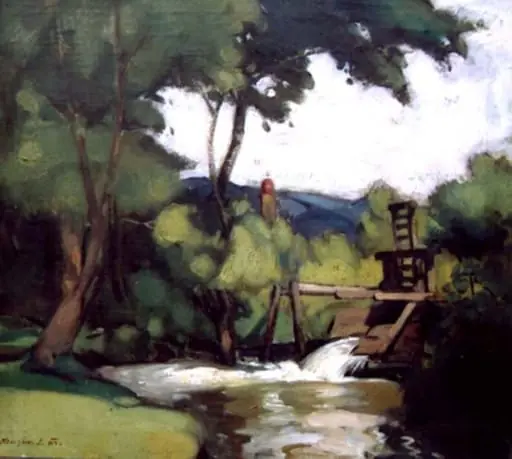
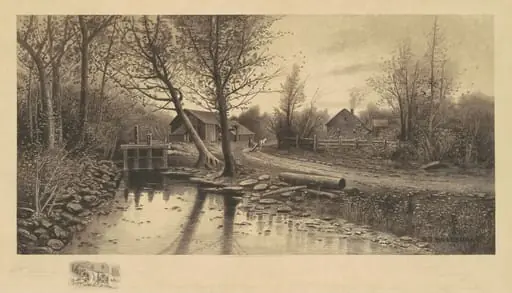
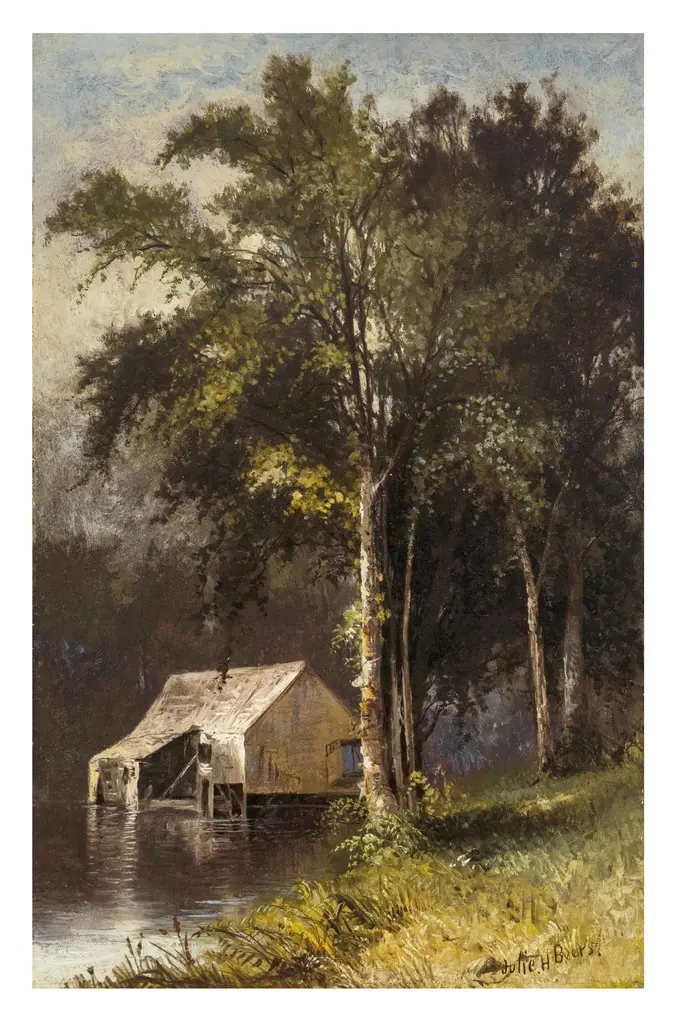
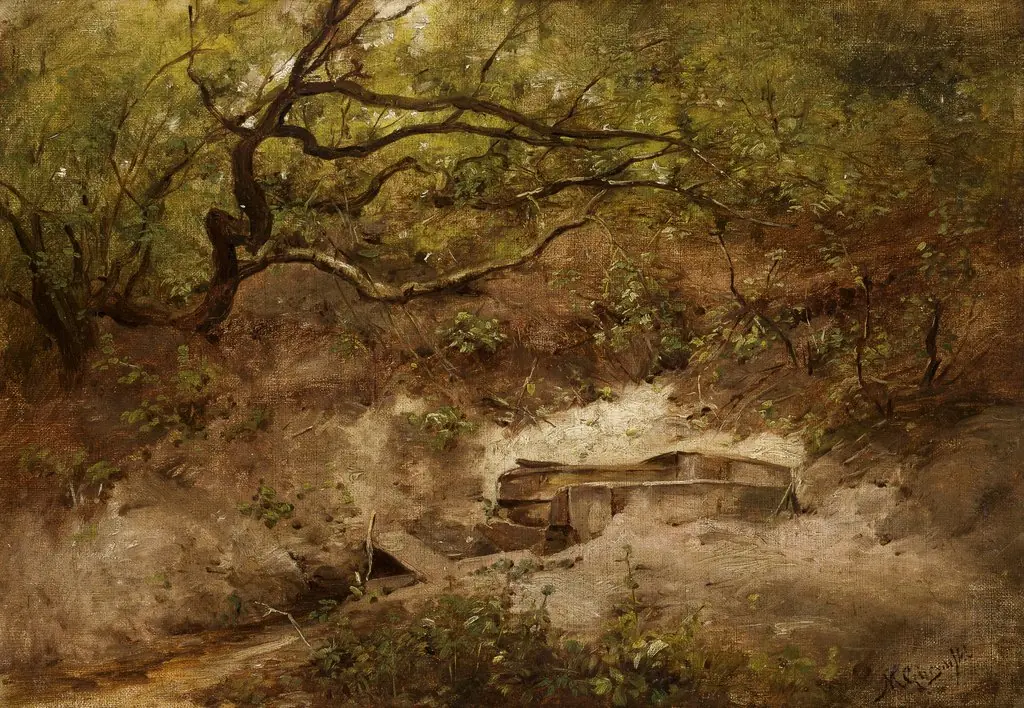
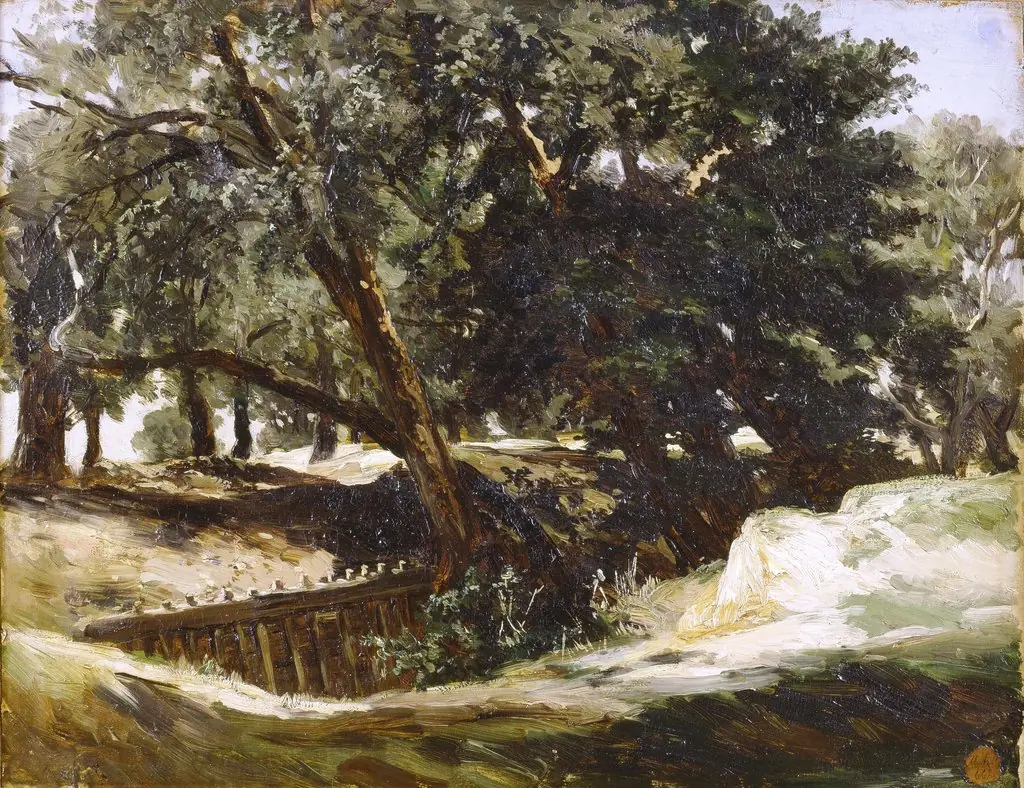
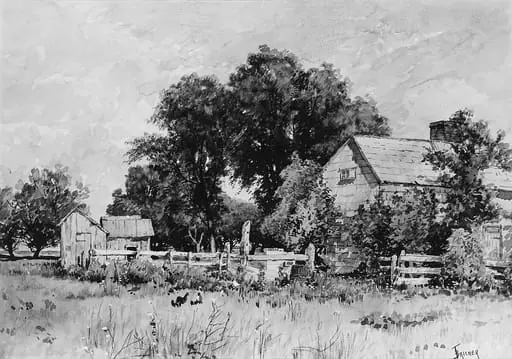
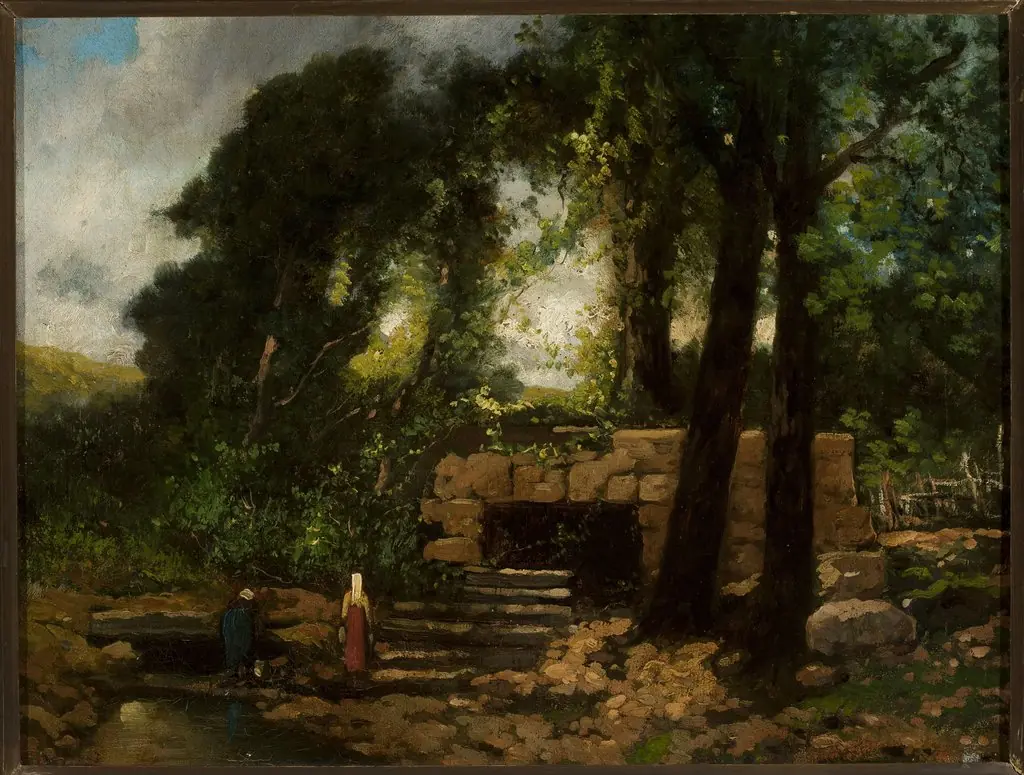
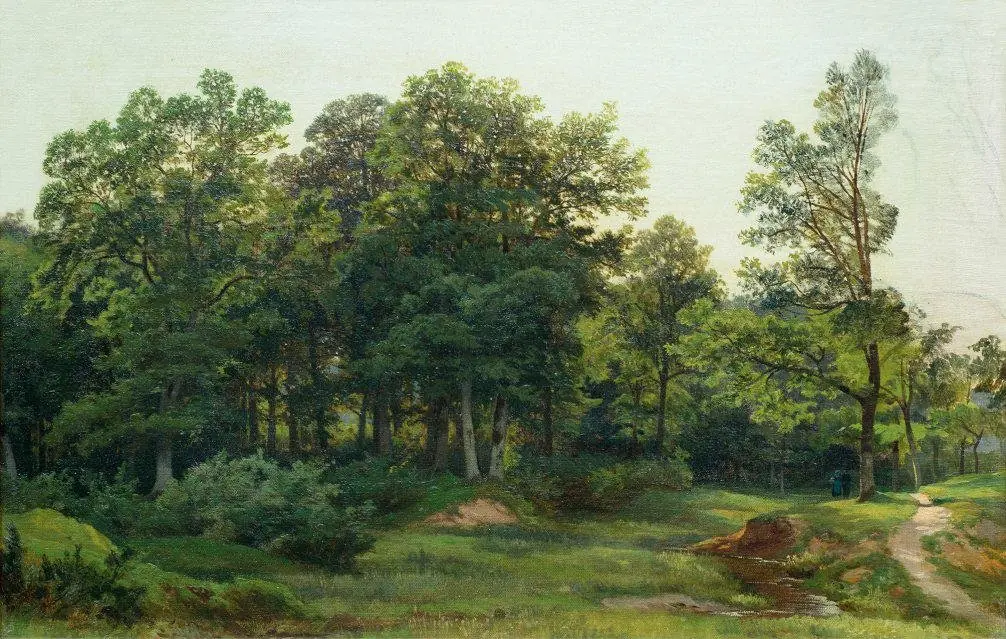
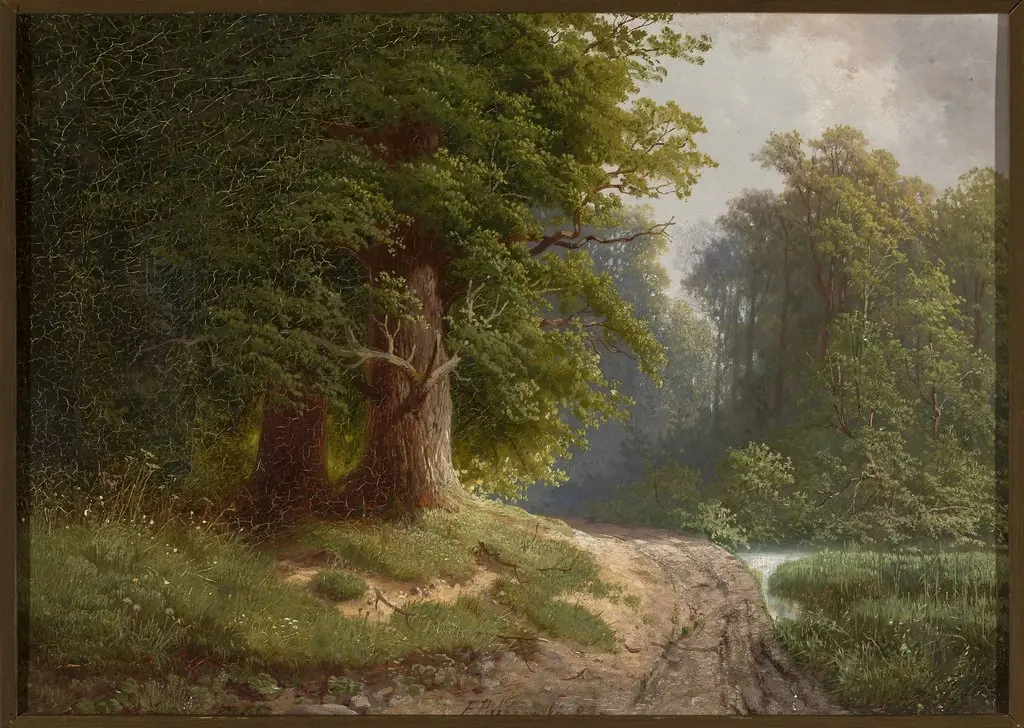
The painting portrays a secluded woodland stream where a wooden water mill turns gently, its mechanism partially submerged. A modest cabin stands nearby, suggesting quiet domestic life integrated into the natural environment. The absence of human figures emphasizes the harmony between structure and landscape, inviting contemplation of rural industry as a quiet, enduring presence rather than a dramatic event.
Technique & Style
Henția employed loose, blended brushwork to render the forest and water, favoring soft transitions between greens and earth tones. Light is suggested through dappled patches rather than sharp highlights, creating a subdued, diffused atmosphere. The water wheel’s motion is implied by the flow of the stream and the subtle angle of its paddles, avoiding overt detail in favor of mood and texture.
History & Provenance
Created in 1881, *Moara* emerged during Henția’s most active years as a painter and illustrator in Romania. While specific ownership records are limited, the work aligns with his documented focus on vernacular scenes. It likely circulated among local collectors or institutions interested in national identity through art, though no major exhibitions or documented sales from the period are known.
Context
In late 19th-century Romania, artists like Henția sought to define a visual language rooted in local life, distinct from academic or foreign models. *Moara* reflects this trend, echoing broader European Realist movements that valued everyday scenes over historical or mythological narratives. The mill, a common rural feature, symbolized self-sufficiency and continuity in a rapidly changing society.
Legacy
Though not widely reproduced or studied today, *Moara* remains representative of Henția’s contribution to Romanian visual culture. It exemplifies a quiet, observational mode of painting that prioritized atmosphere and place over narrative drama. Its endurance lies in its understated documentation of rural infrastructure and natural light, offering a subtle counterpoint to more dramatic depictions of the era.
Artist & collection
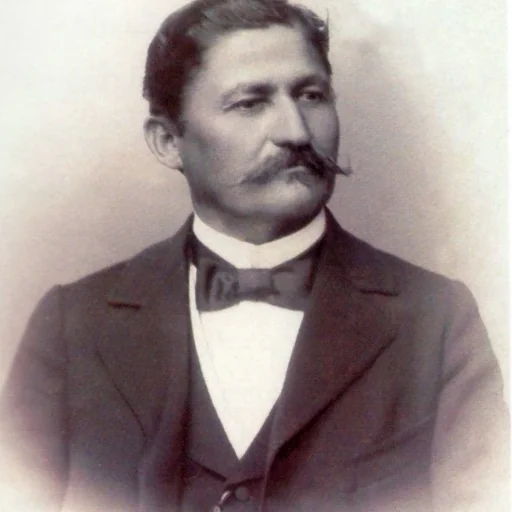
Artist
Sava Henția (1 February 1848, Sebeșel - 21 February 1904, Sebeșel) was an Imperial Austrian-born Romanian painter, decorator and illustrator.