Artwork
Capra neagră
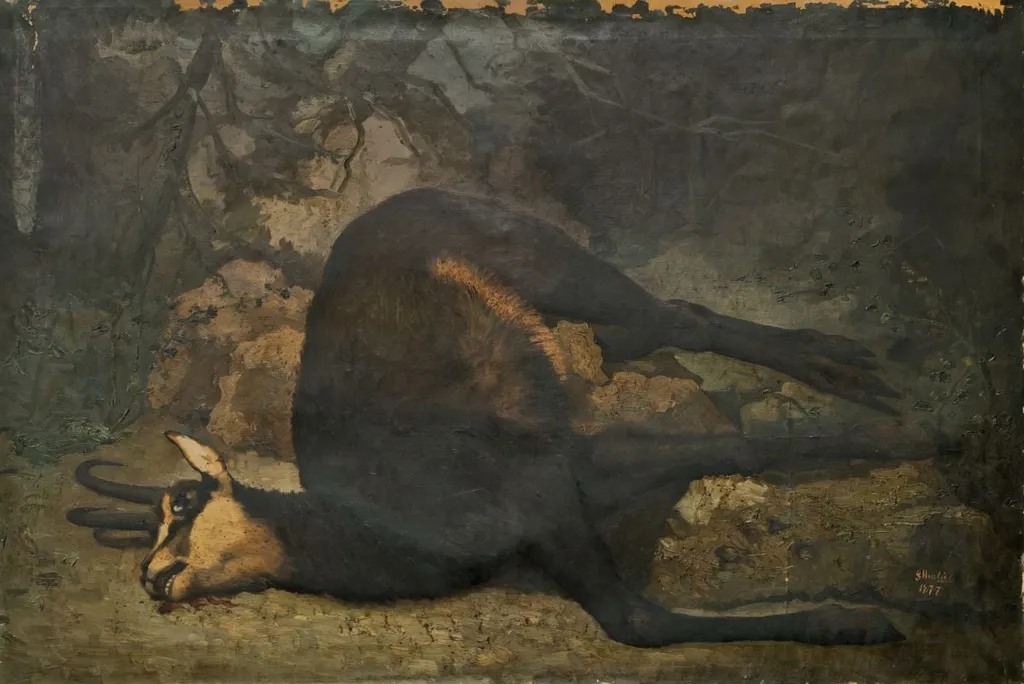
Capra neagră is an unspecified painting by the Biedermeier artist Sava Henția. It dates from 1877 and is held in the collection of the Bucharest Municipality Museum.
About this work
Overview
Capra neagră, created by Sava Henția in 1877, is a painting housed in the Museum of Ethnography. It depicts a somber scene of a dark, shaggy animal amidst a rocky landscape, accompanied by a deceased goat.
Subject & Meaning
The subject revolves around the juxtaposition of life and death, with a living animal (possibly a goat, given the title) and a dead goat with curved horns. The scene may symbolize the cycle of life or the harshness of nature.
Technique & Style
Henția employed bold, expressive brushstrokes to achieve a nearly three-dimensional texture of the living animal's fur. The painting utilizes chiaroscuro, characterized by strong contrasts between light and dark, enhancing the dramatic and somber atmosphere.
History & Provenance
Created during the Biedermeier period in 1877 by Sava Henția, an artist of Imperial Austrian birth who worked in Romania, Capra neagră is now part of the Museum of Ethnography's collection.
Context
While the Biedermeier period often emphasized comfort and domesticity, Henția's work here diverges, focusing on a rugged, outdoor setting with themes of life, death, and natural texture.
Artist & collection
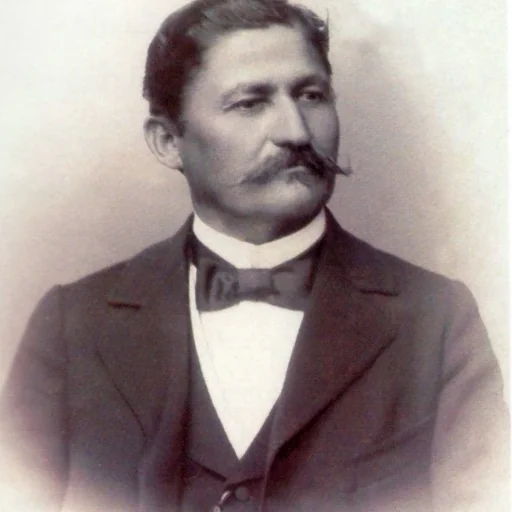
Artist
Sava Henția (1 February 1848, Sebeșel - 21 February 1904, Sebeșel) was an Imperial Austrian-born Romanian painter, decorator and illustrator.
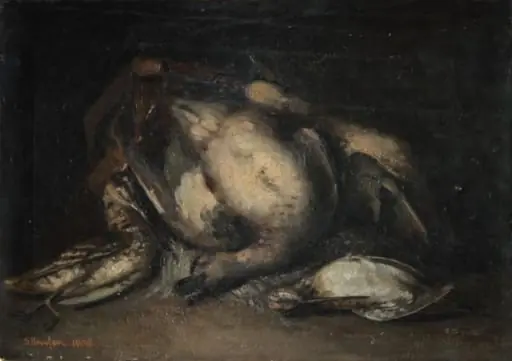
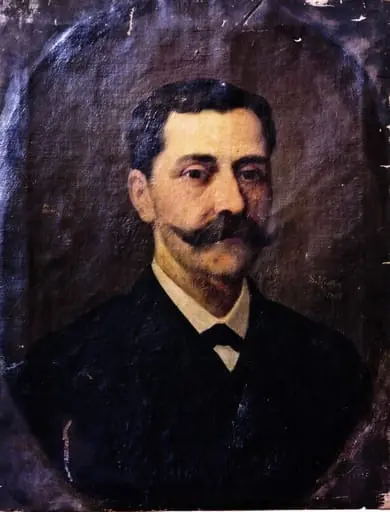
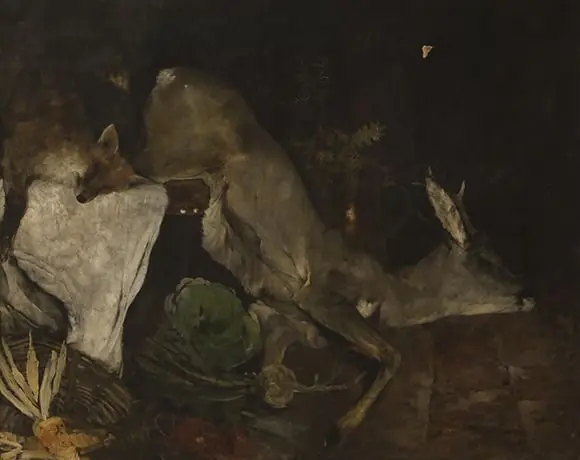 Jagdstillleben mit Fuchs und Rehbock
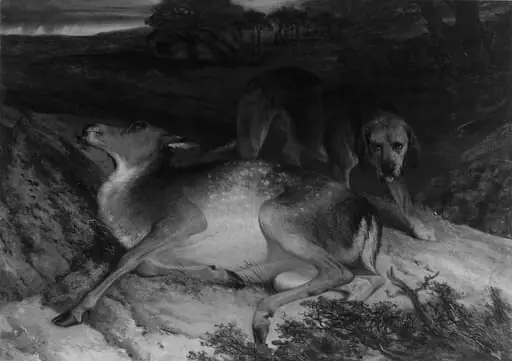 Wounded Stag and Dog
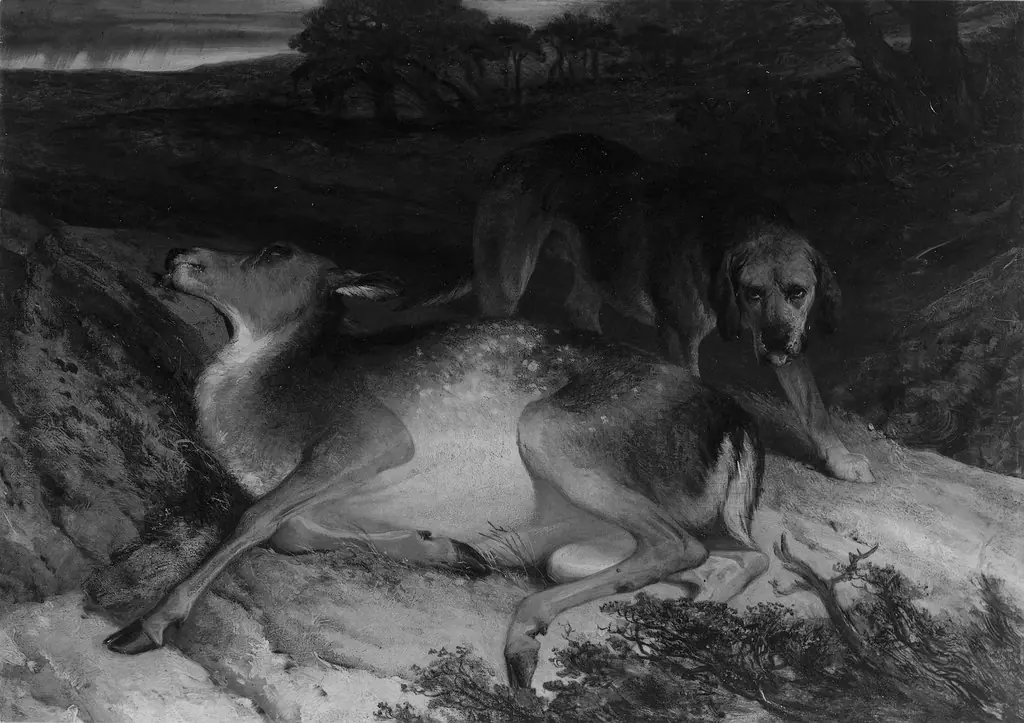 Wounded Stag and Dog
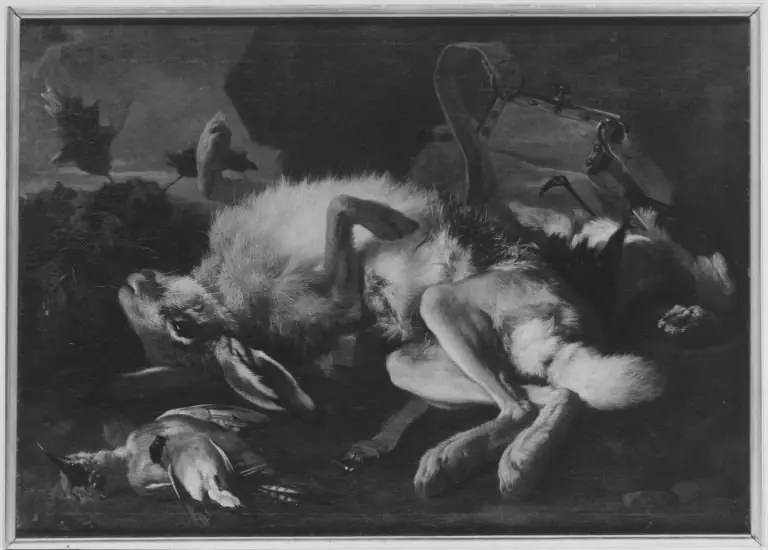 Jagdstillleben
 Head of a Roebuck and Two Ptarmigan
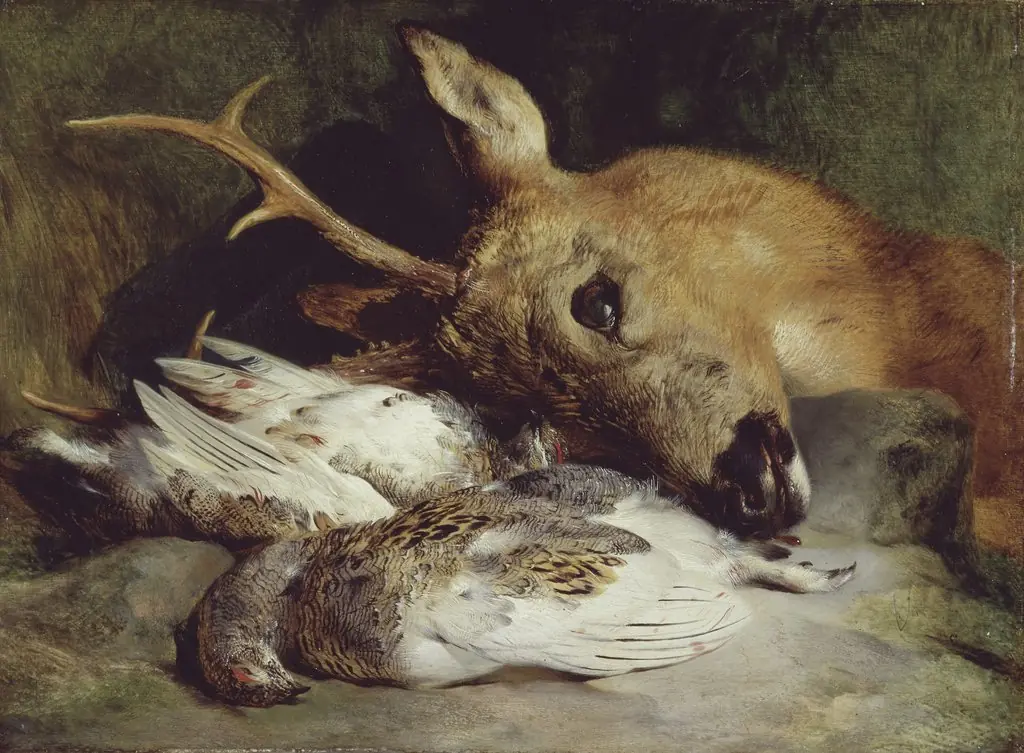 Head of a Roebuck and Two Ptarmigan
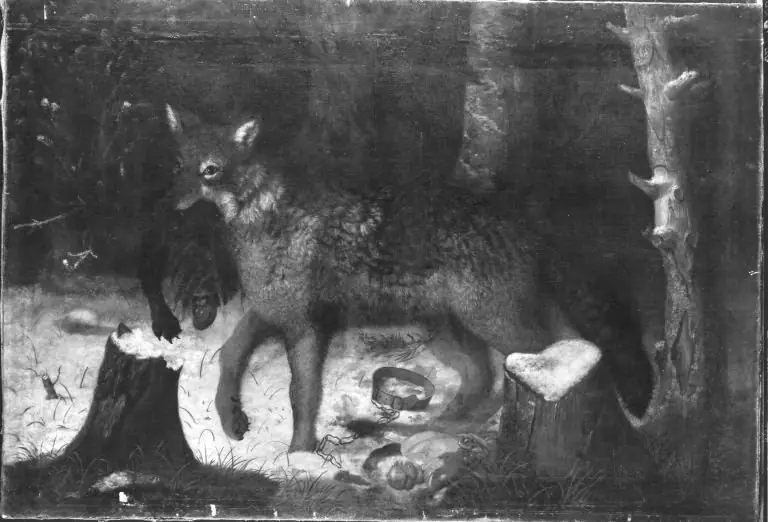 Siegreicher Wolf
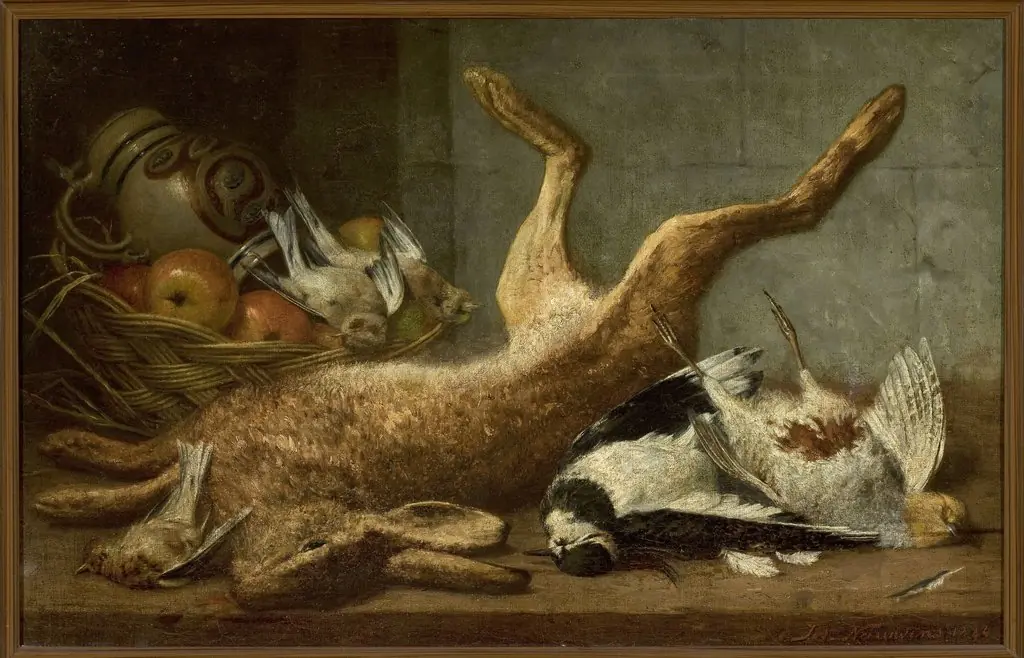 Hunting trophies: dead hare
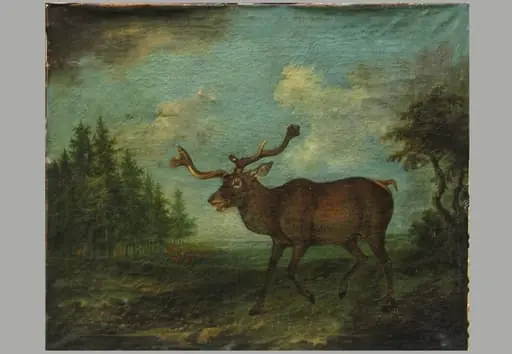 Căprior ; pandant: Vînătoare de mistreț
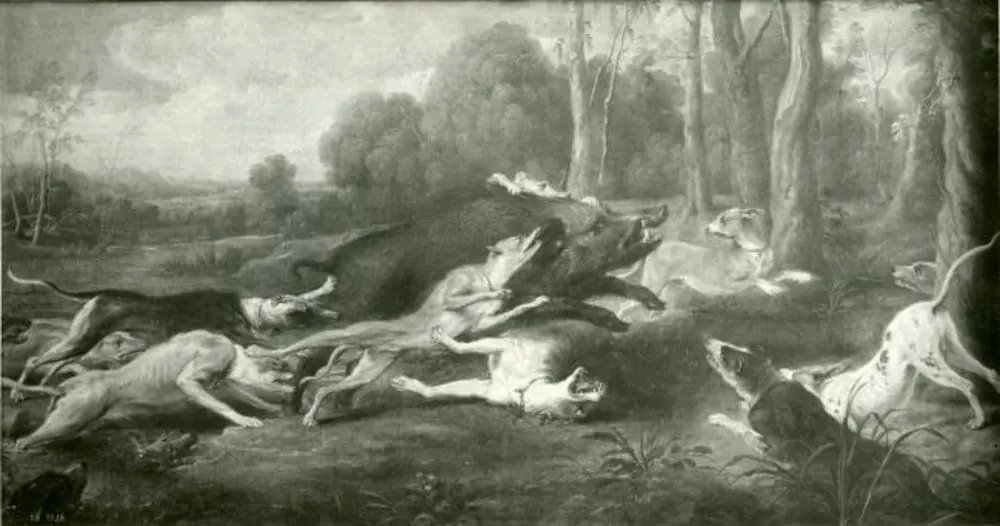 Dogs attacking a wild boar
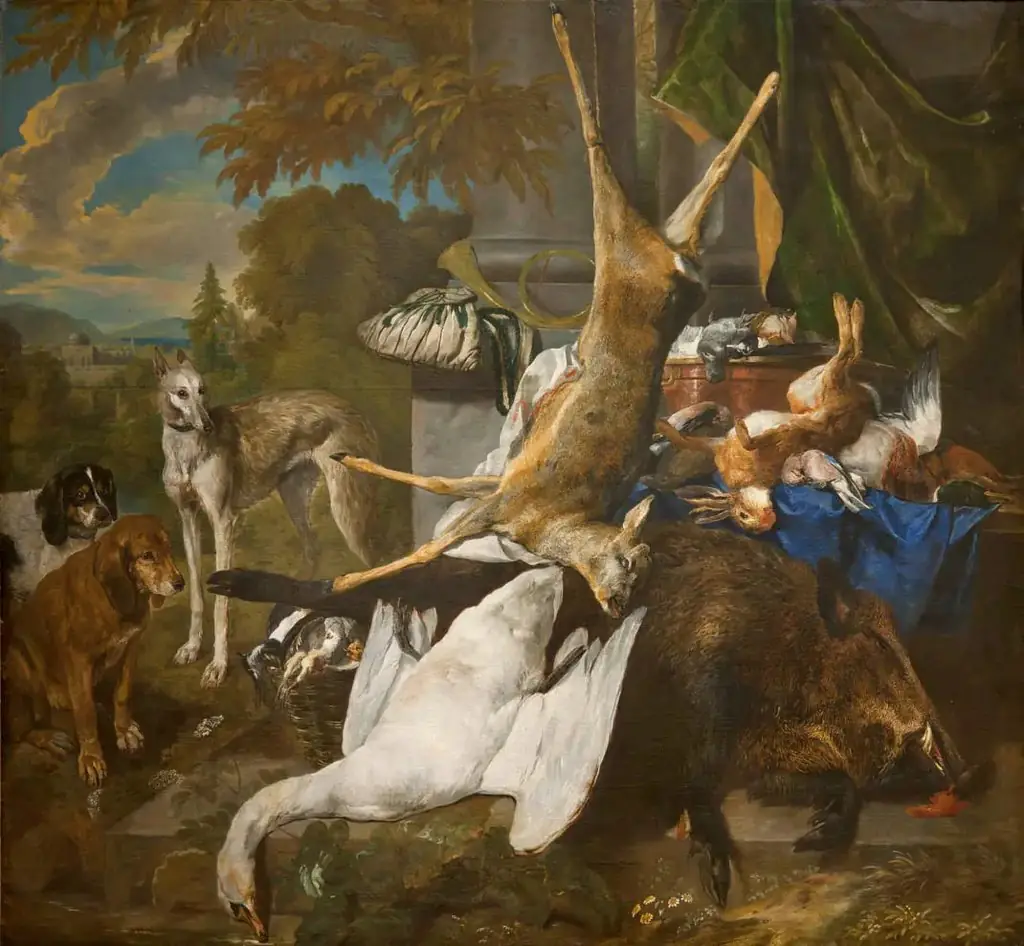 Still life of game and dogs
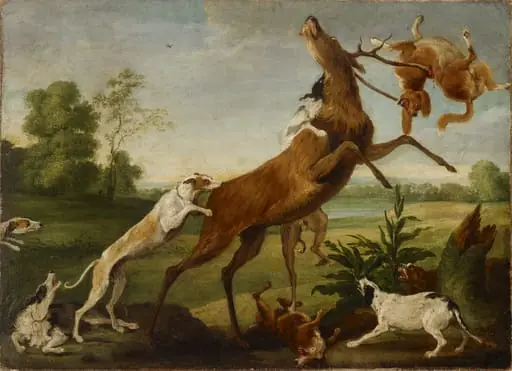 Kauriinmetsästys