Artwork
Apollo Belvedere
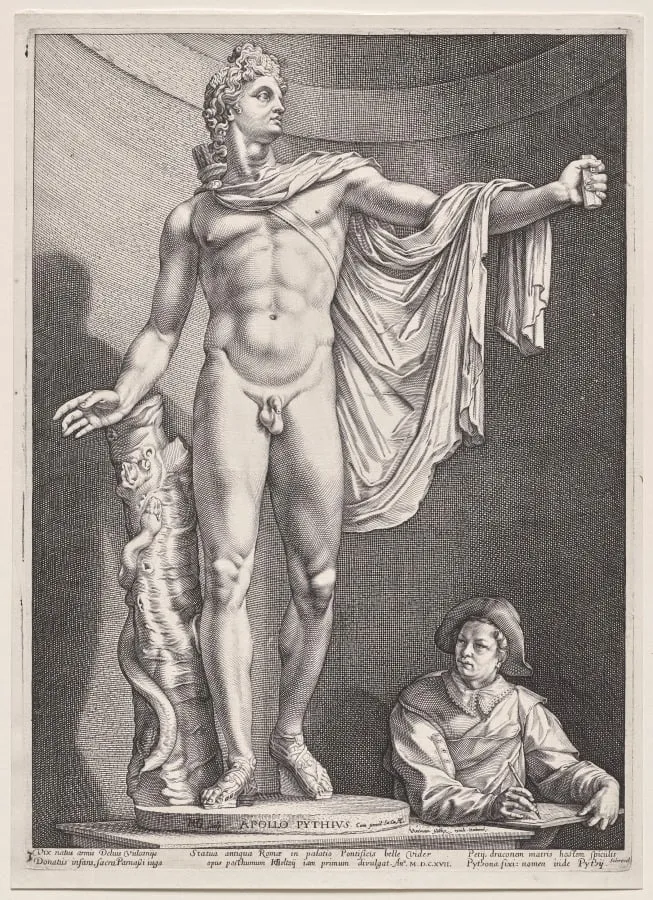
Apollo Belvedere is a print by the Renaissance artist Hendrik Goltzius. It dates from 1592 and is held in the collection of the Cleveland Museum of Art. Hendrick Goltzius, a Dutch printmaker of the late Renaissance, traveled to Rome to study classical sculpture firsthand.
About this work
The artist included a tiny seated man sketching the statue—almost like a self-portrait of Goltzius himself studying the original.
You see a tall, muscular man standing on a pedestal, one arm raised, the other holding a bow. His body twists slightly, and a cloth drapes over his shoulder.
Goltzius drew this after seeing the famous *Apollo Belvedere* statue in Rome. He made the figure look even taller by showing it from below, like you’re looking up at it. The artist included a tiny seated man sketching the statue—almost like a self-portrait of Goltzius himself studying the original.
If you like this, check out more works from the subject: netherlands, 16th century.
Overview
Hendrick Goltzius, a Dutch printmaker of the late Renaissance, traveled to Rome to study classical sculpture firsthand. Upon returning to Haarlem in 1591, he produced an engraving based on his observations of the Apollo Belvedere. His composition emphasizes the act of artistic engagement, placing a small figure sketching the statue within the scene to frame the viewer’s own encounter with the antique.
Subject & Meaning
The engraving depicts the Apollo Belvedere, a celebrated Roman statue of the god, rendered from a low angle to amplify its monumental presence. A seated artist, likely a stand-in for Goltzius, is shown documenting the sculpture, underscoring the intellectual and manual labor of studying antiquity. The inclusion of this figure transforms the print from a mere reproduction into a meditation on artistic apprenticeship and reverence for classical form.
Technique & Style
Goltzius employed his signature engraving technique—fluid, undulating lines that swell and taper—to accentuate the musculature and dynamic pose of Apollo. The precision of his line work conveys both anatomical rigor and a sense of movement, mirroring the statue’s idealized vitality. The contrast between the towering figure and the diminutive sketcher enhances spatial depth and reinforces the scale of the classical original.
History & Provenance
Goltzius made sketches of the Apollo Belvedere during his 1590–91 trip to Rome, later translating them into engraved prints back in Haarlem. This work belongs to a broader trend among Northern European artists who sought to absorb Italian Renaissance ideals through direct study of antiquities. The print circulated widely, helping disseminate the image of the statue beyond Rome’s walls and influencing Northern artistic practice.
Context
In the late 16th century, Northern artists increasingly viewed Italy as the epicenter of artistic authority. Goltzius’s journey and subsequent prints were part of a deliberate effort to align his work with classical standards. His focus on the act of drawing in situ reflects a scholarly approach to art-making, where observation and transcription were essential to achieving artistic legitimacy.
Legacy
Goltzius’s engraving of the Apollo Belvedere became a key reference for later artists seeking to understand classical proportion and expression. By embedding the viewer within the act of looking, he expanded the function of printmaking beyond replication to include narrative and introspection. His technical mastery and conceptual depth helped bridge Northern and Italian traditions in early modern art.
Artist & collection
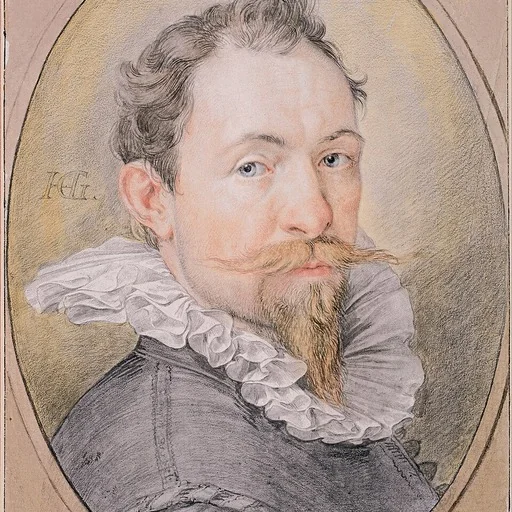
Artist
Hendrick Goltzius (German: , Dutch: ; né Goltz; January or February 1558 – 1 January 1617) was a German-born Dutch printmaker, draftsman, and painter.