Artwork
Fall of Man
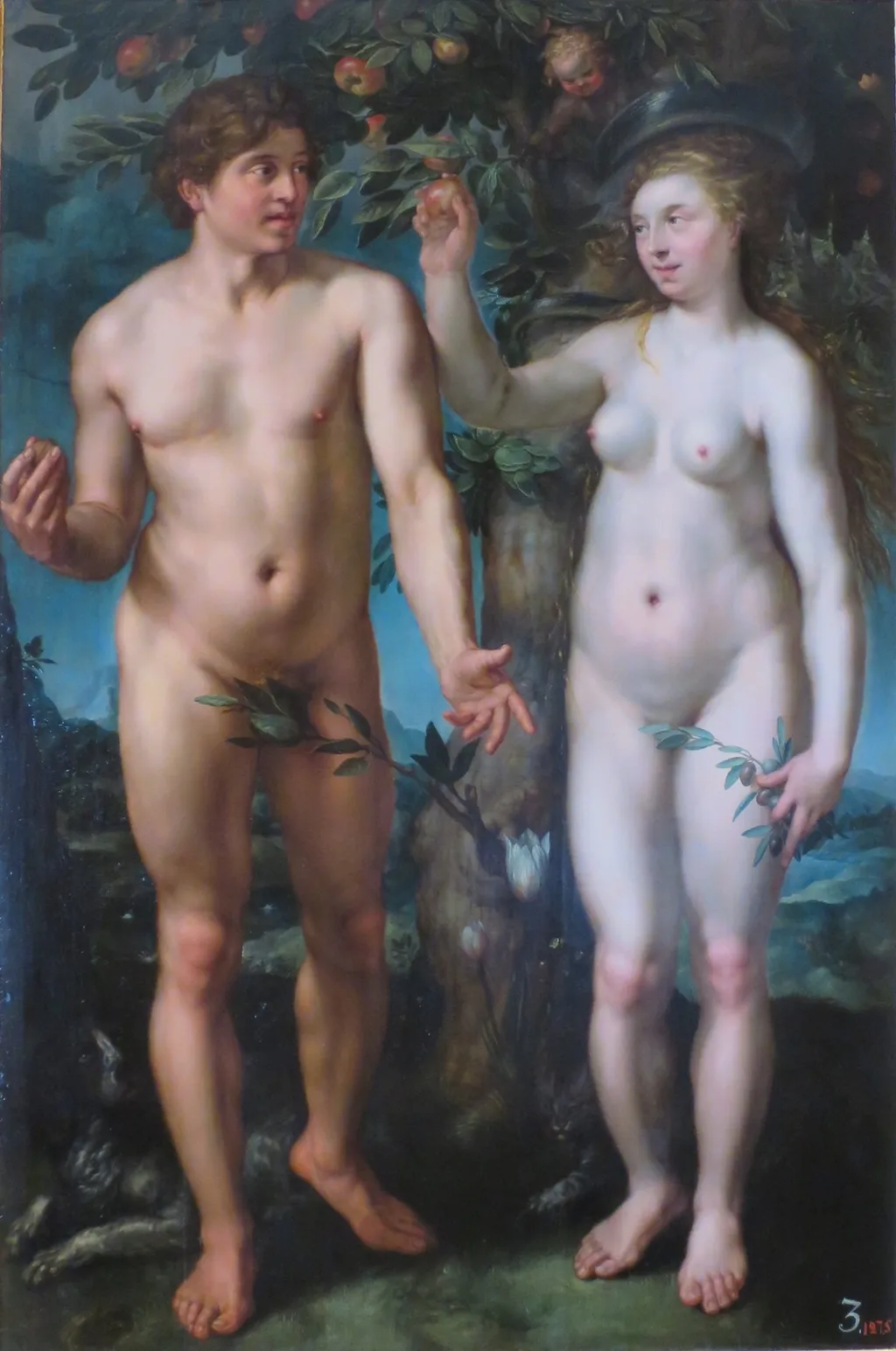
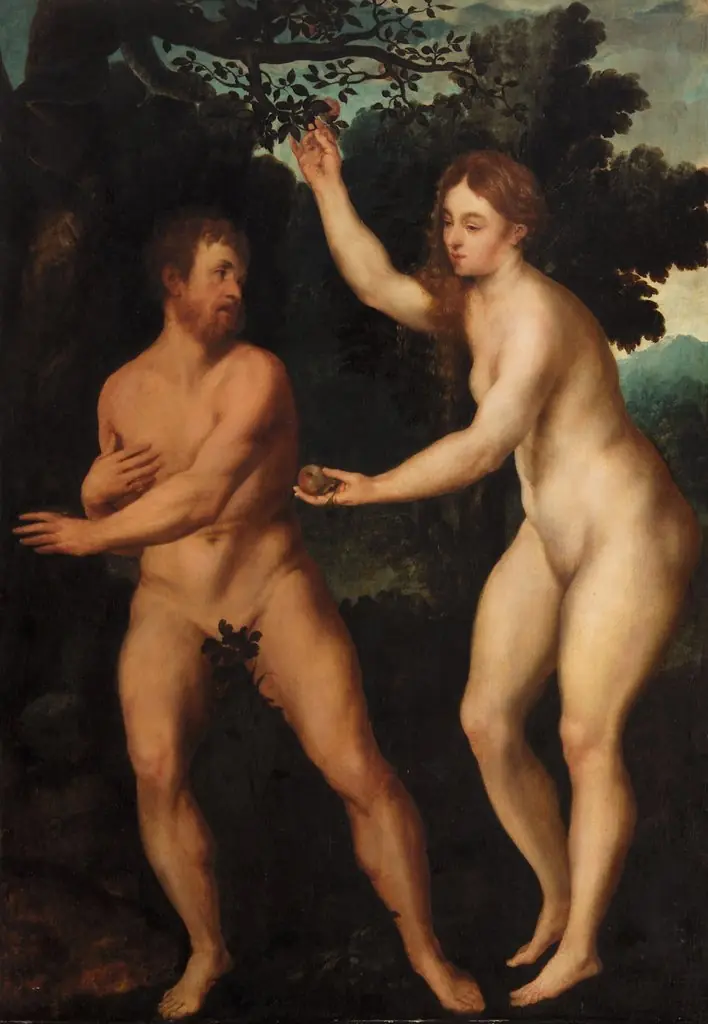
Fall of Man is an oil painting by the Mannerist artist Hendrik Goltzius. It dates from 1608 and is held in the collection of the Hermitage Museum.
About this work
Overview
Created in 1608, *Fall of Man* is an oil painting by Hendrick Goltzius, a Dutch artist of German origin. Executed in the Northern Mannerist idiom, the work presents a mythic scene of the biblical first humans amid a lush woodland. The painting is part of the State Hermitage Museum’s collection in St. Petersburg.
Subject & Meaning
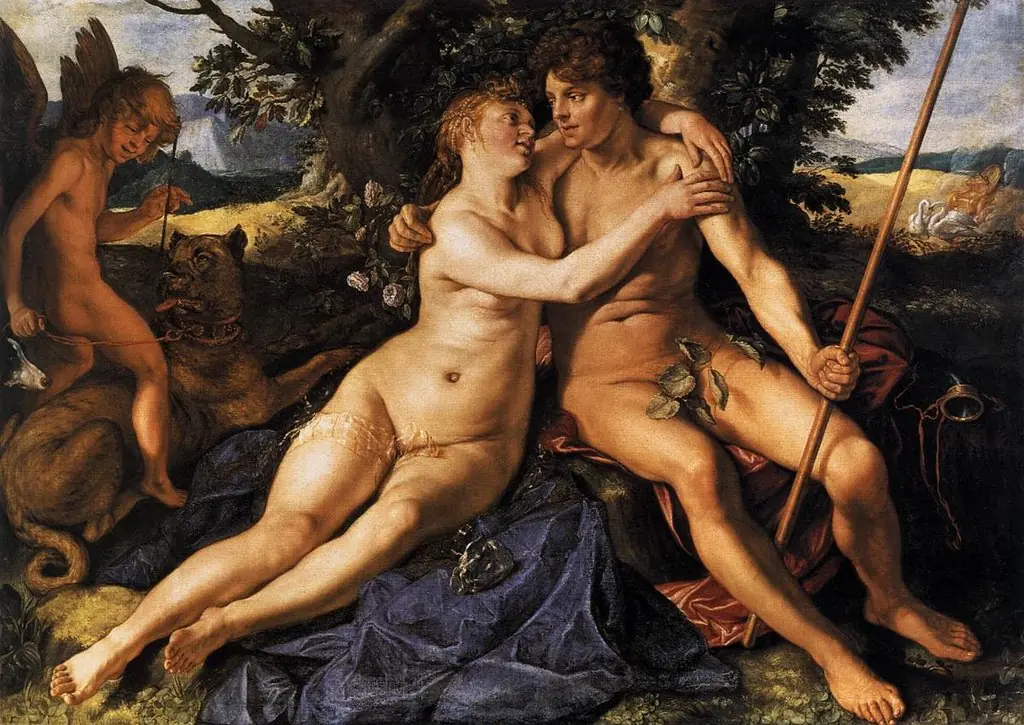
The composition centers on a nude Adam and Eve positioned before an apple tree. The woman extends her hand toward a bright red fruit, while the man holds a small branch and gazes upward, suggesting a moment of curiosity or hesitation. The imagery alludes to the Genesis narrative of temptation and the loss of innocence.
Technique & Style
Goltzius employs the Mannerist penchant for elongated forms and intricate detail, rendering the figures with smooth, luminous skin and the foliage with fine, interlacing leaves. Subtle chiaroscuro models the bodies, creating a gentle contrast between light and shadow that enhances the three‑dimensionality of the scene.
History & Provenance
Originally painted after Goltzius had shifted his focus from engraving to oil, the work reflects his mature period of artistic experimentation. It entered the State Hermitage Museum’s holdings in the 20th century, where it remains on display as an example of Northern Mannerist painting.
Artist & collection
Artist
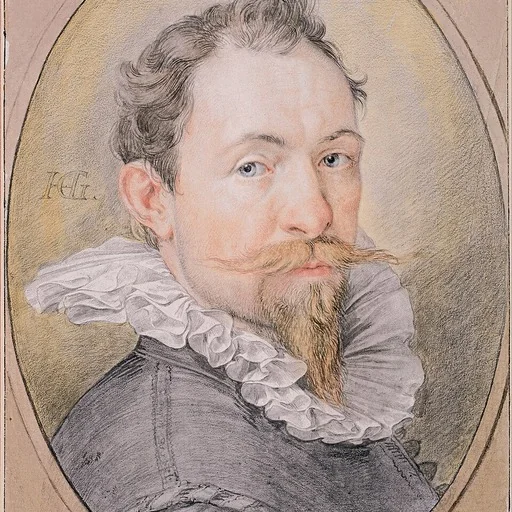
Hendrick Goltzius (German: , Dutch: ; né Goltz; January or February 1558 – 1 January 1617) was a German-born Dutch printmaker, draftsman, and painter.

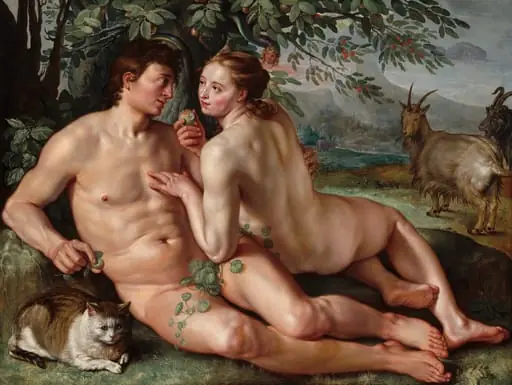
![The Fall of Man [middle panel]](https://artifactworldgallery.com/img/the-fall-of-man-middle-panel--51048cc74e2325c7-w320.webp)