Artwork
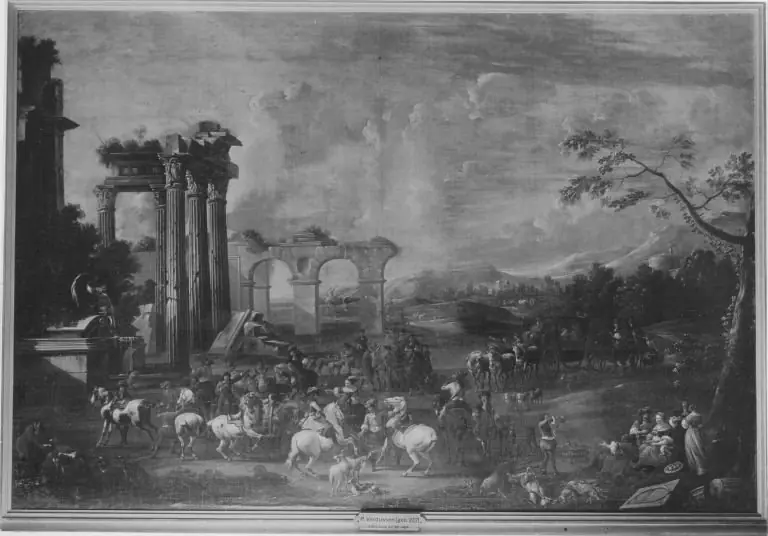
Gypsy camp in an abandoned bulding
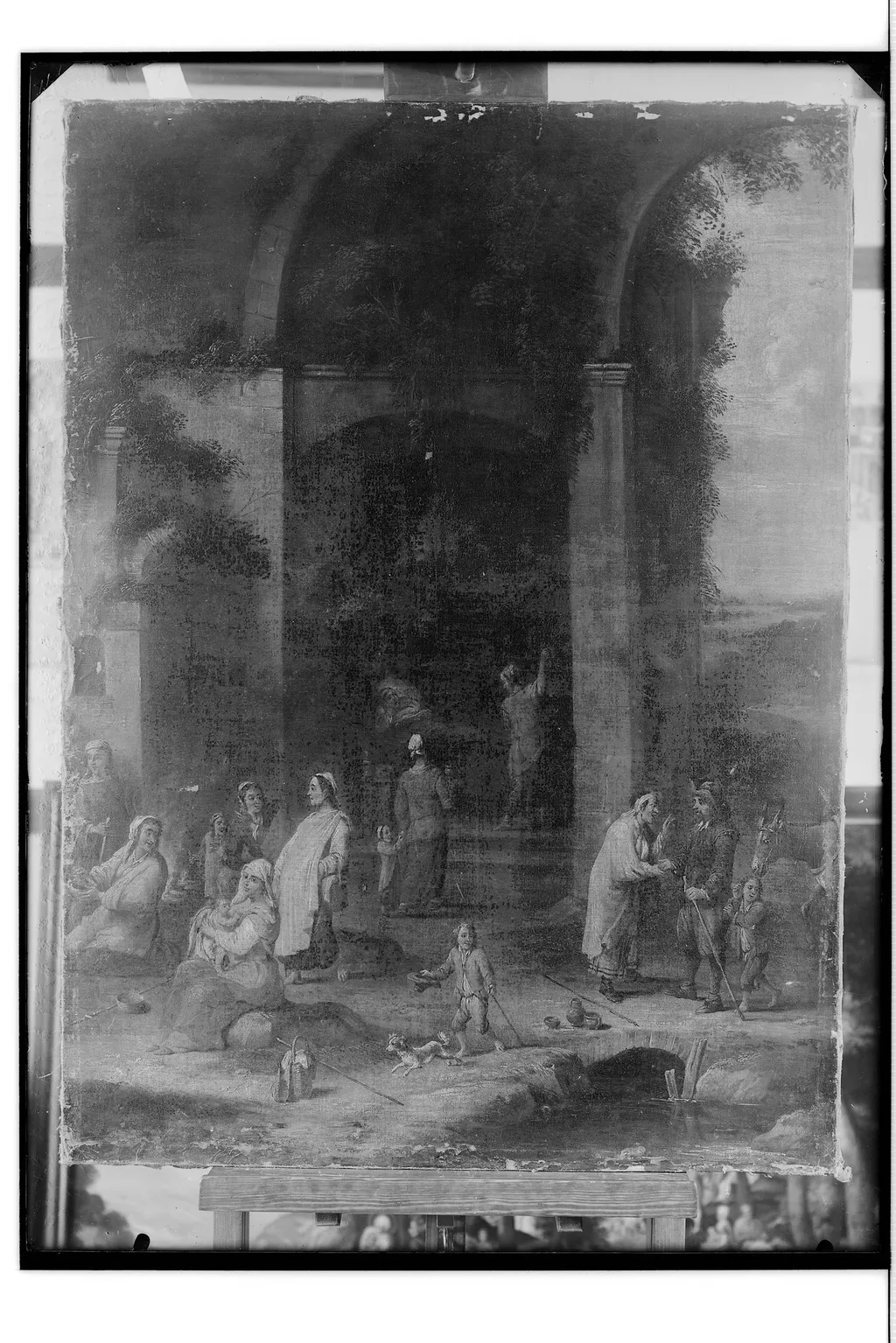
Gypsy camp in an abandoned bulding is an oil painting by Hendrick Govaerts. It dates from 1704 and is held in the collection of the National Museum in Warsaw.
About this work
Overview
Painted around 1704 by Flemish artist Hendrick Govaerts, this oil-on-canvas work depicts a transient community settled within a decaying architectural space. Govaerts, known for intimate genre scenes, captures a moment of quiet daily life in an abandoned structure, blending observation with a subdued palette of earth tones. The painting resides today in the National Museum in Warsaw.
Subject & Meaning
The scene portrays a Romani group occupying the ruins of a once-grand building, their presence marked by quiet domesticity rather than spectacle. A seated woman cradles a child, while a man observes them nearby; others play instruments or move through the space. The composition avoids romanticization, presenting their existence as unremarkable yet dignified, embedded in the decay around them.
Technique & Style
Govaerts employs a restrained, naturalistic approach with soft modeling and careful attention to fabric textures and architectural detail.
Govaerts employs a restrained, naturalistic approach with soft modeling and careful attention to fabric textures and architectural detail. The muted palette—dominated by browns, olives, and grays—enhances the sense of age and stillness. Light filters through the ruin’s open arch, casting gentle shadows that unify the figures with their environment, reinforcing the painting’s intimate, observational tone.
History & Provenance
Created during Govaerts’s later years in Antwerp, the painting entered the National Museum in Warsaw’s collection in the 20th century. Its journey from the Southern Netherlands to Poland remains undocumented, though its subject and style align with Northern European genre traditions of the period. No early records of its ownership or exhibition are known.
Context
In early 18th-century Europe, Romani communities were often marginalized and depicted through stereotypes. Govaerts’s work diverges from caricature, offering a quiet, unjudged glimpse into their daily life. The ruined setting reflects broader themes of transience and decay common in post-war Flemish art, where abandoned spaces became metaphors for impermanence.
Legacy
The painting stands as a modest but significant example of Flemish genre painting that resists exoticism. While Govaerts is not widely celebrated today, this work contributes to a quieter tradition of 17th- and 18th-century art that valued observation over drama, capturing the dignity of ordinary lives in overlooked corners of society.
Artist & collection
Artist
Hendrick Govaerts or Hendrik Govaerts (baptised 28 February 1669 - 10 February 1720) was a Flemish painter.

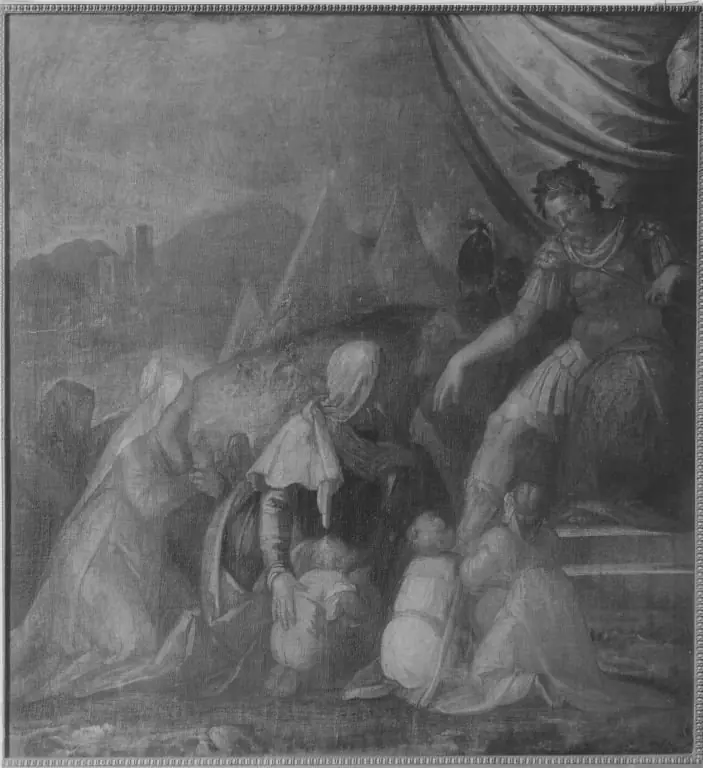 Coriolan lässt sich von seiner Familie bereden
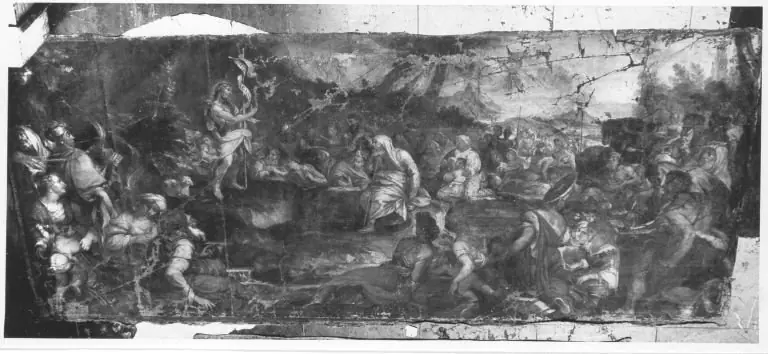 Predigt Johannes des Täufers
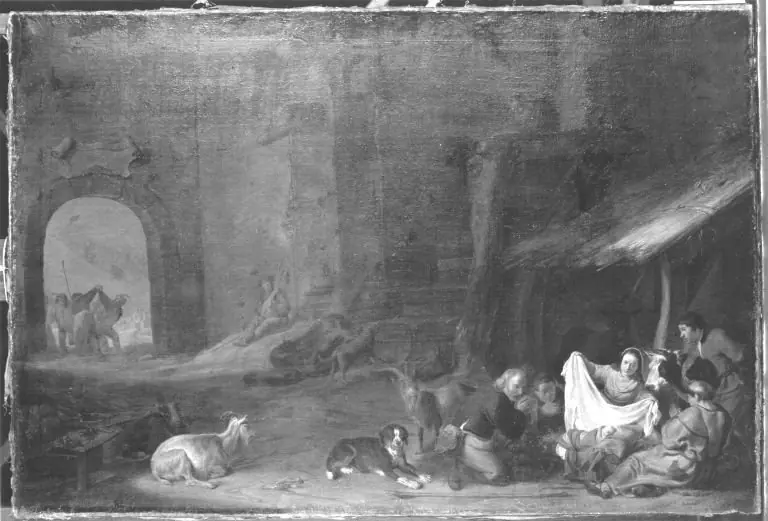 Anbetung der Hirten
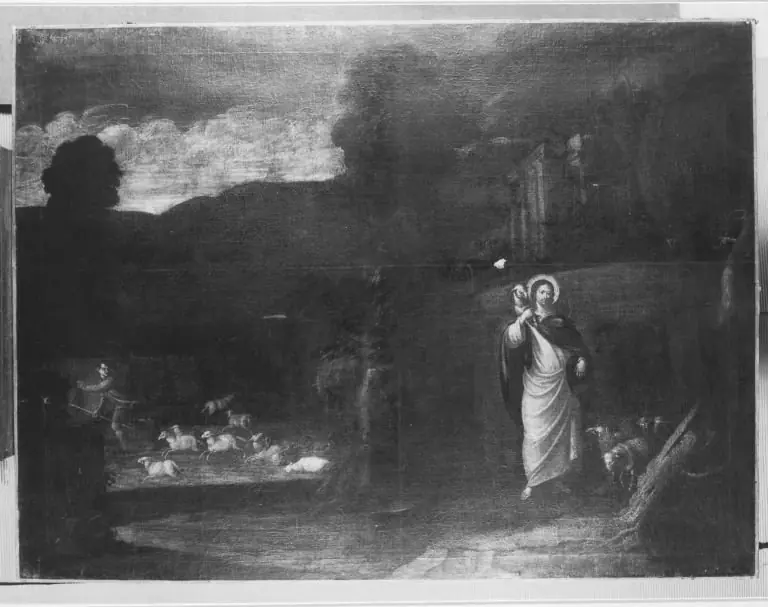 Christus als guter Hirte
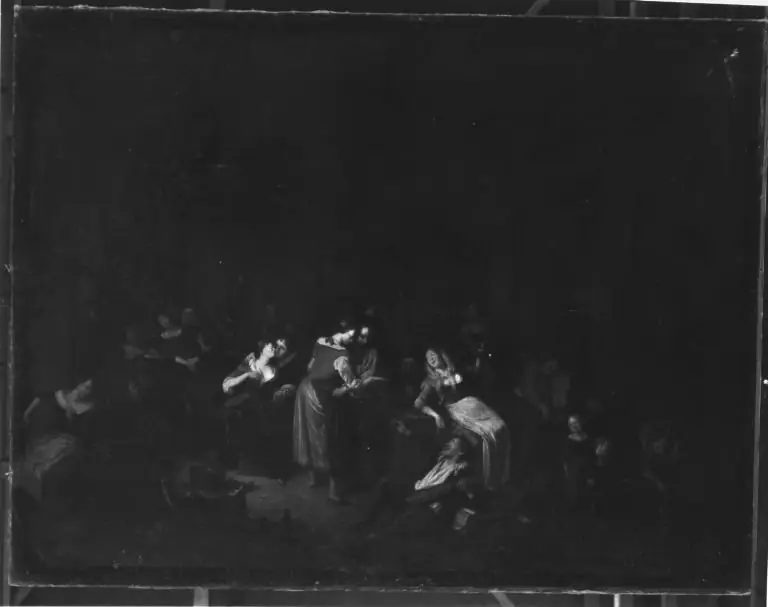 Lustige Gesellschaft
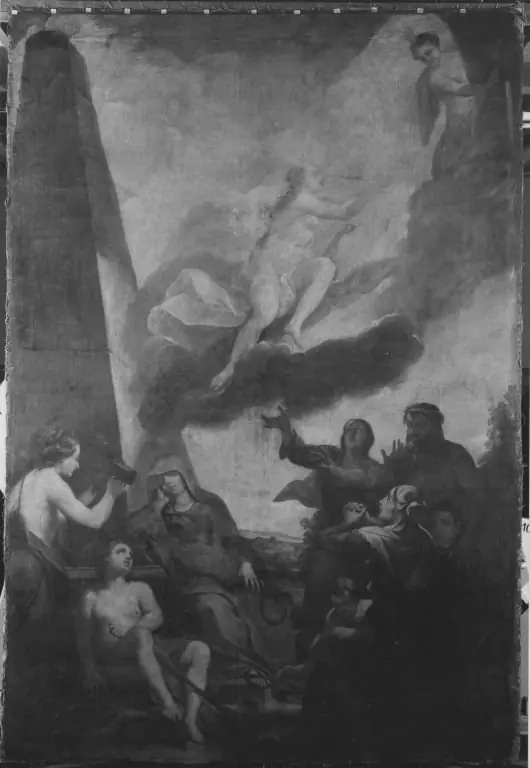 Allegorie auf den Tod einer Fürstin
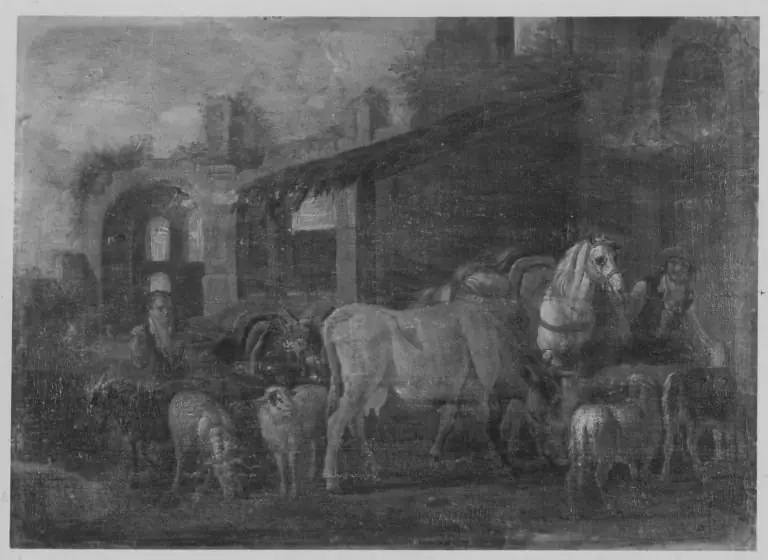 Bepackter Schimmel
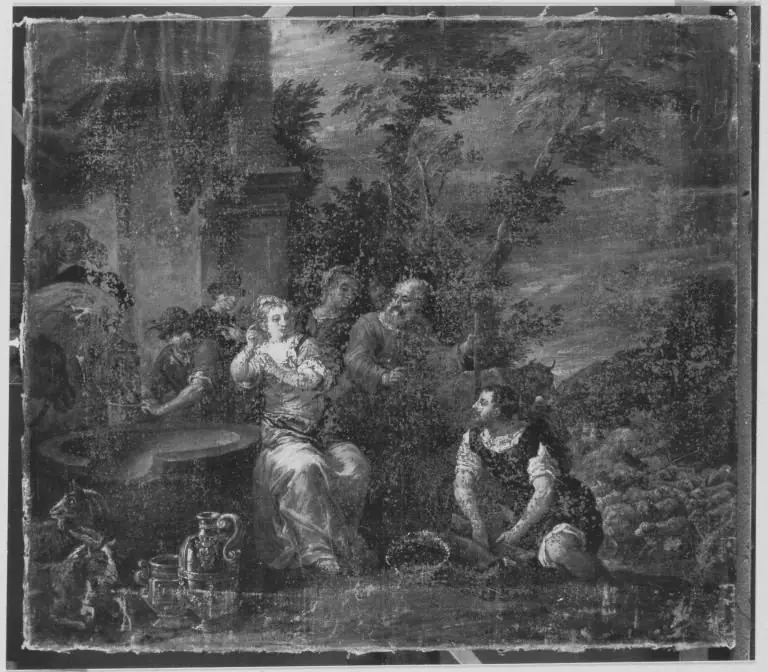 Rebecca am Brunnen (Nachahmer)
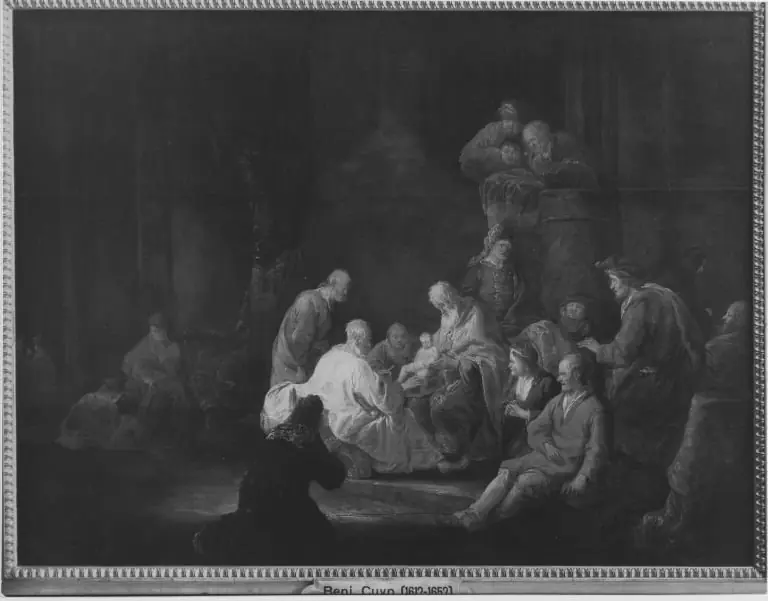 Beschneidung Christi (Circumcisio)
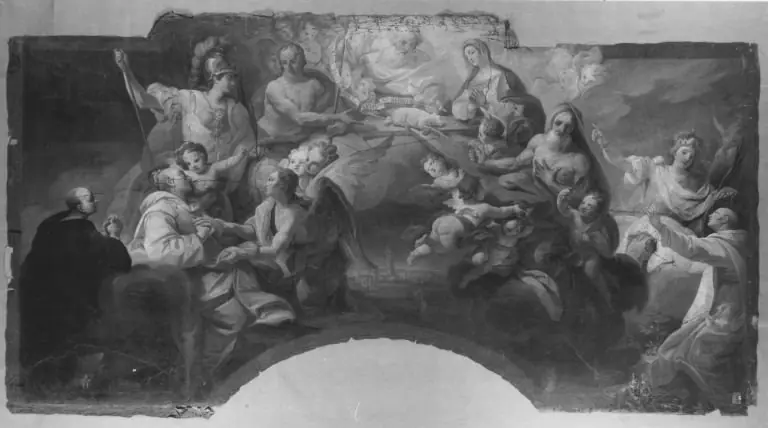 Verherrlichung des Lammes
 Erfrischung auf der Jagd
 The Rest on the Flight into Egypt