Artwork
The Fall of Man
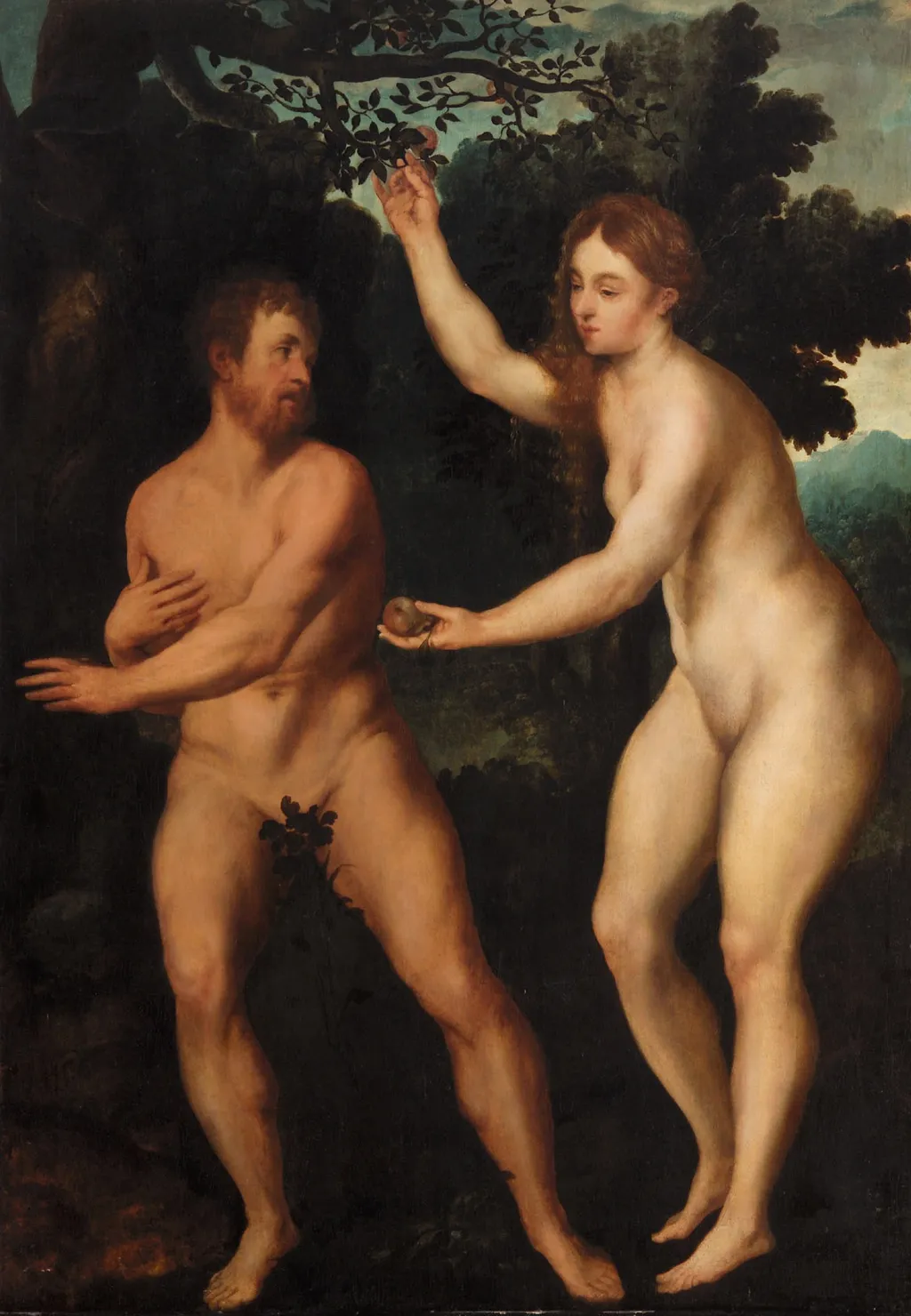
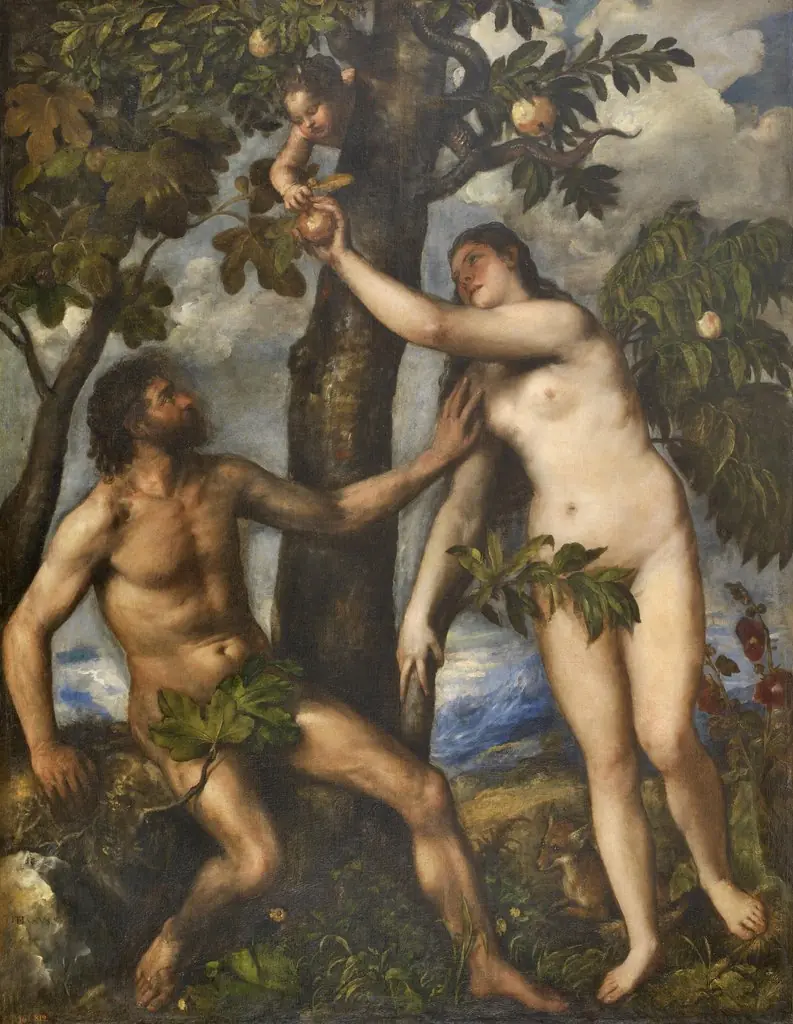
The Fall of Man is an unspecified painting. It dates from 1545 and is held in the collection of the Kunsthistorisches Museum. The work depicts a nude male and female figure within a dense, shadowy forest.
About this work
Overview
The work depicts a nude male and female figure within a dense, shadowy forest. The man, bearded and with his arms crossed over his chest, remains motionless, while the woman extends her hand toward a branch bearing an apple. The composition is dominated by dark green foliage and stark contrasts of light and shadow.
Subject & Meaning
The scene evokes the biblical episode of the Fall, with the apple symbolizing the forbidden fruit. The juxtaposition of the woman's reaching gesture and the man's restrained stance suggests a tension between temptation and restraint, inviting reflection on the moment of choice.
Technique & Style
The painter employs chiaroscuro, employing strong tonal contrasts to model the figures and illuminate the apple against the surrounding gloom. The dark forest backdrop is rendered with thick, layered foliage, creating depth and a dramatic, almost theatrical atmosphere.
Context
Works that explore the Adam and Eve narrative often use nudity and natural settings to emphasize vulnerability and moral stakes. This painting aligns with that tradition, situating the figures in a secluded woodland rather than a garden, thereby heightening the sense of isolation.
Artist & collection


![The Fall of Man [middle panel]](https://artifactworldgallery.com/img/the-fall-of-man-middle-panel--51048cc74e2325c7-w320.webp)