Artwork
Playing Putti
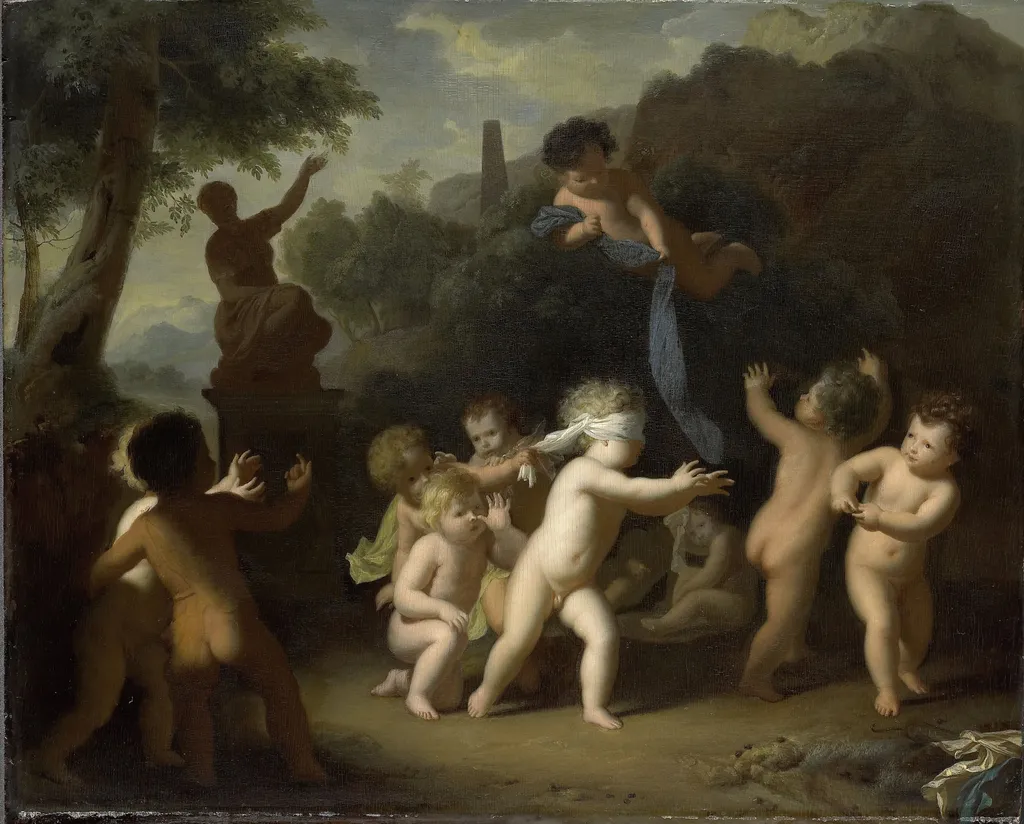
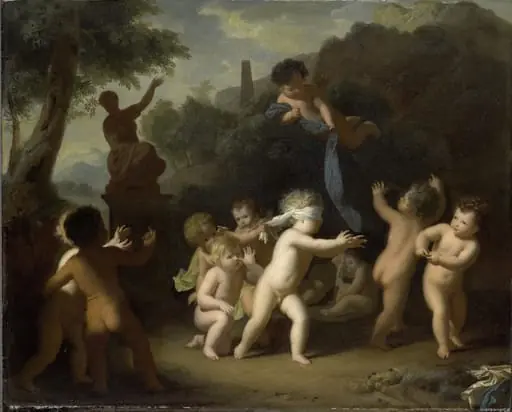
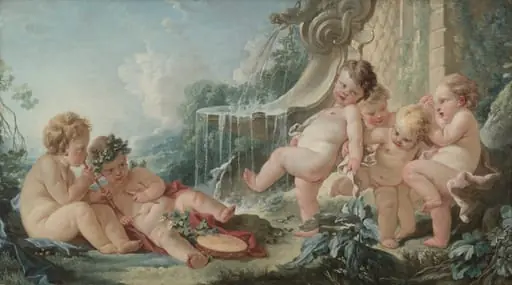
Playing Putti is an oil painting by the Rococo painting artist Hendrik van Limborch. It dates from 1710 and is held in the collection of the Rijksmuseum.
About this work
Overview
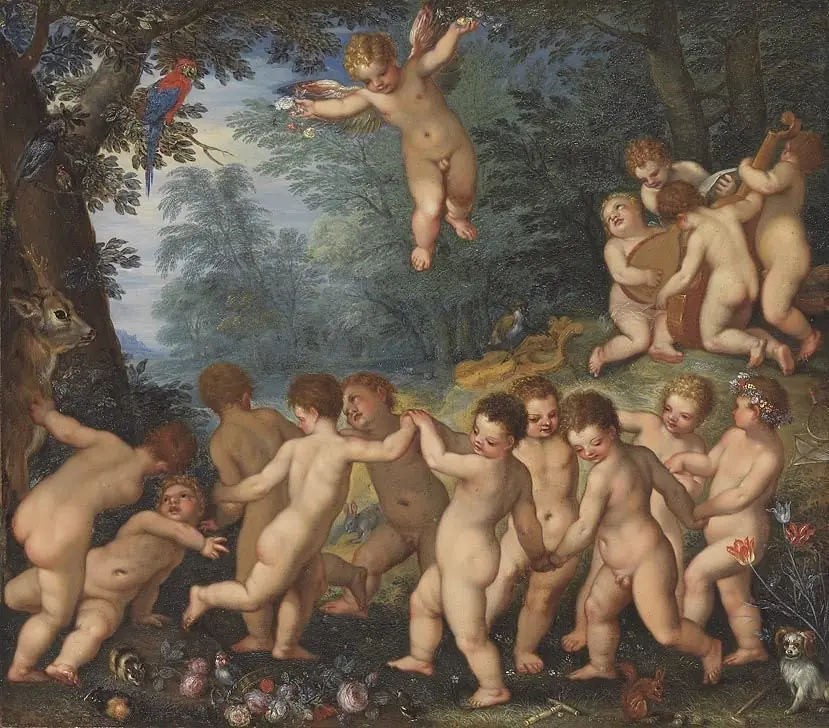
Hendrik van Limborch, a Dutch artist active in the early eighteenth century, executed the oil painting *Playing Putti* in 1710. The work belongs to the Rococo period and is part of the Rijksmuseum’s collection. It portrays a light‑hearted mythological scene populated by cherubic figures.
Subject & Meaning
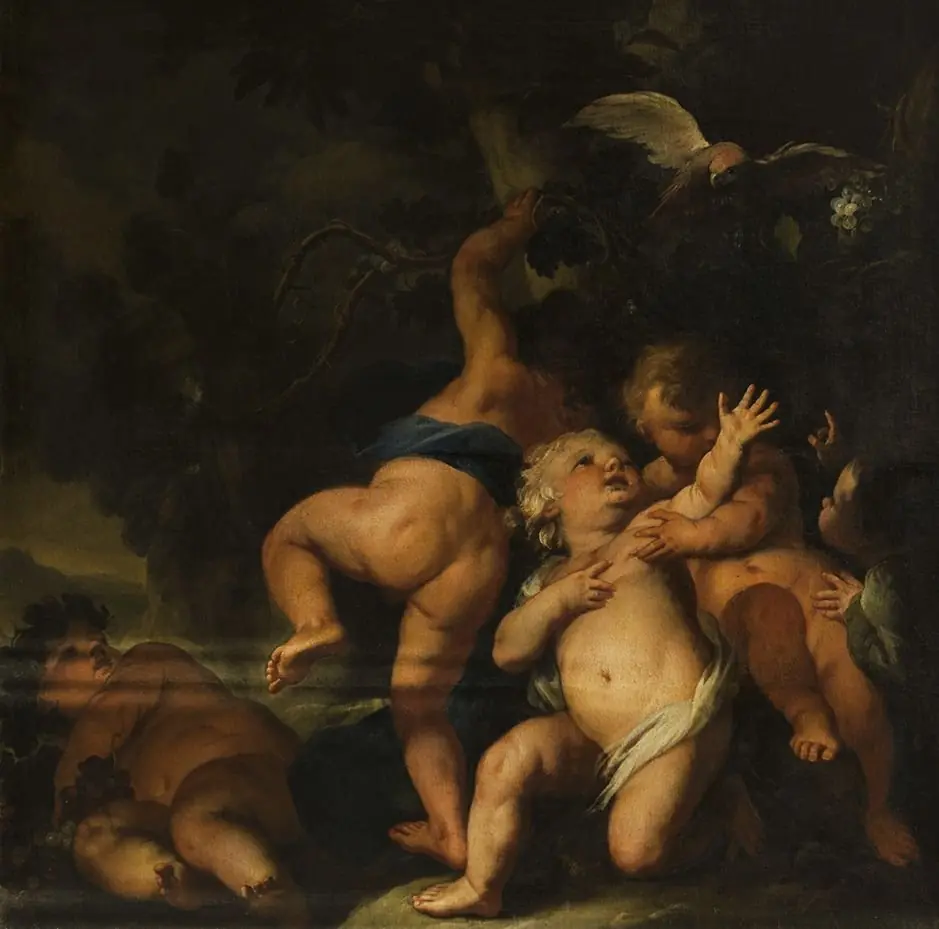
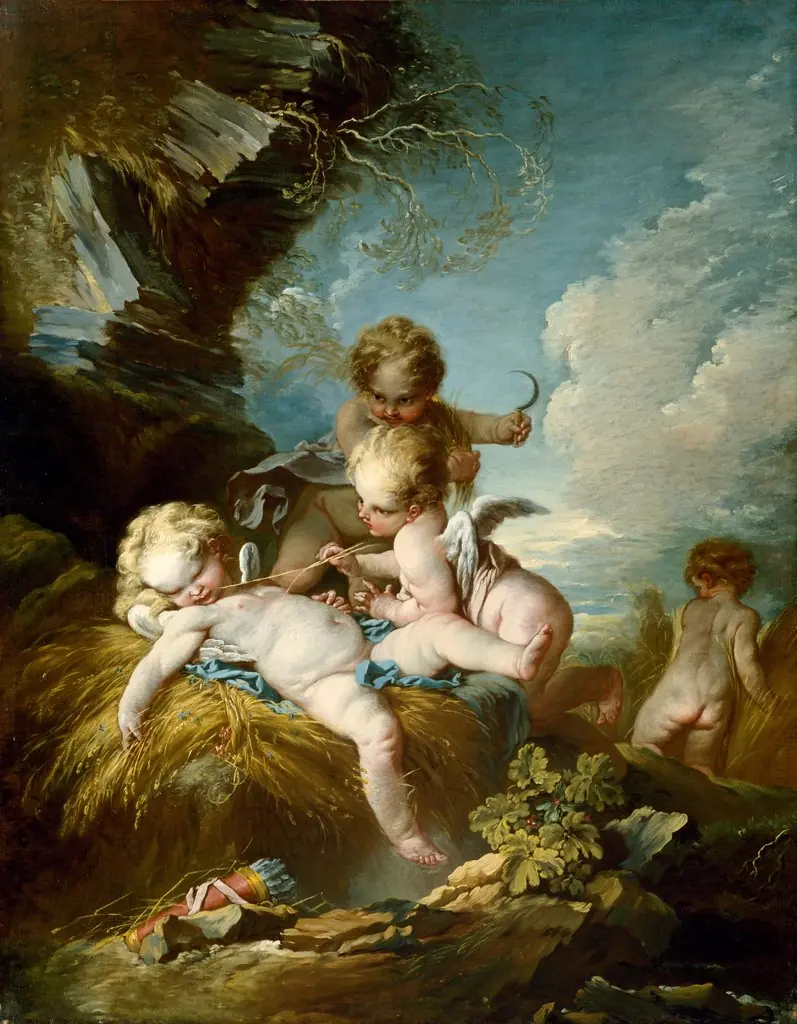
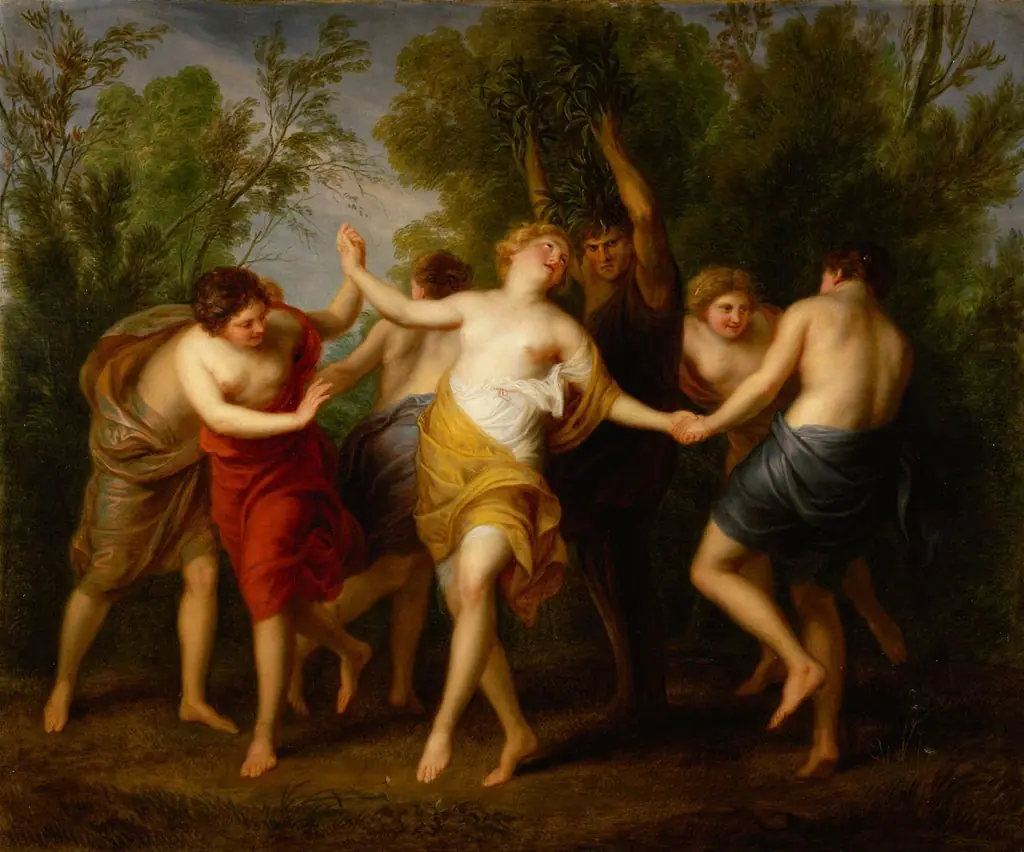
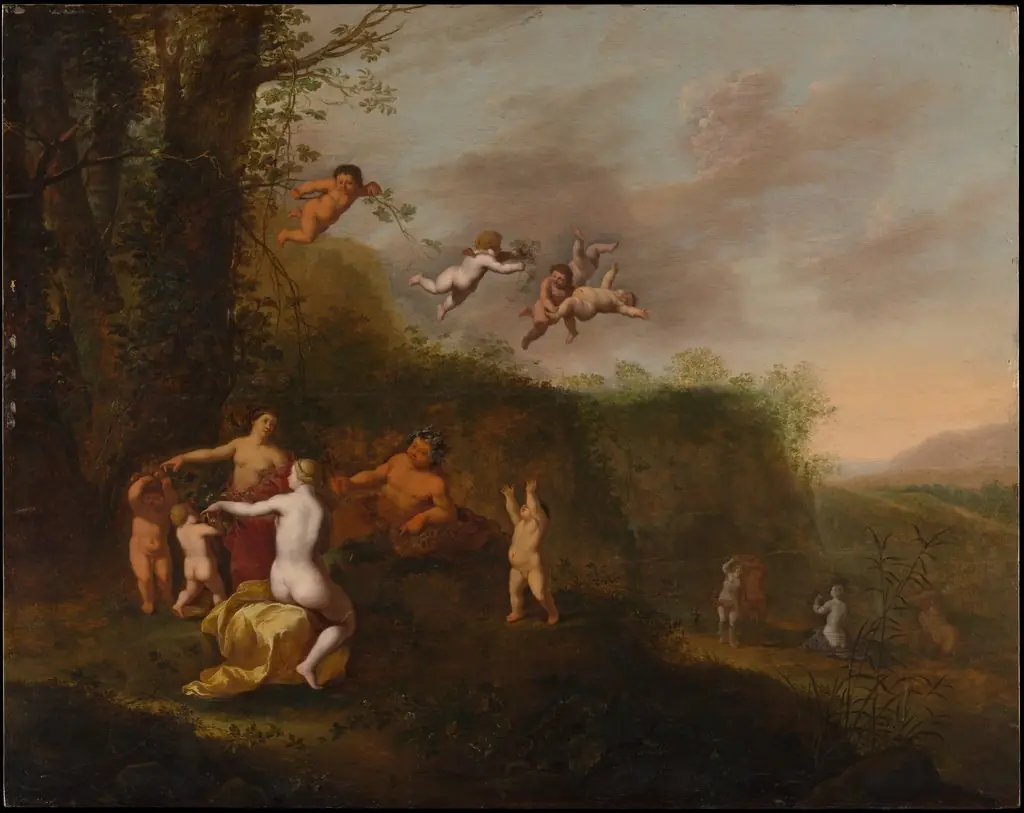
The composition centers on a group of nude putti—plump, childlike figures traditionally associated with classical mythology—engaged in various playful activities within a forest clearing. Their gestures, ranging from reaching upward to dancing, convey a sense of spontaneous joy, while a few adult onlookers add a narrative of observation.
Technique & Style
Limborch employs a delicate palette, rendering the putti’s smooth flesh in pale tones that contrast with the darker foliage and rocky terrain. The brushwork captures fleeting motion, giving the figures a sense of immediacy. Soft, diffused clouds and a gentle sky complete the atmospheric background typical of Rococo sensibility.
History & Provenance
Born in The Hague in 1681, Limborch trained with several prominent masters before developing a reputation for historical allegories and portraiture. He completed *Playing Putti* midway through his career and died in his native city in 1759. The painting entered the Rijksmuseum’s holdings at an unspecified later date.
Context
Putti have appeared in European art since antiquity, often symbolizing love, innocence, or divine presence. In the early eighteenth century, Dutch painters like Limborch incorporated these figures into Rococo compositions, blending classical motifs with the period’s emphasis on lightness and decorative charm.
Own this work as a print
Artist & collection

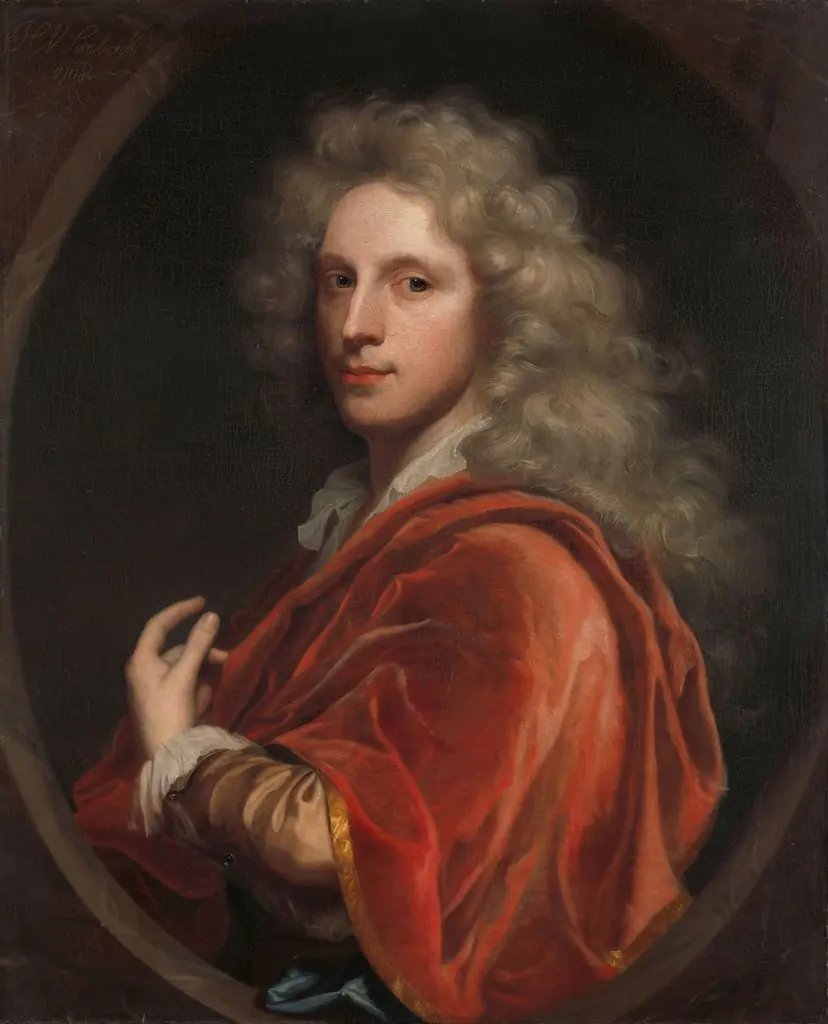
Artist
Hendrik van Limborch (9 March 1681 – 3 February 1759) was a painter and an engraver from the Dutch Republic.