Artwork
Landscape with Herd of Sheep in Front of a Peasant Hut in a Ruins
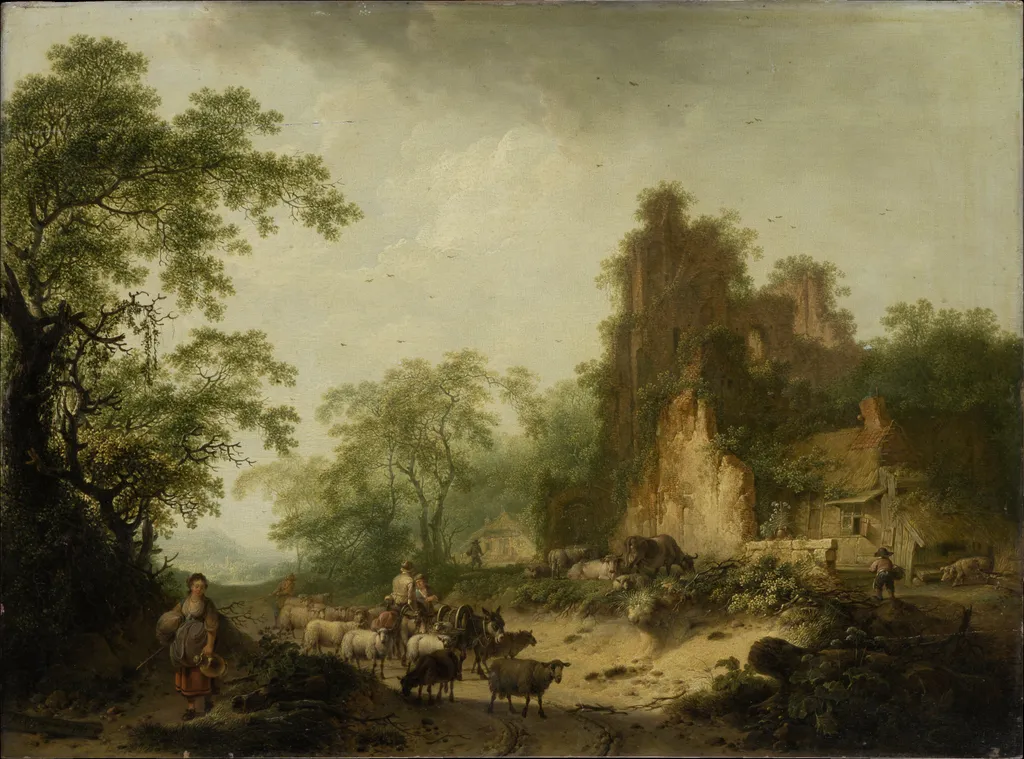
Landscape with Herd of Sheep in Front of a Peasant Hut in a Ruins is an oil painting by the Rococo painting artist Henk Meijer. It dates from 1793 and is held in the collection of the Städel Museum.
About this work
The painting is titled Landscape with Herd of Sheep in Front of a Peasant Hut in a Ruins.
It was created by Henk Meijer in 1785. The fact that it's an oil painting from this time period is interesting, as it shows the artist's skill with this medium.
You can learn more about the artist's style by looking up the work of artist: Henk Meijer.
Overview
Landscape with Herd of Sheep in Front of a Peasant Hut in a Ruins is an oil painting attributed to Dutch artist Henk Meijer. Executed in the late eighteenth century, the work depicts a pastoral scene that includes a flock of sheep, a modest peasant dwelling, and the remnants of a ruined structure. The canvas is part of the collection of the Städel Museum in Frankfurt.
Subject & Meaning
The composition presents a tranquil rural setting, where the movement of the sheep contrasts with the static, deteriorating architecture. The juxtaposition of thriving livestock against a decaying hut may suggest themes of continuity in agrarian life despite the passage of time and the inevitable decline of human habitation.
Technique & Style
Rendered in oil on canvas, Meijer employs a muted palette and careful modeling of light to convey atmospheric depth. The brushwork balances fine detail in the animals with broader, softer strokes for the landscape, reflecting the Dutch tradition of realistic yet idealized countryside scenes prevalent in the late 1700s.
History & Provenance
The painting entered the Städel Museum’s holdings through acquisition in the nineteenth century, though the exact date of purchase is not recorded in the available sources. Its presence in the museum’s collection underscores the institution’s interest in representing Dutch landscape painting from the Enlightenment era.
Context
Created during a period when Dutch artists were revisiting rural motifs, the work aligns with contemporary interests in documenting everyday life and the natural environment. Meijer’s focus on a humble peasant hut and livestock reflects broader Enlightenment concerns with the dignity of labor and the relationship between humans and nature.
Artist & collection

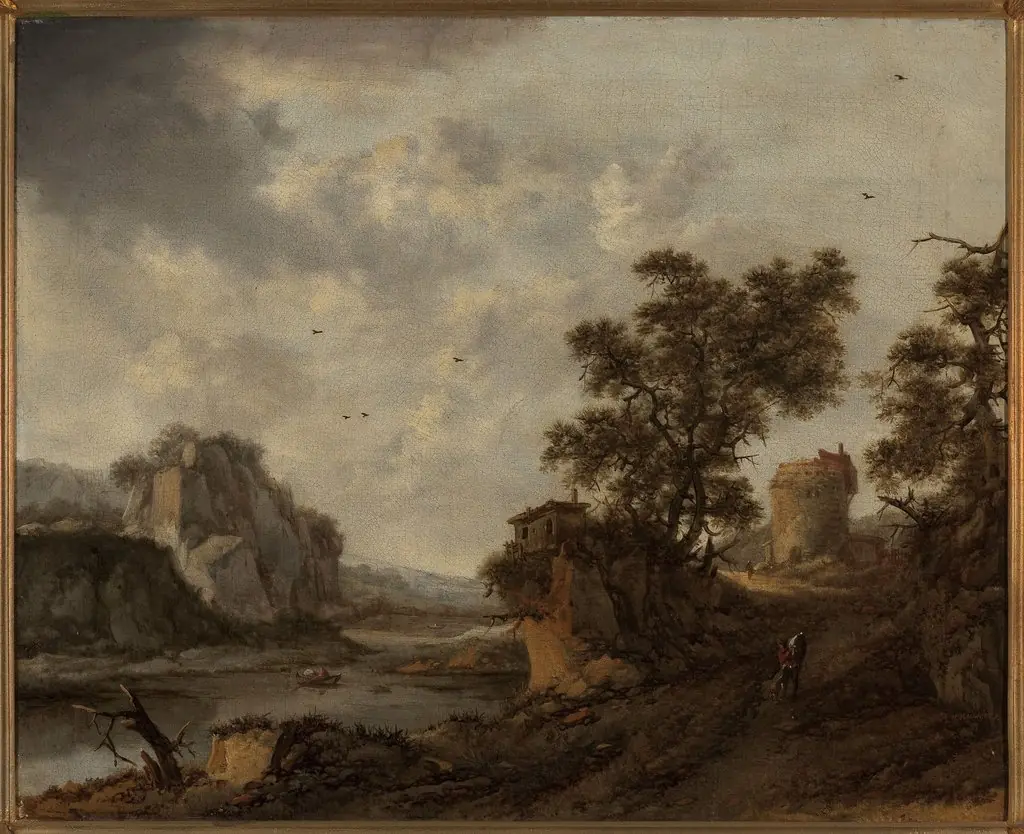 River landscape
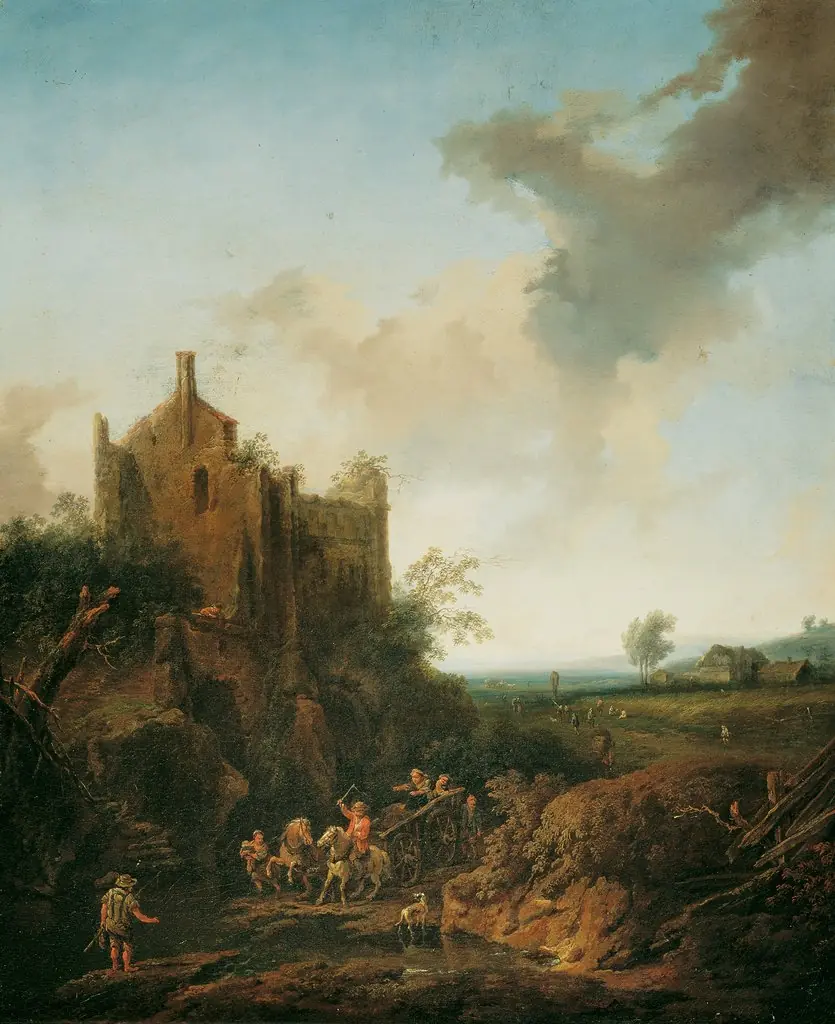 Landscape with a ruined castle near a fordable place in the river
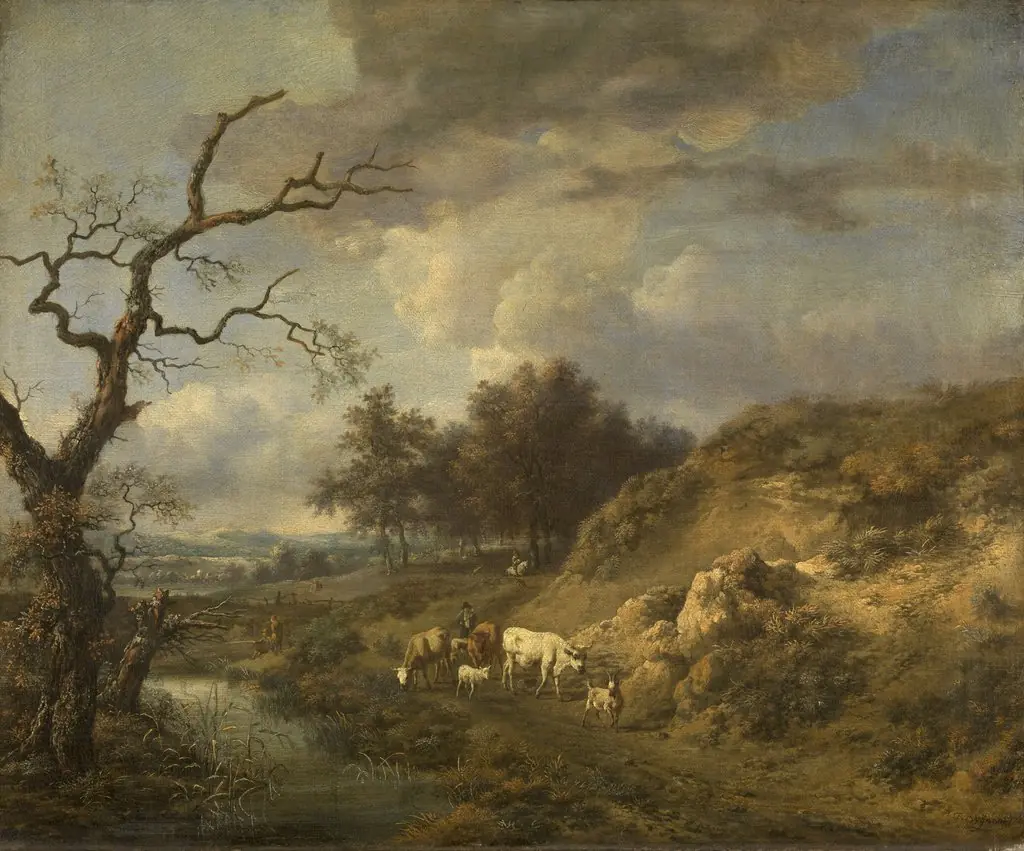 Landschap met vee
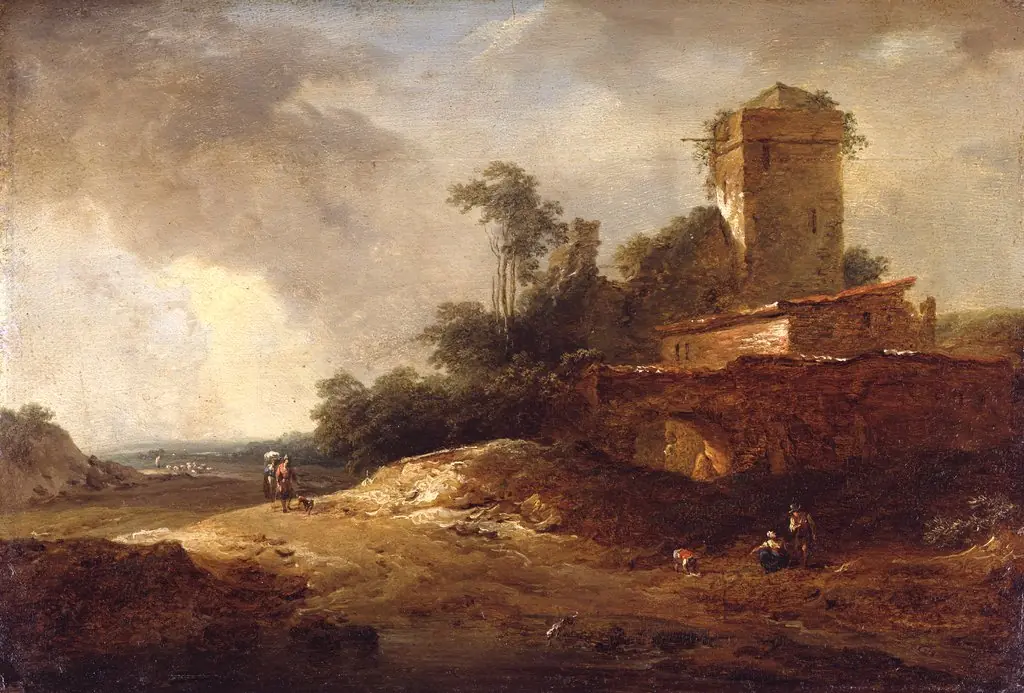 Landscape with a tower
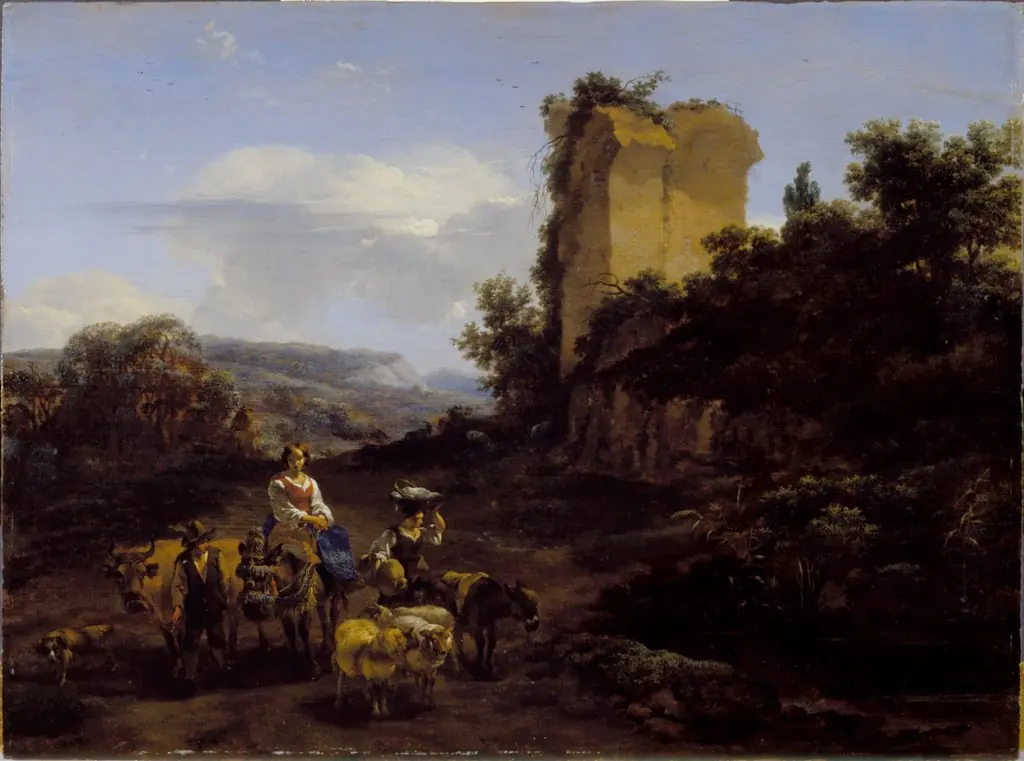 Landscape with Ruins and Travelers
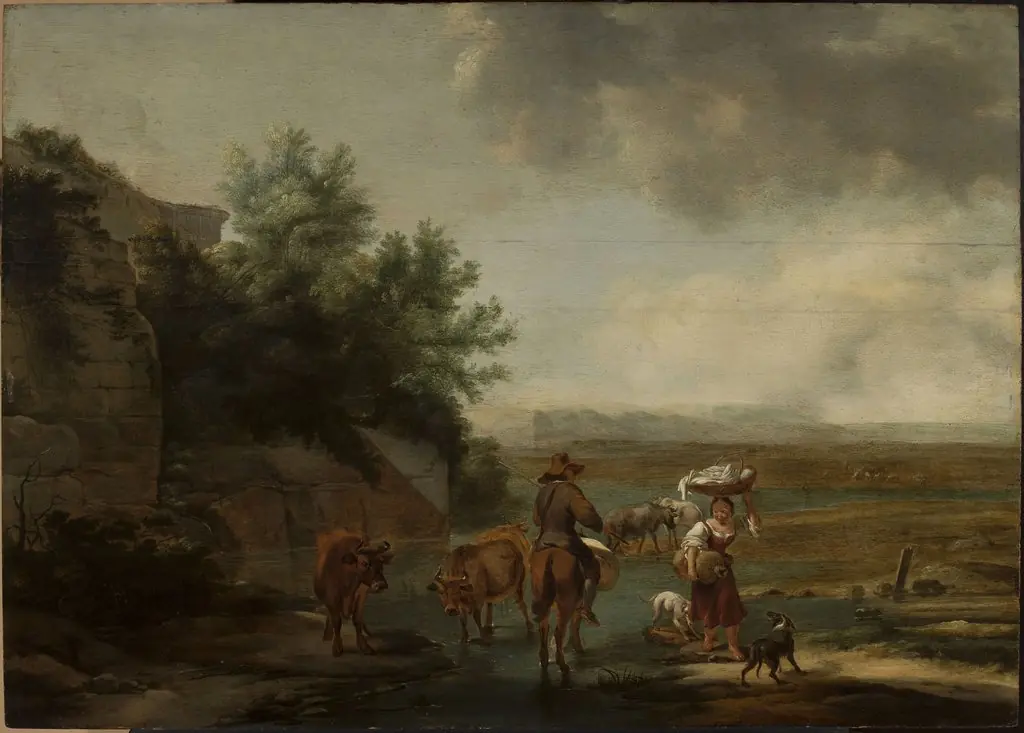 Pastoral landscape
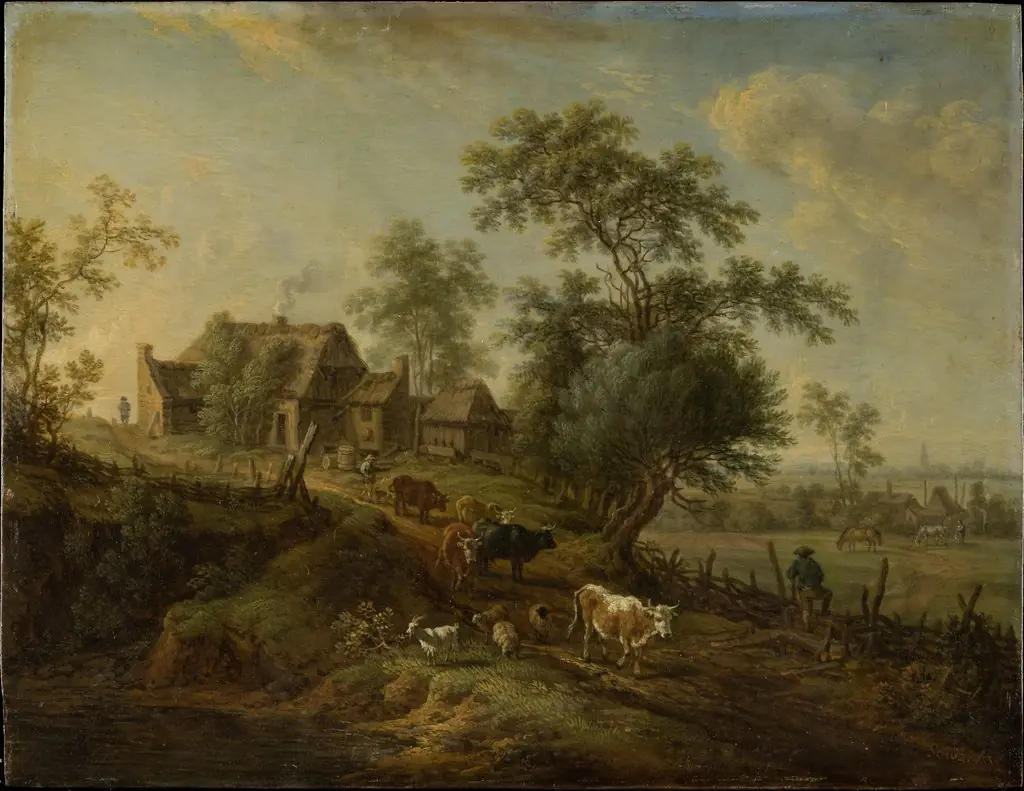 Landscape with Farm Animals on a Road
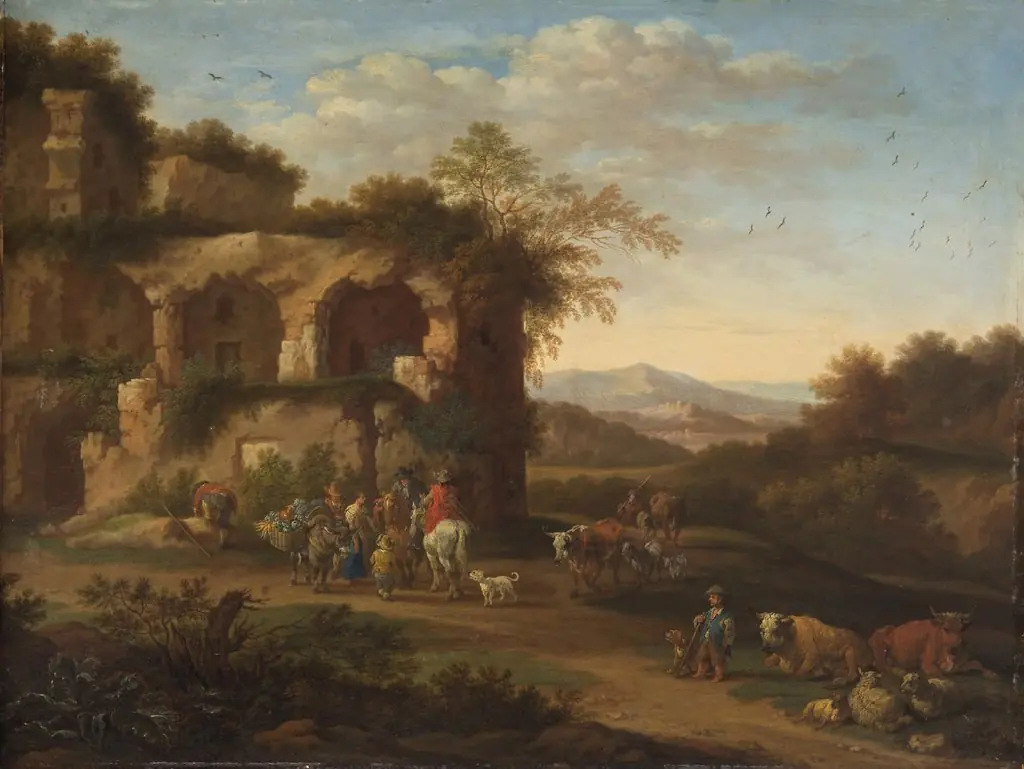 Italian landscape with antique ruins and herders
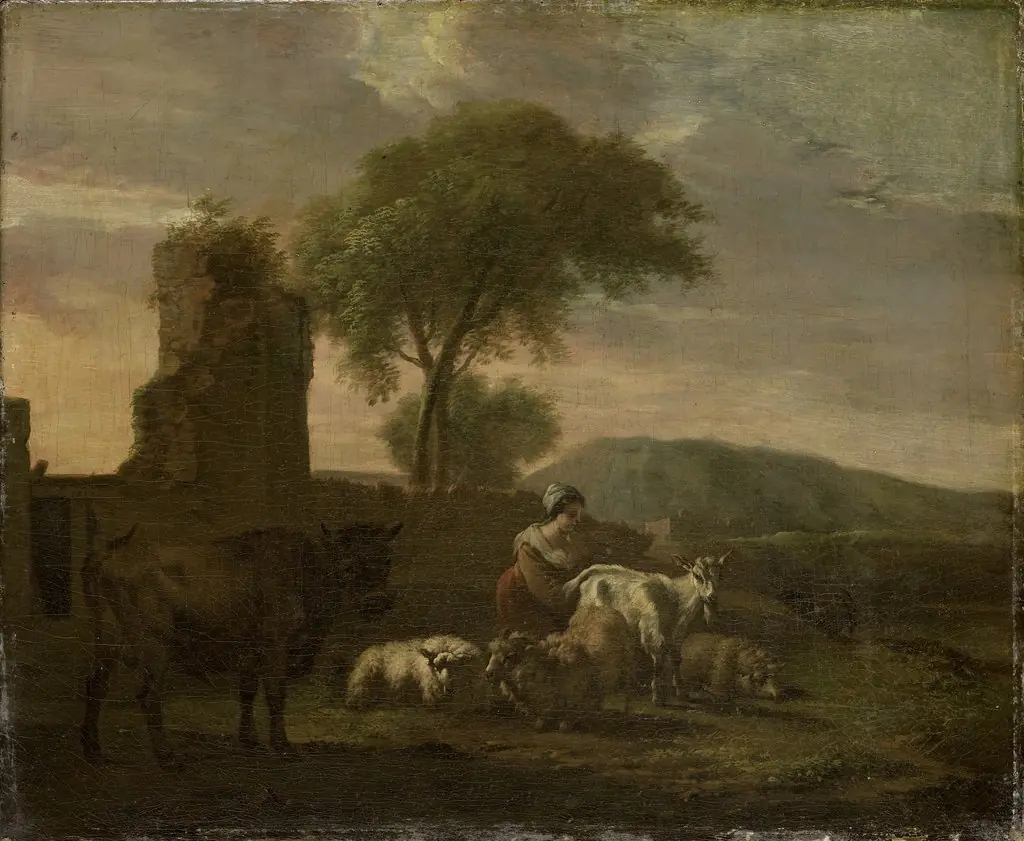 Italian landscape with sheperdess and flocks
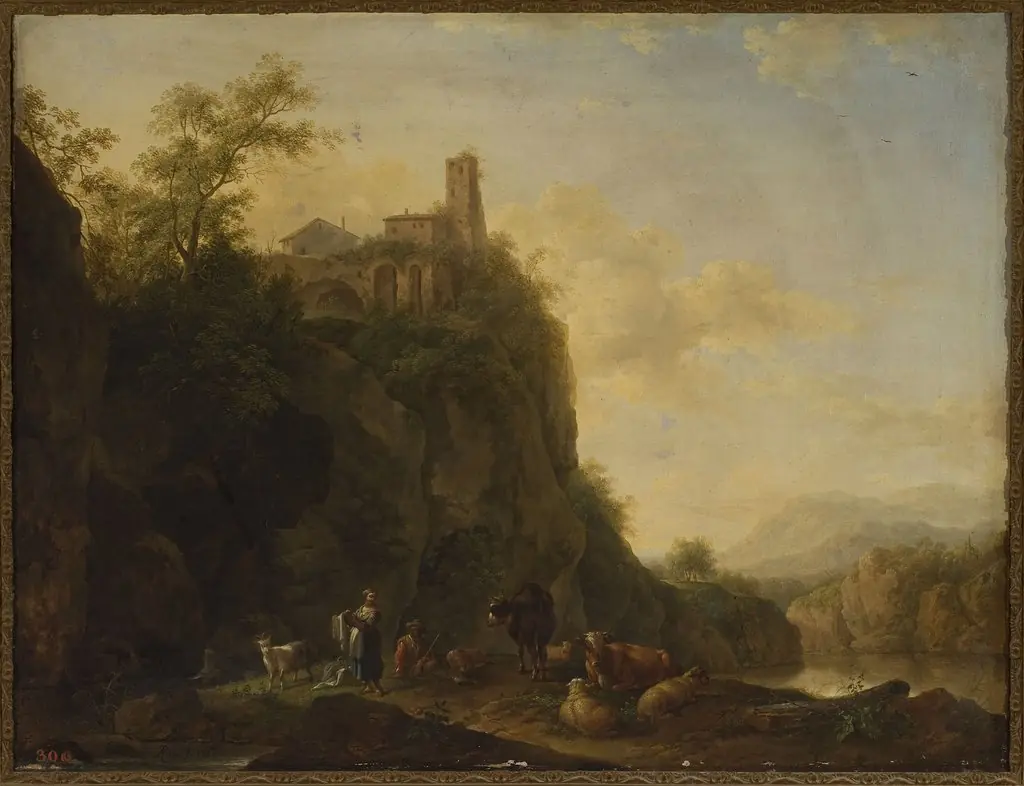 Mountain landscape with cattle