Artwork
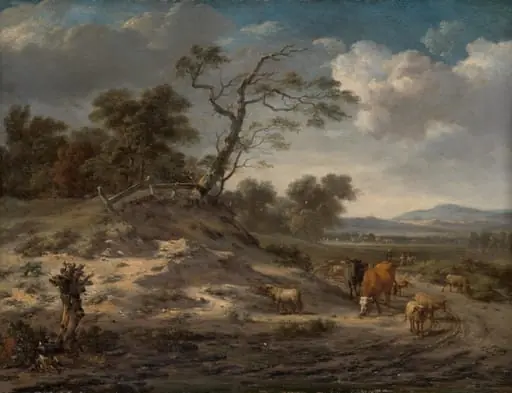
Landschap met vee
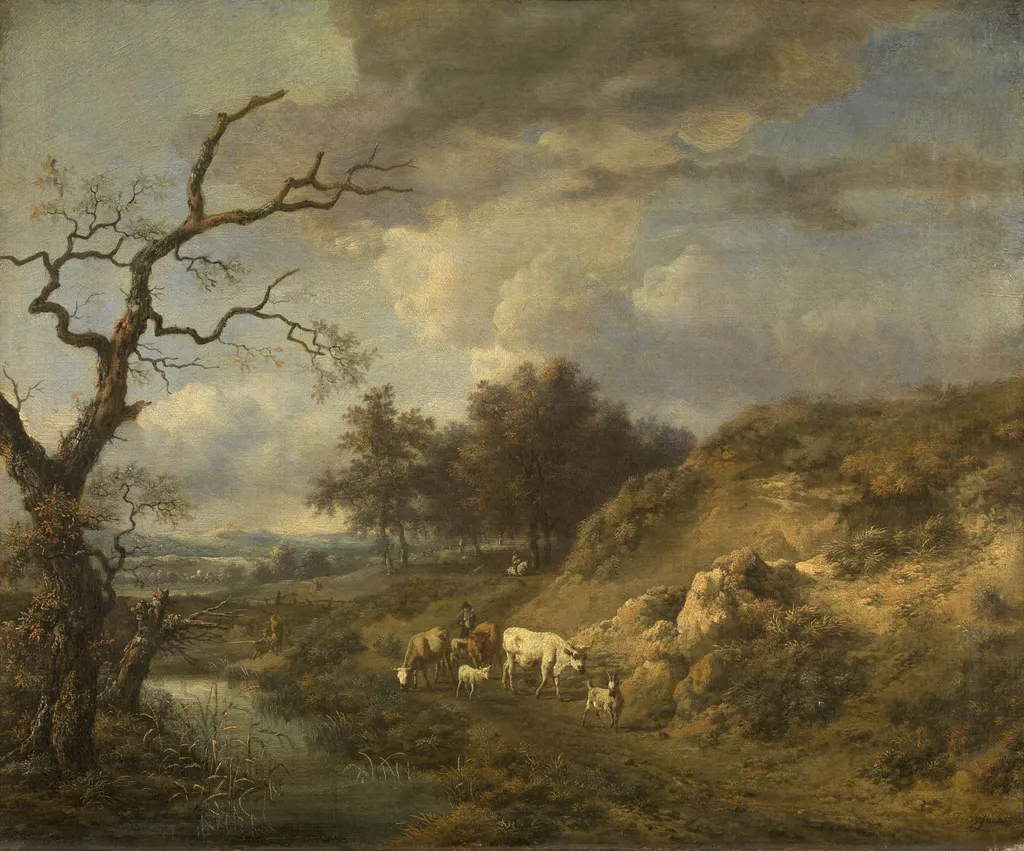
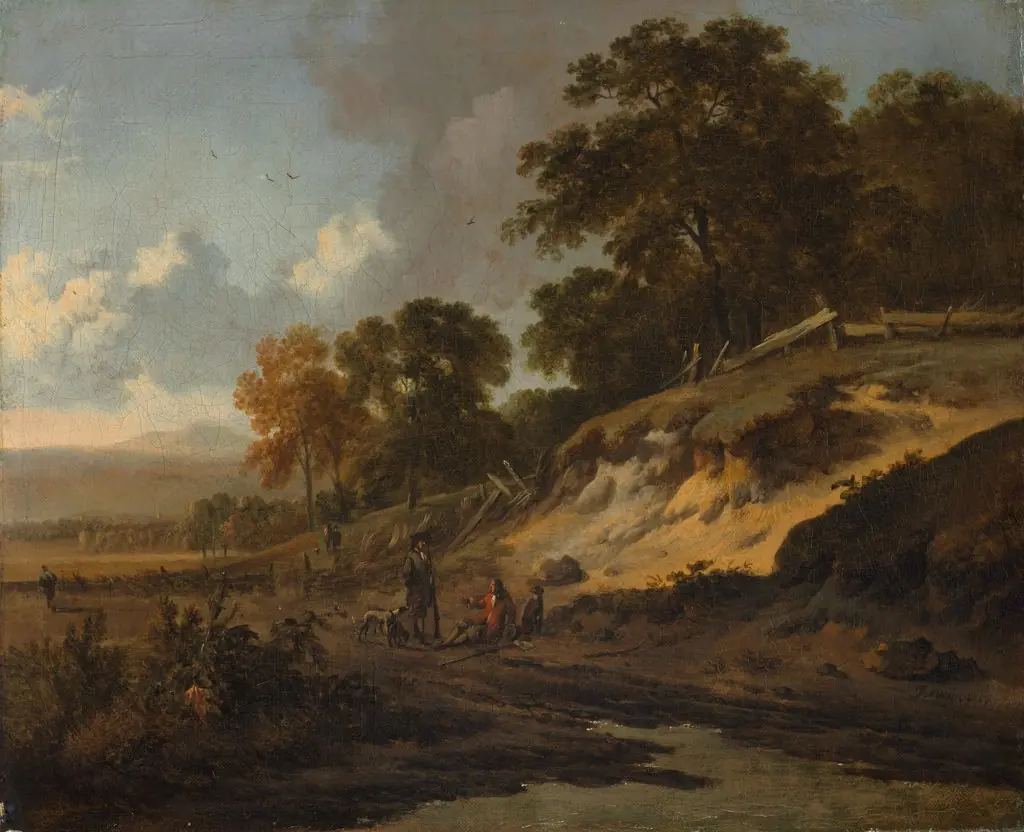
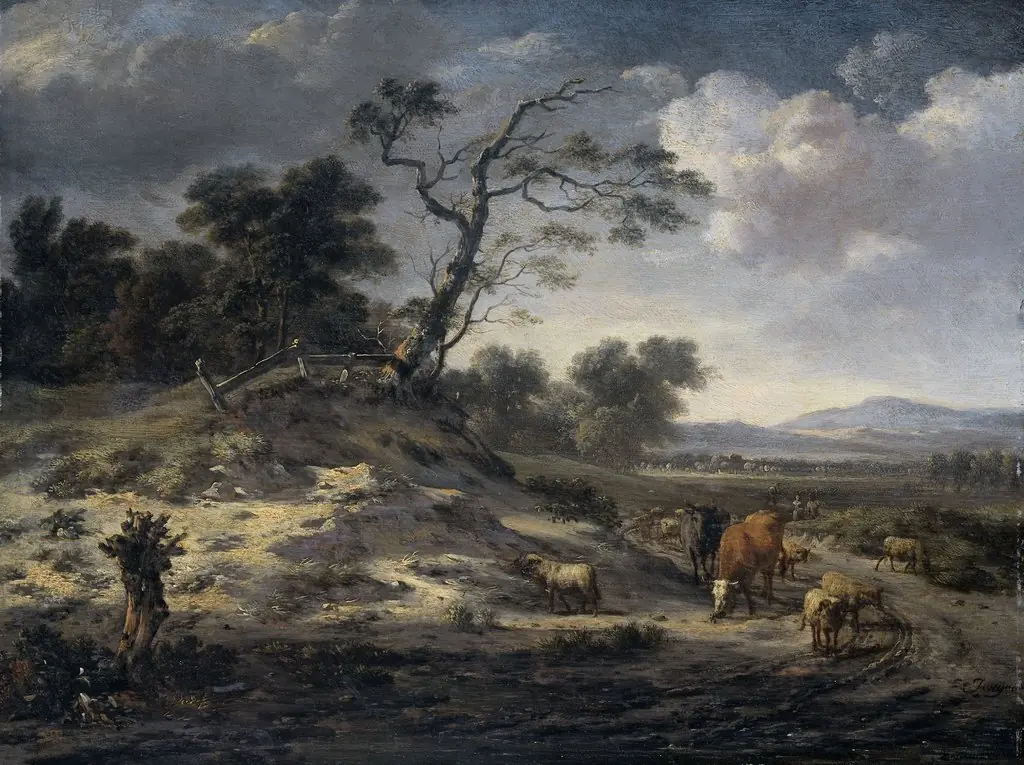
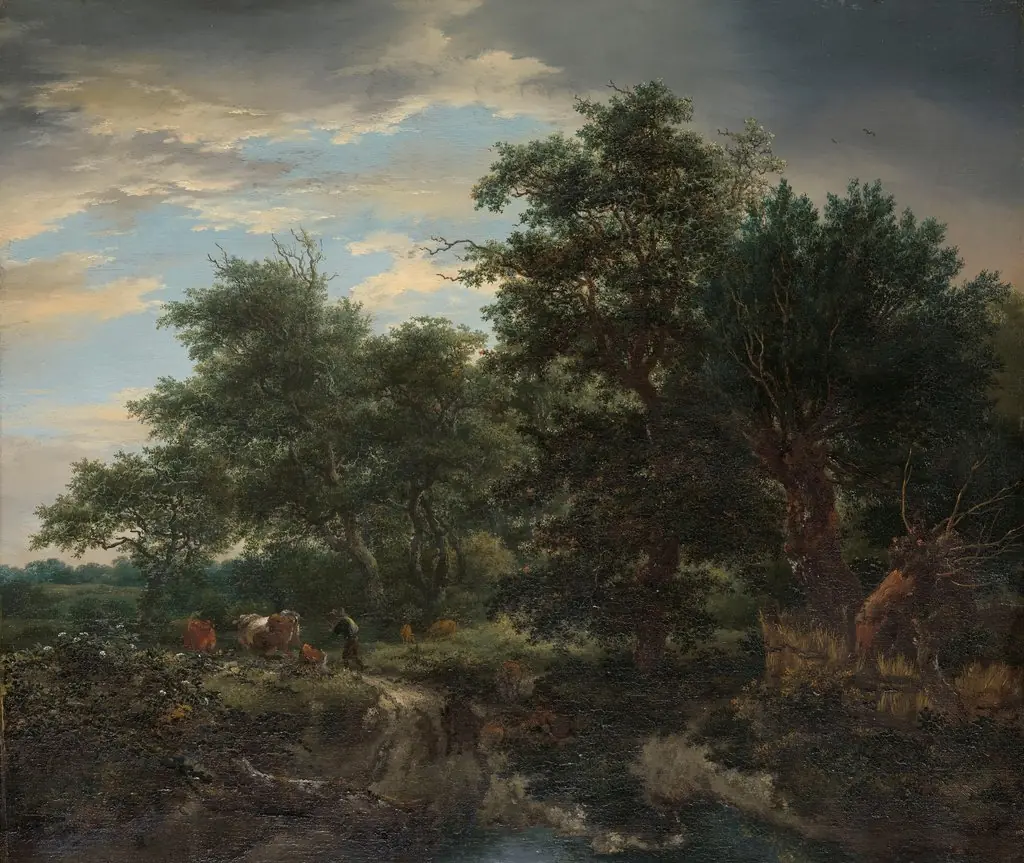
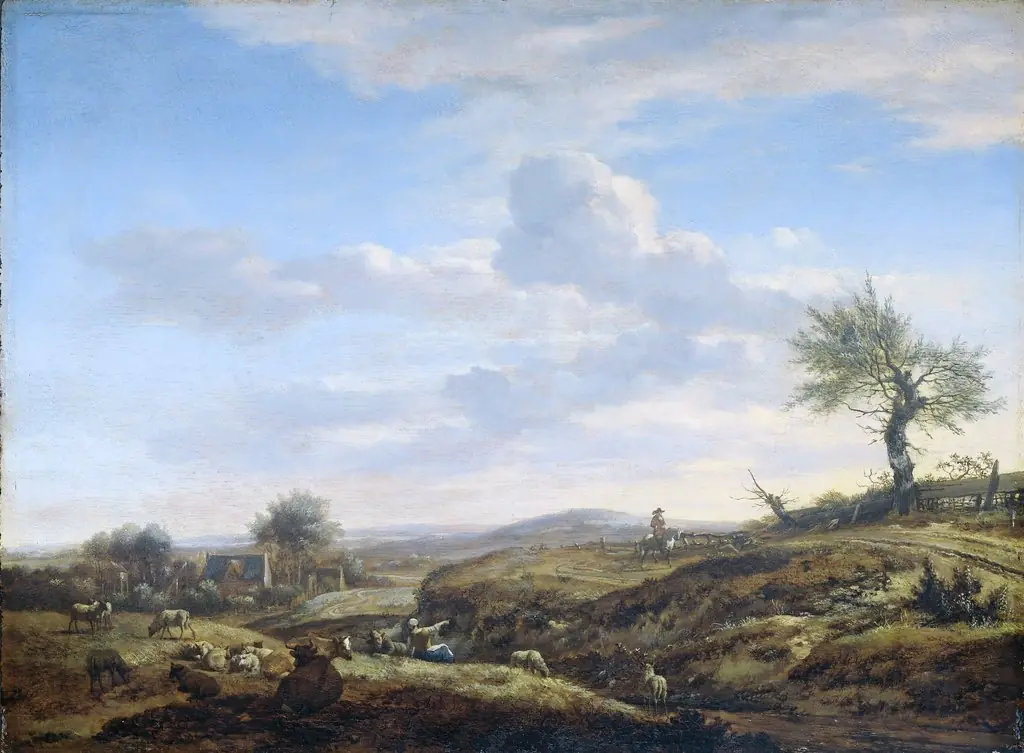
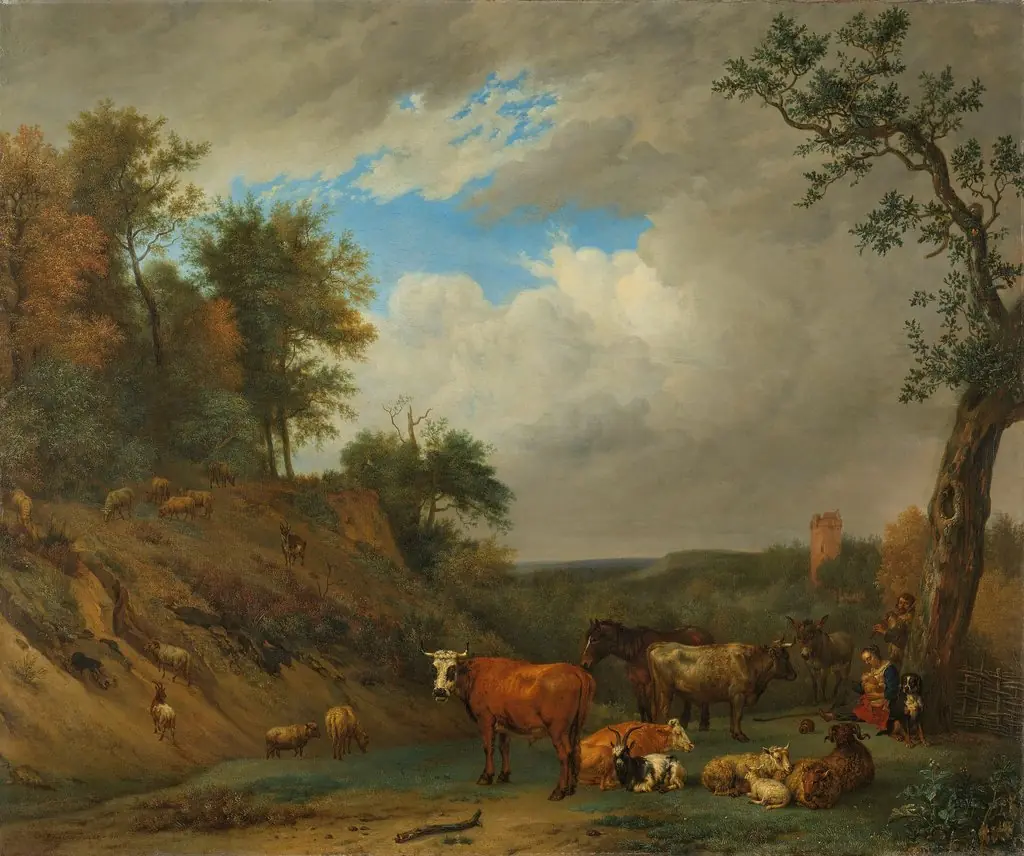
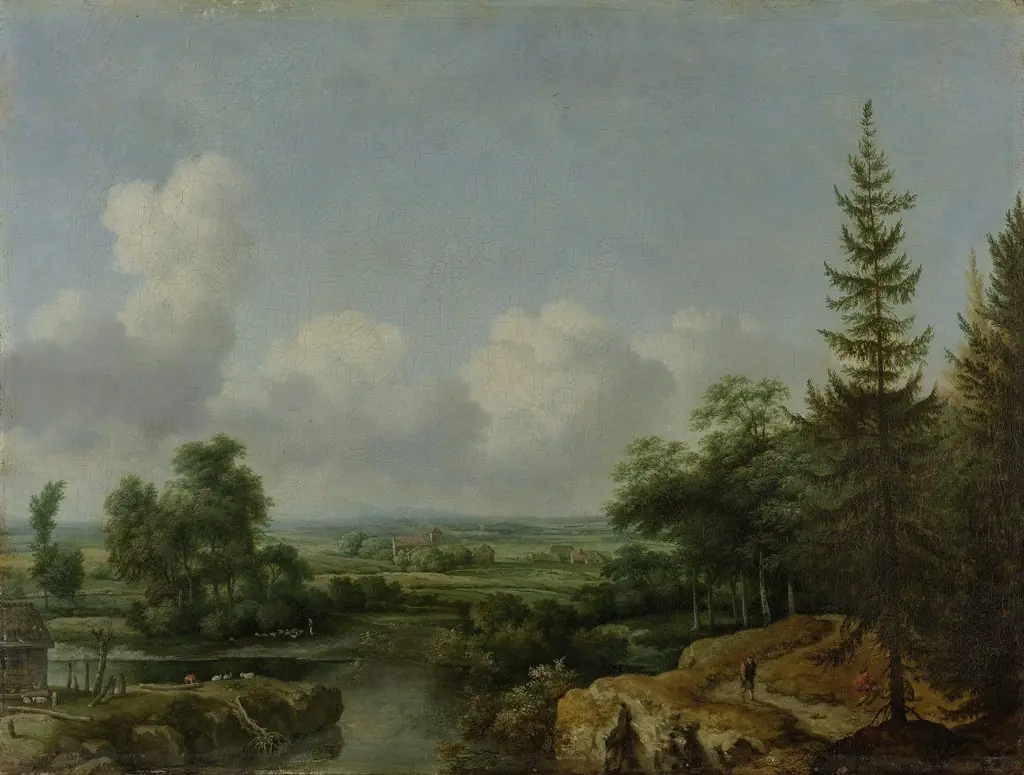
Landschap met vee is an oil painting by the Hague School Movement artist Jan Wijnants. It dates from 1668 and is held in the collection of the Royal Museum of Fine Arts Antwerp.
About this work
Overview
Its composition balances open sky with grounded terrain, creating a calm, measured rhythm typical of mid-17th-century Dutch landscape traditions.
This oil painting, dated around 1668, is attributed to Jan Wijnants, a Dutch landscape artist active during the Golden Age. It is part of the collection at the Royal Museum of Fine Arts Antwerp. The work presents a quiet rural scene, emphasizing natural elements over human activity. Its composition balances open sky with grounded terrain, creating a calm, measured rhythm typical of mid-17th-century Dutch landscape traditions.
Subject & Meaning
The scene features a small herd of cattle and goats grazing near a still body of water, surrounded by sparse vegetation and a lone, leafless tree on the left. The animals, unremarkable in number and posture, suggest daily pastoral life rather than symbolic narrative. The absence of people or structures reinforces a sense of solitude and natural order, reflecting contemporary Dutch values of harmony with the land.
Technique & Style
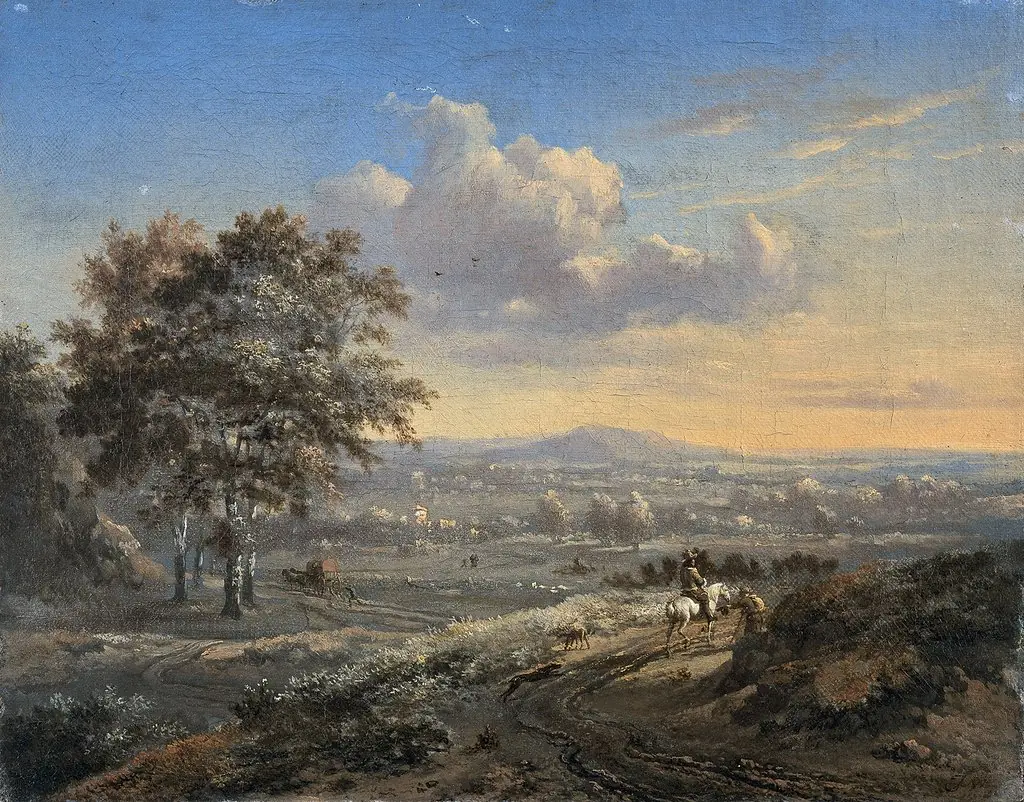
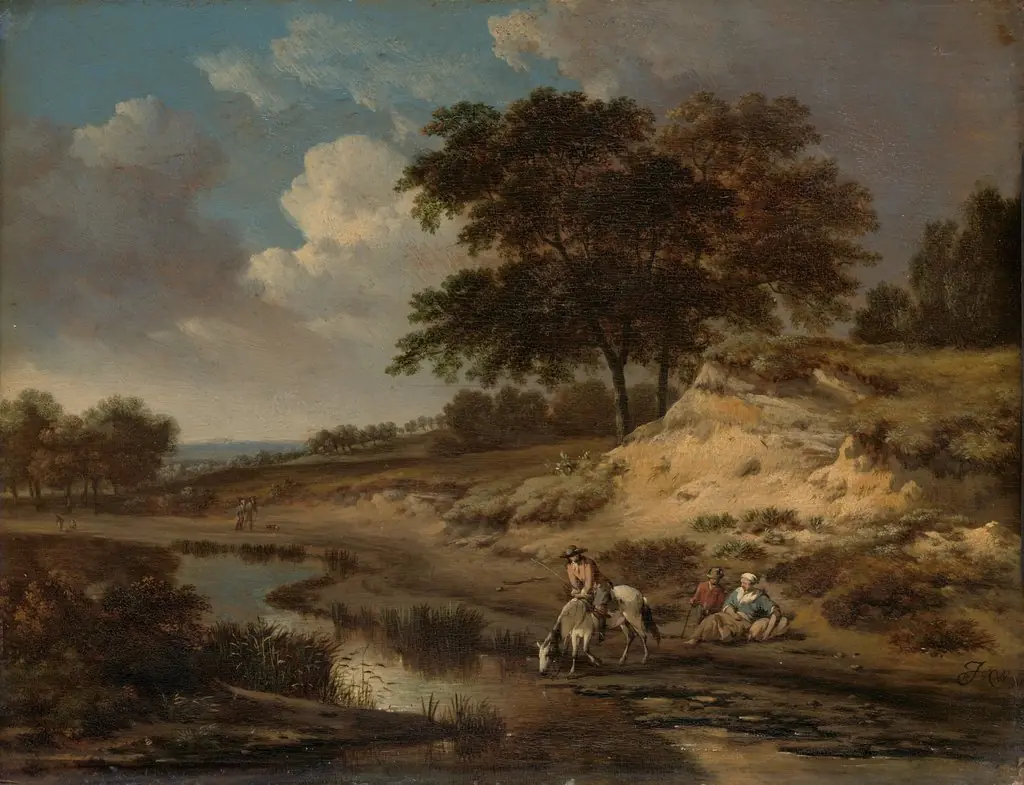
Wijnants employs loose, visible brushwork to render foliage, clouds, and animal forms, giving the surface a tactile quality. Light filters through a cloud-dappled sky, casting soft shadows that define the rolling hill and ground plane. Color is muted—ochres, grays, and pale greens—yet carefully modulated to suggest atmospheric depth. The technique avoids idealization, favoring observed texture over polished finish.
History & Provenance
The painting entered the Royal Museum of Fine Arts Antwerp’s collection in the 19th century, likely through acquisition from a private Belgian or Dutch estate. Its documented history before that is unclear, though it aligns stylistically with Wijnants’ known output from the 1660s. No significant alterations or restorations are recorded, preserving its original surface and tonal balance.
Context
Created during the height of Dutch landscape painting, this work reflects a broader trend toward intimate, unembellished views of the countryside. Unlike grand Italianate scenes, Wijnants’ approach emphasizes local topography and subtle light effects. His style was influenced by artists like Jacob van Ruisdael, yet retained a quieter, more restrained character suited to northern Dutch sensibilities.
Legacy
While not among Wijnants’ most widely reproduced works, this painting exemplifies his consistent focus on naturalism and atmospheric nuance. It contributes to the understanding of how Dutch artists captured everyday rural environments without narrative or drama. Its presence in a major Belgian museum underscores its recognition within regional art historical discourse.
Own this work as a print
Artist & collection