Artwork
Statue of Venus and Cupid, Great Exhibition 1851
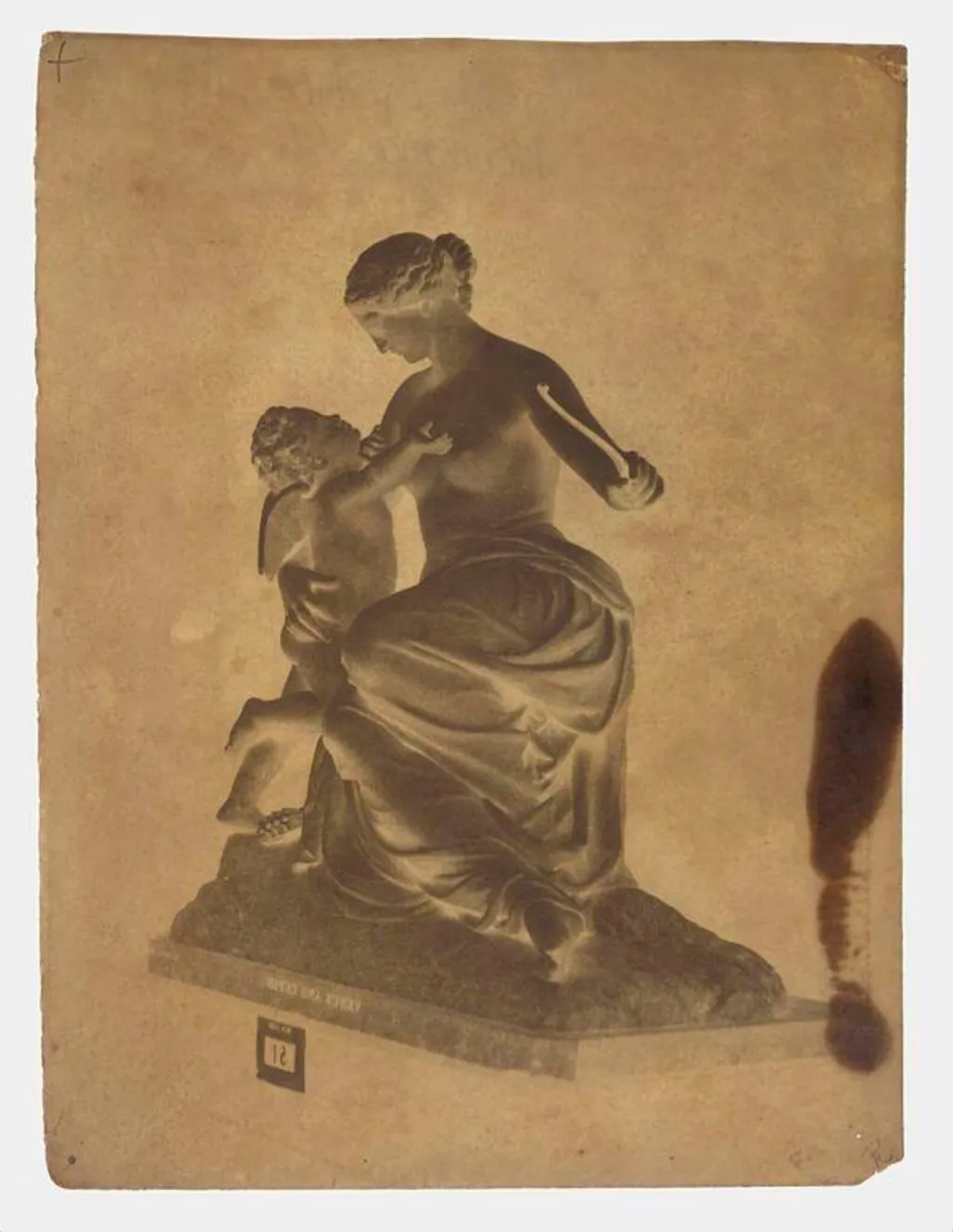
Statue of Venus and Cupid, Great Exhibition 1851 is a photographic photography by the Impressionist artist Nicolaas Henneman. It dates from 1851 and is held in the collection of the Victoria and Albert Museum. A sepia-toned, unmounted waxed paper negative photograph captures a sculpture of Venus and Cupid.
About this work
The sculpture appears to be made of stone or marble, and the photograph captures the intricate details of the figures' faces and bodies.
This is a photograph of a sculpture. The sculpture depicts a woman and a child. The woman is kneeling, and the child is standing in front of her. The woman is wearing a long dress that drapes around her body, and the child is nude. The photograph is sepia-toned and has a rough, textured border.
The sculpture appears to be made of stone or marble, and the photograph captures the intricate details of the figures' faces and bodies. The woman's hair is pulled back, and the child's hair is curly. The photograph is mounted on a piece of paper with a rough edge.
The photograph is a representation of a sculpture that was displayed at the Great Exhibition in 1851. If you're interested in learning more about this style of photography, you might want to look into the work of Henneman, Nicolaas.
Overview
A sepia-toned, unmounted waxed paper negative photograph captures a sculpture of Venus and Cupid. The image features a kneeling female figure with a draped, long dress and a nude, winged child standing before her, showcasing intricate facial and bodily details.
Subject & Meaning
The sculpture depicted is an interpretation of the classical mythological figures Venus (goddess of love) and Cupid (god of desire), symbolizing their iconic relationship. Venus is shown with her arm around Cupid, emphasizing maternal affection amidst mythological connotations.
Technique & Style
The photograph's rough, textured border and sepia tone reflect mid-19th-century photographic techniques. The sculpture itself, likely of stone or marble, exhibits classical influences in its rendering of drapery, hairstyles (Venus' pulled back, Cupid's curly), and naturalistic poses.
History & Provenance
The sculpture was showcased at the 1851 Great Exhibition in London, a prominent international event celebrating industrial and artistic achievements. The photograph serves as a record of the sculpture's exhibition.
Context
Created during a period of revived interest in classical antiquity, the sculpture and its photographic capture align with the Victorian era's appreciation for both ancient themes and emerging photographic technology.
Legacy
While the sculpture's long-term impact is not prominently documented, the photograph remains a historical artifact of the Great Exhibition and a testament to early photographic documentation of art.
Artist & collection
Artist
These are early photographs of statues and sculpture displayed at the 1851 Great Exhibition in London.

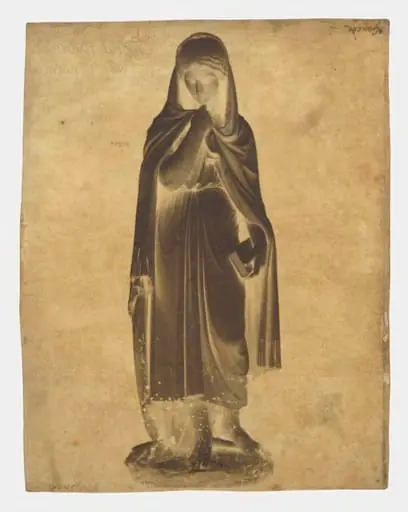 Sculpture of a Woman, Great Exhibition 1851
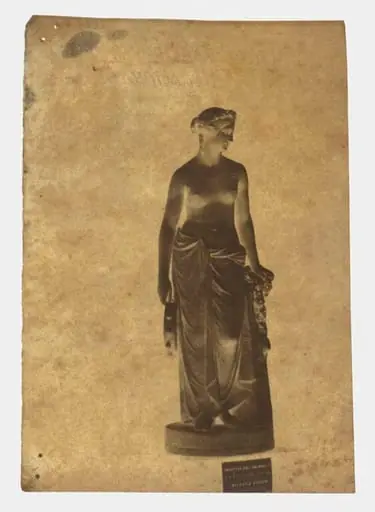 Dancing Girl Reposing, Prize Statue, Great Exhibition 1851
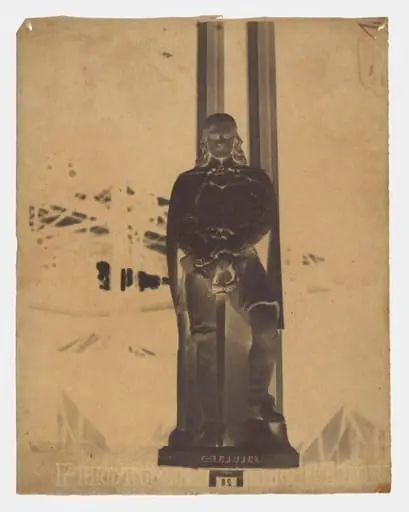 Statue titled Falkland, Great Exhibition 1851
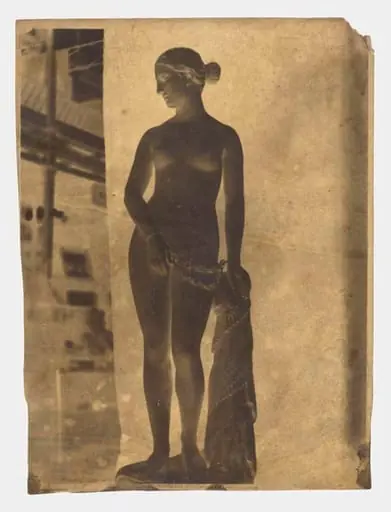 Sculpture of a Female Nude, Great Exhibition 1851
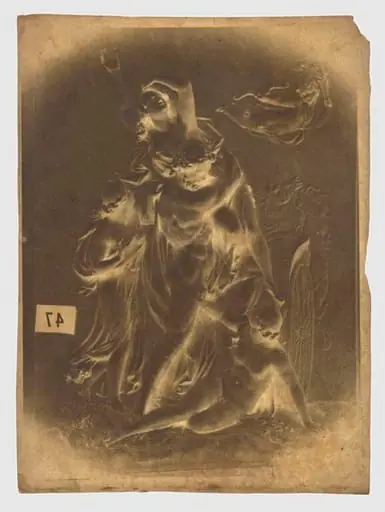 Stone Relief, Great Exhibition 1851
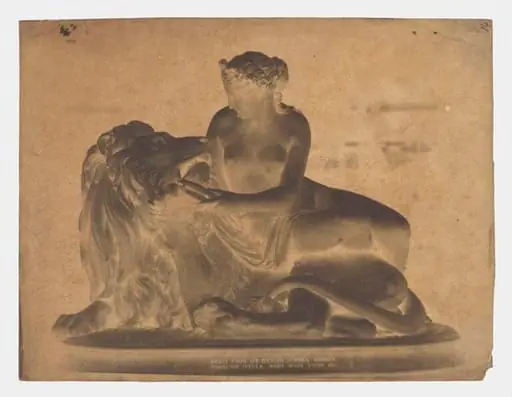 Statue of Female Nude with Lion, Great Exhibition 1851
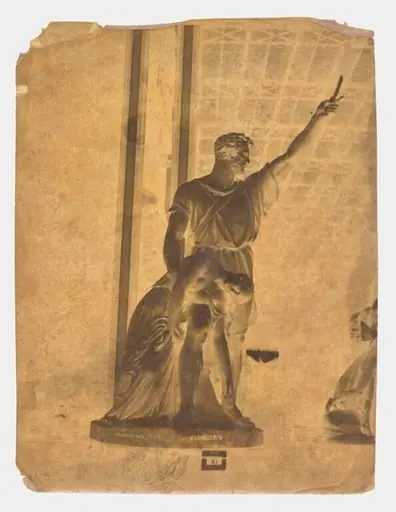 Statue titled Virginius, Great Exhibition 1851
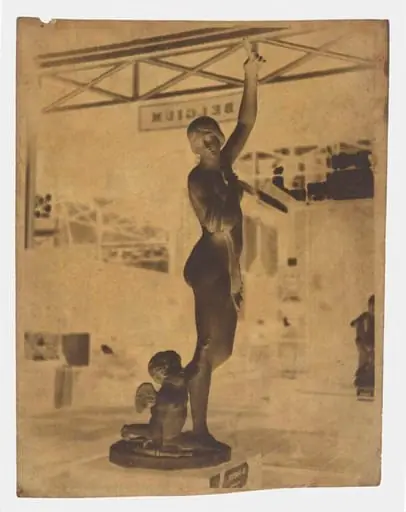 Statue of Female Nude with Cherub, Great Exhibition 1851