Artwork
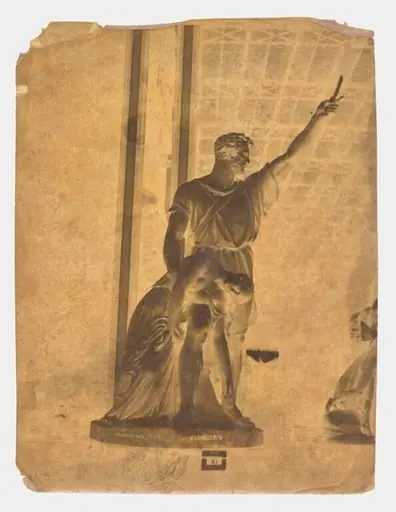
Statue of Female Nude with Cherub, Great Exhibition 1851
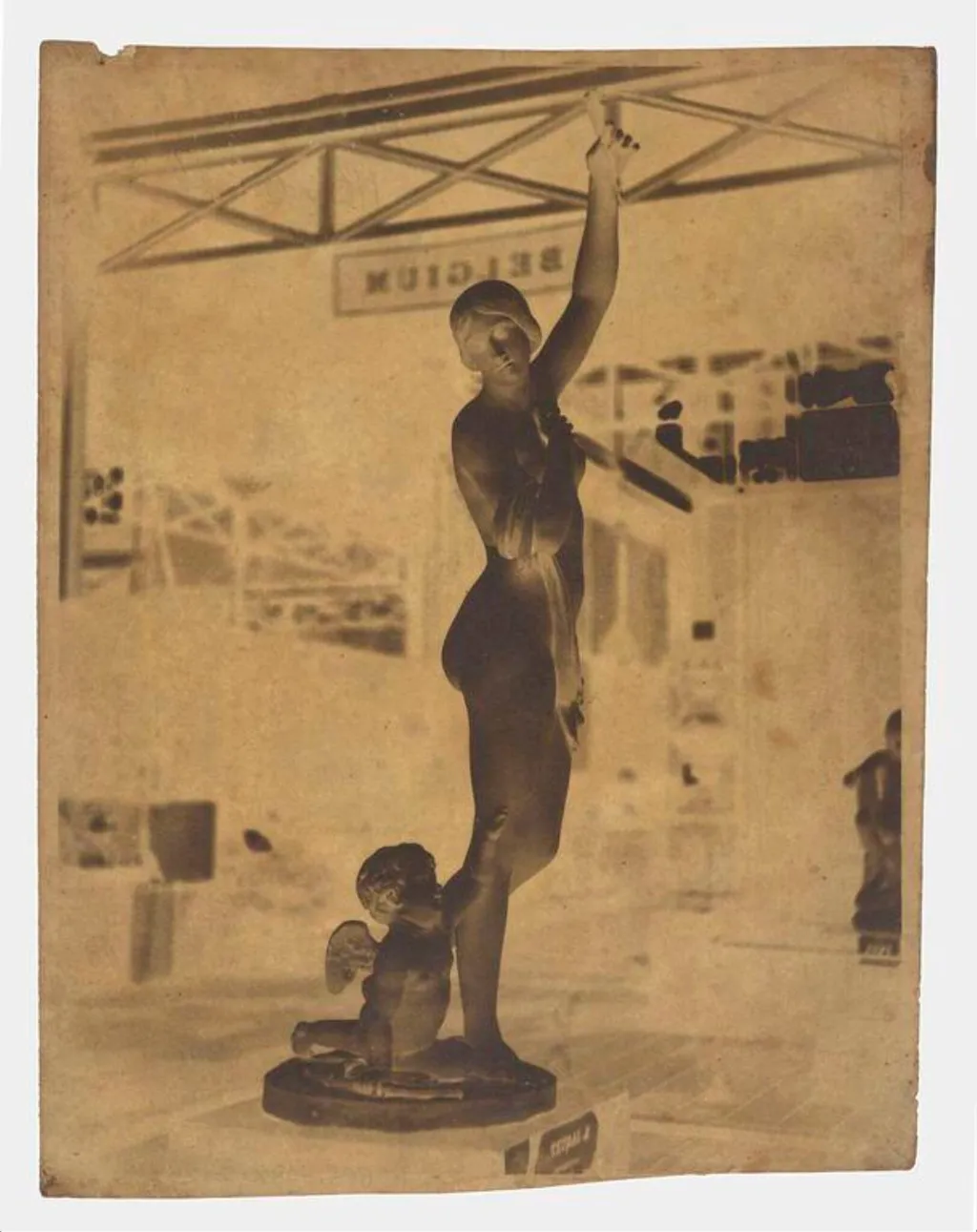
Statue of Female Nude with Cherub, Great Exhibition 1851 is a photographic photography by the Impressionist artist Nicolaas Henneman. It dates from 1851 and is held in the collection of the Victoria and Albert Museum. A waxed paper negative captures a small sculptural group displayed at the Great Exhibition of 1851.
About this work
Overview
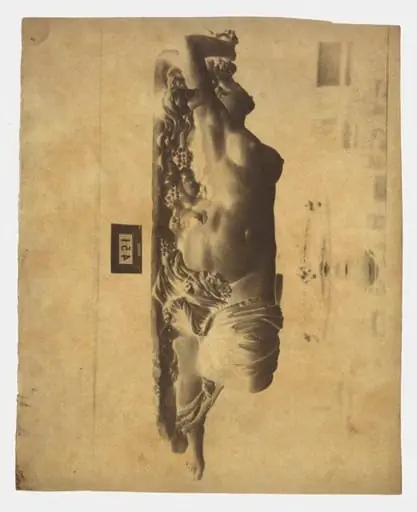
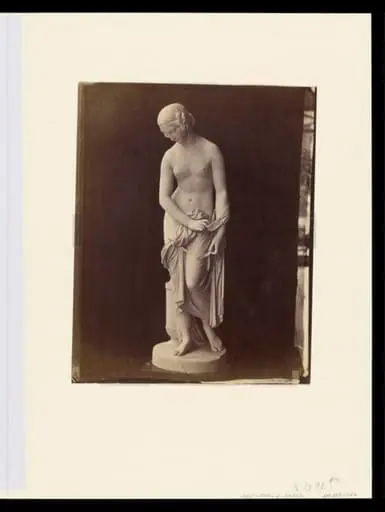
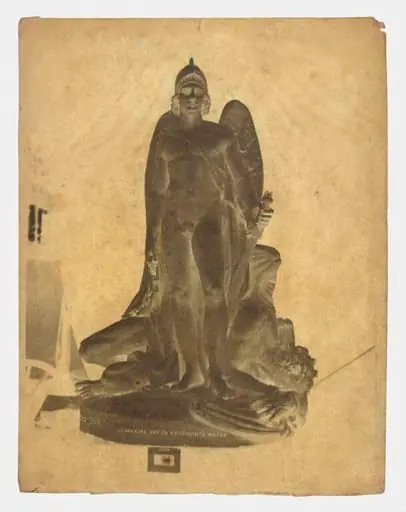
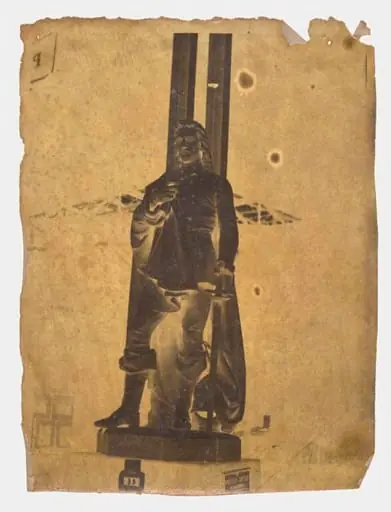
A waxed paper negative captures a small sculptural group displayed at the Great Exhibition of 1851. The image shows a standing female nude, one arm raised, with a cherub at her base holding a shield-like object. The background is indistinct, suggesting a crowded exhibition hall, and the photograph’s faded state reflects its age and the limitations of early photographic processes.
Subject & Meaning
The sculpture depicts a classical female figure, likely symbolizing an idealized virtue or muse, accompanied by a cherub that may represent innocence or divine protection. The presence of a shield suggests allegorical themes—perhaps defense of beauty, truth, or art. The pairing reflects 19th-century tendencies to blend mythological motifs with moral or aesthetic narratives in public displays.
Technique & Style
The sculpture is rendered in a neoclassical style, with smooth contours and restrained detail typical of academic sculpture of the period. The photograph, as a waxed paper negative, exhibits soft focus and tonal gradation, characteristic of early photographic technology. The medium’s limitations emphasize form over texture, aligning with the sculpture’s idealized aesthetic.
History & Provenance
The sculpture was exhibited at the Great Exhibition in London, 1851, a global showcase of industrial and artistic achievement. The photograph likely served as a documentary record for visitors or collectors. It is now held in the Victoria and Albert Museum’s collection, where it contributes to the archive of 19th-century exhibition culture and photographic practice.
Context
The Great Exhibition featured hundreds of decorative and fine art objects from across the British Empire and beyond. Sculptures like this, often small-scale and allegorical, were common in such displays, intended to elevate public taste. The photograph’s blurred crowd and numbered signage reflect the exhibition’s scale and its role as a public spectacle of modernity.
Legacy
This image preserves a moment in the history of art dissemination, when photography began to document and circulate sculptural works beyond the exhibition hall. It illustrates how early photographic techniques shaped public perception of art, and how such objects were integrated into broader cultural narratives of refinement and progress.
Artist & collection
Artist
These are early photographs of statues and sculpture displayed at the 1851 Great Exhibition in London.

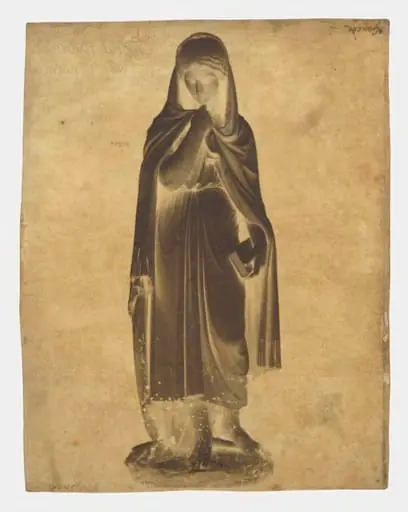 Sculpture of a Woman, Great Exhibition 1851
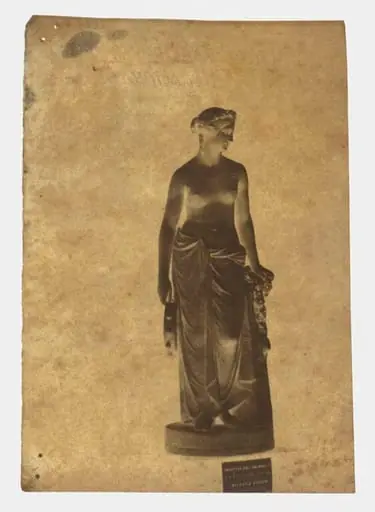 Dancing Girl Reposing, Prize Statue, Great Exhibition 1851
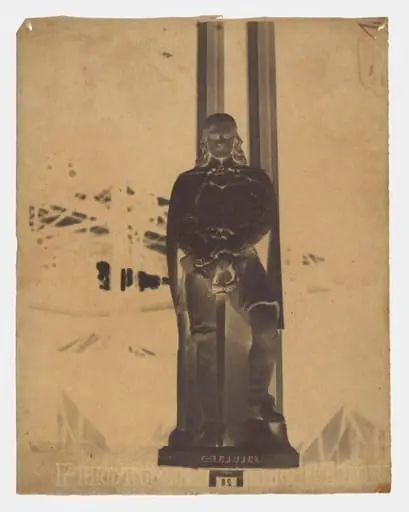 Statue titled Falkland, Great Exhibition 1851
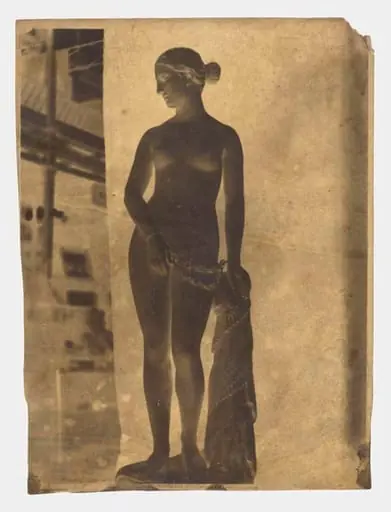 Sculpture of a Female Nude, Great Exhibition 1851
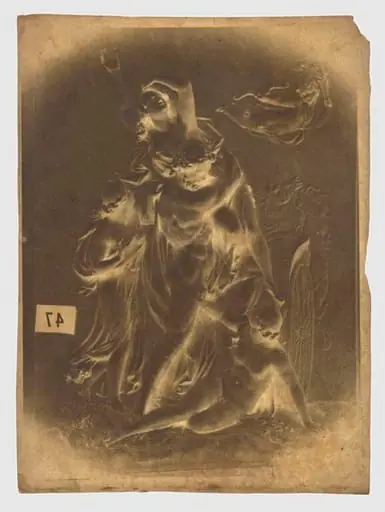 Stone Relief, Great Exhibition 1851
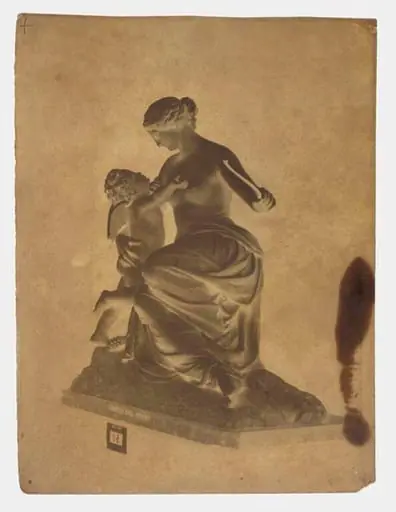 Statue of Venus and Cupid, Great Exhibition 1851
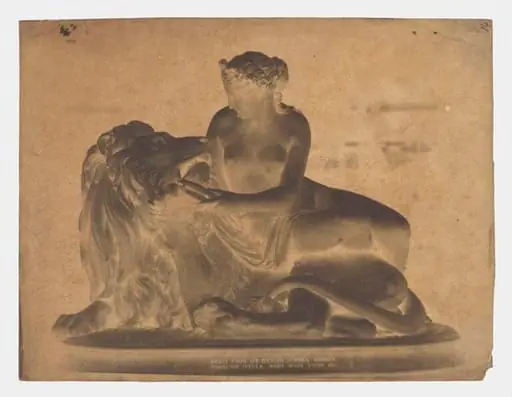 Statue of Female Nude with Lion, Great Exhibition 1851
 Statue titled Virginius, Great Exhibition 1851