Artwork
Untitled
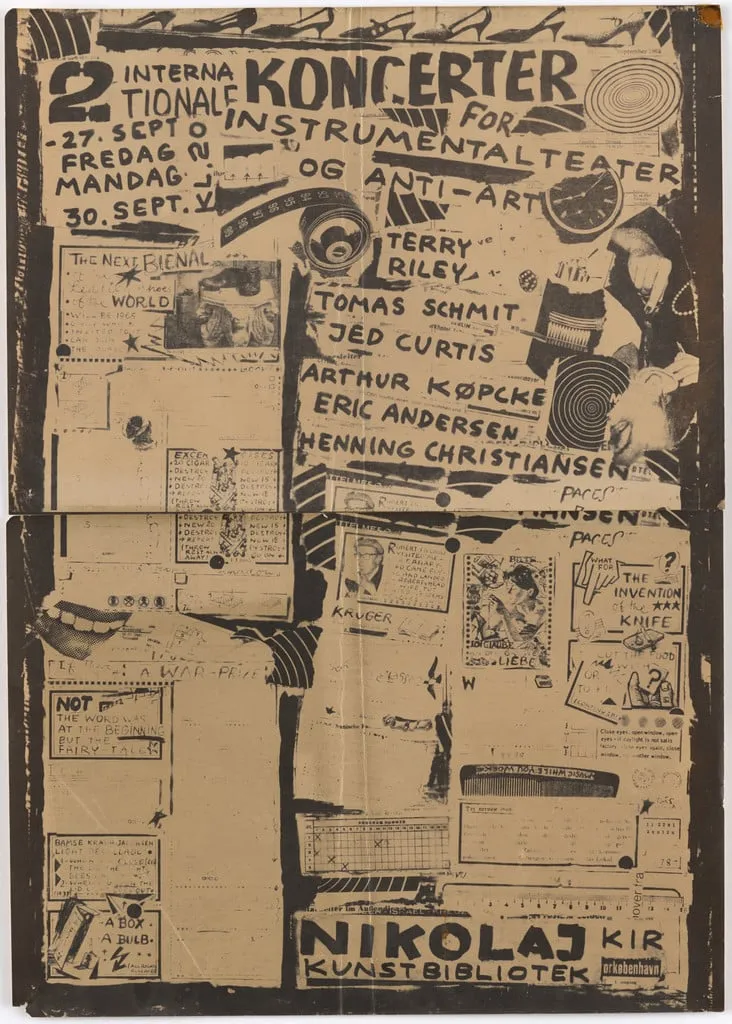
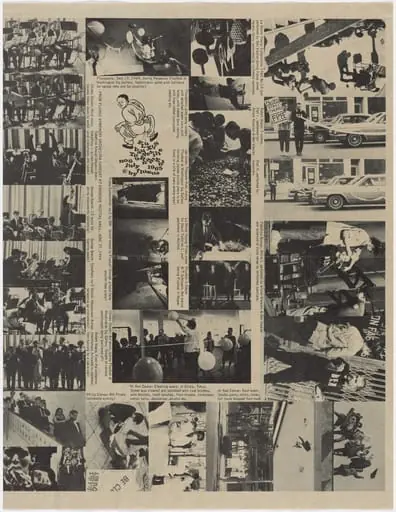
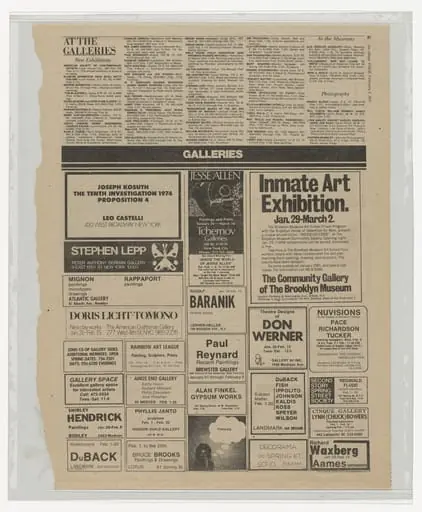
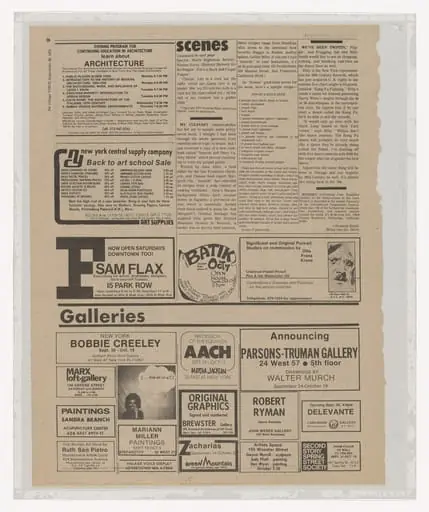
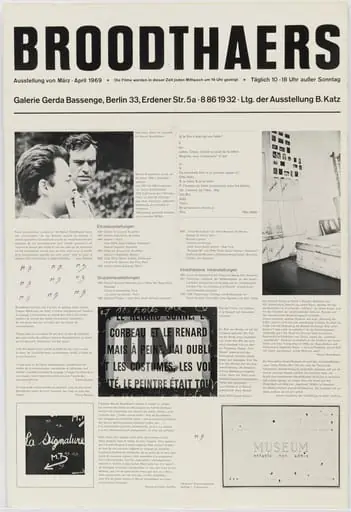
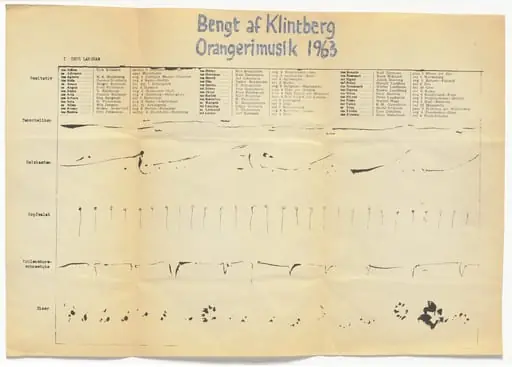
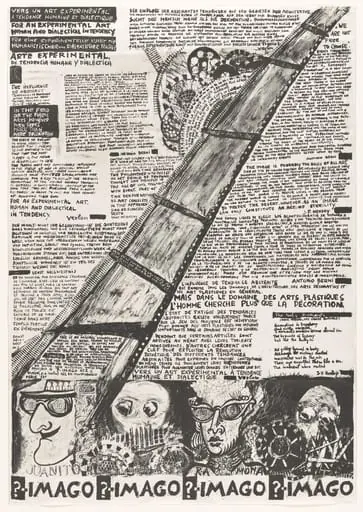
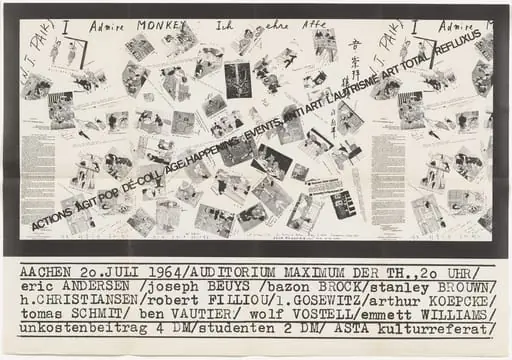
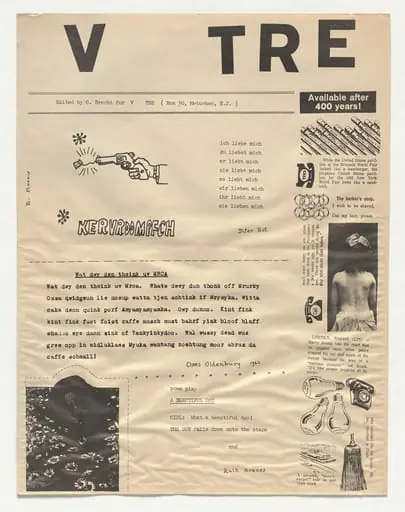
Untitled is a silver print by Terry Riley, Tomas Schmit, Jed Curtis, Arthur Köpcke, Eric Andersen, Designer Unidentified Henning Christiansen. It dates from 1963 and is held in the collection of the Museum of Modern Art.
About this work
Overview
This gelatin silver print, dated 1963, is a collaborative work by a group of artists associated with the Fluxus movement, including Henning Christiansen, Terry Riley, Tomas Schmit, Jed Curtis, Arthur Köpcke, and Eric Andersen. The designer remains unidentified. The image is part of The Museum of Modern Art’s collection, reflecting the experimental spirit of early 1960s avant-garde practices that blurred boundaries between visual art, music, and performance.
Subject & Meaning
The image lacks a clear representational subject, instead presenting abstract tonal variations that suggest documentation of a transient event.
The image lacks a clear representational subject, instead presenting abstract tonal variations that suggest documentation of a transient event. Its ambiguity aligns with Fluxus ideals, emphasizing process over product and inviting open interpretation. The work functions less as a conventional photograph and more as a trace of an ephemeral artistic action, possibly linked to a happenings or experimental performance.
Technique & Style
Executed in gelatin silver print, the work employs the standard black-and-white photographic process of the era. The composition avoids traditional framing or focus, favoring irregular contrasts and grainy textures. This stylistic choice reflects a deliberate rejection of polished aesthetics, aligning with Fluxus’s preference for raw, unmediated expression and anti-art gestures.
History & Provenance
Created in 1963, the print emerged from a circle of international artists engaged in Fluxus activities across Europe and the United States. It entered The Museum of Modern Art’s collection as part of its broader effort to document experimental art forms of the 1960s. The absence of a credited designer suggests collective authorship, consistent with Fluxus’s decentralized creative model.
Context
This work belongs to a moment when artists were redefining art as an experience rather than an object. Fluxus practitioners rejected commercial gallery systems and embraced spontaneity, often using everyday materials and documentation as art. The print likely originated from a performance, concert, or event where photography served as a record rather than a finished artwork.
Legacy
As a product of Fluxus’s collaborative ethos, the print exemplifies the movement’s influence on later conceptual and performance-based practices. Its inclusion in MoMA’s collection helped legitimize ephemeral and non-traditional forms within institutional frameworks, paving the way for future recognition of interdisciplinary and process-oriented art.
Artist & collection
Artist
Henning Christiansen, Terry Riley, Tomas Schmit, Jed Curtis, Arthur Köpcke, Eric Andersen, Designer Unidentified (1932–2008) was a Danish artist.