Artwork
Untitled
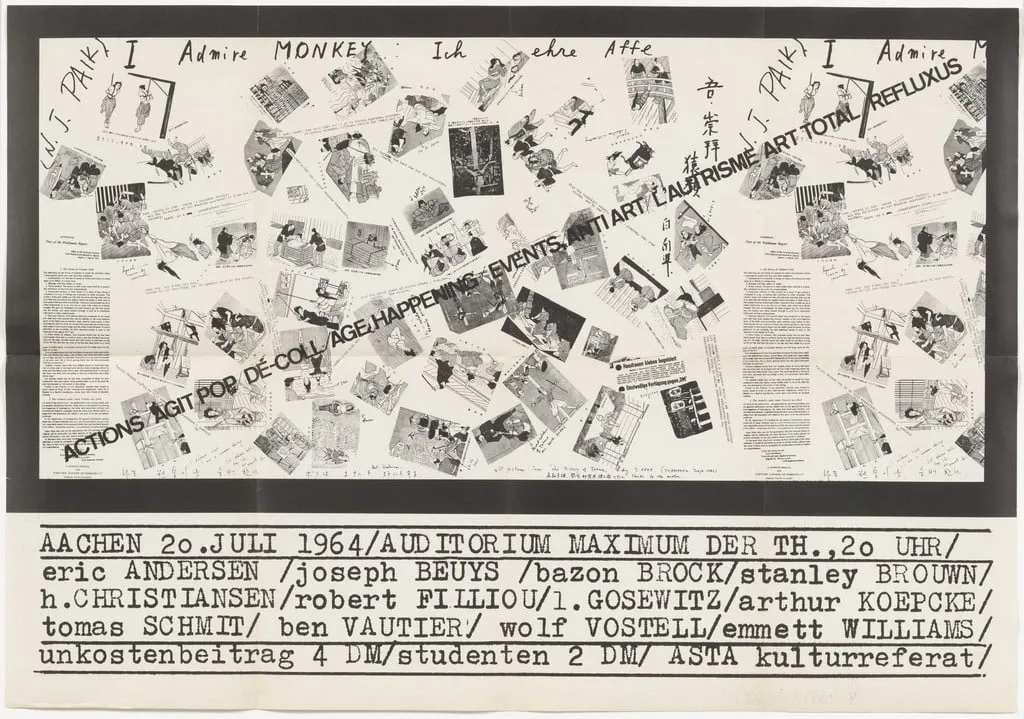
Untitled is an ink print by Nam June Paik. It dates from 1964 and is held in the collection of the Museum of Modern Art.
About this work
Nam June Paik was part of Fluxus, a group that treated art like a joke or a protest.
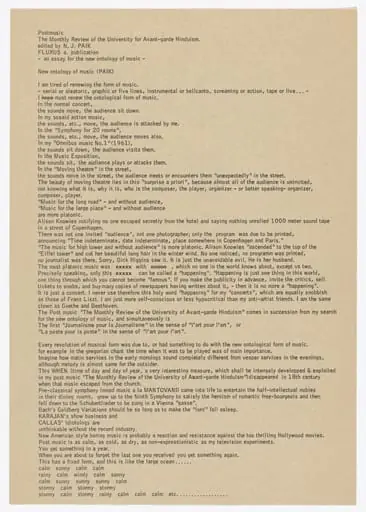
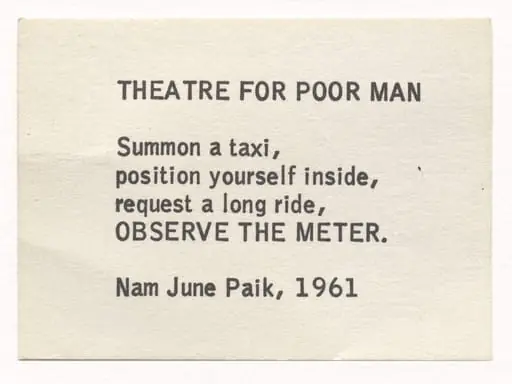
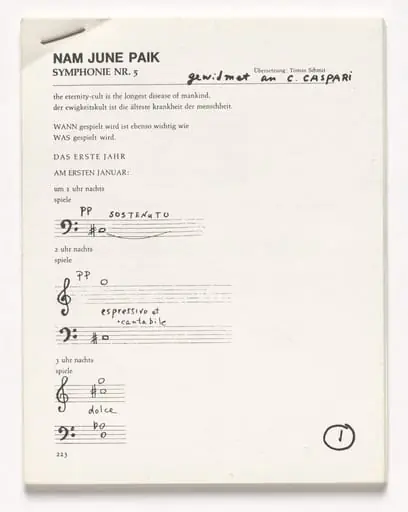
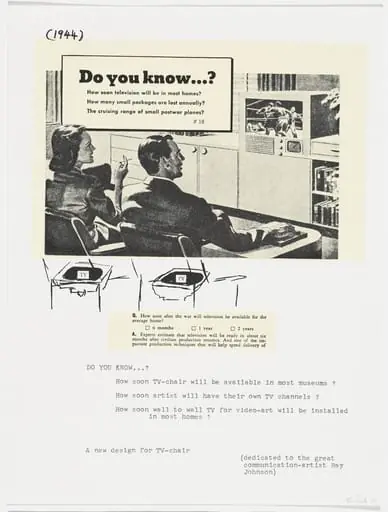
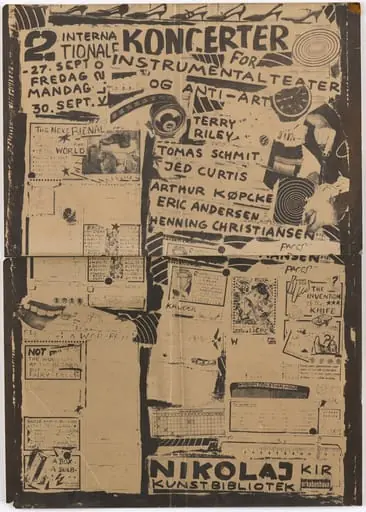
This lithograph looks like a messy collage of words and photos. Big black letters shout random phrases like "HAPPENING" and "ANTI ART." Tiny images—cars, a TV—are pasted all over.
It’s from 1964, made for a wild art event in Germany. Nam June Paik was part of Fluxus, a group that treated art like a joke or a protest. This poster screams the chaos of it all.
Check out more by Nam June Paik at The Museum of Modern Art.
Overview
Created in 1964, this offset lithograph by Nam June Paik is a dynamic visual composition that blends fragmented text and small photographic elements. Produced as a promotional piece for an experimental art event in Germany, it reflects the ethos of the Fluxus movement. The work is part of the collection at The Museum of Modern Art, where it serves as a tangible artifact of 1960s avant-garde experimentation in art and performance.
Subject & Meaning
The print juxtaposes bold, chaotic typographic fragments—phrases like 'HAPPENING' and 'ANTI ART'—with miniature images of cars, televisions, and other mundane objects. These elements reject traditional aesthetic order, instead evoking the disruptive spirit of Fluxus. The work functions as both a manifesto and a visual noise, challenging the boundaries between art, language, and everyday life.
Technique & Style
Paik employed offset lithography to layer disparate visual components—handwritten text, photocopied imagery, and typographic bursts—into a single, dense surface. The composition embraces disorder, with no central focal point or hierarchical structure. The rough, collage-like aesthetic mimics the spontaneity of performance and zine culture, aligning with Fluxus’s preference for accessible, anti-elitist methods of production.
History & Provenance
The print was made in 1964 to advertise an event in Wiesbaden, Germany, organized by Fluxus artists including Paik. It circulated among participants and audiences of the movement’s early happenings. Acquired by The Museum of Modern Art, it is now preserved as a key document of 1960s experimental art, reflecting the movement’s ephemeral nature and its transition from performance to printed record.
Context
Emerging from the Fluxus network, this work responds to postwar European art’s rejection of formalism and commercialism. Paik and his peers used printed matter as a tool for dissemination, bypassing galleries to reach wider audiences. The piece aligns with contemporaneous efforts to dissolve distinctions between art, music, poetry, and life, often through humor, absurdity, and deliberate disruption.
Legacy
As a printed artifact of Fluxus, this lithograph exemplifies how artists used reproducible media to democratize artistic expression. Its raw, unpolished form influenced later movements that embraced collage, punk aesthetics, and conceptual publishing. Today, it remains a reference point for understanding how performance-based art found enduring form outside the traditional gallery system.
Artist & collection

Artist
Nam June Paik was a South Korean artist. He worked with a variety of media and is considered to be the founder of video art. He is credited with the first use (1974) of the term "electronic super highway" to describe…