Artwork
Thebes, Temple of the Ramesseum, Interior of the Hypostyle Hall
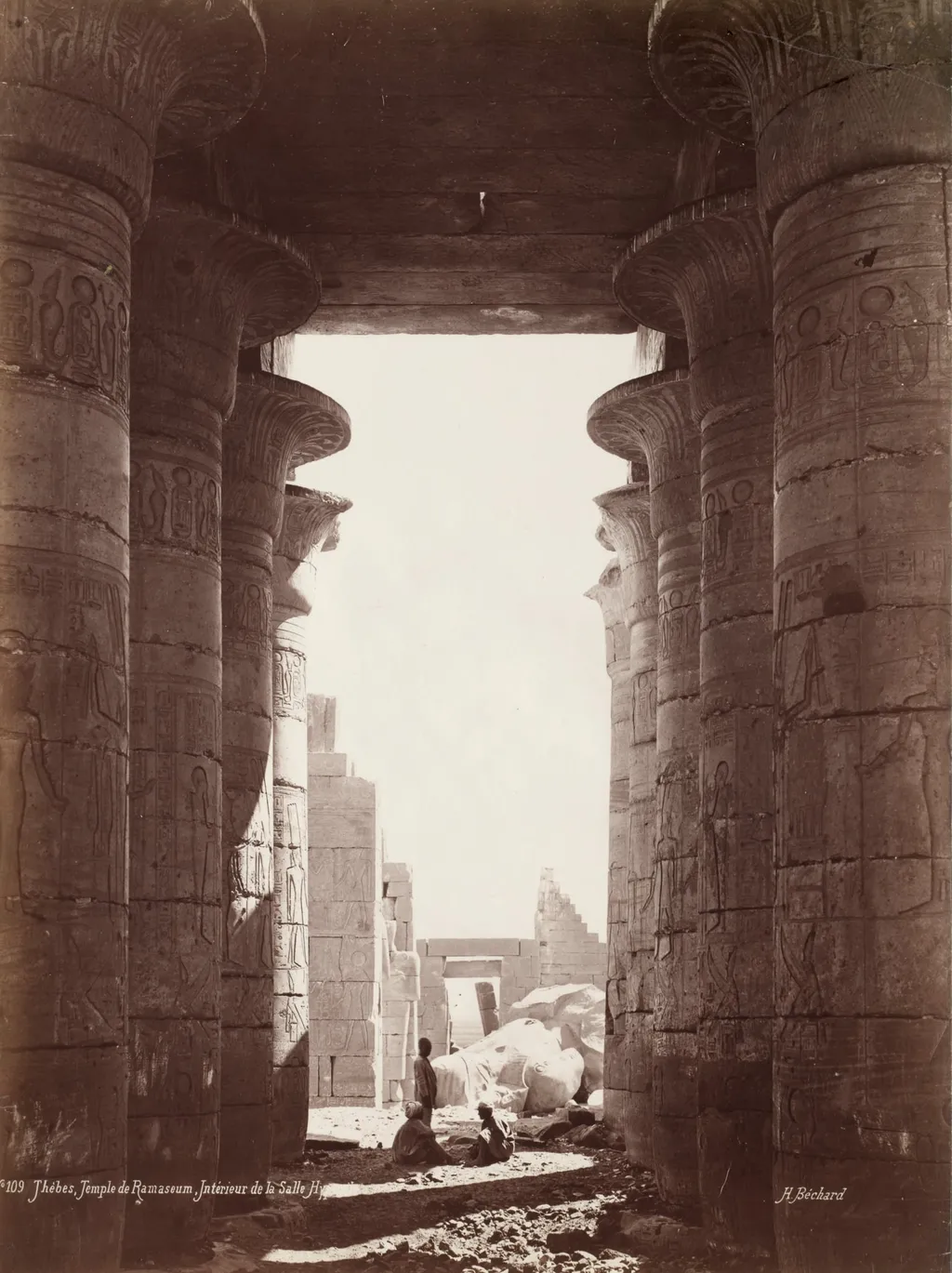
Thebes, Temple of the Ramesseum, Interior of the Hypostyle Hall is a photography by the Impressionist artist Henri Béchard. It dates from 1874 and is held in the collection of the Cleveland Museum of Art.
About this work
Overview
Taken around 1874 by French photographer Henri Béchard, this image captures the interior of the hypostyle hall in the Ramesseum, a mortuary temple in Thebes.
Taken around 1874 by French photographer Henri Béchard, this image captures the interior of the hypostyle hall in the Ramesseum, a mortuary temple in Thebes. The photograph records the atmospheric interplay of shadow and light within the ancient structure, emphasizing the scale and decay of the stone architecture. It is part of a broader 19th-century effort to document Egypt’s monumental ruins through photography.
Subject & Meaning
The image focuses on the towering columns of the Ramesseum’s hypostyle hall, their surfaces inscribed with hieroglyphs and royal iconography once meant to honor Ramses II. The dim interior, pierced by a beam of light at the far end, suggests the passage of time and the temple’s abandonment. The two figures seated on the floor provide scale and a quiet human presence amid the ruins.
Technique & Style
Béchard employed long exposure to capture the interior’s low light, resulting in a high-contrast image where dark stone contrasts sharply with the bright exit. The composition emphasizes verticality, drawing the eye toward the distant opening. The grain and tonal range reflect early photographic limitations, yet the image retains a documentary clarity that underscores the temple’s architectural grandeur.
History & Provenance
The photograph was made during a period of increased European interest in Egypt’s antiquities, following Napoleon’s campaigns and the rise of archaeological tourism. Béchard’s work was likely part of a systematic effort to record sites before further deterioration. The image entered the collection of The Cleveland Museum of Art, where it remains as a record of 19th-century photographic exploration of ancient Egypt.
Context
The Ramesseum, built in the 13th century BCE, served as a memorial temple for Pharaoh Ramses II. By the 1870s, its hypostyle hall had been buried under centuries of silt and partially collapsed. Béchard’s photograph reflects the state of the site during early archaeological surveys, before modern excavation and conservation efforts reshaped its appearance.
Legacy
Béchard’s image contributes to a visual archive that shaped Western understanding of ancient Egypt. It exemplifies how early photography transformed archaeological documentation, offering a more objective record than earlier illustrations. The photograph endures as a historical artifact, preserving the temple’s condition at a pivotal moment in its modern reception.
Artist & collection

 View of Karnak Temple, Hypostyle Hall
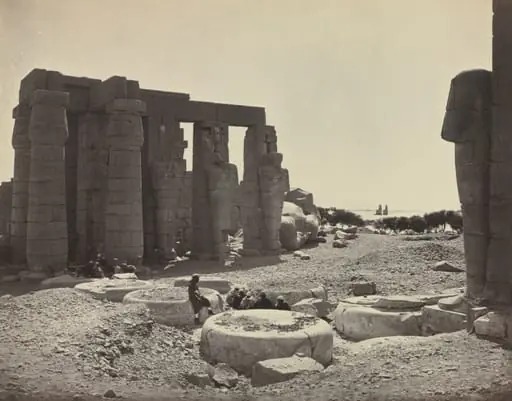 The Ramesseum, Thebes
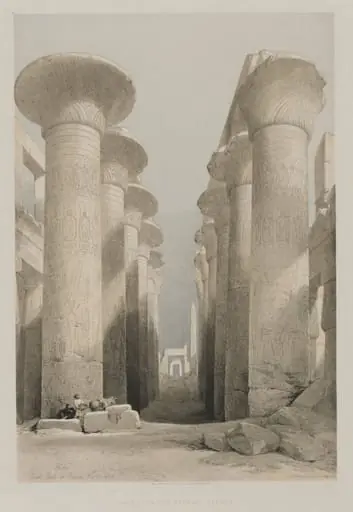 Egypt and Nubia, Volume I: Thebes, Great Hall at Karnac
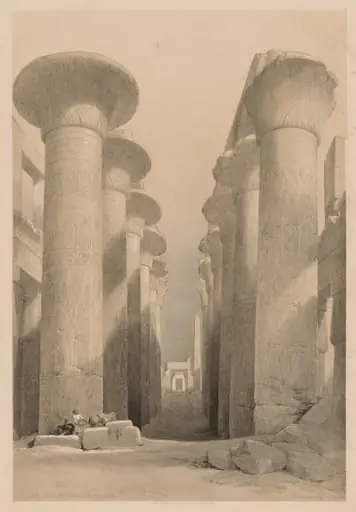 Egypt and Nubia: Volume I - No. 20, Great Hall at Karnak, Thebes
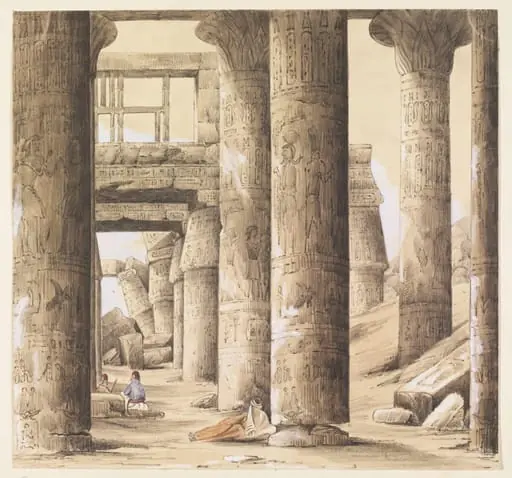 Interior of the Temple of Karnak, Thebes Upper Egypt.
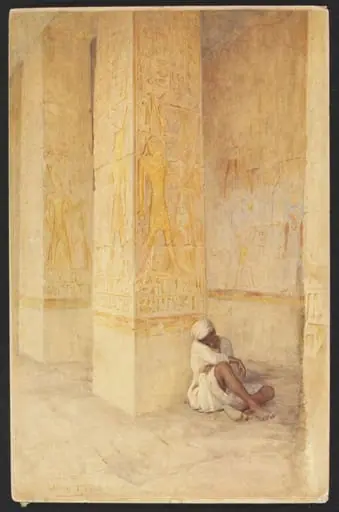 The Temple of Hatshepsoo at Thebes
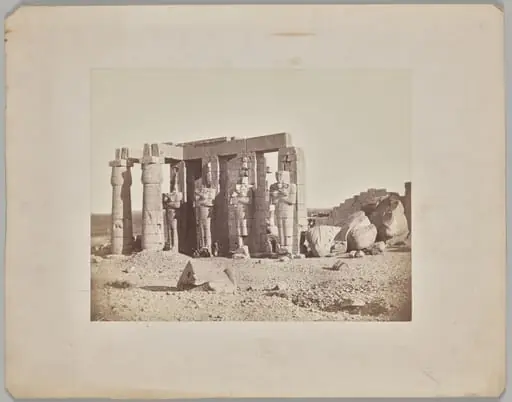 Fallen Statue at the Ramasseum, Thebes
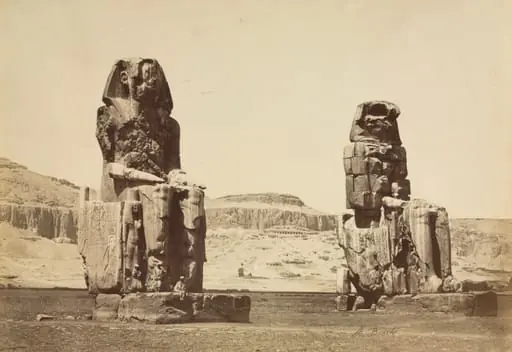 The Colossi of Memnon, Thebes
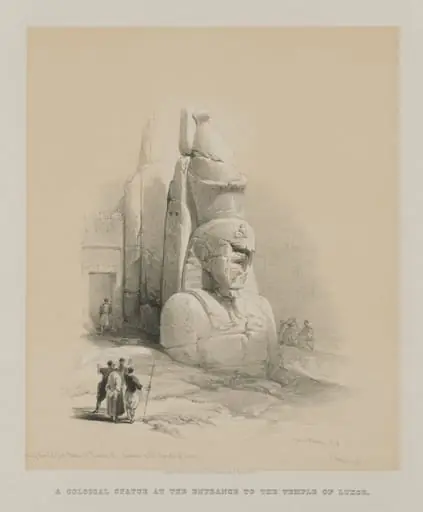 Egypt and Nubia, Volume I: One of Two Colossal Statues of Rameses II. Entrance to the Temple of Luxor