Artwork
Egypt and Nubia: Volume I - No. 20, Great Hall at Karnak, Thebes
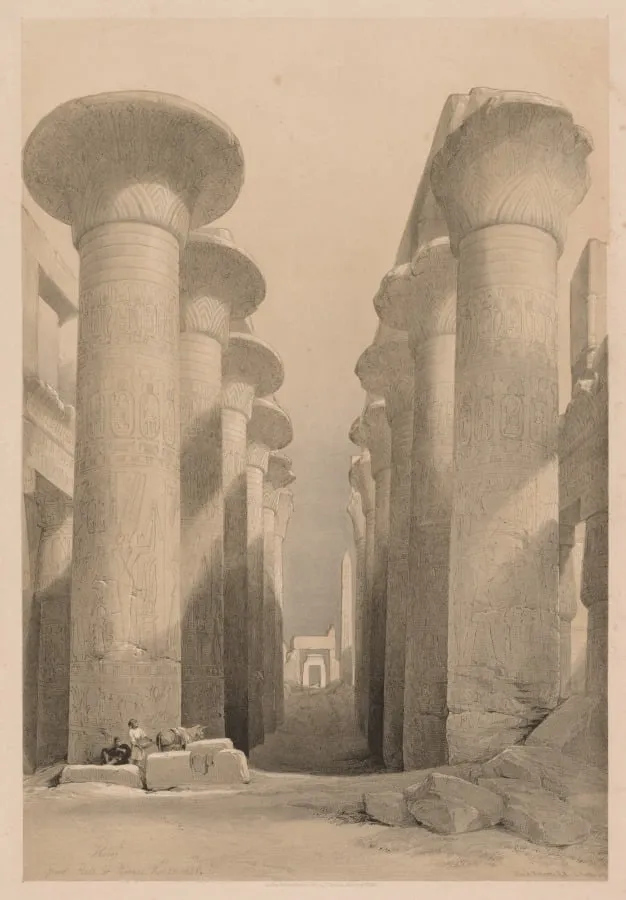
Egypt and Nubia: Volume I - No. 20, Great Hall at Karnak, Thebes is a print by the Romanticist artist Louis Haghe. It dates from 1838 and is held in the collection of the Cleveland Museum of Art.
About this work
Overview
Created in 1838 by Louis Haghe, this lithograph is part of a multi-volume series documenting ancient Egyptian and Nubian monuments.
Created in 1838 by Louis Haghe, this lithograph is part of a multi-volume series documenting ancient Egyptian and Nubian monuments. As a British lithographer of Belgian descent, Haghe specialized in translating field sketches into detailed printed images. This plate, numbered 20 in Volume I, captures the interior of the Great Hall at Karnak, offering a precise visual record of the site during a period of growing European interest in Egypt’s antiquities.
Subject & Meaning
The scene portrays the vast columned hall of Karnak, its towering pillars inscribed with hieroglyphs, casting long shadows from a single light source. A solitary figure rests against a low wall beside a donkey, grounding the monumental architecture in human scale. The composition suggests quiet observation rather than grandeur, emphasizing the stillness of the ancient space and the passage of time, rather than overt celebration or myth.
Technique & Style
Haghe employed lithography to achieve fine tonal gradations and sharp linear detail, capturing the texture of weathered stone and the depth of shadowed recesses. The use of side lighting enhances the three-dimensionality of the columns and their carved reliefs. The drawing’s precision reflects a topographical approach, prioritizing accuracy over romantic embellishment, aligning with early archaeological documentation practices.
History & Provenance
Produced by Haghe’s London firm Day & Haghe, established in 1830, this print was part of a commercially published series aimed at an educated European audience. The work was based on sketches made during travels to Egypt, likely by artists accompanying early 19th-century expeditions. Its publication helped disseminate visual knowledge of Karnak beyond travelers and scholars, contributing to the broader documentation of Egypt’s heritage.
Context
In the 1830s, European interest in Egypt intensified following Napoleon’s campaign and the decipherment of the Rosetta Stone. This print emerged amid a surge in archaeological surveys and illustrated publications. Unlike earlier idealized depictions, Haghe’s work reflects a shift toward empirical recording, aligning with emerging scientific approaches to antiquities while still operating within the aesthetic conventions of topographical illustration.
Legacy
Haghe’s lithograph contributed to the archival record of Karnak’s condition in the early 19th century, serving as a reference for later scholars and conservators. Its restrained style influenced subsequent illustrated travel accounts, favoring fidelity over dramatization. Though not widely exhibited as fine art, it remains a significant artifact in the history of archaeological visualization and the transmission of cultural heritage through print.
Artist & collection
Artist
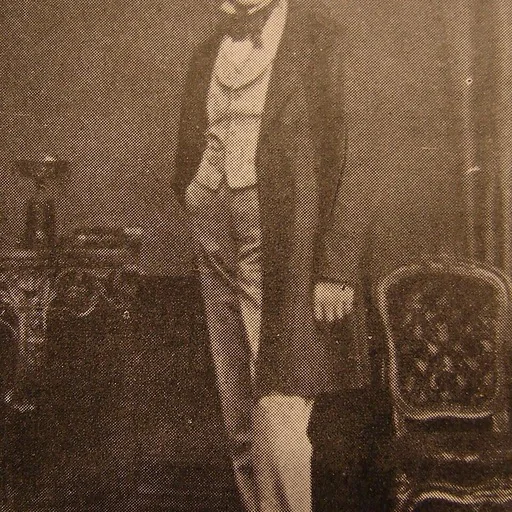
Louis Haghe (17 March 1806 – 9 March 1885) was a lithographer and watercolourist from the Netherlands and then the United Kingdom.

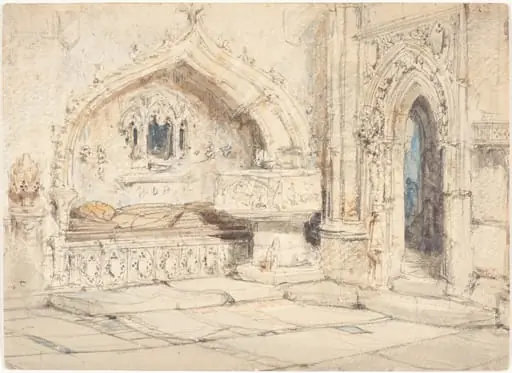 Interior of a Church with a Wall Tomb and Medieval Font
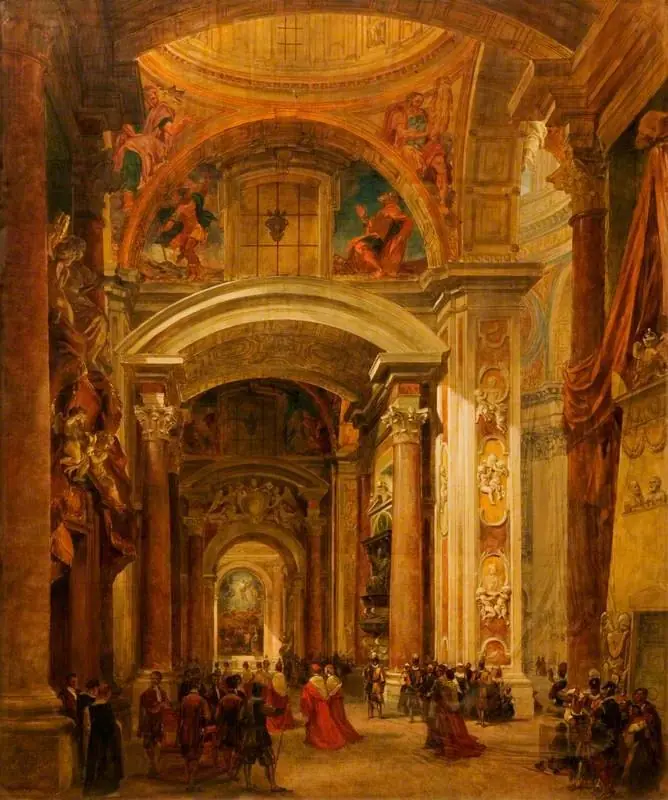 Interior of St Peter's, Rome
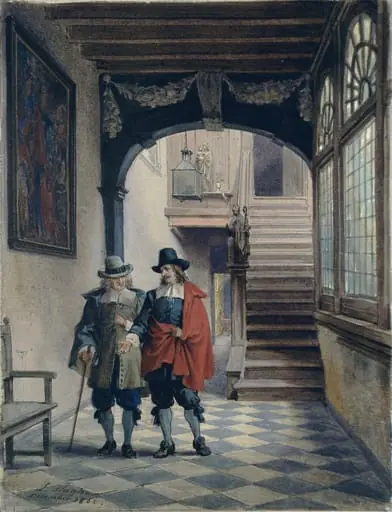 The Corridor, Brewer's Hall, Antwerp
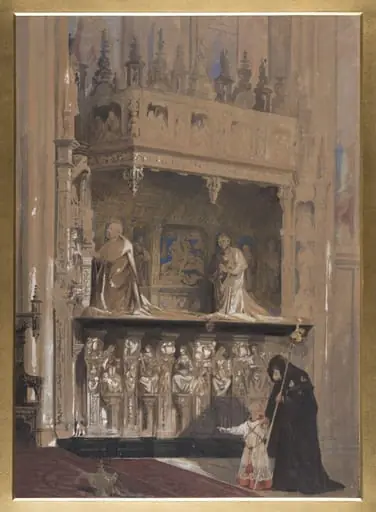 Monument of the Cardinald D'Amboise in Rouen Cathedral
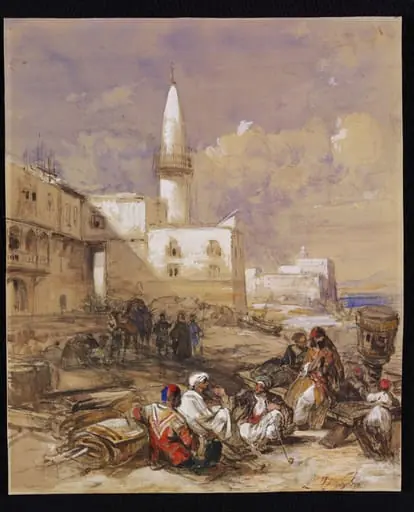 The Quay at Suez
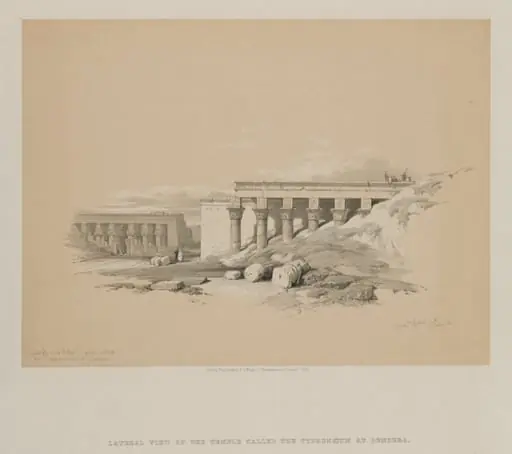 Egypt and Nubia, Volume II: Lateral View of the Temple called The Typhonoeum at Dendera
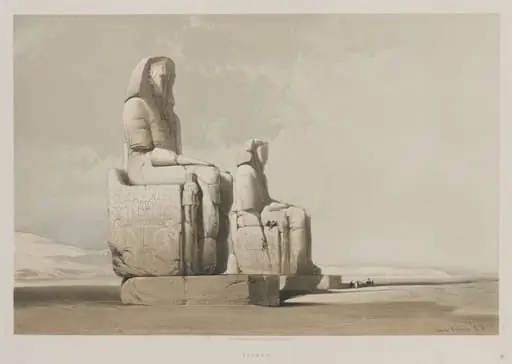 Egypt and Nubia, Volume I: Thebes
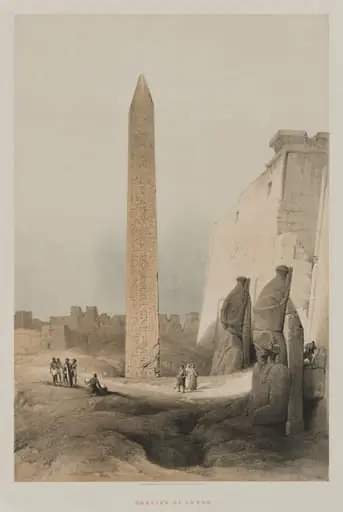 Egypt and Nubia, Volume I: Luxor
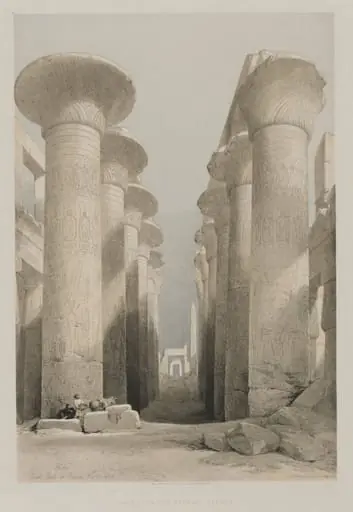 Egypt and Nubia, Volume I: Thebes, Great Hall at Karnac
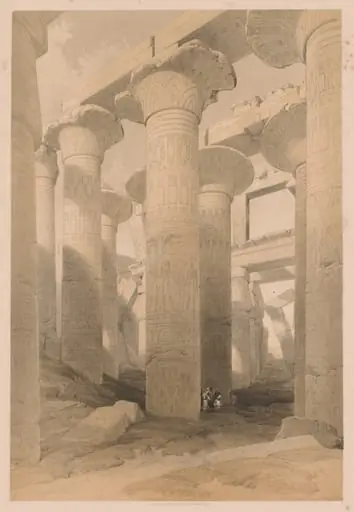 Egypt and Nubia: Volume II - No. 14, Karnak
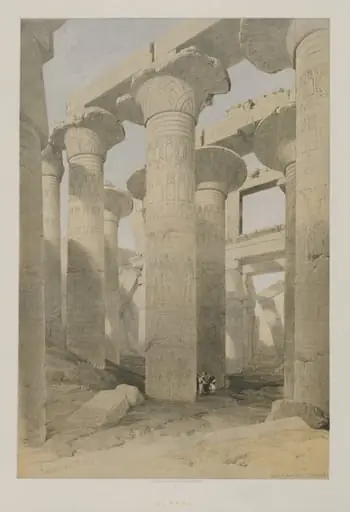 Egypt and Nubia, Volume II: Karnac
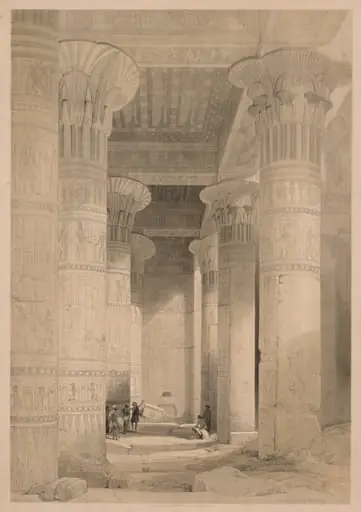 Egypt and Nubia: Volume I - Frontispiece, View under the Grand Portico, Philae
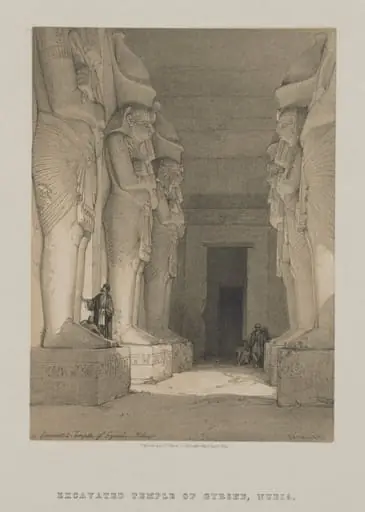 Egypt and Nubia, Volume I: Excavated Temple of Gyrshe, Nubia
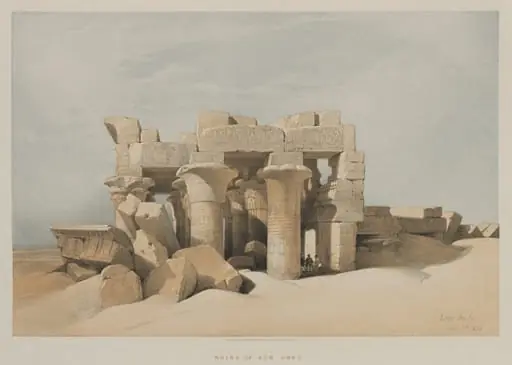 Egypt and Nubia, Volume I: Kom-Ombo
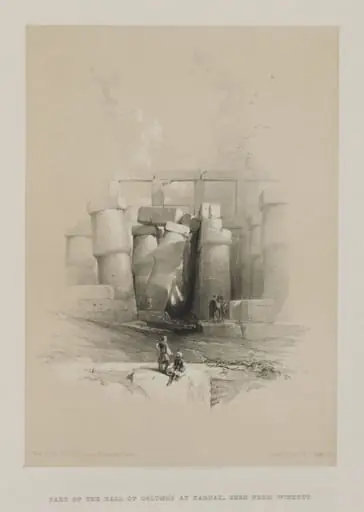 Egypt and Nubia, Volume II: Part of the Hall of Columns at Karnak, Thebes
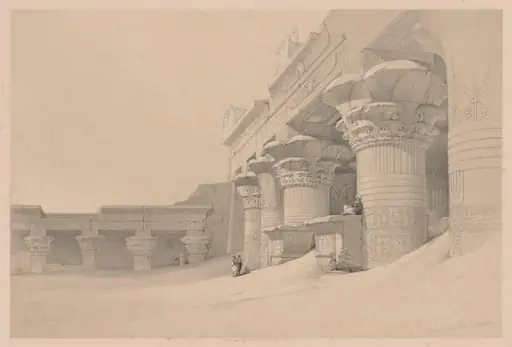 Egypt and Nubia: Volume I - No. 10, Edfou
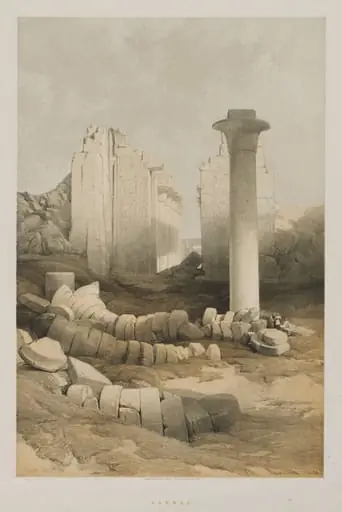 Egypt and Nubia, Volume II: Karnak
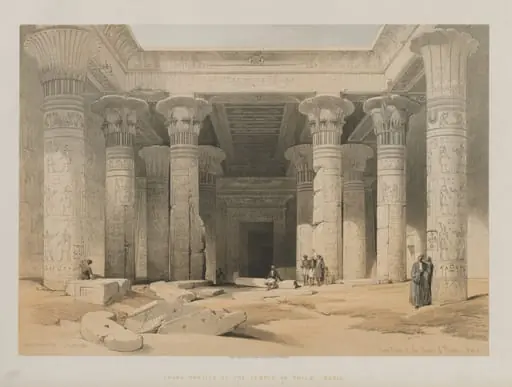 Egypt and Nubia, Volume I: Grand Portico of the Temple of Philae, Nubia