Artwork
At the Table of Monsieur and Madame Natanson
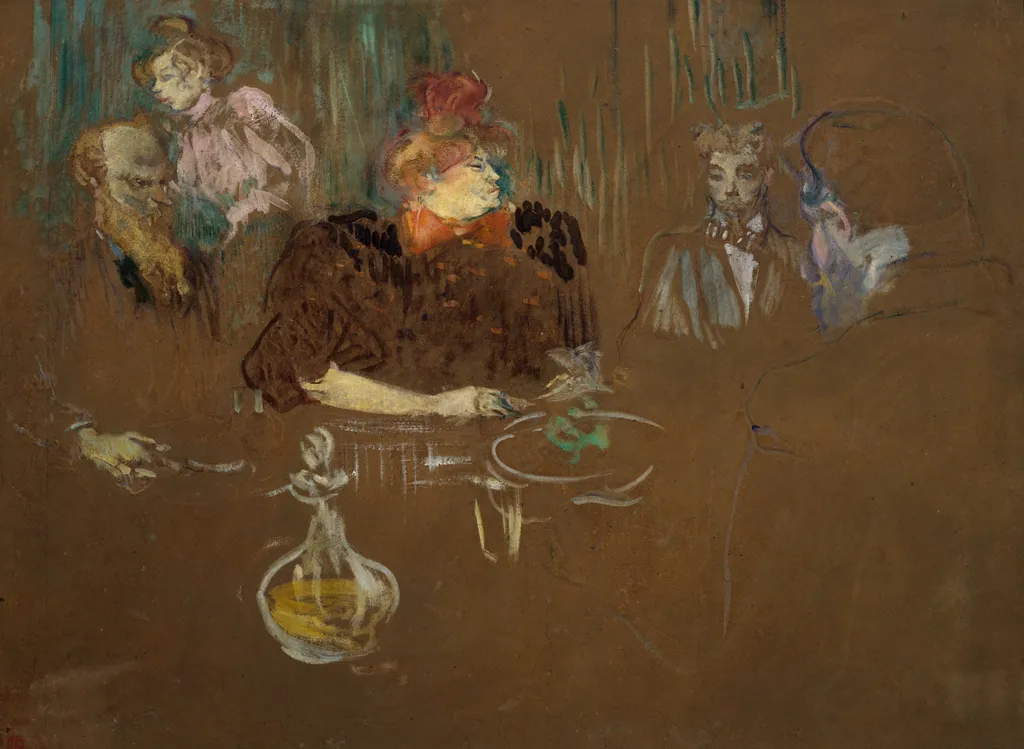
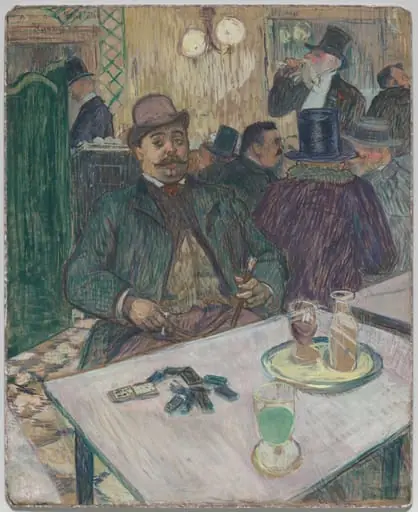
At the Table of Monsieur and Madame Natanson is an oil painting by the Post-Impressionist artist Henri de Toulouse-Lautrec. It dates from 1900 and is held in the collection of the Museum of Fine Arts, Houston.
About this work
Overview
Henri de Toulouse‑Lautrec’s 1900 oil painting *At the Table of Monsieur and Madame Natanson* portrays a small gathering of elegantly dressed figures seated around a table laden with fine china, glasses and a central bottle of wine. The scene captures a moment of informal conversation and conviviality within a refined domestic setting, rendered in the artist’s characteristic post‑impressionist vocabulary.
Subject & Meaning
The work likely represents a social circle drawn from Paris’s artistic and theatrical milieu, reflecting the artist’s close ties to the city’s cultural elite. By focusing on the relaxed interaction of the participants, Toulouse‑Lautrec emphasizes the intimacy and shared enjoyment of a private gathering, offering a glimpse into the interpersonal dynamics of late‑19th‑century Parisian society.
Technique & Style
Executed with loose, expressive brushwork, the painting employs vivid, saturated hues that animate the figures and the surrounding objects.
Executed with loose, expressive brushwork, the painting employs vivid, saturated hues that animate the figures and the surrounding objects. Contrasting light and shadow create a subtle chiaroscuro effect, giving depth to the composition while preserving a sense of immediacy. The overall handling balances detailed rendering of clothing and tableware with a more gestural approach to the surrounding space.
History & Provenance
Created near the end of Toulouse‑Lautrec’s brief career, the piece was painted shortly before his death in 1901. It was originally commissioned by or for the Natanson family, prominent patrons of the arts, and subsequently entered private collections before being acquired by a museum specializing in French modern art. Its provenance traces a typical path from private salon to public exhibition.
Context
The painting emerges from the vibrant cultural atmosphere of Belle Époque Paris, a period marked by flourishing cabarets, salons, and artistic experimentation. Toulouse‑Lautrec, known for his depictions of nightlife and marginalized figures, here turns his eye to a more genteel setting, illustrating the breadth of his interest in the city’s social spectrum.
Legacy
While not as widely reproduced as his nightclub scenes, this work contributes to a fuller understanding of Toulouse‑Lautrec’s range, demonstrating his ability to capture both the flamboyance of public venues and the quieter moments of private conviviality. It remains a valuable reference for scholars studying the intersection of art, patronage, and social life in early‑20th‑century France.
Own this work as a print
Artist & collection
Artist
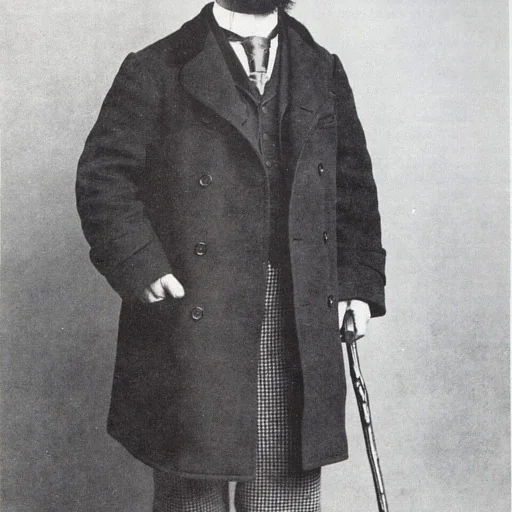
Comte Henri Marie Raymond de Toulouse-Lautrec-Montfa (24 November 1864 – 9 September 1901), known as Toulouse-Lautrec (French: ), was a French painter, printmaker, draughtsman, caricaturist, and illustrator.

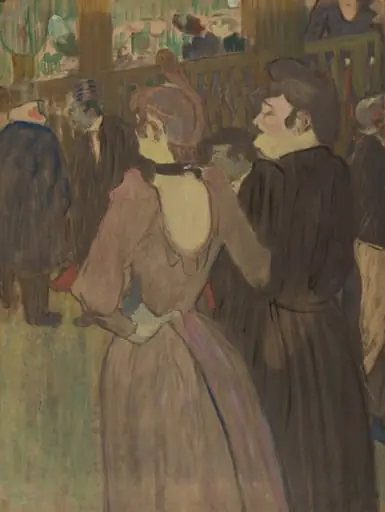 La Goulue and Her Sister
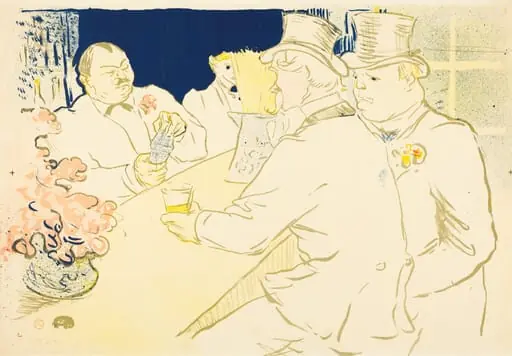 Irish and American Bar, rue Royale
 Music Hall Interior
 Costume Party
 Moulin de la Galette
 Kristiania Bohemians
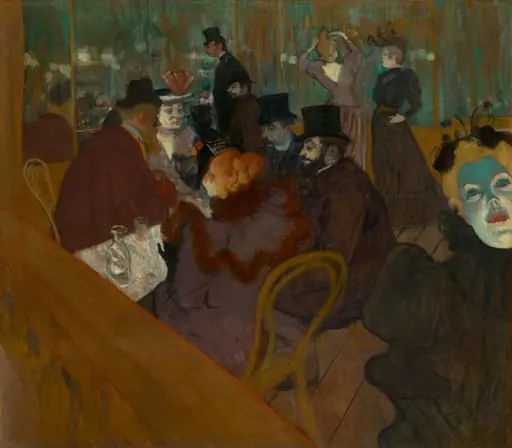 At the Moulin Rouge
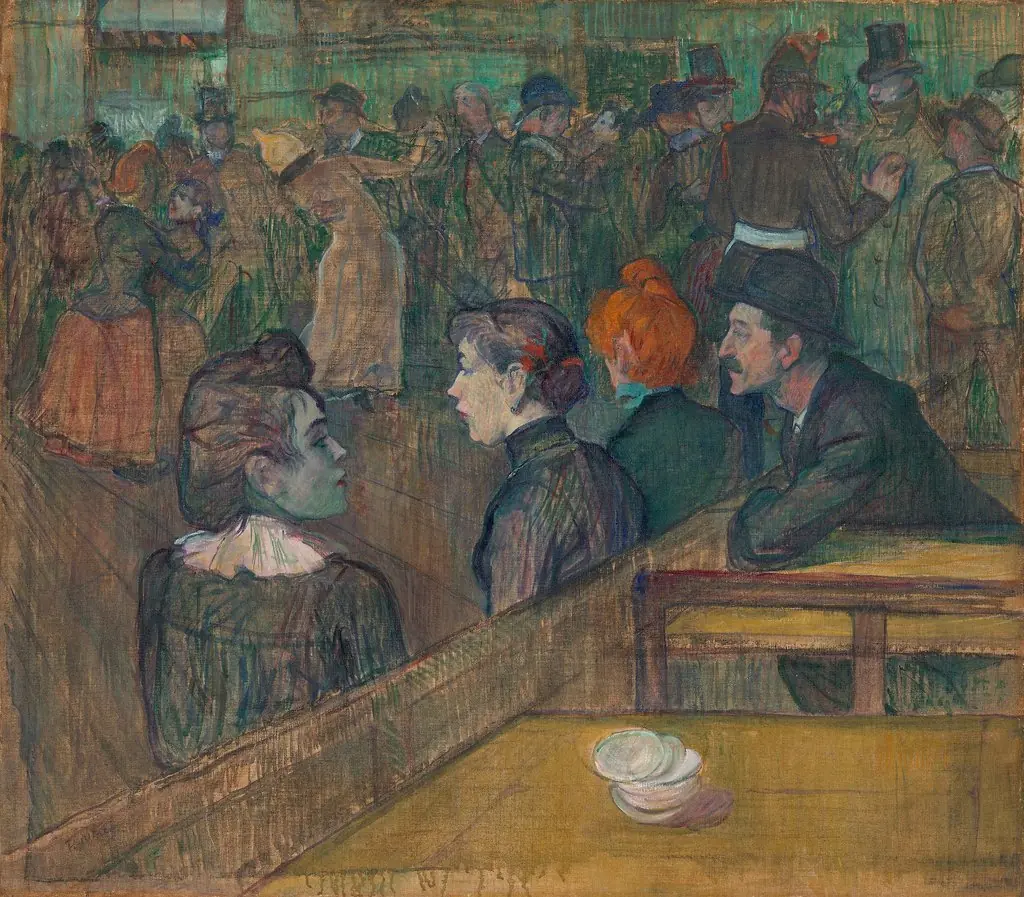 Moulin de la Galette
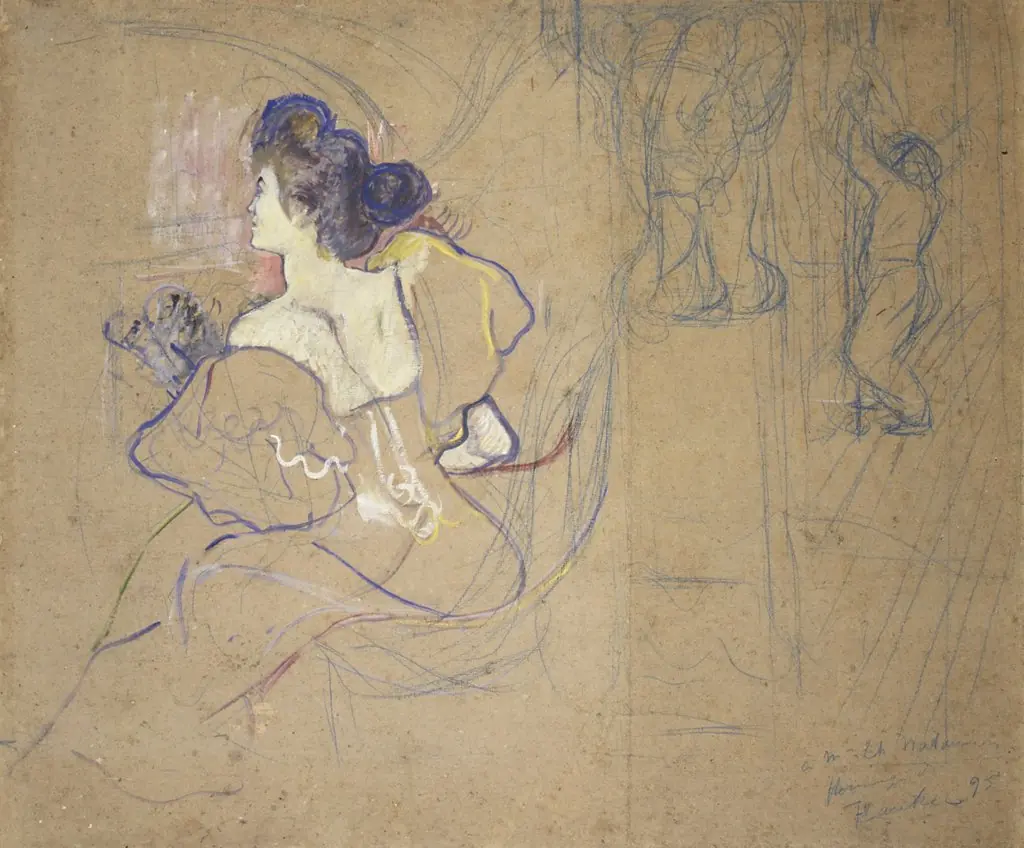 Madame Thadée Natanson (Misia Godebska, 1872–1950) at the Theater
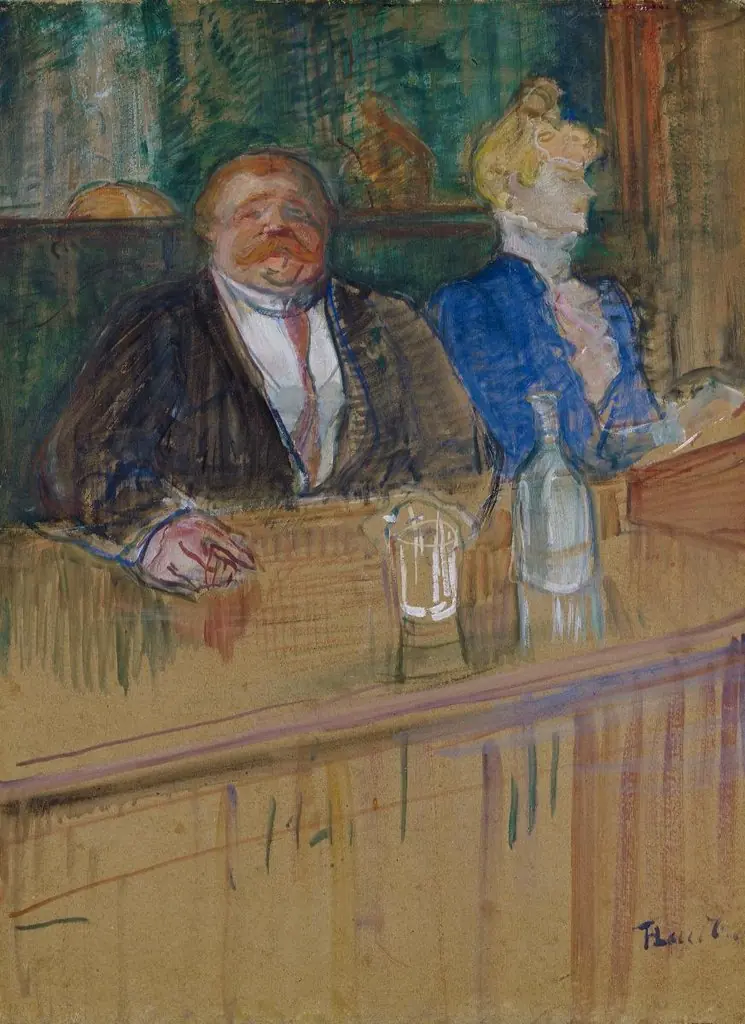 Au café: Le Patron et la Caissière chlorotique
 Monsieur Boileau at the Café