Artwork
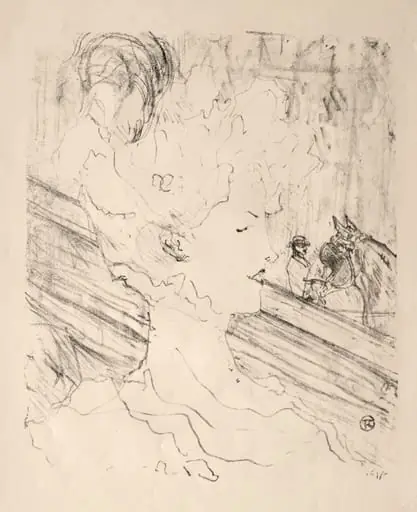
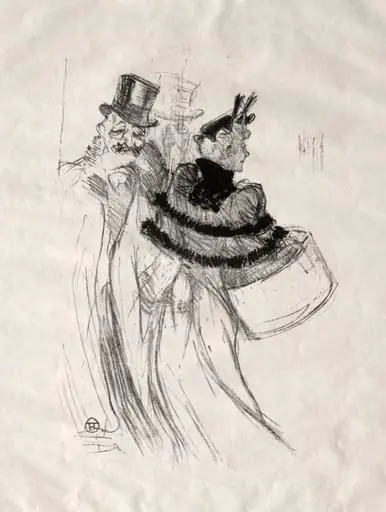
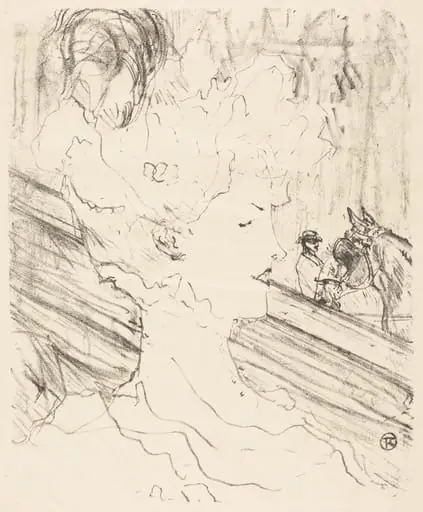
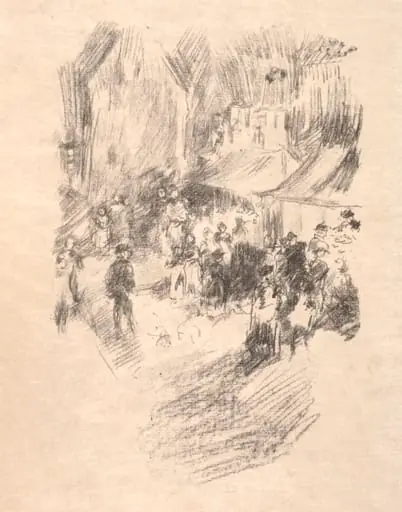
Au pied du Sinaï: Les Juifs Polonais, Carlsbad
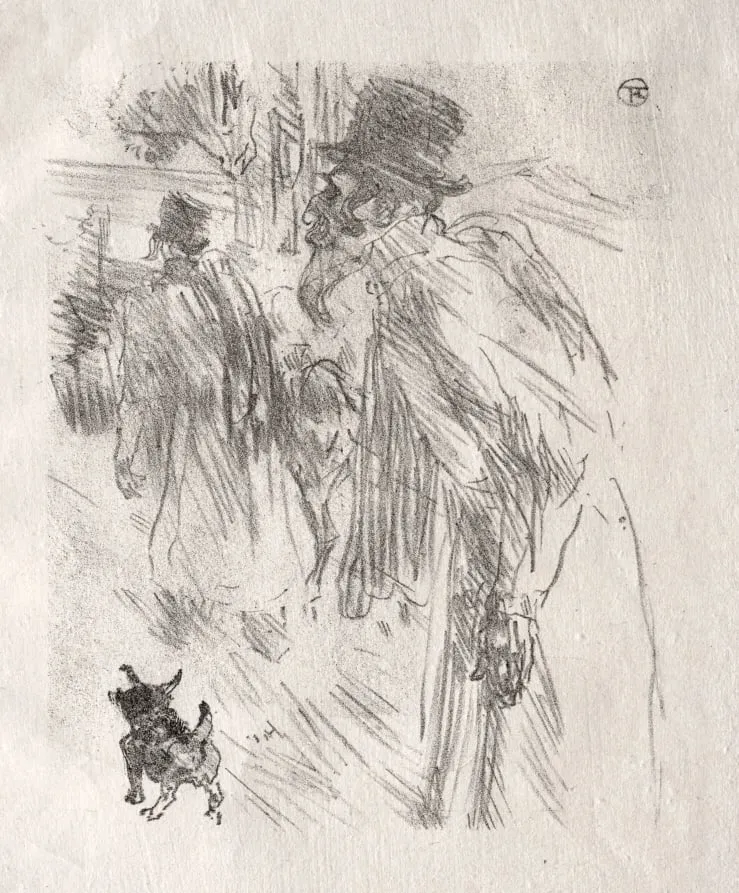
Au pied du Sinaï: Les Juifs Polonais, Carlsbad is a print by the Impressionist artist Henri de Toulouse-Lautrec. It dates from 1898 and is held in the collection of the Cleveland Museum of Art.
About this work
Overview
The piece is part of the Cleveland Museum of Art’s collection and exemplifies his shift toward more intimate, observational drawings in his later years.
Created in 1898, *Au pied du Sinaï: Les Juifs Polonais, Carlsbad* is a lithograph by Henri de Toulouse-Lautrec, capturing a quiet moment in the Bohemian spa town of Carlsbad. Though best known for his Parisian nightlife scenes, this work reflects his broader interest in observing ordinary individuals in public spaces. The piece is part of the Cleveland Museum of Art’s collection and exemplifies his shift toward more intimate, observational drawings in his later years.
Subject & Meaning
The image depicts a Polish Jewish woman walking a small dog along a path, her posture relaxed yet restrained, suggesting a moment of solitary routine. The title references a biblical site, possibly alluding to displacement or spiritual longing, though the scene itself is secular and unembellished. The subject’s identity and context remain deliberately ambiguous, emphasizing anonymity over narrative, a hallmark of Lautrec’s later focus on marginalized figures in transient settings.
Technique & Style
Executed in loose, rapid linework, the lithograph avoids shading and detail, relying instead on energetic strokes to suggest form and movement. The woman’s heavy coat and the dog’s slight forward pull are conveyed with minimal strokes, while the background dissolves into indistinct shapes. This sketch-like approach reflects Lautrec’s preference for immediacy, capturing fleeting gestures rather than polished compositions, aligning with his interest in the raw texture of daily life.
History & Provenance
Lautrec produced this work during a period of declining health and increasing withdrawal from Parisian social circles. He spent time in spa towns like Carlsbad seeking relief from his ailments, where he turned to drawing as a private, portable practice. The lithograph entered the Cleveland Museum of Art’s collection through documented acquisition, preserving its connection to his final creative phase, marked by introspection and a focus on quiet, unremarkable moments.
Context
In the late 1890s, Lautrec increasingly turned away from the cabarets and brothels of Montmartre, instead observing travelers and locals in European spa towns. These settings offered a different kind of social observation—less theatrical, more subdued. The presence of Polish Jews in Carlsbad reflects broader patterns of migration and diaspora in Central Europe, though Lautrec’s interest lay less in ethnicity than in the quiet dignity of everyday movement.
Legacy
This work contributes to Lautrec’s reputation as a chronicler of the overlooked, extending his realism beyond urban entertainment to include transient, anonymous figures in peripheral spaces. Its informal technique influenced later artists seeking authenticity over polish, reinforcing the value of sketch-like immediacy in modern printmaking. Though not widely exhibited, it remains a quiet testament to his evolving vision in his final years.
Artist & collection
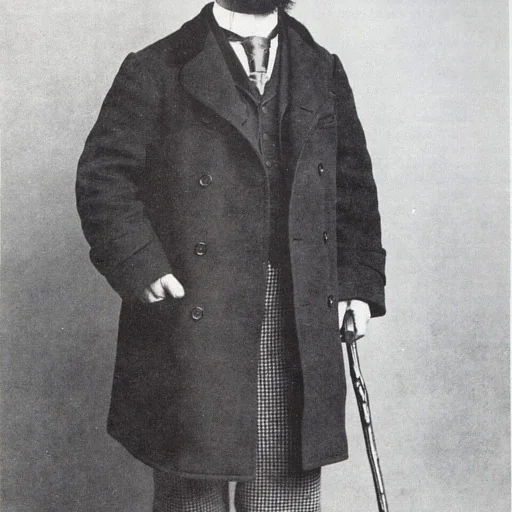
Artist
Comte Henri Marie Raymond de Toulouse-Lautrec-Montfa (24 November 1864 – 9 September 1901), known as Toulouse-Lautrec (French: ), was a French painter, printmaker, draughtsman, caricaturist, and illustrator.