Artwork
The Old Gentlemen
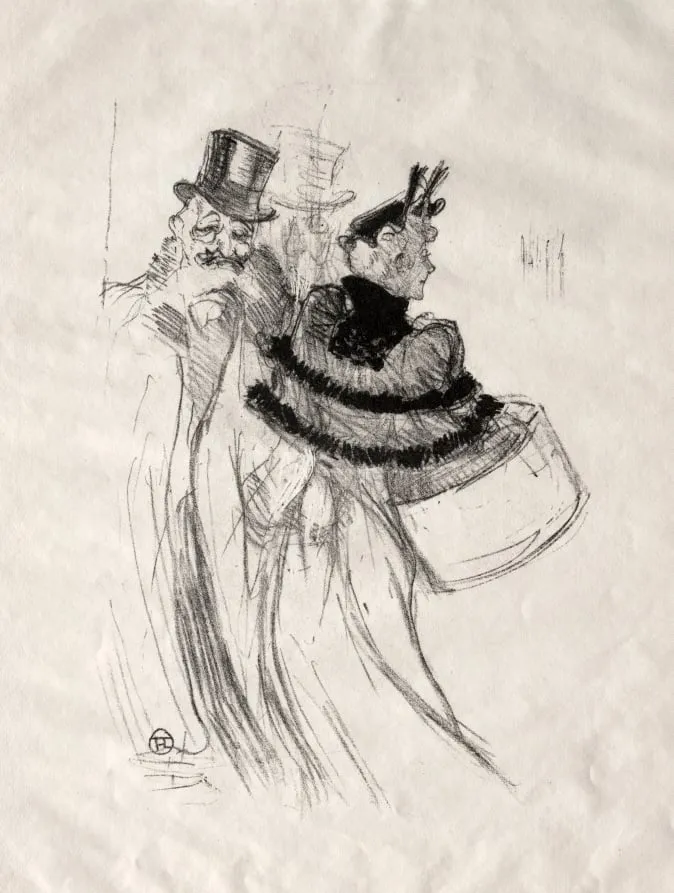
The Old Gentlemen is a print by the Impressionist artist Henri de Toulouse-Lautrec. It dates from 1894 and is held in the collection of the Cleveland Museum of Art.
About this work
Overview
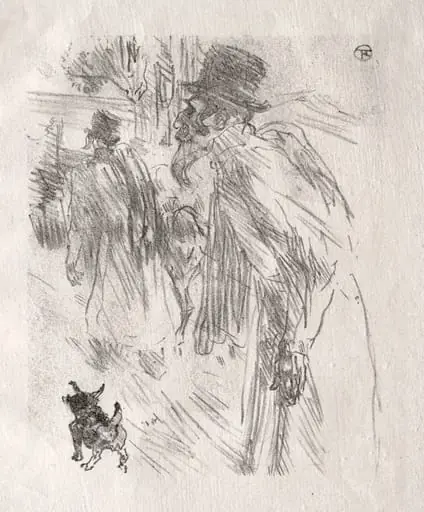
Created in 1894 by Henri de Toulouse-Lautrec, *The Old Gentlemen* is a color lithograph that captures two men in formal attire, standing side by side.
Created in 1894 by Henri de Toulouse-Lautrec, *The Old Gentlemen* is a color lithograph that captures two men in formal attire, standing side by side. Though often associated with Parisian nightlife scenes, this work shifts focus to quiet, intimate portraiture. Toulouse-Lautrec, born into French nobility, used printmaking to explore social types with psychological nuance. The piece resides in The Cleveland Museum of Art’s collection, reflecting his broader interest in character over spectacle.
Subject & Meaning
The two figures—a younger man and an older one—represent contrasting generations and temperaments. The elder, in a long coat and top hat, projects solemnity, while the younger, with a shorter hat and looser posture, suggests ease or detachment. Their matching mustaches and formal dress hint at shared social standing, yet their expressions and stances reveal unspoken differences in outlook. The absence of context invites viewers to interpret their relationship as one of observation, not narrative.
Technique & Style
Toulouse-Lautrec employed bold, fluid outlines and flat areas of vivid color, characteristic of his lithographic work. The composition strips away background detail, directing attention to the men’s postures and facial expressions. His use of simplified forms and strong contrasts echoes Japanese woodblock prints, which influenced his approach to line and space. Rather than blending tones, he relied on sharp edges and saturated hues to define form and mood.
History & Provenance
Produced in 1894, *The Old Gentlemen* belongs to a series of lithographs Toulouse-Lautrec made during his most prolific printmaking period. It was likely printed in a small edition, typical of his artistic practice. The work entered The Cleveland Museum of Art’s collection in the 20th century, acquired as part of a broader effort to document modern European graphic art. Its preservation reflects early institutional recognition of printmaking as a serious medium.
Context
In the 1890s, Parisian society was undergoing rapid change, with class boundaries becoming more visible yet porous. Toulouse-Lautrec, though aristocratic, moved among performers, sex workers, and bourgeois patrons, documenting their interactions with unflinching clarity. *The Old Gentlemen* fits within this social survey, portraying men who embody the era’s formal codes while revealing subtle psychological fissures beneath them.
Legacy
Though less famous than his cabaret scenes, *The Old Gentlemen* exemplifies Toulouse-Lautrec’s ability to convey character through minimal means. His lithographic innovations influenced 20th-century graphic design and portrait printmaking. The work’s restrained composition and psychological depth set it apart from the more sensational imagery of his time, offering a quiet counterpoint to the glittering chaos of fin-de-siècle Paris.
Artist & collection
Artist
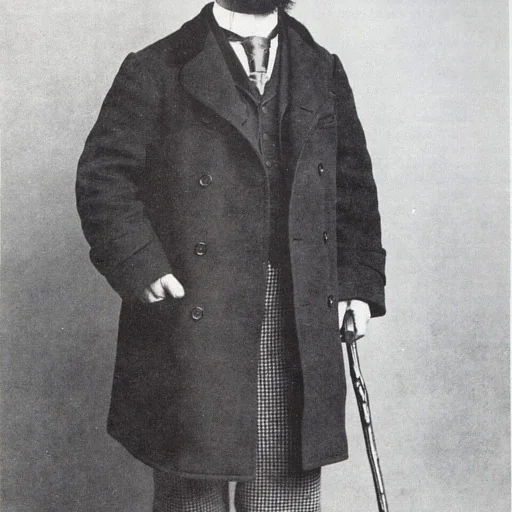
Comte Henri Marie Raymond de Toulouse-Lautrec-Montfa (24 November 1864 – 9 September 1901), known as Toulouse-Lautrec (French: ), was a French painter, printmaker, draughtsman, caricaturist, and illustrator.

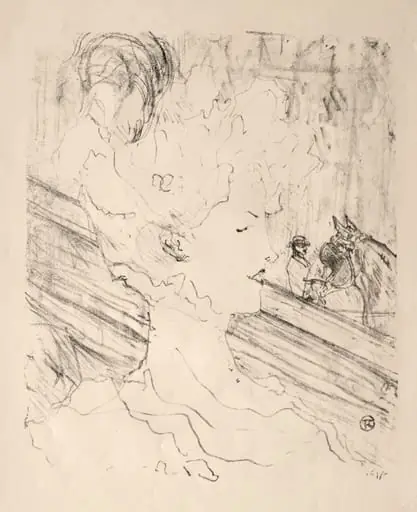 Emilienne d'Alençon
 Au pied du Sinaï: Les Juifs Polonais, Carlsbad
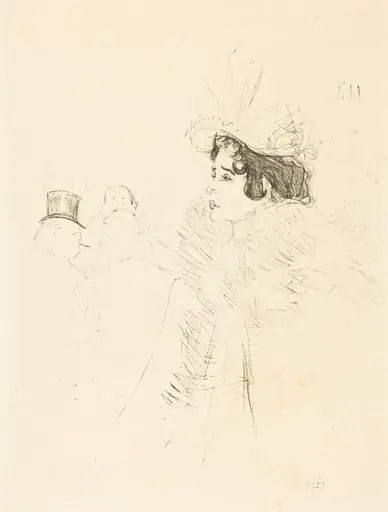 Miss May Belfort in the Irish and American Bar, rue Royale (Miss Belfort Belfort au Irish and American Bar, Rue Royale)
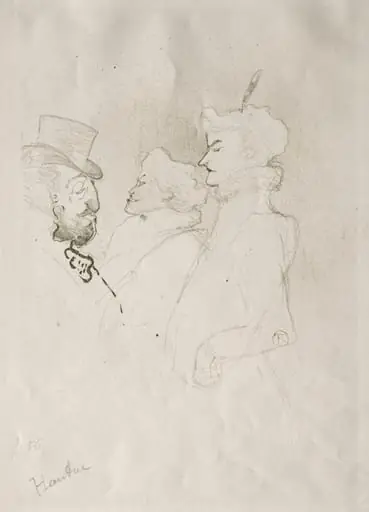 Why Not? Once Does Not Constitute a Habit
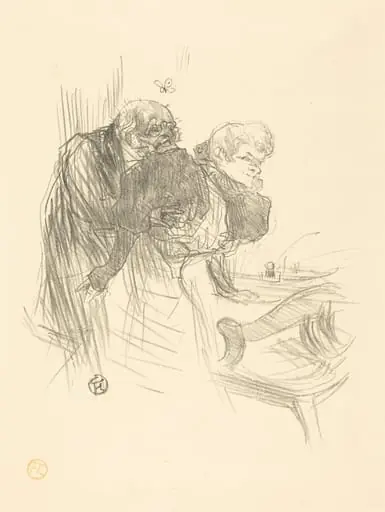 Les vieux papillons
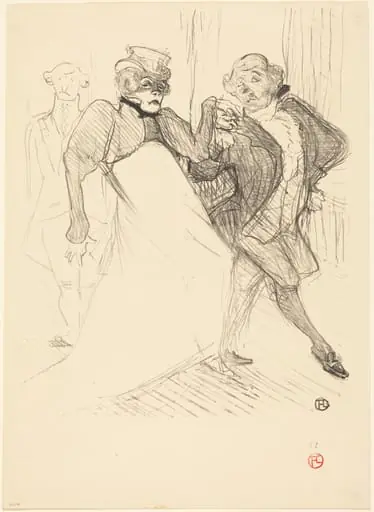 Rejane and Galipaux in "Madame Sans-Gêne" (Réjane et Galipaux dans "Madame Sans-Gêne")
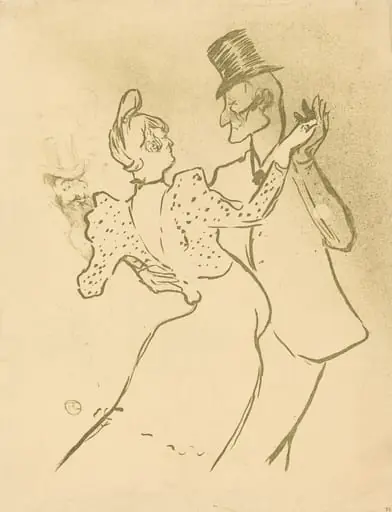 La Goulue
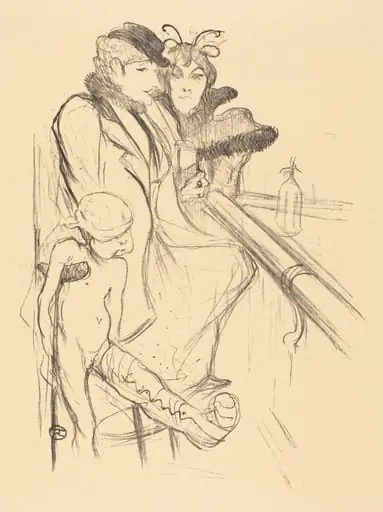 Wounded Eros (Eros vanné)
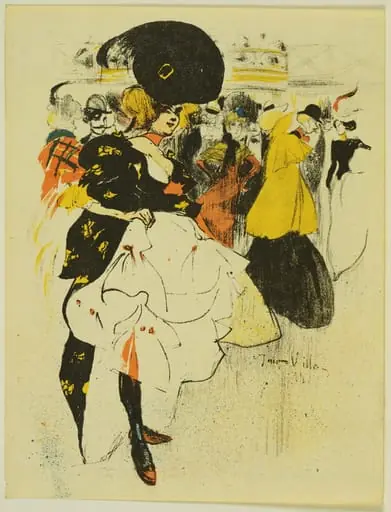 Untitled
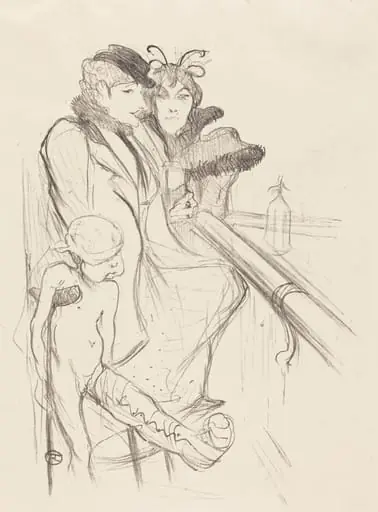 Wounded Eros (Eros vanné)
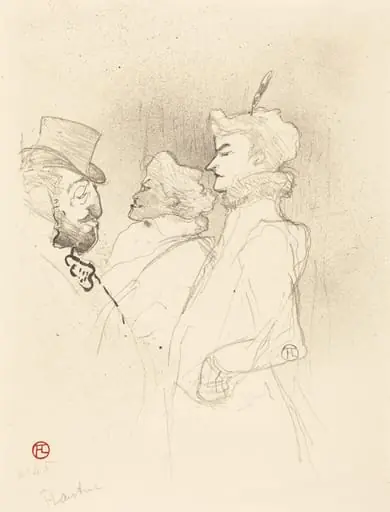 Why Not?...Once Is Not a Habit (Pourquoi pas?...Une fois n'est pas coutume)
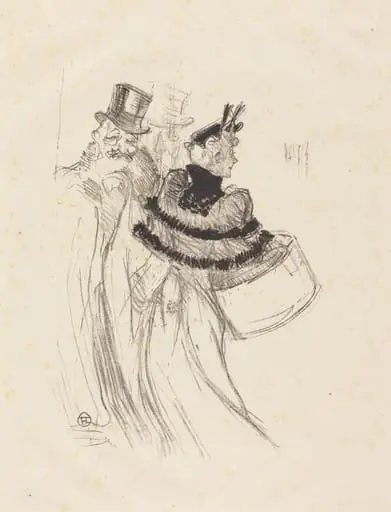 The Old Gentlemen (Les vieux messieurs)