Artwork
Elles: Frontispiece
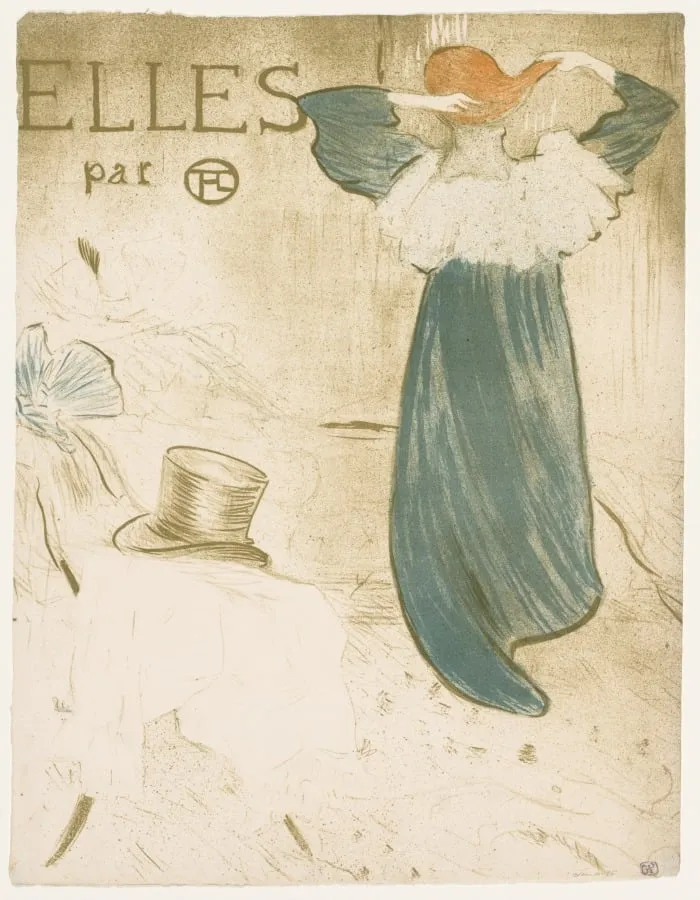
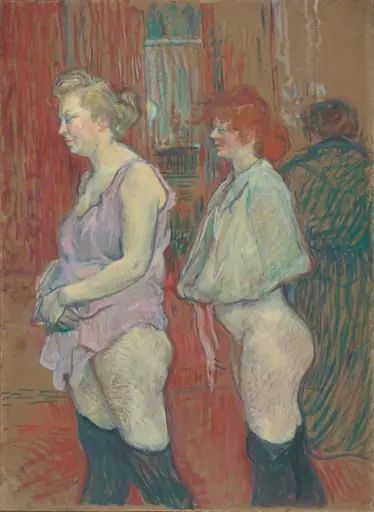
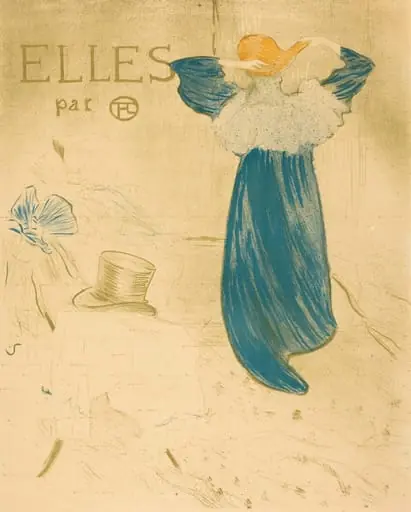
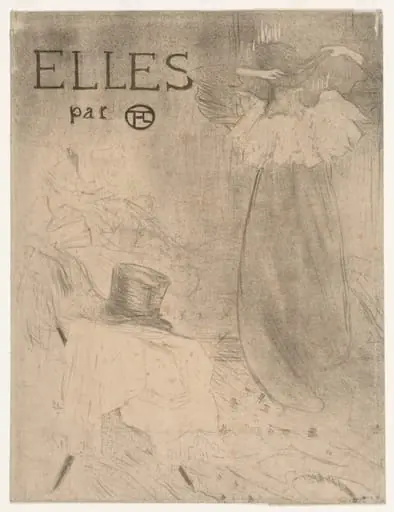
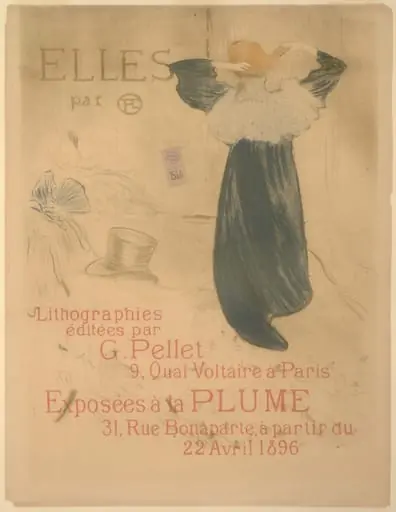
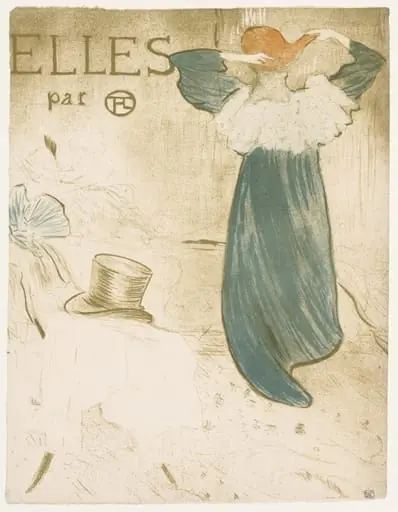
Elles: Frontispiece is a print by the Impressionist artist Henri de Toulouse-Lautrec. It dates from 1896 and is held in the collection of the Cleveland Museum of Art.
About this work
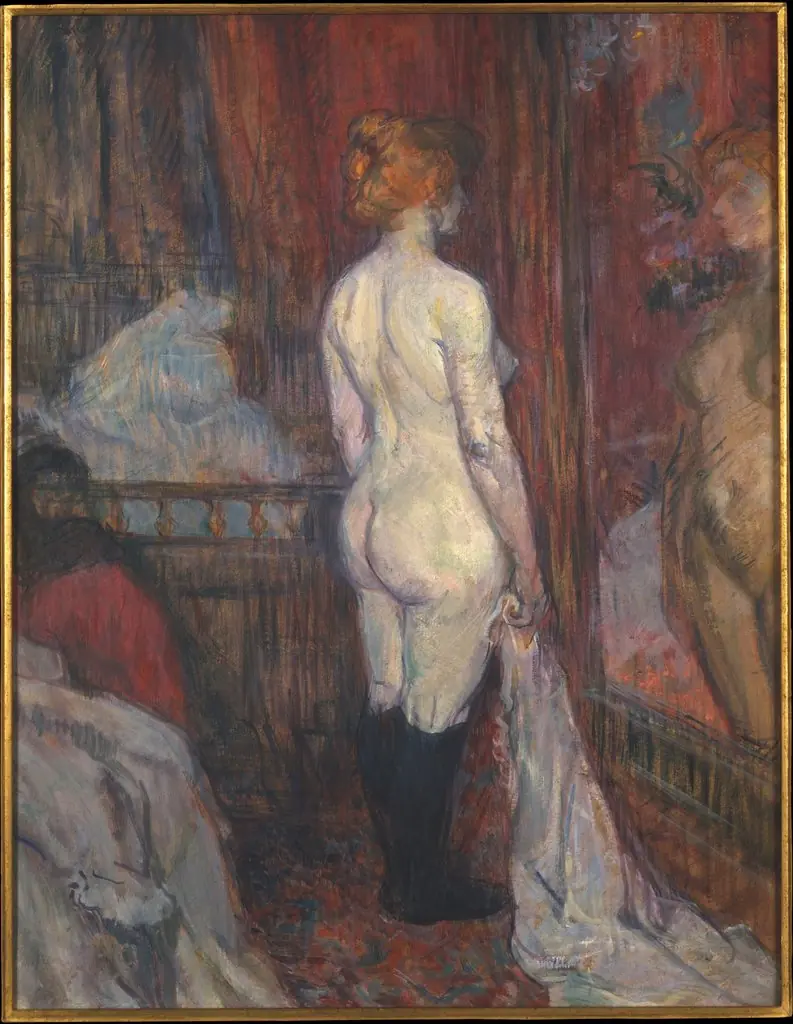
This painting shows a woman in a plain white apron standing against a dark wall.
This painting shows a woman in a plain white apron standing against a dark wall. She looks tired, her arms hanging loose at her sides. The room behind her is bare except for a small window letting in a little light.
Lautrec made these prints to show everyday life in brothels. He wanted to paint the women as real people, not glamorous figures. The set sold poorly at first because it felt too honest.
See how the light falls just right on her face? Look up Henri de Toulouse-Lautrec (French, 1864–1901).
Overview
Henri de Toulouse‑Lautrec created a series of ten color lithographs for the French publisher Gustave Pellet, accompanied by a frontispiece and cover, that portray scenes from Parisian brothels. The set, titled "Elles," was intended to attract new customers but initially sold poorly, likely because its depictions were more observational than erotic.
Subject & Meaning
Lautrec spent extended periods living in various maisons de tolérance between 1892 and 1895, observing the women’s daily routines, from sleeping and bathing to caring for one another. His images emphasize the ordinary, sometimes weary aspects of their lives, presenting the women as individuals rather than idealized temptresses, and subtly convey their isolation and hardship.
Technique & Style
Executed in late‑nineteenth‑century French color lithography, the prints combine bold outlines with delicate washes of hue, allowing nuanced rendering of skin, fabric and light. The frontispiece, for example, shows a woman in a plain white apron against a dark wall, illuminated by a narrow window that highlights her tired expression and relaxed posture.
History & Provenance
Gustave Pellet commissioned the series to broaden his catalogue, but the market’s response was lukewarm at the time of publication. Despite the initial commercial failure, the works later gained recognition for their candid portrayal of a marginalized social group and for their contribution to the development of modern printmaking.
Context
While depictions of prostitutes appeared in contemporary popular press, Lautrec was the first prominent artist to treat the subject with sustained, empathetic focus. His approach diverged from sensationalist portrayals, aligning with a broader fin-de‑siècle interest in the realities of urban life and the lives of those on society’s margins.
Artist & collection
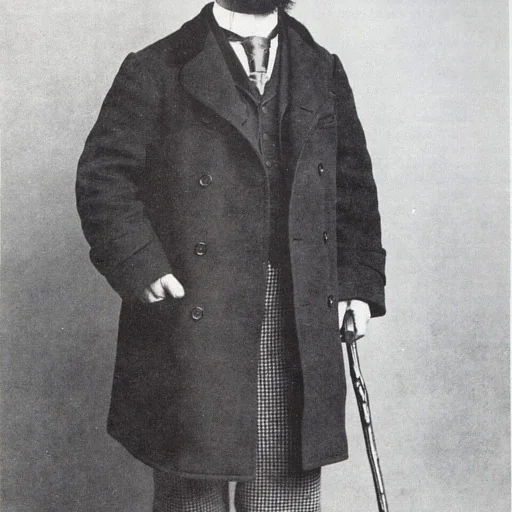
Artist
Comte Henri Marie Raymond de Toulouse-Lautrec-Montfa (24 November 1864 – 9 September 1901), known as Toulouse-Lautrec (French: ), was a French painter, printmaker, draughtsman, caricaturist, and illustrator.