Artwork
Guy and Mealy, in "Paris qui Marche"
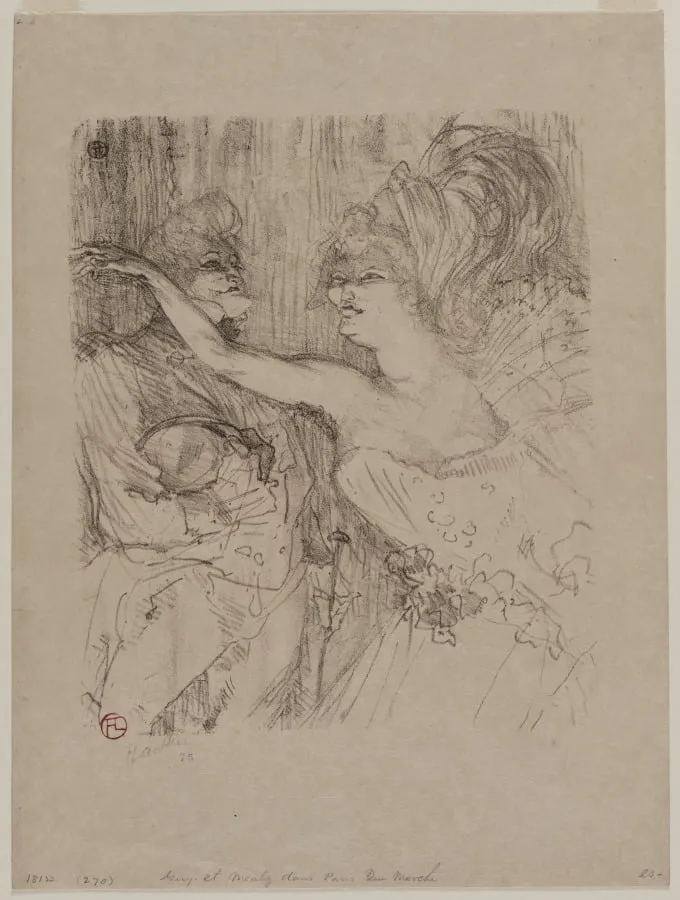
Guy and Mealy, in "Paris qui Marche" is a print by the Impressionist artist Henri de Toulouse-Lautrec. It dates from 1898 and is held in the collection of the Cleveland Museum of Art.
About this work
Overview
Executed with swift, deliberate lines, it belongs to his broader practice of translating live energy into portable studies rather than finished paintings.
Created in 1898, this ink and wash sketch by Henri de Toulouse-Lautrec captures two figures from Paris’s performance world, identified as Guy and Mealy. Part of a series documenting the city’s theatrical life, the work reflects Lautrec’s habit of observing and recording moments from backstage and stage. Executed with swift, deliberate lines, it belongs to his broader practice of translating live energy into portable studies rather than finished paintings.
Subject & Meaning
The figures are likely performers mid-transition between acts, their poses suggesting a pause in motion rather than a staged tableau. The woman’s hand resting on the man’s shoulder implies a familiar, perhaps professional, rapport. Lautrec avoided romanticizing his subjects; here, their attire and posture hint at the transient, labor-intensive nature of entertainment, revealing the human presence behind the spectacle without sentimentality.
Technique & Style
Lautrec employed fluid ink lines and diluted washes to suggest form and movement without detail. The background is left partially undefined, focusing attention on the figures’ gestures and costumes. His approach echoes Impressionist concerns with immediacy but leans into caricature and structural clarity, using economy of line to convey rhythm and posture. The absence of shading and the emphasis on contour reflect his background in lithography and poster design.
History & Provenance
This sketch was produced during a period when Lautrec regularly attended music halls and cabarets, often sketching performers between shows. It was likely made as a preparatory study, possibly for a larger composition or poster. The work remained in private hands after his death, later entering institutional collections through estate sales and donations, preserving its status as a direct record of his observational practice.
Context
In late 19th-century Paris, the rise of public entertainment venues like the Moulin Rouge created new subjects for artists. Lautrec, an outsider due to his physical condition and aristocratic isolation, found kinship among performers who also lived on society’s margins. His sketches document a culture where art, labor, and spectacle blurred, offering a quiet counterpoint to the idealized imagery of academic painting.
Legacy
Lautrec’s sketches, including this one, helped redefine the role of drawing in modern art—not as preliminary, but as a finished expression of perception. His candid portrayals of performers influenced later generations of illustrators and expressionist artists who valued emotional truth over polish. These works remain vital for understanding how urban life was visually documented outside traditional institutions.
Artist & collection
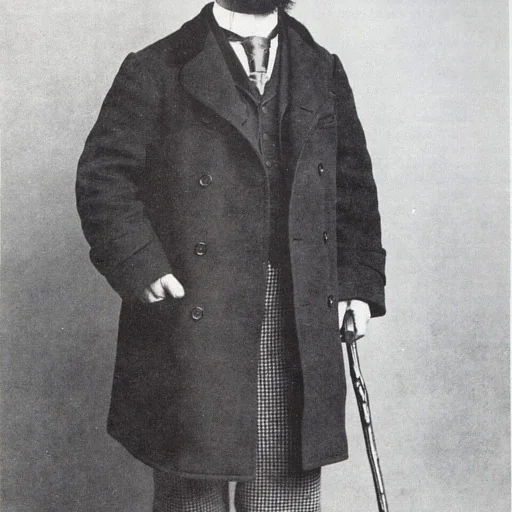
Artist
Comte Henri Marie Raymond de Toulouse-Lautrec-Montfa (24 November 1864 – 9 September 1901), known as Toulouse-Lautrec (French: ), was a French painter, printmaker, draughtsman, caricaturist, and illustrator.

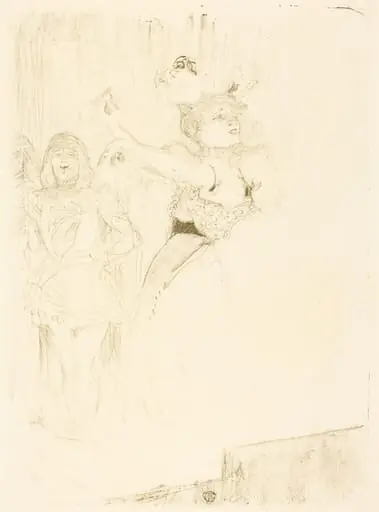 Lender Dancing the Bolero in "Chilperic" (Lender dansant le pas du boléro dans "Chilpéric")
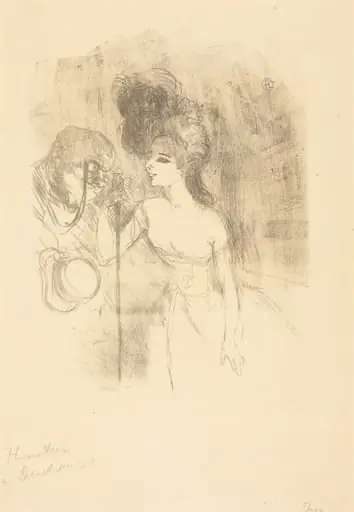 Anna Held and Baldy (Anna Held et Baldy)
 A Princely Idyl, Clara Ward
 Le Café
 The Dancer, No. 1
 Carnival (Carnaval)
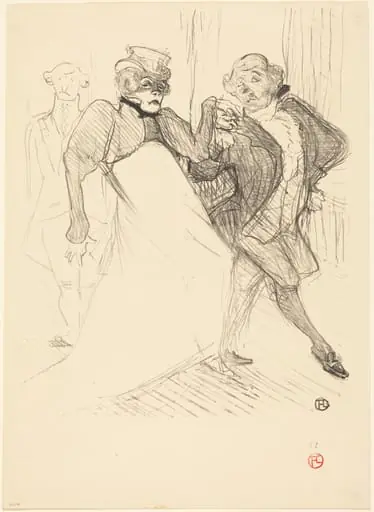 Rejane and Galipaux in "Madame Sans-Gêne" (Réjane et Galipaux dans "Madame Sans-Gêne")
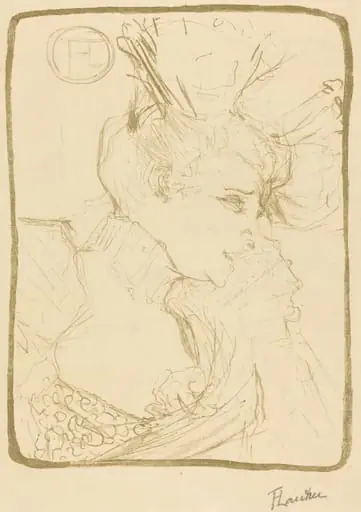 Bust of Mademoiselle Marcelle Lender (Mademoiselle Marcelle Lender, en buste)
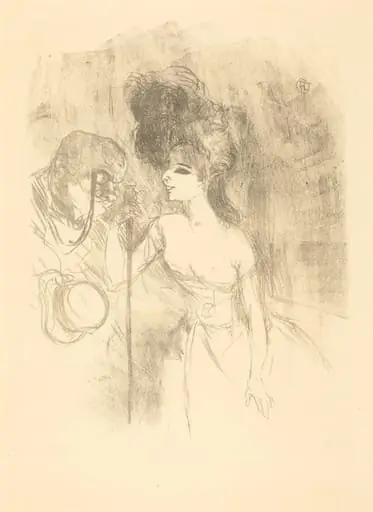 Anna Held and Baldy (Anna Held et Baldy)
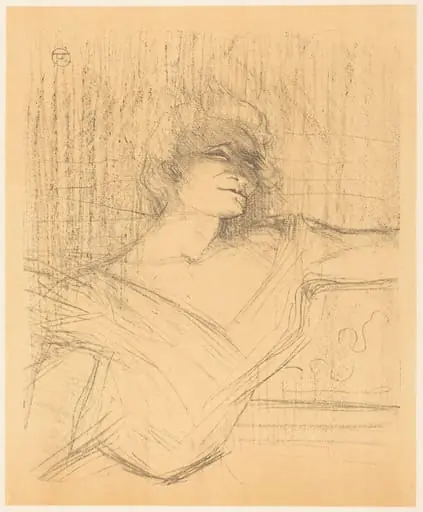 In "La glu" (Dans "La glu")
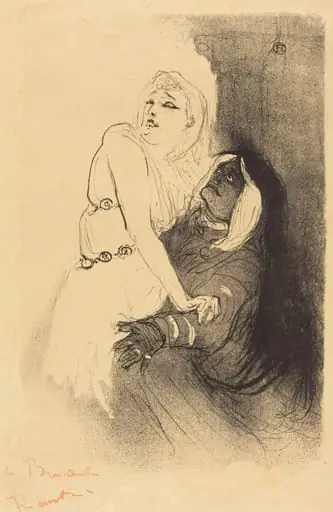 At the Renaissance: Sarah Bernhardt in "Phedre" (A la Renaissance: Sarah Bernhardt dans "Phèdre")
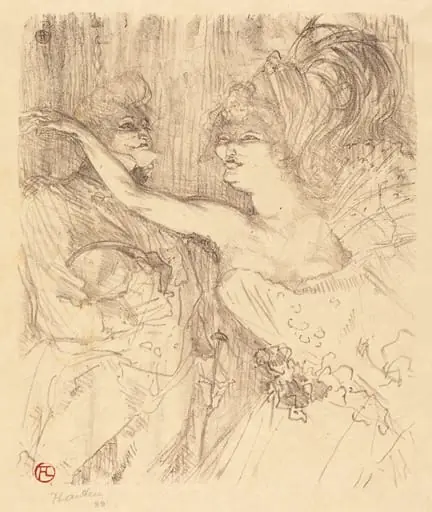 Guy and Mealy in "Paris qui marche" (Guy et Mealy dans "Paris qui marche")