Artwork
Napoleon
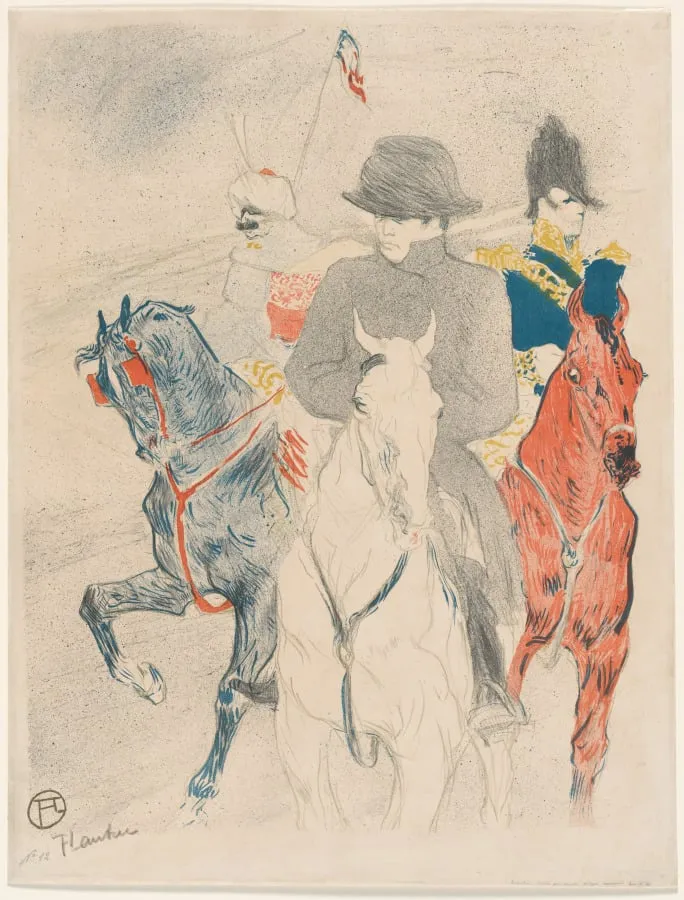
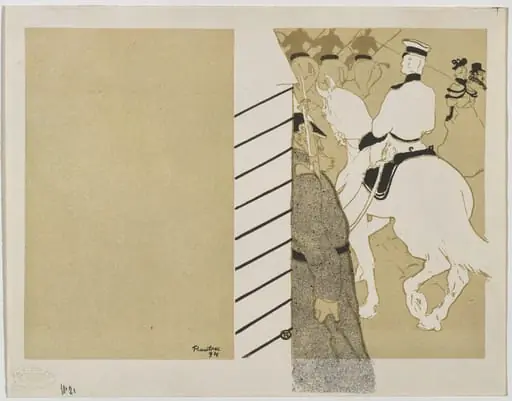
Napoleon is a print by the Impressionist artist Henri de Toulouse-Lautrec. It dates from 1895 and is held in the collection of the Cleveland Museum of Art.
About this work
Next, check out Henri de Toulouse-Lautrec (French, 1864–1901) for more of his bold, expressive work.
This print shows three riders on horseback. The person in the middle wears a dark coat and hat, holding a flag with a red cross. The rider on the right is in a bright blue coat with gold trim, and the horse is red. The horse on the left is dark with a red saddle blanket.
The sketchy lines and bold colors make it feel fast and lively. The artist used quick, loose strokes instead of smooth details.
Next, check out Henri de Toulouse-Lautrec (French, 1864–1901) for more of his bold, expressive work.
Overview
Henri de Toulouse-Lautrec created this 1895 print as part of his broader exploration of movement and performance in Parisian society. Though titled *Napoleon*, the image does not depict the historical figure but rather evokes military pageantry through stylized equestrian figures. Executed in lithography, the work reflects Lautrec’s signature approach: dynamic composition, flattened perspective, and expressive line work that prioritizes energy over realism.
Subject & Meaning
The print portrays three mounted riders in a ceremonial formation, their costumes and flags suggesting a mock military procession. The central figure bears a red-cross banner, possibly alluding to chivalric or religious symbolism, while the vividly colored horses and attire imply theatricality over historical accuracy. Lautrec uses this scene to comment on the performative nature of authority and spectacle, themes recurrent in his depictions of nightlife and public display.
Technique & Style
Lautrec employed lithography to achieve sharp contrasts and fluid, sketch-like contours. Bold outlines define the riders and horses, while areas of flat, unmodulated color—deep blue, crimson, and black—enhance visual rhythm. The loose, rapid strokes convey motion and spontaneity, rejecting academic detail in favor of expressive immediacy. This technique aligns with his interest in Japanese prints and the emerging modernist aesthetic of simplification.
History & Provenance
Created in 1895, this print emerged during Lautrec’s most prolific period of graphic work, when he produced posters and lithographs for Parisian venues. It was likely part of a private or limited edition, not widely distributed. Though its exact early ownership is undocumented, it entered public collections in the 20th century as interest grew in Lautrec’s role in the evolution of modern printmaking.
Context
In 1890s Paris, military parades and historical reenactments were popular spectacles, often blending fact and fantasy. Lautrec, fascinated by performance in all forms—from cabarets to cavalry drills—used such imagery to explore identity and illusion. His aristocratic background gave him access to elite circles, yet his art consistently focused on the constructed nature of power and status, whether in brothels or on horseback.
Legacy
This print exemplifies Lautrec’s influence on modern graphic design and expressionist art. His fusion of commercial print techniques with personal, observational subject matter helped redefine lithography as a vehicle for artistic commentary. Though lesser-known than his cabaret posters, works like *Napoleon* demonstrate his consistent interest in movement, costume, and the theatricality of everyday life.
Artist & collection
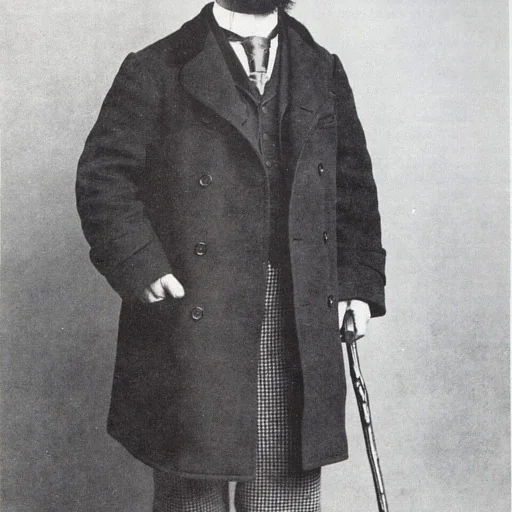
Artist
Comte Henri Marie Raymond de Toulouse-Lautrec-Montfa (24 November 1864 – 9 September 1901), known as Toulouse-Lautrec (French: ), was a French painter, printmaker, draughtsman, caricaturist, and illustrator.

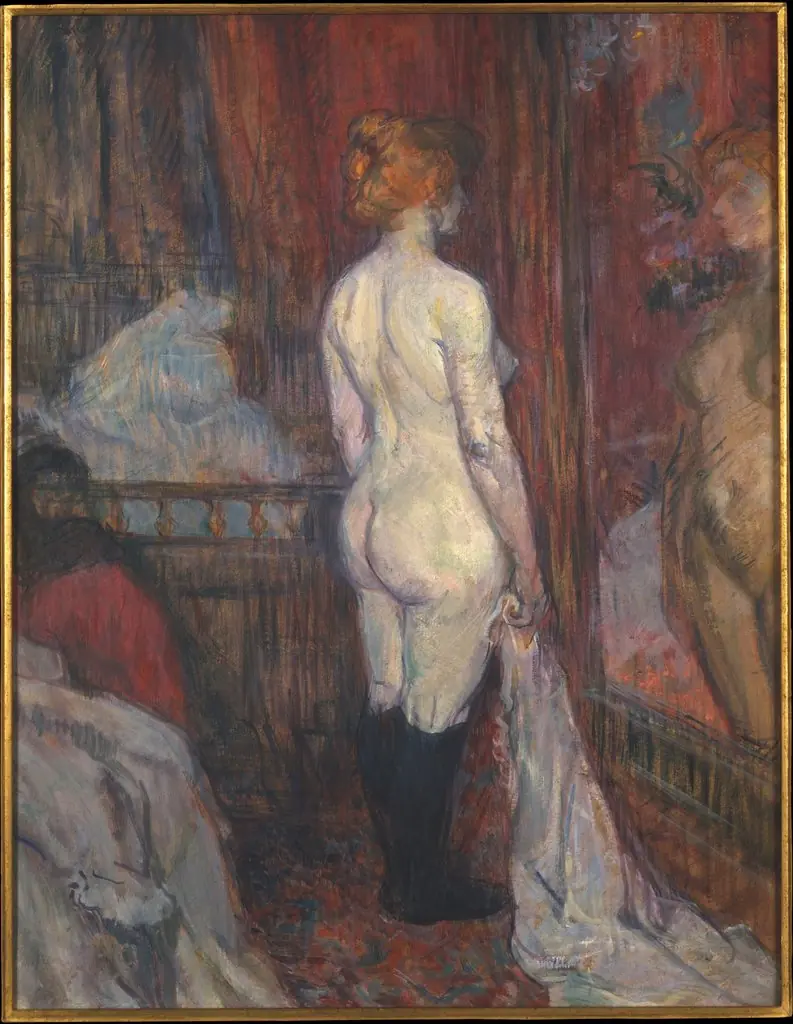
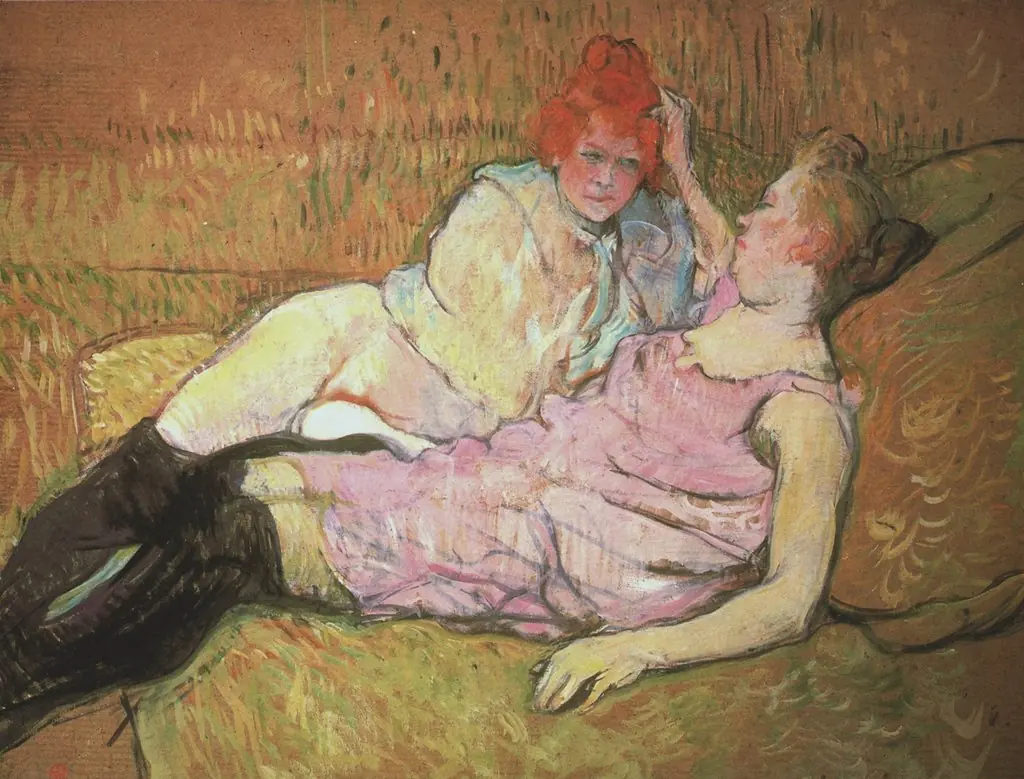
 Untitled
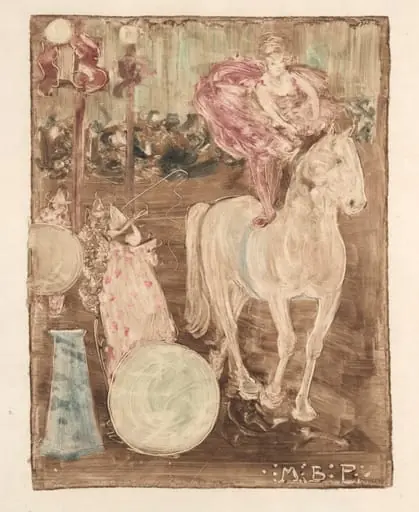 Bareback Rider
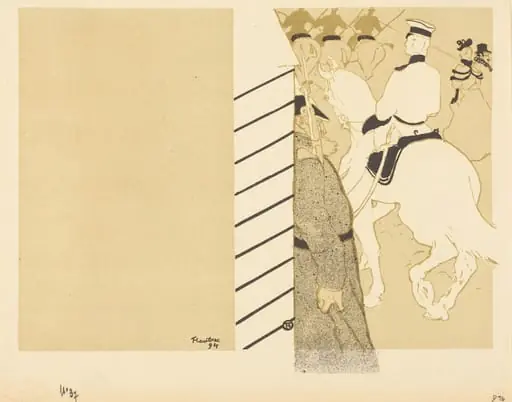 German Babylon (Babylone d'Allemagne)
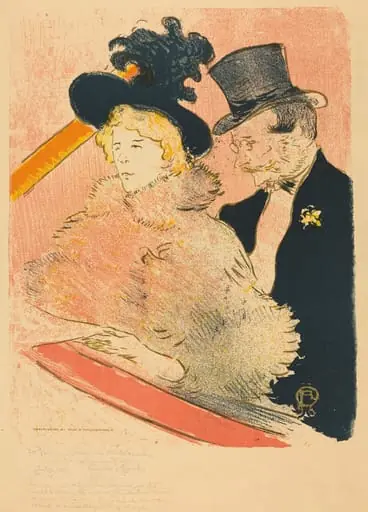 At the Concert (Au concert)
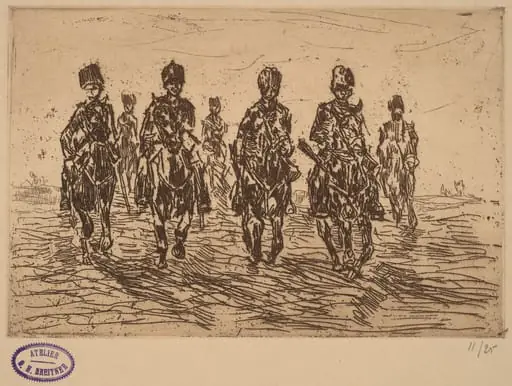 Galloping Hussars in Front View
 Untitled
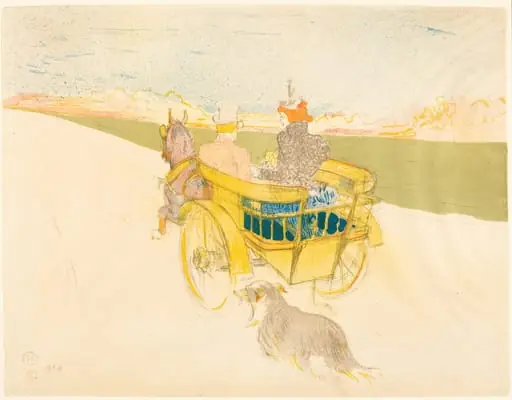 Country Outing (Partie de campagne)
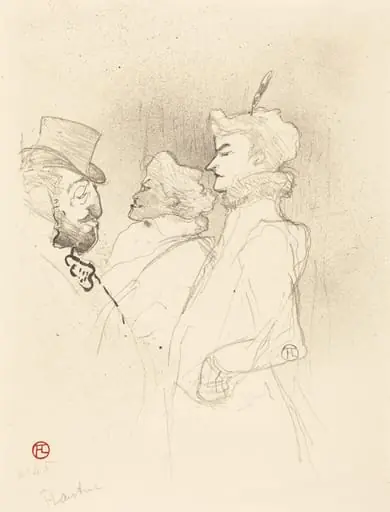 Why Not?...Once Is Not a Habit (Pourquoi pas?...Une fois n'est pas coutume)
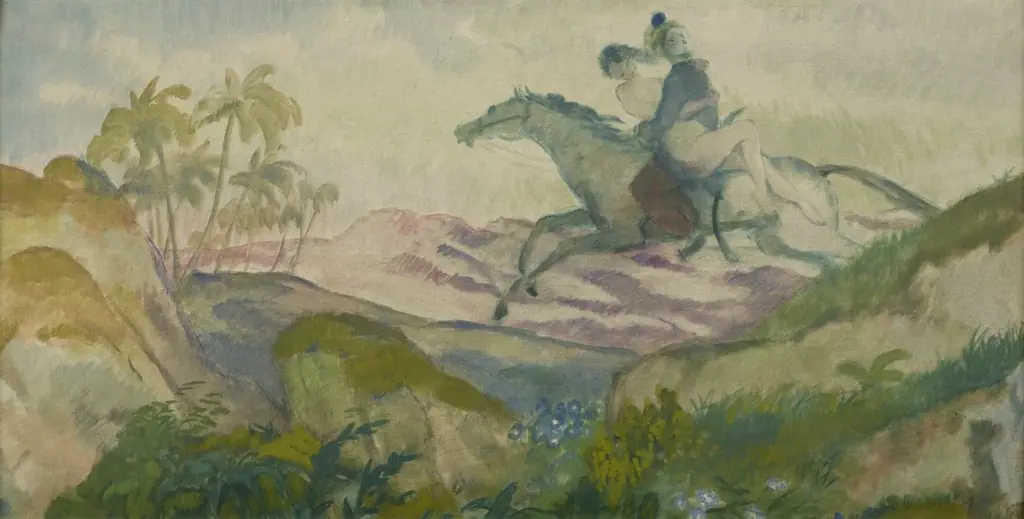 Paar rücklings auf Pferd
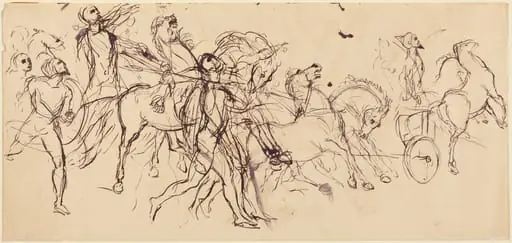 Charioteers (recto and verso)
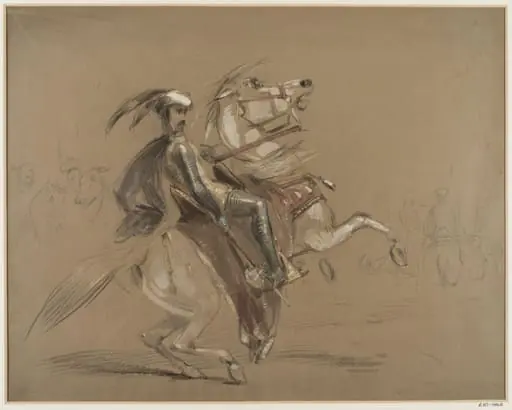 A knight in armour on a rearing horse, with other riders in the background
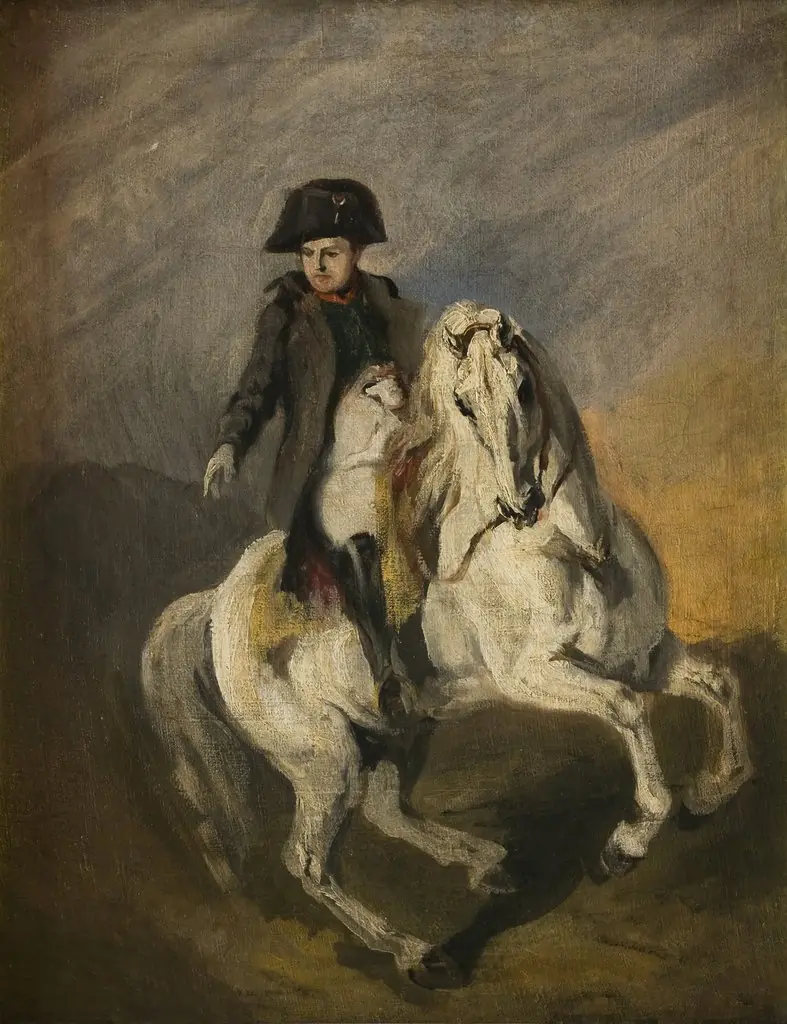 Napoleon on a Grey Horse