Artwork
Untitled
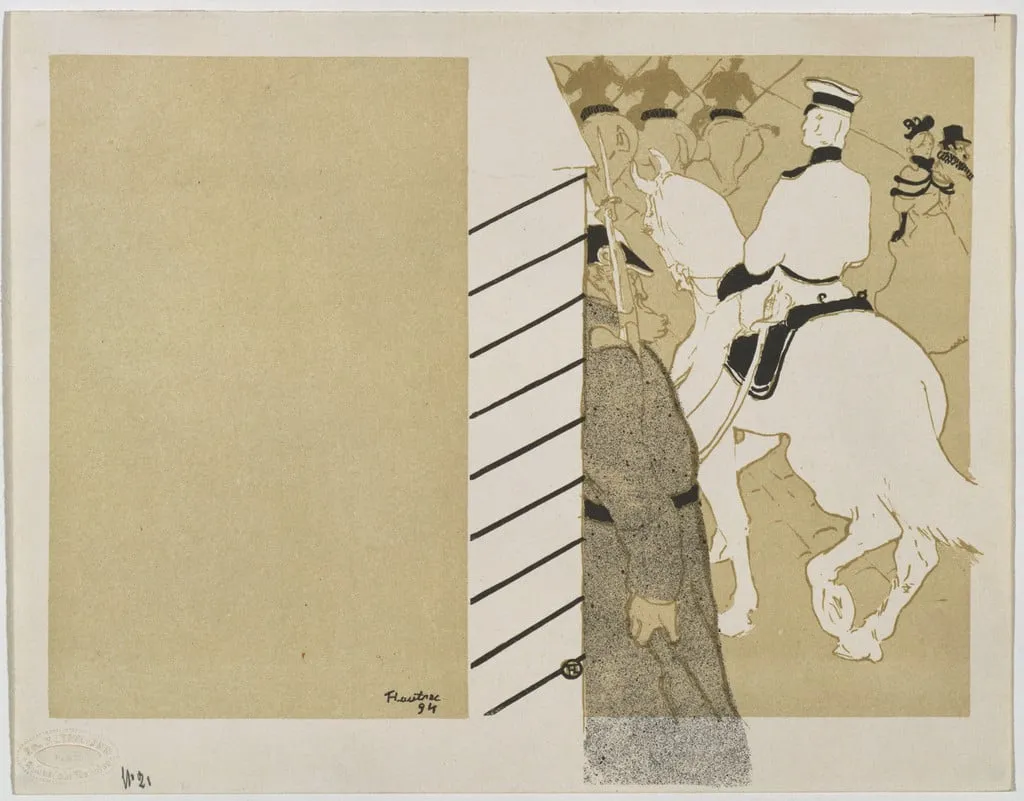
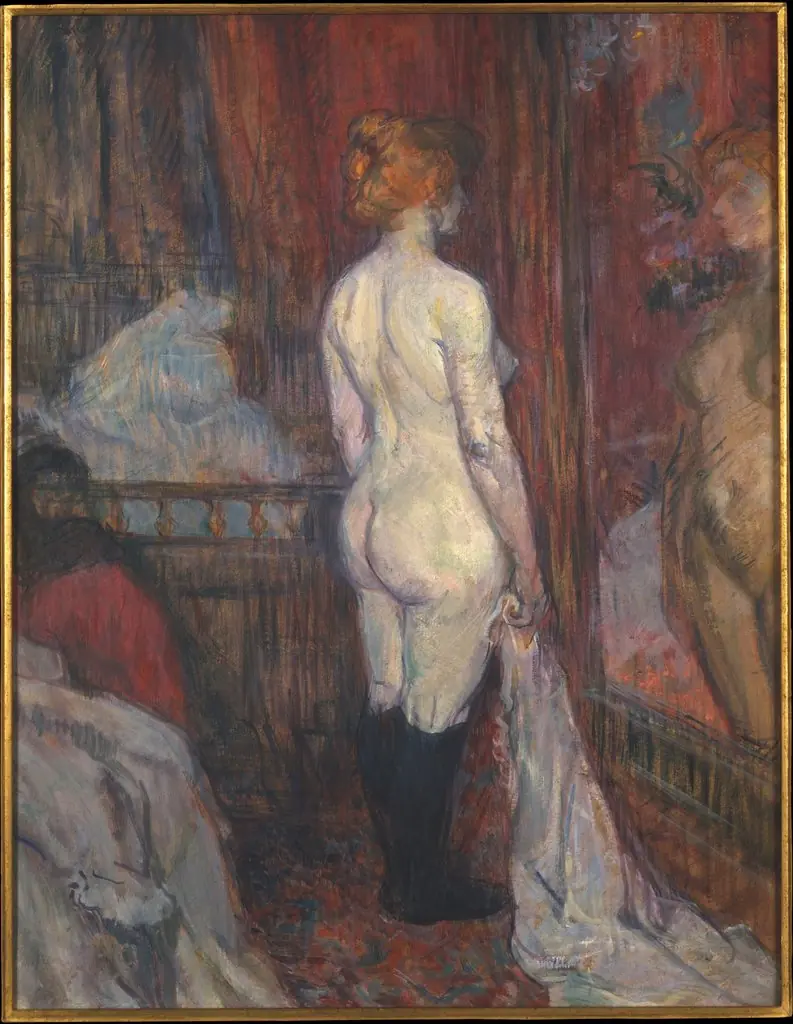
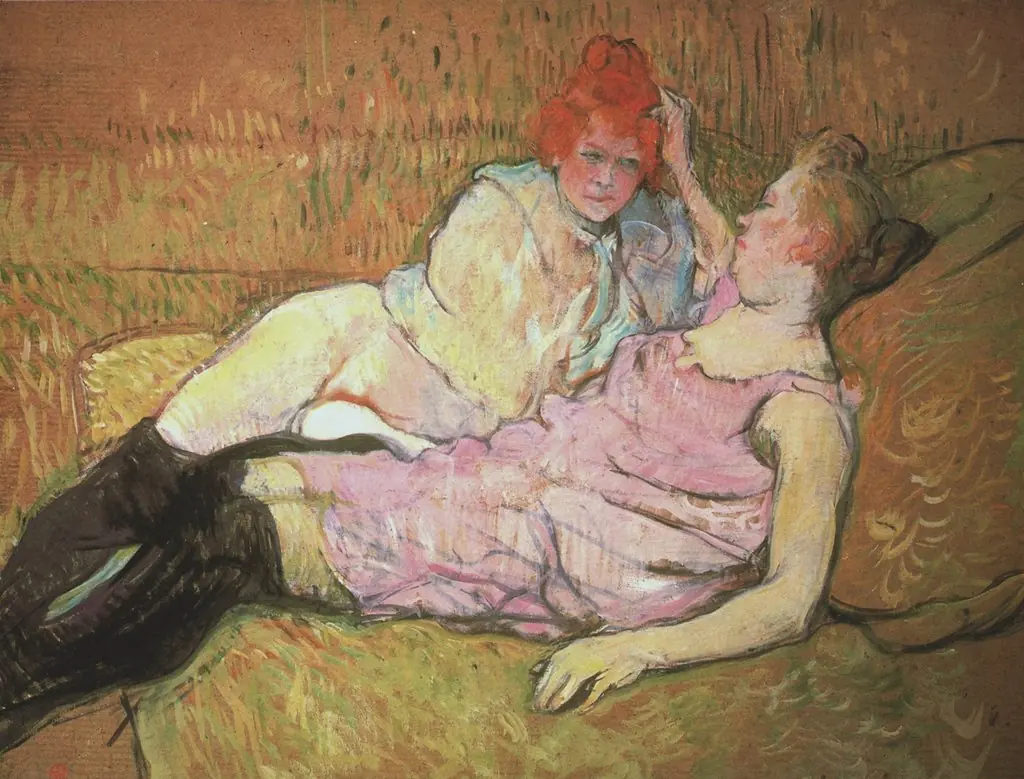
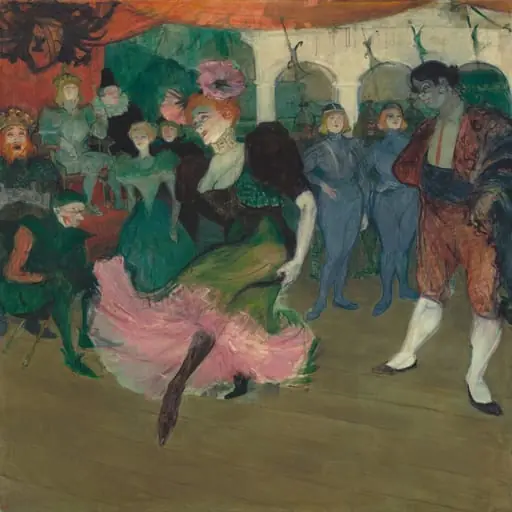
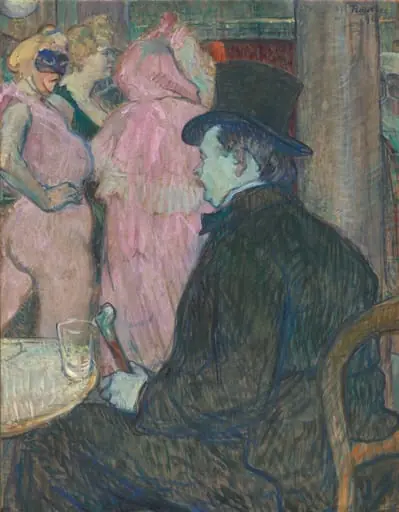
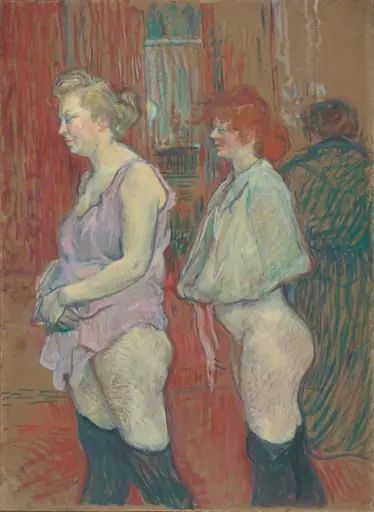
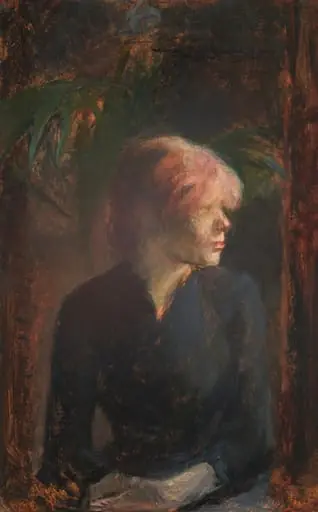
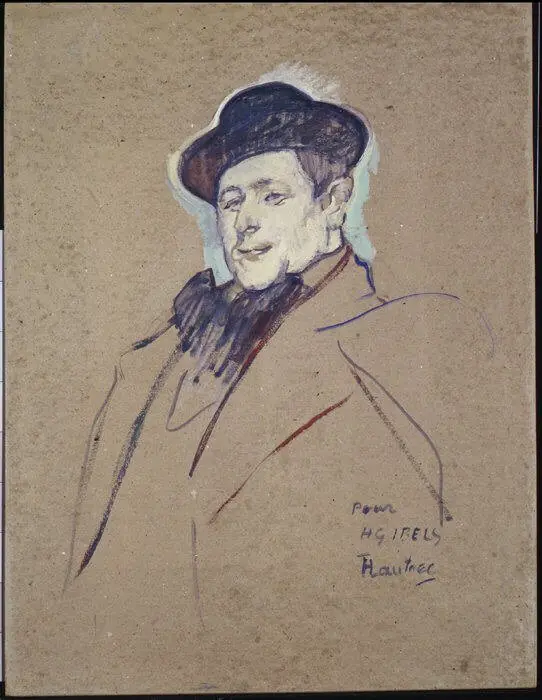
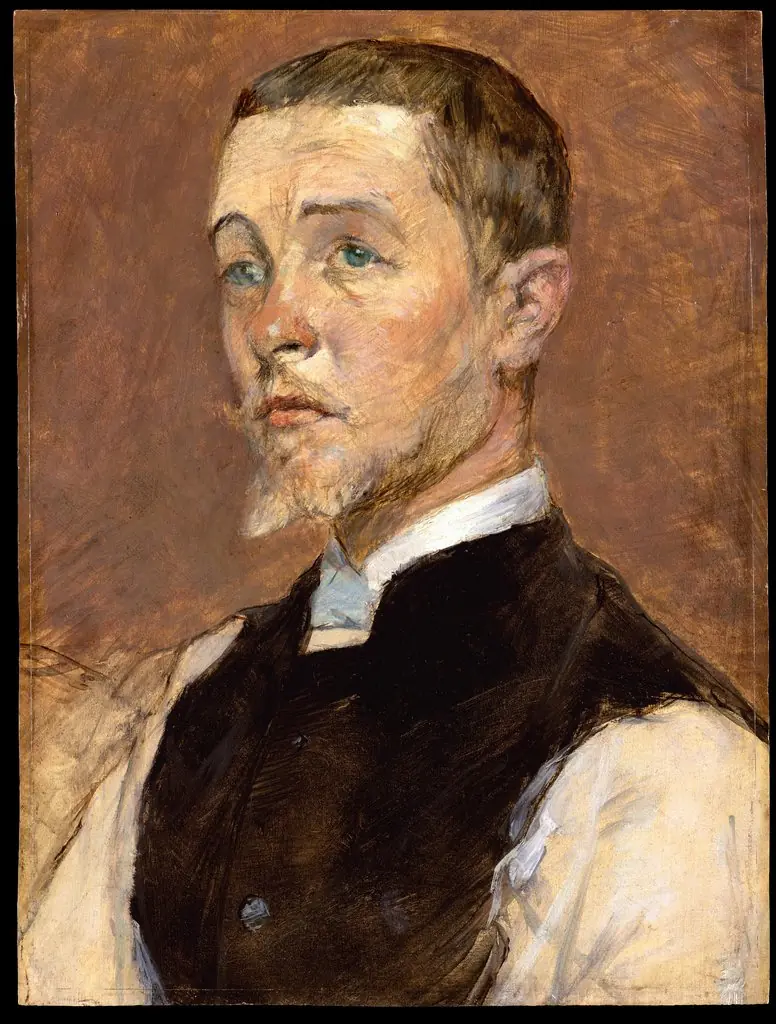
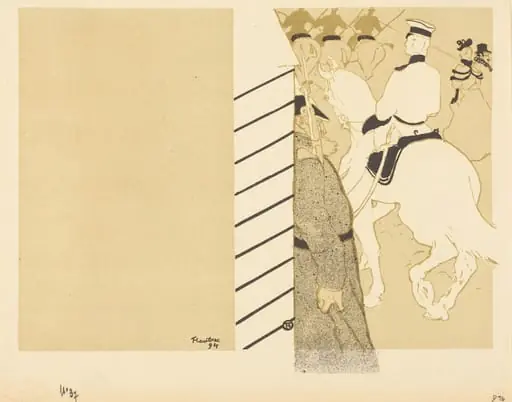
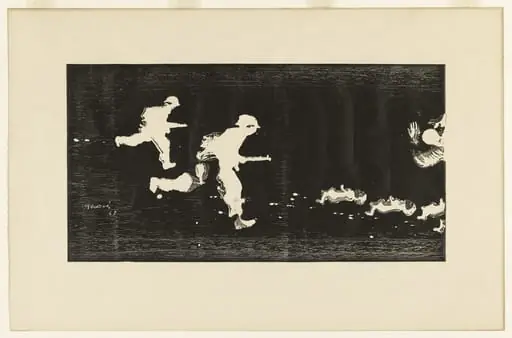
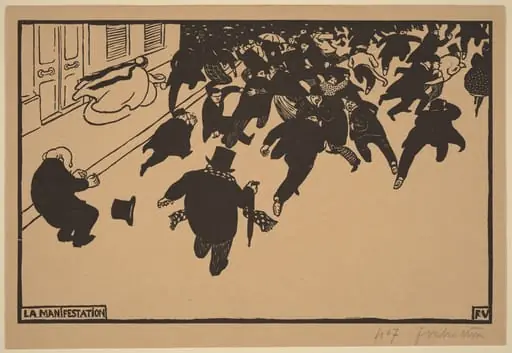
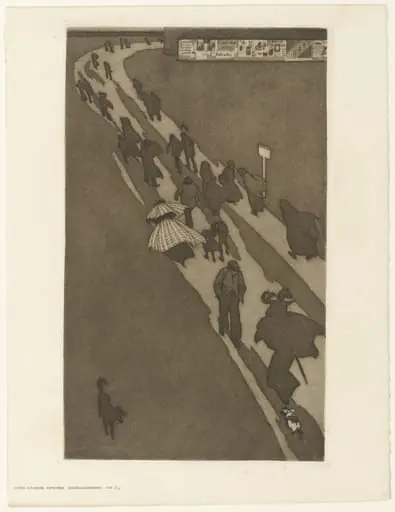
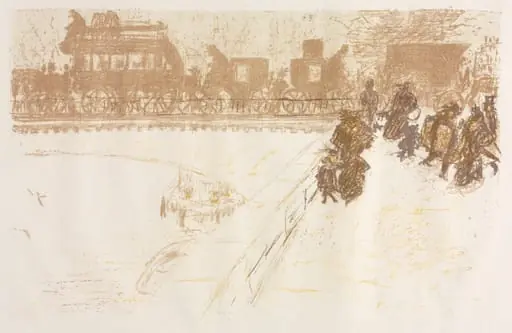
Untitled is an ink print by the Impressionist artist Henri de Toulouse-Lautrec. It dates from 1894 and is held in the collection of the Museum of Modern Art.
About this work
Overview
Though untitled, it reflects his broader practice of documenting public spectacles with immediacy and precision.
Created in 1894, this lithograph by Henri de Toulouse-Lautrec captures a moment from Parisian street life during a period of intense social and artistic transformation. Though untitled, it reflects his broader practice of documenting public spectacles with immediacy and precision. Executed in black ink on paper, the work exemplifies his mastery of lithographic technique, using bold contours and minimal tonal variation to convey motion and atmosphere.
Subject & Meaning
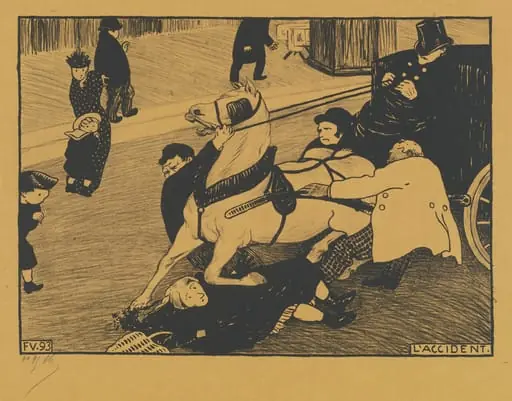
The image centers on a mounted figure in a white uniform, likely a military officer or ceremonial guard, guiding a white horse through a dense crowd. Surrounding figures—pedestrians, riders, and carriage occupants—suggest a public procession or parade. The cropped composition and lack of contextual detail emphasize fragmentation, hinting at the transient, anonymous nature of urban experience. Toulouse-Lautrec’s focus on such scenes underscores his interest in the rhythms of everyday life beyond the stage.
Technique & Style
Toulouse-Lautrec employed lithography to achieve sharp, linear clarity and a sense of spontaneity. The composition relies on flat, unmodulated black lines with minimal shading, creating a graphic intensity that echoes Japanese woodblock prints. The abrupt cutoff at the left edge suggests the scene extends beyond the frame, reinforcing the impression of a fleeting glance. His deliberate simplification of form and rejection of naturalistic detail align with modernist tendencies in printmaking of the era.
History & Provenance
This work emerged from Toulouse-Lautrec’s active period in Montmartre, where he produced numerous prints for posters, journals, and private collections. Likely made as a standalone print rather than a reproduction, it was probably circulated among artists and collectors familiar with his depictions of Parisian life. Its survival in private or institutional hands reflects its status as part of his lesser-known but significant graphic output beyond commercial posters.
Context
In the 1890s, Paris was a hub of visual experimentation, with lithography gaining favor among artists seeking alternatives to traditional painting. Toulouse-Lautrec’s work intersected with the rise of illustrated periodicals and the popularity of public spectacles like parades and military reviews. His choice to depict such scenes—rather than cabaret performers—reveals a broader engagement with the city’s visible rituals, capturing both order and chaos in its streets.
Legacy
This lithograph contributes to Toulouse-Lautrec’s reputation as a keen observer of modern urban life. His use of cropping, line, and flatness influenced later generations of graphic artists and illustrators, particularly in the development of modern poster design and editorial illustration. Though less famous than his cabaret scenes, works like this demonstrate his consistent interest in the dynamics of movement, crowd, and public performance.
Artist & collection
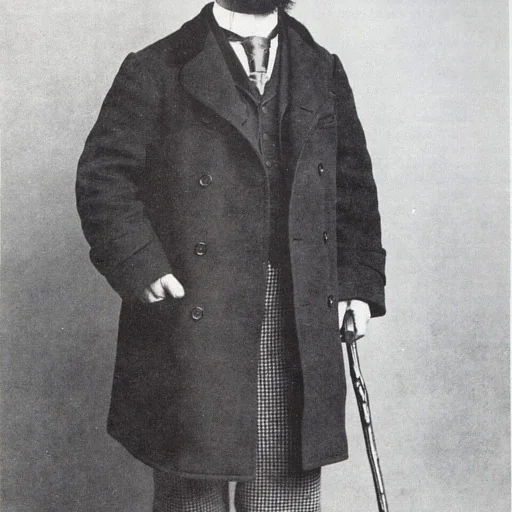
Artist
Comte Henri Marie Raymond de Toulouse-Lautrec-Montfa (24 November 1864 – 9 September 1901), known as Toulouse-Lautrec (French: ), was a French painter, printmaker, draughtsman, caricaturist, and illustrator.