Artwork
The Chatelaine or the Tocsin
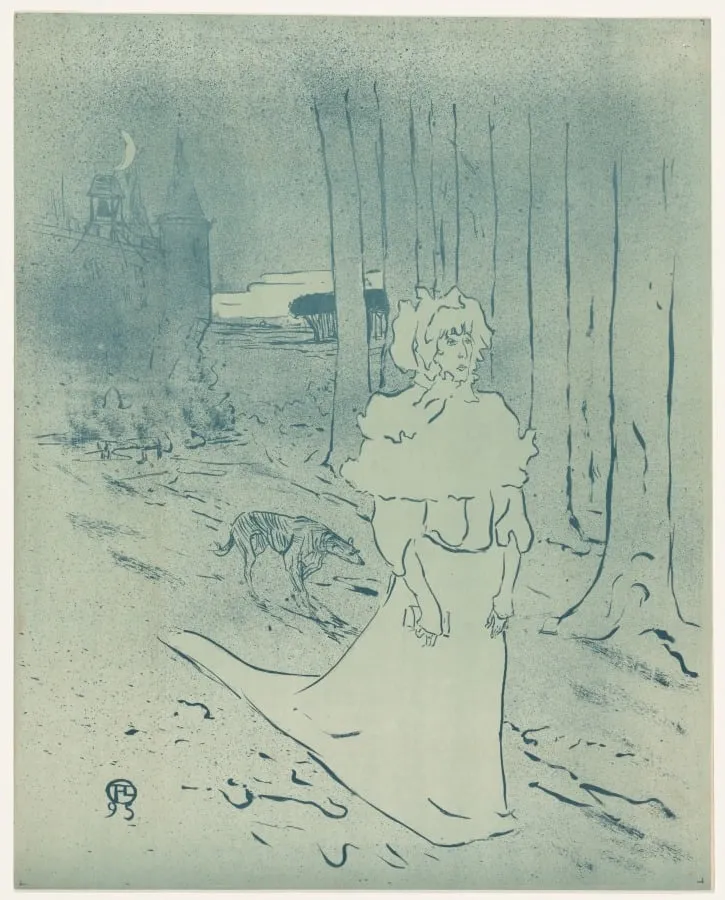
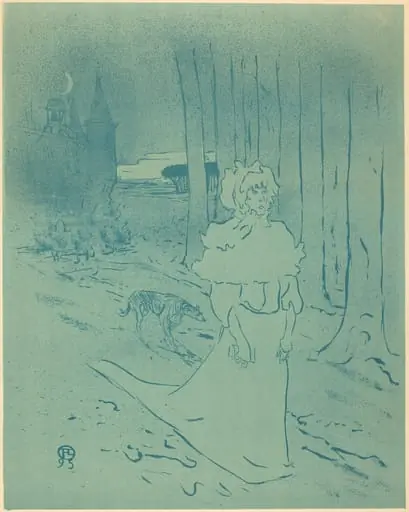
The Chatelaine or the Tocsin is a print by the Impressionist artist Henri de Toulouse-Lautrec. It dates from 1895 and is held in the collection of the Cleveland Museum of Art.
About this work
Overview
Created in 1895, *The Chatelaine or the Tocsin* is a lithographic print by Henri de Toulouse-Lautrec.
Created in 1895, *The Chatelaine or the Tocsin* is a lithographic print by Henri de Toulouse-Lautrec. Though best known for his scenes of Parisian entertainment, this work departs from his usual urban subjects, turning instead to a nocturnal, almost mythic landscape. Executed with rapid, expressive lines, it captures a moment of quiet tension between human presence and the natural world, reflecting Lautrec’s broader interest in mood over narrative.
Subject & Meaning
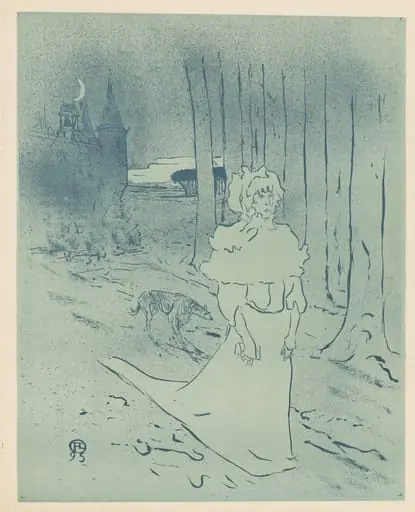
The print depicts a woman in a long gown standing alone in a shadowed forest, a wolf at her feet gazing upward. Behind her, a distant town with a church steeple is illuminated by a low-hanging moon. The imagery evokes folklore and isolation, suggesting themes of vigilance or transition. The title, referencing both a noblewoman’s keyholder and a warning bell, hints at a symbolic threshold—between civilization and wilderness, safety and danger.
Technique & Style
Lautrec employed loose, fluid linework characteristic of his graphic style, using minimal strokes to suggest form and atmosphere. The lithographic process allowed for soft tonal gradations, with shadows dissolving into the paper’s texture. Unlike his bold, colorful posters, this piece relies on monochrome contrast and delicate line variation to convey depth and emotion, aligning with the introspective tone of the scene.
History & Provenance
The print was produced during a period when Lautrec was increasingly withdrawn from Parisian nightlife, focusing on more personal, symbolic subjects. It was likely part of a small, private edition, not intended for mass distribution. Its early ownership remains undocumented, but it entered public collections in the early 20th century, valued for its departure from his more famous cabaret scenes.
Context
Emerging alongside Symbolist and Decadent movements, the work reflects a broader late-19th-century fascination with myth, solitude, and the subconscious. While Lautrec’s peers often depicted urban decay or eroticism, this piece turns inward, engaging with rural legend and psychological unease. It resonates with contemporary literary and visual explorations of liminal spaces and hidden fears.
Legacy
Though less known than his posters, *The Chatelaine or the Tocsin* illustrates Lautrec’s versatility and willingness to explore non-commercial themes. Its quiet intensity influenced later printmakers drawn to psychological depth over spectacle. The work remains a quiet testament to his ability to convey complex emotion through minimal means, expanding the scope of his artistic legacy beyond the stage and the street.
Artist & collection
Artist
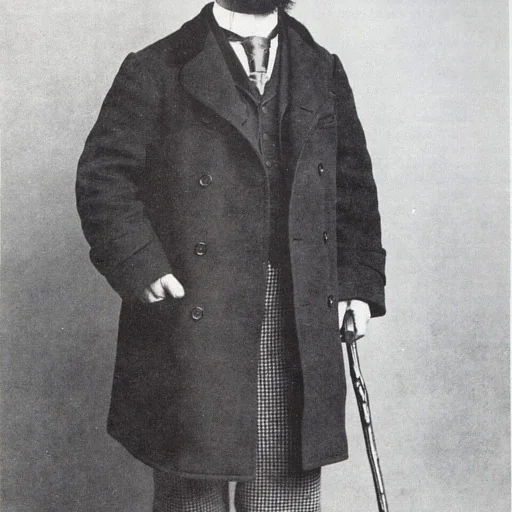
Comte Henri Marie Raymond de Toulouse-Lautrec-Montfa (24 November 1864 – 9 September 1901), known as Toulouse-Lautrec (French: ), was a French painter, printmaker, draughtsman, caricaturist, and illustrator.

 Emilienne d'Alençon
 The Manor Lady or the Omen (La chatelaine ou le tocsin)
 Invocation mémoriale
 Untitled
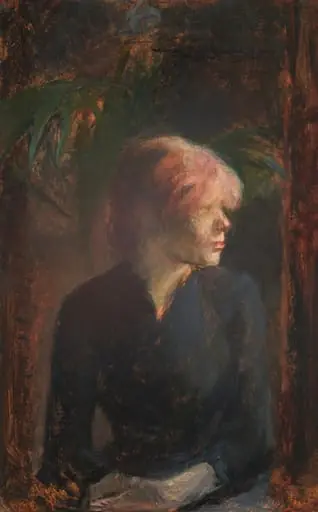
 Study of a Woman (Etude de femme)
 La Vie muette
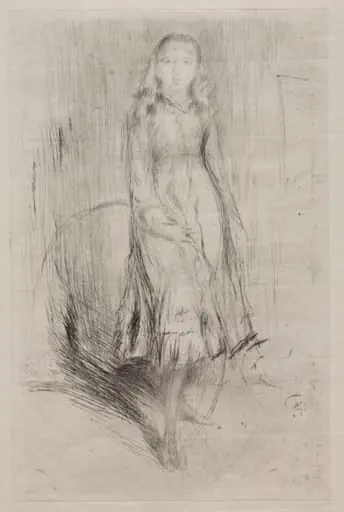 Florence Leyland
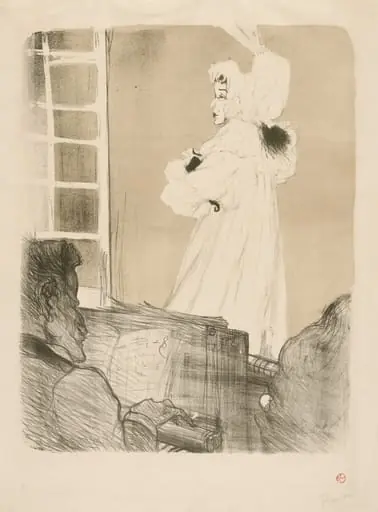 Miss May Belfort
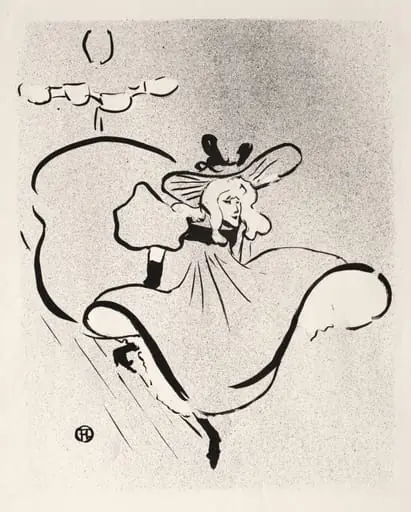 Jane Avril
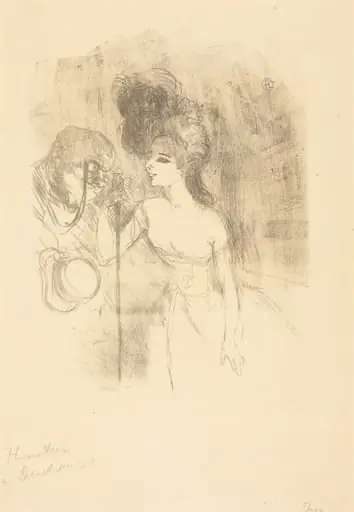 Anna Held and Baldy (Anna Held et Baldy)
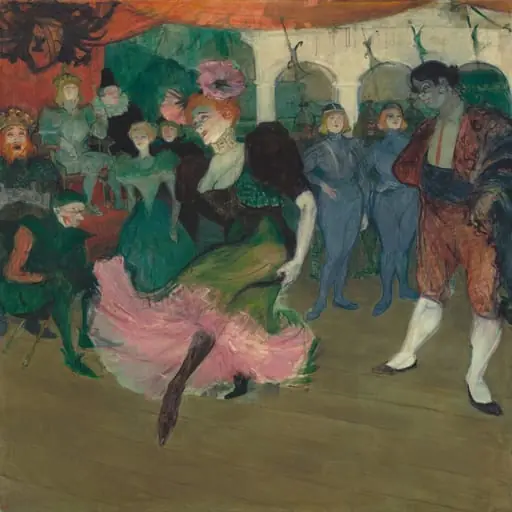
 Lender Dancing the Bolero in "Chilperic" (Lender dansant le pas du boléro dans "Chilpéric")
 The Manor Lady or the Omen (La chatelaine ou le tocsin)