Artwork
The Manor Lady or the Omen (La chatelaine ou le tocsin)
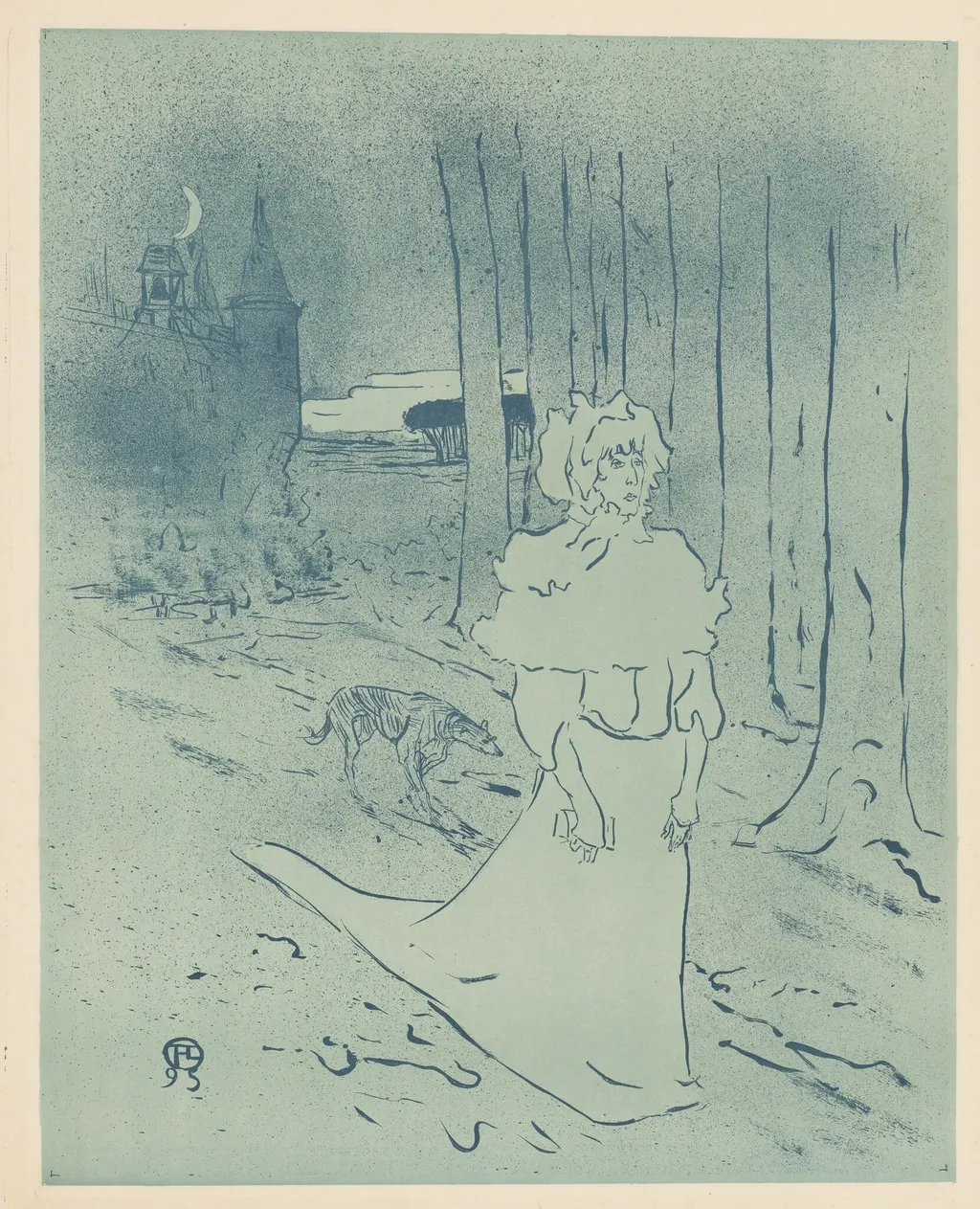
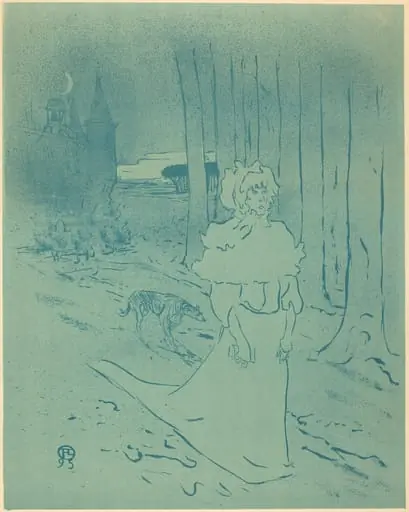
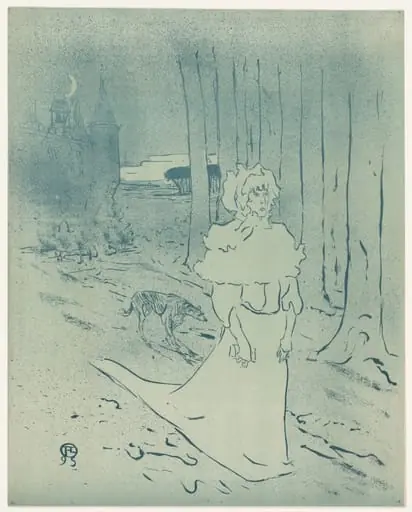
The Manor Lady or the Omen (La chatelaine ou le tocsin) is an ink print by the Impressionist artist Henri de Toulouse-Lautrec. It dates from 1895 and is held in the collection of the National Gallery of Art.
About this work
Overview
Rendered in turquoise and light blue, it presents a solitary woman moving through a moonlit forest, accompanied by a small dog.
Created in 1895, this lithograph by Henri de Toulouse-Lautrec is one of his rare landscape-themed prints, departing from his usual depictions of Parisian nightlife. Rendered in turquoise and light blue, it presents a solitary woman moving through a moonlit forest, accompanied by a small dog. The village behind her is barely discernible, its forms softened by the print’s muted palette and loose linework, suggesting a transition between the real and the imagined.
Subject & Meaning
The figure, dressed in a flowing gown and barefoot, moves with quiet purpose through a wooded landscape, evoking mythic or folkloric associations. Her blurred face and ghostly presence suggest an ethereal being—perhaps a spirit, a memory, or a symbolic figure from rural legend. The distant church spire and village hint at a world left behind, reinforcing a theme of withdrawal or transition, possibly reflecting the artist’s own sense of alienation from aristocratic society.
Technique & Style
Toulouse-Lautrec employed lithography to achieve a soft, atmospheric effect, using minimal ink tones of turquoise and pale blue to suggest moonlight and depth. The lines are fluid and sketchlike, avoiding sharp definition, especially around the figure’s face and the distant buildings. This deliberate ambiguity creates a dreamlike quality, contrasting with his more structured poster designs and revealing a more introspective side of his artistic practice.
History & Provenance
The print was produced in 1895 during a period when Toulouse-Lautrec was exploring personal themes beyond cabaret scenes. It was likely printed in a small edition, possibly for private distribution rather than commercial use. No public record of its initial exhibition exists, and its early ownership remains undocumented, suggesting it was not intended for mass circulation but rather as a private artistic experiment.
Context
While Toulouse-Lautrec is best known for his depictions of Montmartre’s performers and patrons, this work aligns with late 19th-century European interest in folklore, Symbolist imagery, and the mystical qualities of nature. His physical limitations and withdrawal from social circles may have deepened his engagement with solitary, introspective subjects, drawing from literary and visual traditions that favored mood over narrative clarity.
Legacy
Though less known than his posters, this lithograph reveals Toulouse-Lautrec’s capacity for poetic understatement and emotional nuance. It anticipates later modernist explorations of psychological space and atmospheric printmaking. Its rarity and departure from his commercial output have made it a point of interest for scholars examining the private, non-public dimensions of his artistic vision.
Artist & collection
Artist
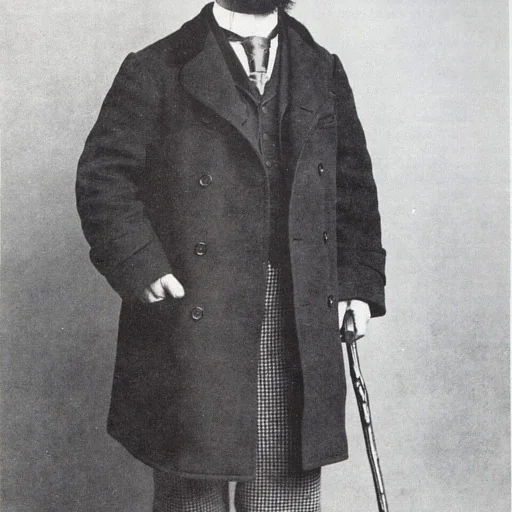
Comte Henri Marie Raymond de Toulouse-Lautrec-Montfa (24 November 1864 – 9 September 1901), known as Toulouse-Lautrec (French: ), was a French painter, printmaker, draughtsman, caricaturist, and illustrator.

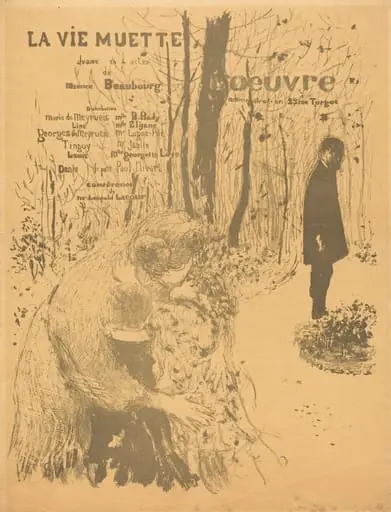 La Vie muette
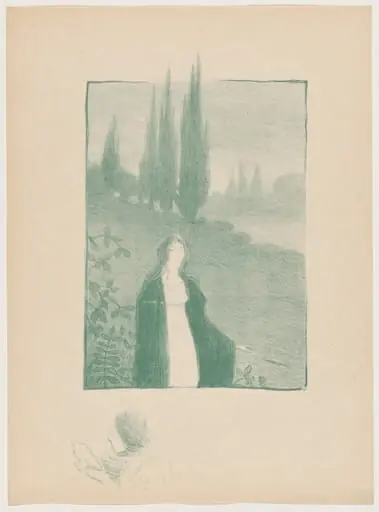 Invocation mémoriale
 Untitled
 Volpini Suite: Human Misery (Misères Humaines)
 La Victoire
 Study of a Woman (Etude de femme)
 Anna Held and Baldy (Anna Held et Baldy)
 untitled (Woman descending onto a street of umbrellas)
 Rosmersholm; Le Gage
 Elle venait lentement...
 The Manor Lady or the Omen (La chatelaine ou le tocsin)
 The Chatelaine or the Tocsin