Artwork
Study for In the Salon on the Rue des Moulins
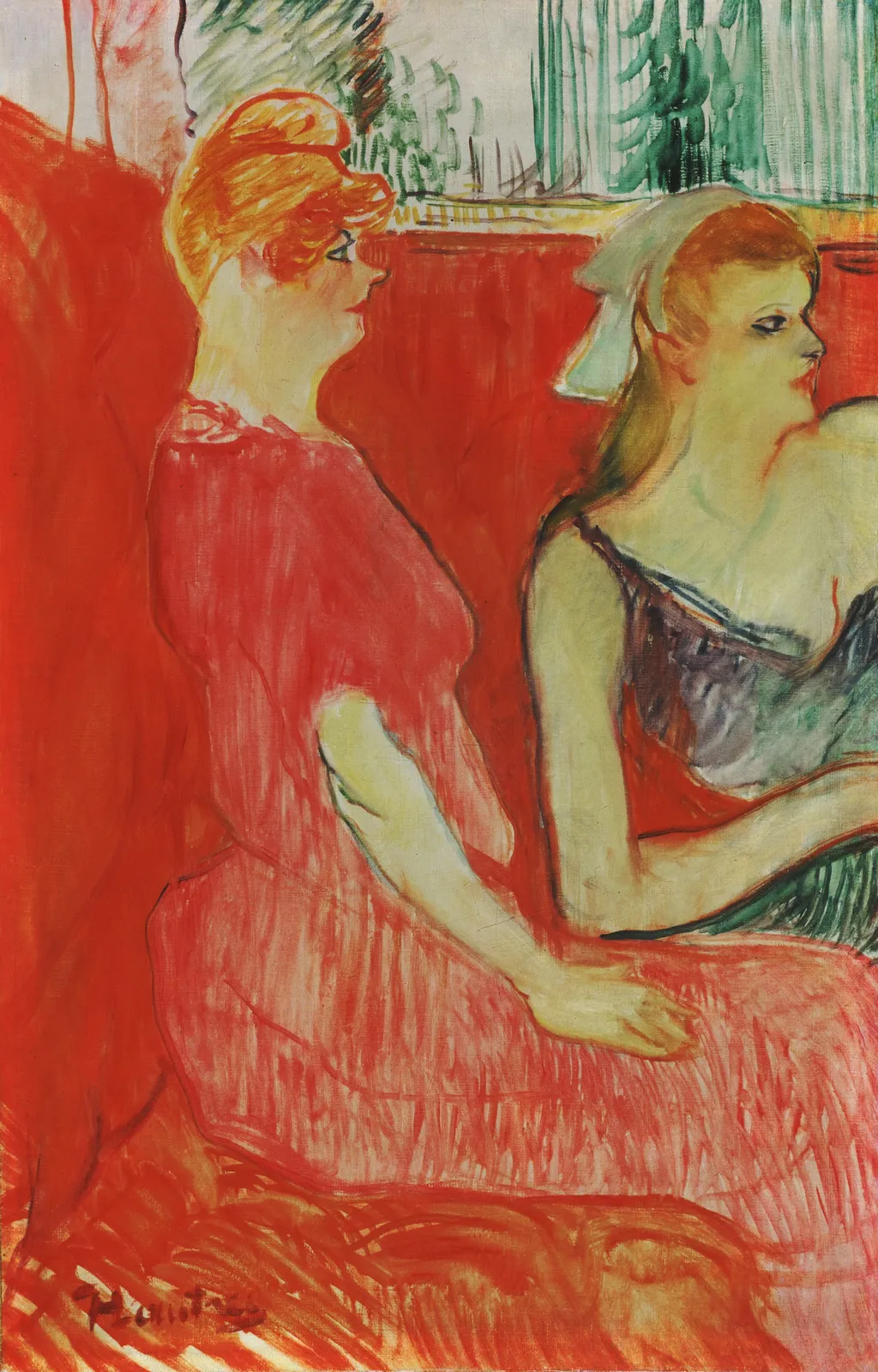
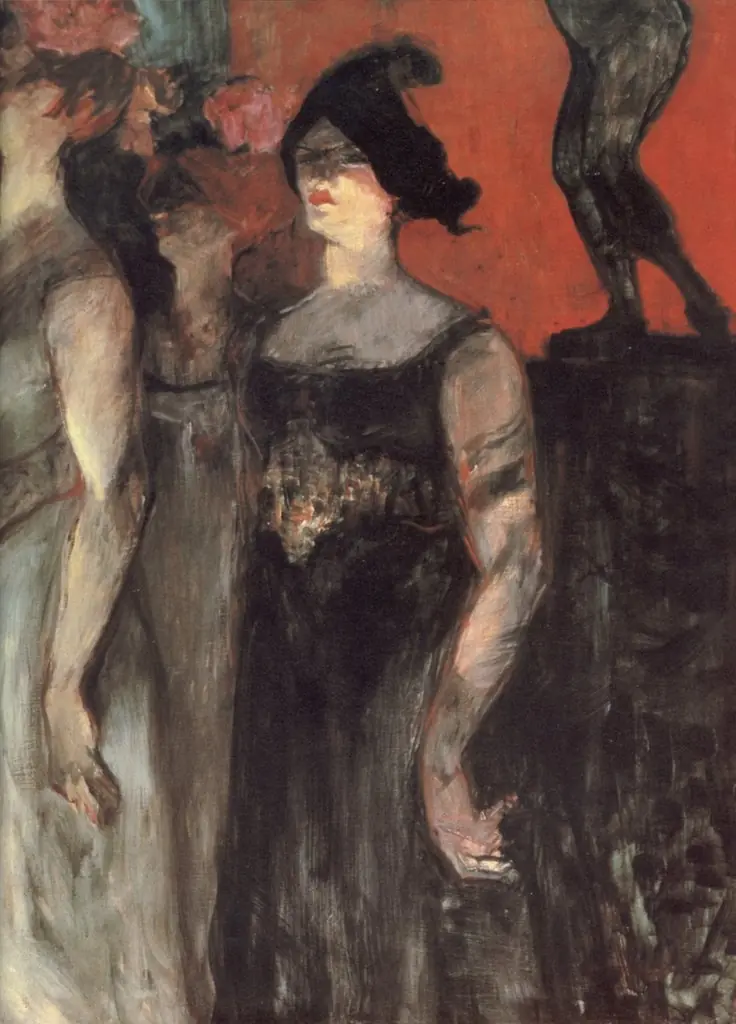
Study for In the Salon on the Rue des Moulins is an oil painting by the Post-Impressionist artist Henri de Toulouse-Lautrec. It dates from 1898 and is held in the collection of the Hammer Museum.
About this work
Overview
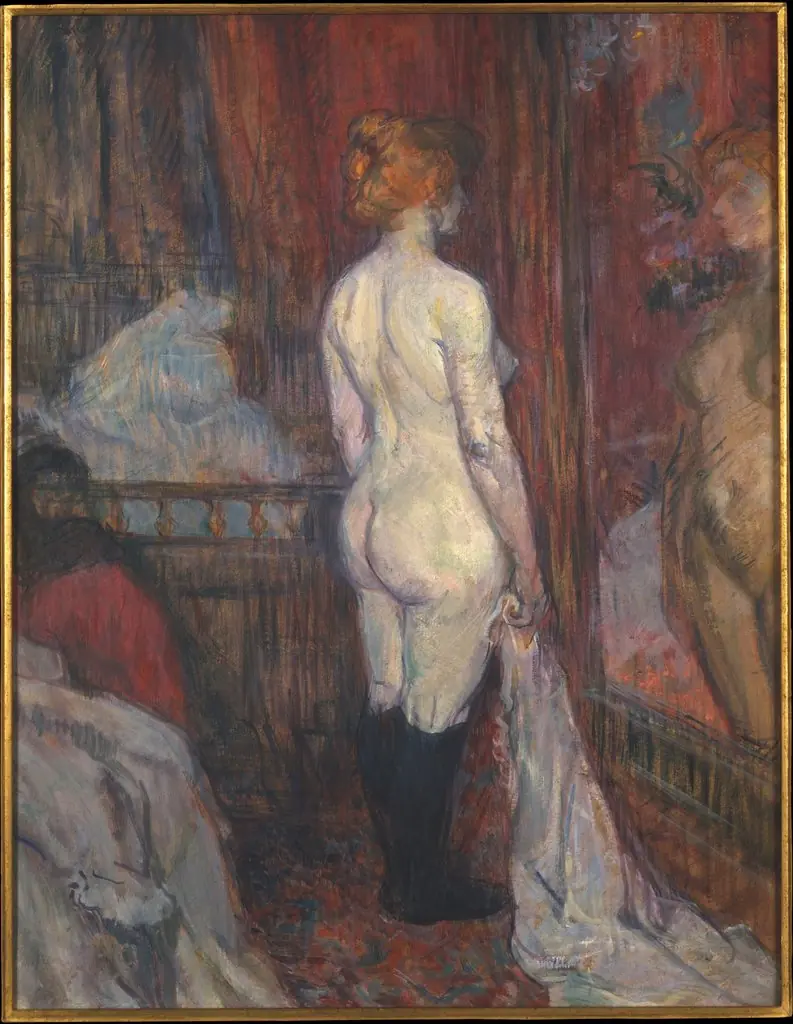
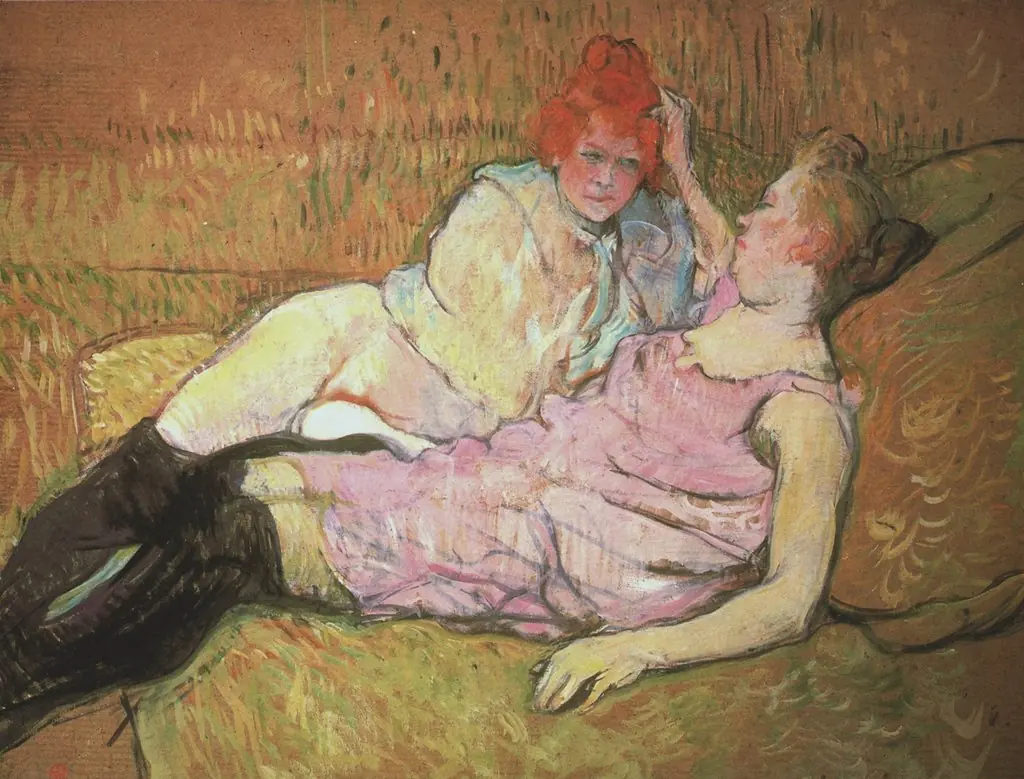
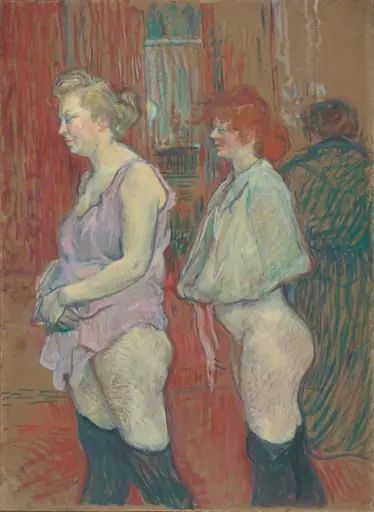
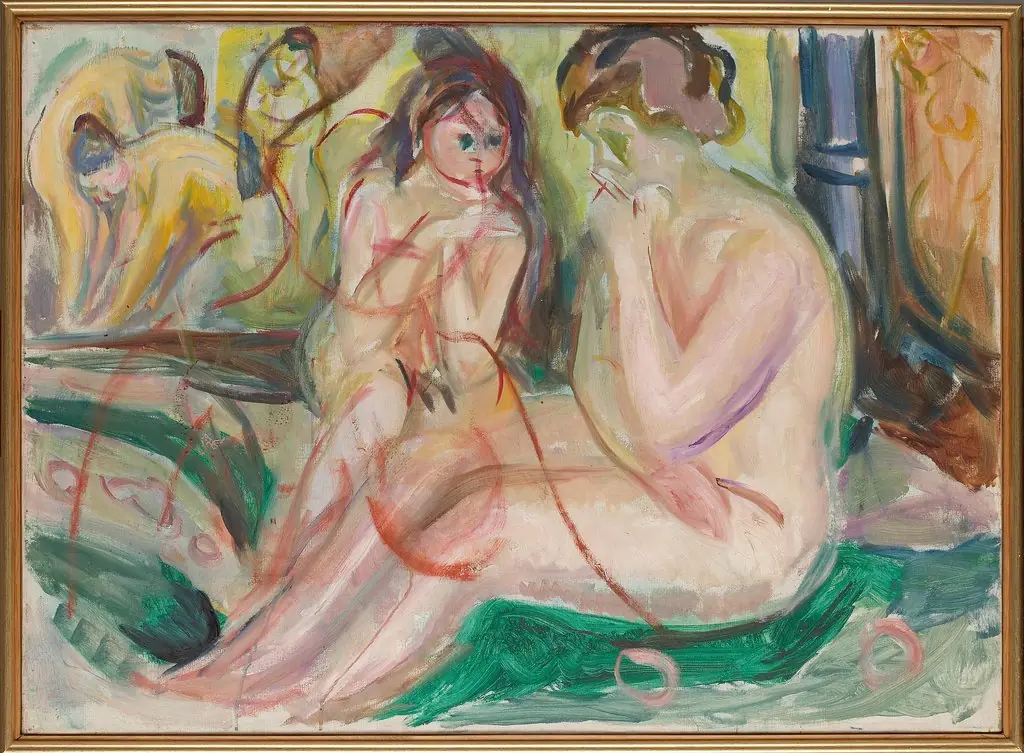
Created in 1898, this oil painting by Henri de Toulouse-Lautrec is a preparatory study for a larger composition depicting an interior scene in a Parisian brothel. Executed with direct brushwork and muted tones, it captures a quiet moment between two women, reflecting the artist’s consistent interest in intimate, unidealized portrayals of urban life.
Subject & Meaning
The painting shows two women seated in close proximity within a confined room—one facing the other, the other turned away. Their postures suggest emotional distance despite physical closeness, hinting at the isolation embedded in their social environment. Toulouse-Lautrec avoids narrative drama, instead emphasizing the quiet dignity and solitude of his subjects.
Technique & Style
Toulouse-Lautrec employed thick, expressive brushstrokes and a restrained palette dominated by reds and blacks, reinforcing the claustrophobic atmosphere. The red walls and green curtains create a stark, almost theatrical backdrop. His approach blends observational realism with a flattened perspective, characteristic of his post-impressionist sensibility and graphic training.
History & Provenance
The painting was produced during the final years of Toulouse-Lautrec’s life, as he continued to document Parisian nightlife despite declining health. It entered the Hammer Museum’s collection through documented acquisitions, preserving its connection to the artist’s late-period studies of marginalized communities in Montmartre.
Context
In late 19th-century Paris, brothels like the one on Rue des Moulins were common yet socially hidden spaces. Toulouse-Lautrec, familiar with these environments, depicted them not as scandalous but as lived-in realities. His work diverged from romanticized portrayals, offering instead a candid, unsentimental view of women whose lives existed outside mainstream society.
Legacy
This study exemplifies Toulouse-Lautrec’s commitment to portraying the unseen corners of urban life with empathy and precision. Though lesser known than his posters or finished canvases, such preparatory works reveal his methodical process and enduring influence on modern artists who sought truth in everyday scenes.
Own this work as a print
Artist & collection
Artist
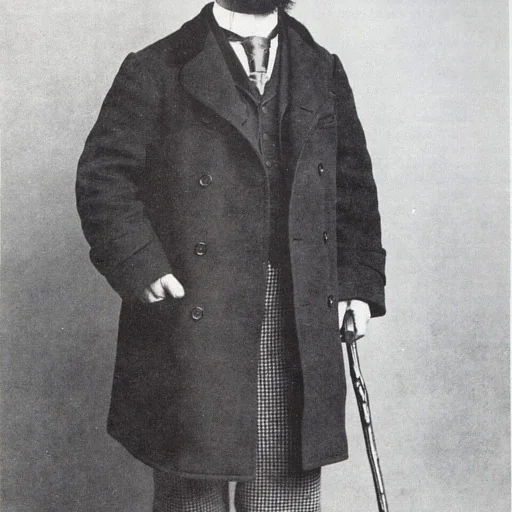
Comte Henri Marie Raymond de Toulouse-Lautrec-Montfa (24 November 1864 – 9 September 1901), known as Toulouse-Lautrec (French: ), was a French painter, printmaker, draughtsman, caricaturist, and illustrator.