Artwork
Grape Picking
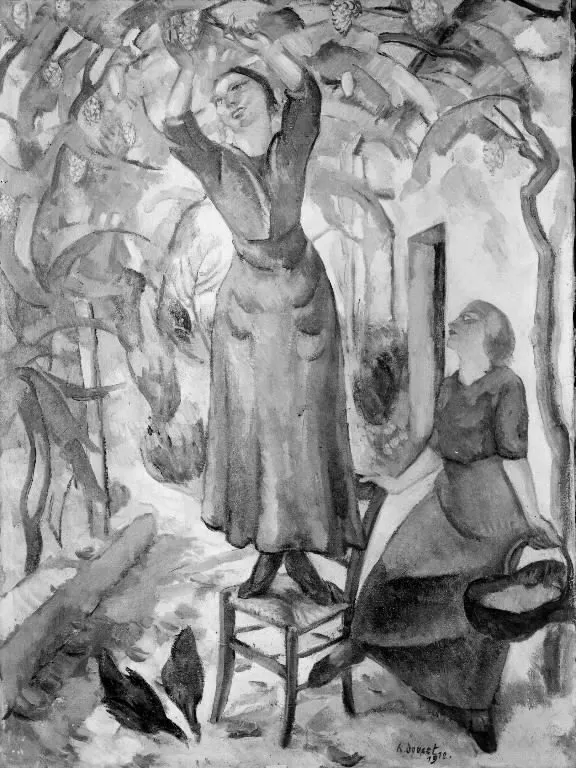
Grape Picking is an oil painting by the Post-Impressionist artist Henri Doucet. It dates from 1912 and is held in the collection of the Statens Museum for Kunst.
About this work
Overview
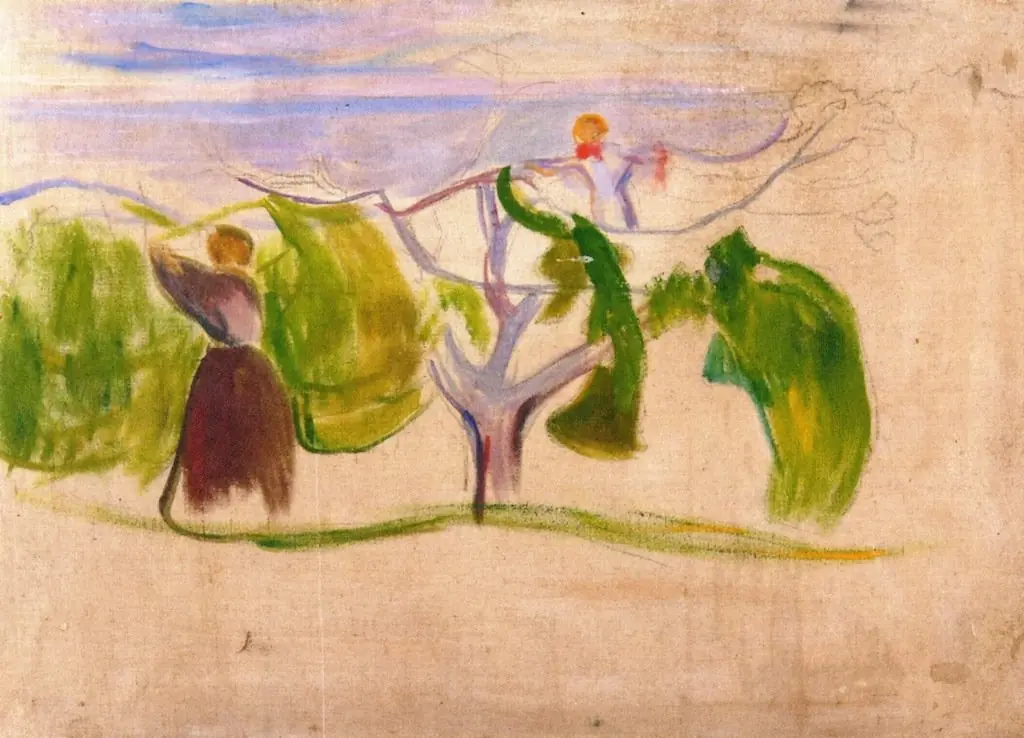
Painted in 1912 by Henri Doucet, Grape Picking is an oil-on-canvas work depicting two women engaged in the seasonal labor of harvesting grapes.
Painted in 1912 by Henri Doucet, Grape Picking is an oil-on-canvas work depicting two women engaged in the seasonal labor of harvesting grapes. The piece resides in the collection of Statens Museum for Kunst in Copenhagen. Its composition centers on a quiet, unidealized moment of rural work, rendered with attention to natural light and the physicality of the figures within a dense, verdant landscape.
Subject & Meaning
The painting portrays two women in a vineyard—one standing on a chair to reach high clusters, the other kneeling below, gazing upward. Their postures suggest cooperation and rhythm in labor, without overt sentimentality. The absence of narrative detail or symbolic elements directs focus to the act itself, emphasizing dignity in routine agricultural work rather than romanticizing rural life.
Technique & Style
Doucet employs loose, textured brushwork to convey the density of the foliage and the weight of the women’s clothing. Thick applications of paint, particularly in the leaves and fabric, create a tactile surface. The contrast between the dark, muted tones of the figures and the bright greens of the vines enhances spatial depth, while the visible strokes preserve a sense of immediacy and movement.
History & Provenance
Created in 1912, the painting entered the collection of Statens Museum for Kunst in Denmark, where it remains today. Doucet, a French artist associated with post-impressionist circles, produced works focused on rural scenes during this period. While little is documented about the painting’s early ownership, its acquisition by the museum reflects early 20th-century interest in everyday French life as a subject for serious art.
Context
Grape Picking emerged during a time when European artists increasingly turned to rural labor as a subject, moving away from urban modernity. Doucet’s approach aligns with regionalist tendencies in French painting, where the rhythms of agricultural life were observed with quiet realism. The work reflects broader cultural interest in authenticity and the natural world, even as industrialization reshaped society.
Legacy
Though not widely exhibited outside Denmark, the painting contributes to an understudied strand of early 20th-century French art that valued observational detail over dramatic narrative. Its preservation in a national collection underscores its role as a quiet record of labor and landscape, offering insight into how rural existence was visually documented beyond the more famous movements of the era.
Artist & collection

 Nature morte
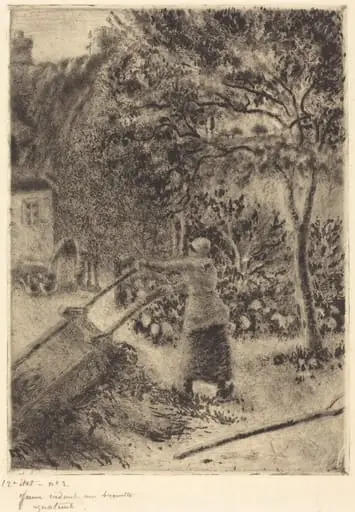 A Woman Emptying a Wheelbarrow (Femme vidant une brouette)
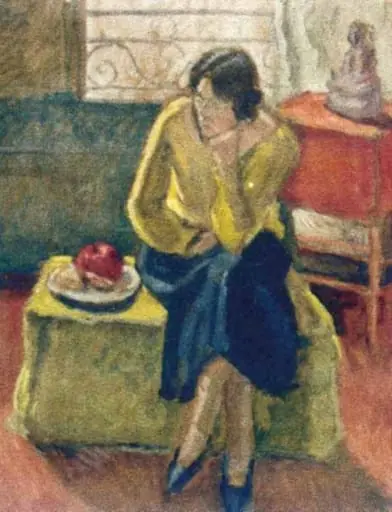 Femeie cu măr
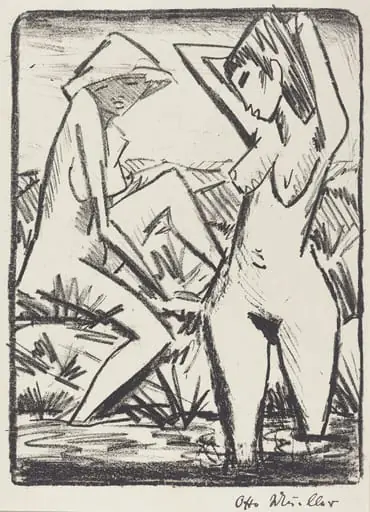 Standing Girl in Water and the Other Sitting on Shore (Im Wasser stehendes und am Ufer sitzendes Madchen mit Hut)
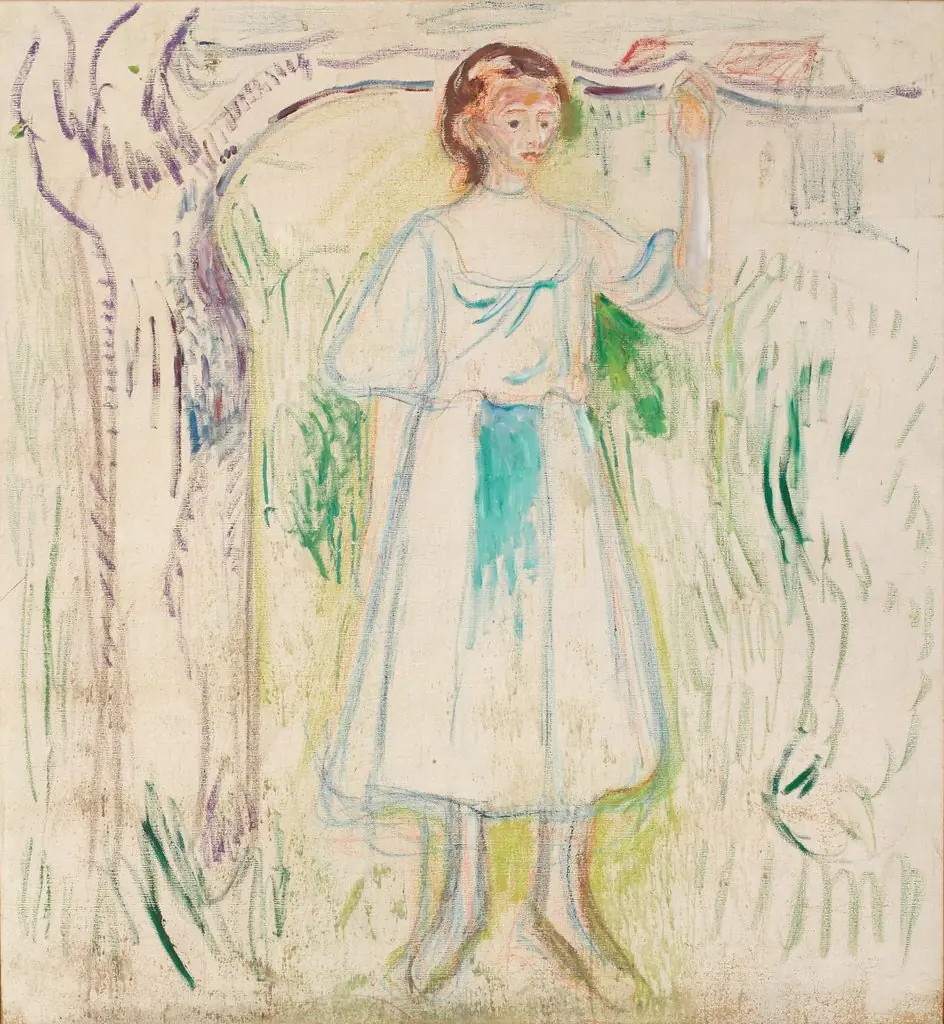 Young Woman Under a Tree
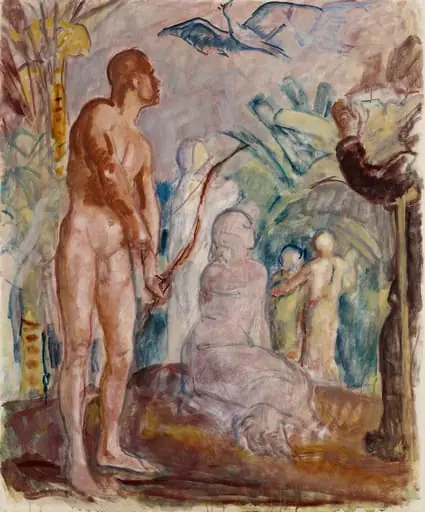 Paratiisilintu, luonnos
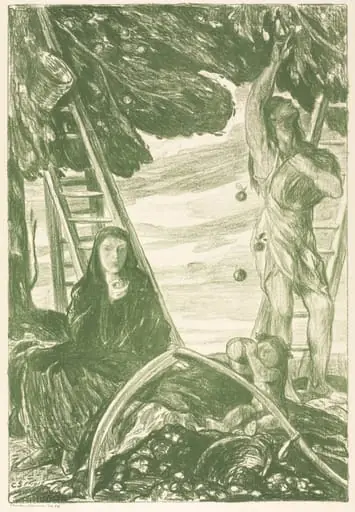 Autumn
 Dommedagsscene
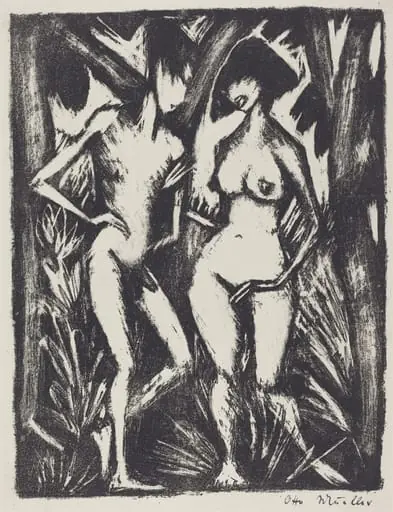 Adam and Eve (Adam und Eva)
 Ingeborg Kaurin
 Fruit harvest