Artwork
Cherries
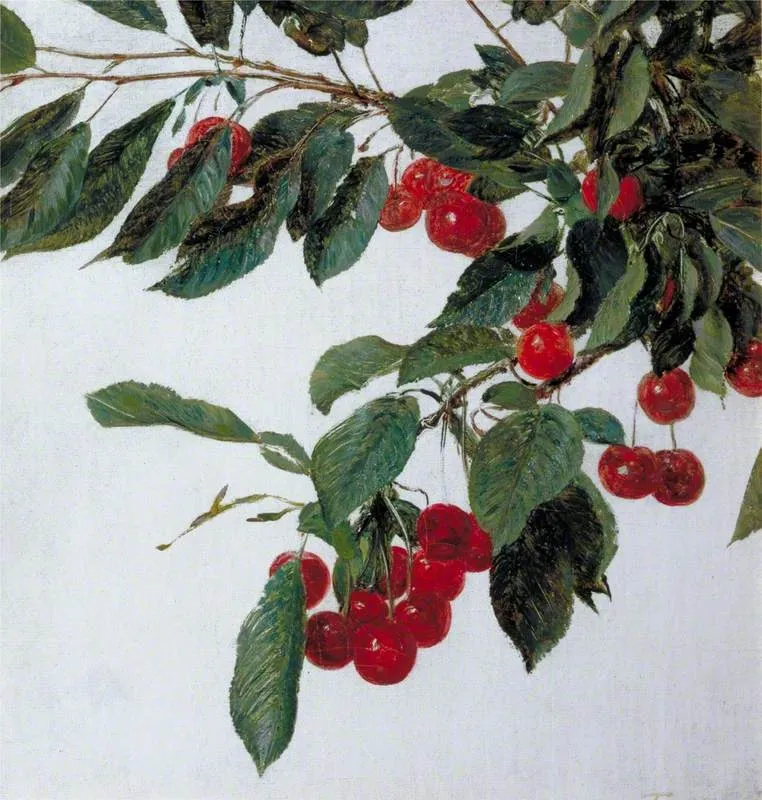
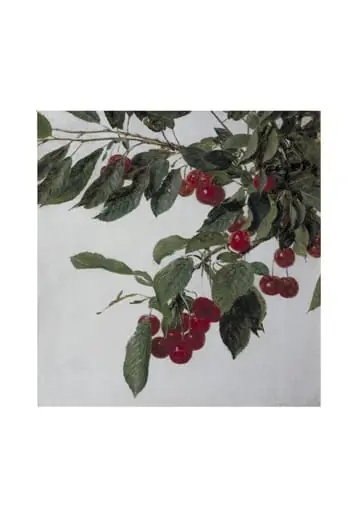
Cherries is an oil painting by the Impressionist artist Henri Fantin-Latour. It dates from 1889 and is held in the collection of the Victoria and Albert Museum.
About this work
Overview
Though often linked to Impressionism due to its era and subject, the work reflects a more precise, quiet approach than the movement’s typical brushwork.
Painted in 1889, *Cherries* is an oil still life by French artist Henri Fantin-Latour. Though often linked to Impressionism due to its era and subject, the work reflects a more precise, quiet approach than the movement’s typical brushwork. It belongs to the Victoria and Albert Museum’s collection and exemplifies Fantin-Latour’s sustained interest in arranging simple, everyday objects with careful attention to form and tone.
Subject & Meaning
The painting presents a modest arrangement of cherries, some whole, others halved, resting on a plain surface. There is no narrative or symbolic reference beyond the fruit’s natural presence. The composition invites contemplation of texture, color, and light, emphasizing the quiet dignity of ordinary things. Fantin-Latour’s focus on such simplicity aligns with a broader 19th-century tradition of still life as a vehicle for observation rather than allegory.
Technique & Style
Fantin-Latour employed fine, controlled brushwork to render the cherries’ glossy surfaces and subtle gradations of red. Shadows are softly modeled, and the background remains muted, directing focus to the fruit’s form. Unlike the loose brushstrokes of many Impressionists, his technique is deliberate and refined, drawing from academic training while embracing the tonal sensitivity of contemporary naturalism.
History & Provenance
The painting was completed in 1889, near the end of Fantin-Latour’s career, and entered the Victoria and Albert Museum’s collection in the 20th century. It was not widely exhibited during his lifetime, reflecting his relative detachment from the avant-garde circles he once frequented. Its current placement in a design and decorative arts museum underscores its value as an example of refined still-life practice.
Context
In late 19th-century France, still life was often considered a lesser genre, yet Fantin-Latour elevated it through meticulous execution. While contemporaries like Monet and Renoir pursued light and movement, he turned inward, focusing on composition and material presence. His work bridged academic tradition and emerging modern sensibilities, offering a quieter counterpoint to the era’s more radical experiments.
Legacy
Fantin-Latour’s still lifes, including *Cherries*, are now recognized for their restraint and sensitivity. Though overshadowed by his group portraits, these works influenced later artists interested in meditative, object-centered composition. The painting endures as a testament to the expressive potential of simplicity, valued for its calm precision rather than dramatic effect.
Artist & collection
Artist
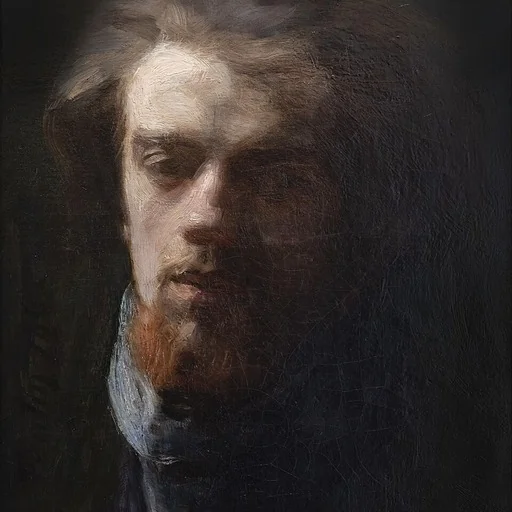
Ignace Henri Jean Theodore Fantin-Latour (French pronunciation: ; 14 January 1836 – 25 August 1904) was a French painter and lithographer best known for his flower paintings and group portraits of Parisian artists and writers.