Artwork
Temptation of St. Anthony
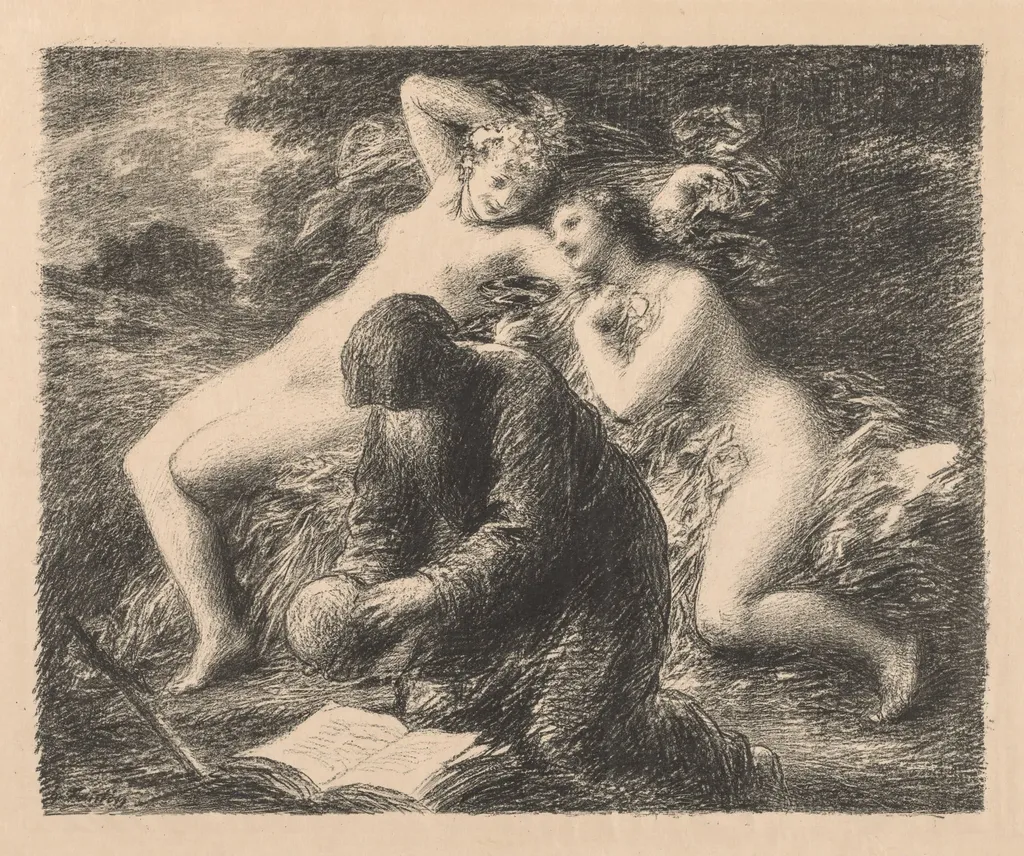
Temptation of St. Anthony is a print by the Impressionist artist Henri Fantin-Latour. It dates from 1893 and is held in the collection of the Cleveland Museum of Art.
About this work
Overview
Anthony* departs from his usual still lifes and portraiture to explore a psychological and spiritual theme.
Created in 1893, Henri Fantin-Latour’s lithograph *Temptation of St. Anthony* departs from his usual still lifes and portraiture to explore a psychological and spiritual theme. Rendered in ink on paper, the work captures a moment of inner turmoil through fragmented, agitated lines. Its somber tone and unresolved forms reflect the Symbolist interest in inner states rather than external reality, positioning the saint as a figure besieged by unseen forces.
Subject & Meaning
The print illustrates the legendary trial of St. Anthony, a hermit saint subjected to visions of demonic apparitions. Fantin-Latour avoids literal depictions of devils, instead suggesting menace through indistinct, looming silhouettes and distorted shapes. The saint, hunched and withdrawn, embodies isolation and mental strain. The scene evokes a psychological landscape—fear, doubt, and spiritual endurance rendered as ambient pressure rather than narrative action.
Technique & Style
Using lithographic crayon, Fantin-Latour applied loose, smudged strokes to generate texture and movement. The contrast between the dense, shadowed background and the faintly defined figure enhances the sense of unease. Lines are deliberately unstable, avoiding clear contours to mimic the instability of hallucination. The absence of sharp detail and the dominance of tonal gradations align with Symbolist priorities over descriptive realism.
History & Provenance
This print was produced late in Fantin-Latour’s career, during a period when he increasingly engaged with literary and mystical subjects. It was likely made as an independent artistic statement rather than a commission. Though not widely exhibited in his lifetime, it entered museum collections in the early 20th century as interest in Symbolist printmaking grew among collectors and scholars.
Context
In the 1890s, European artists turned to themes of mysticism and the subconscious, influenced by emerging psychoanalytic ideas and literary Symbolism. Fantin-Latour’s work responds to this climate, echoing the preoccupations of writers like Baudelaire and artists like Redon. Unlike the overtly grotesque visions of some contemporaries, his approach remains restrained, suggesting horror through absence and ambiguity rather than explicit imagery.
Legacy
The lithograph stands as one of Fantin-Latour’s few ventures into the supernatural, marking a quiet but significant shift in his oeuvre. It influenced later artists exploring psychological states through printmaking, particularly in its use of tonal ambiguity to convey inner turmoil. While not widely known, it remains a compelling example of how Symbolist ideals translated into the intimate scale of graphic art.
Own this work as a print
Artist & collection
Artist
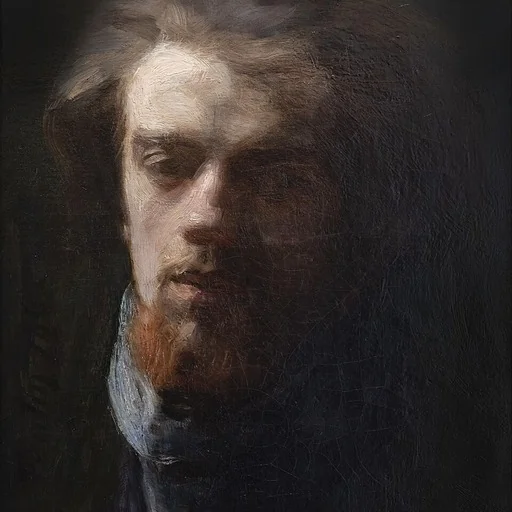
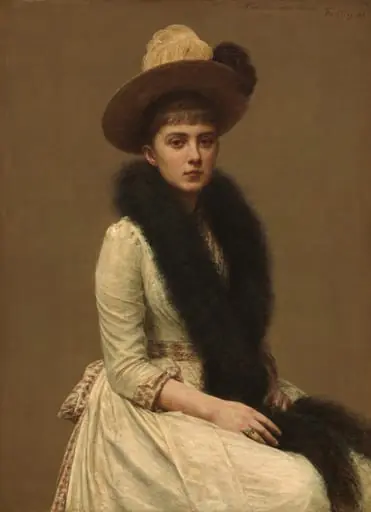
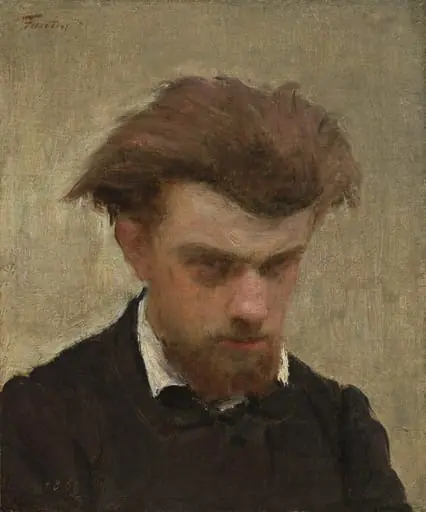
Ignace Henri Jean Theodore Fantin-Latour (French pronunciation: ; 14 January 1836 – 25 August 1904) was a French painter and lithographer best known for his flower paintings and group portraits of Parisian artists and writers.

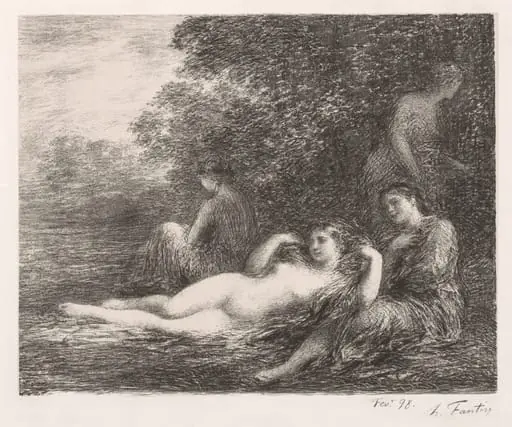 The Bathers
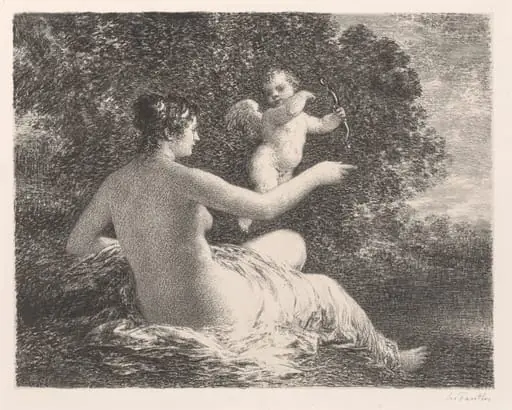 Venus and Cupid
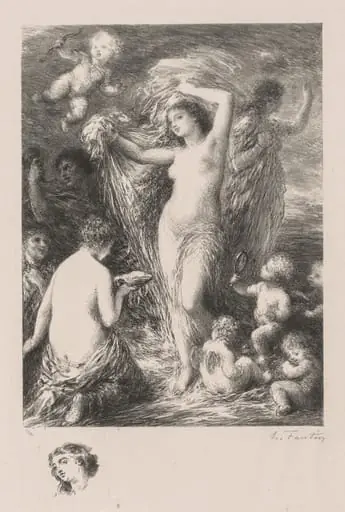 Venus Anadyomene
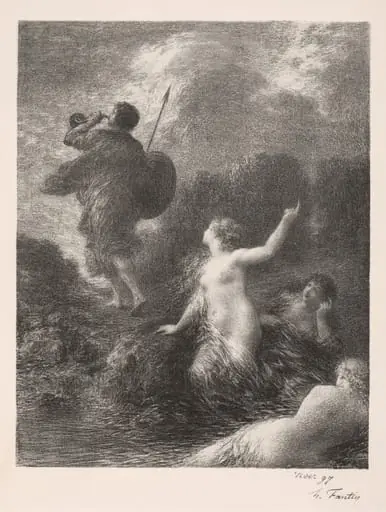 Twilight of the Gods: Siegfried and the Rhine Maidens
 Goetterdaemmerung: Siegfried et les filles
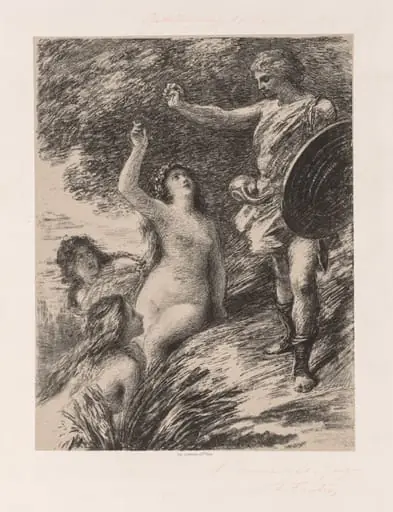 Siegfried and the Daughters of the Rhine
 Inspiration
 Sarah la Baigneuse
 Debut from Paradise and the Peri (Second Plate)
 Venusberg
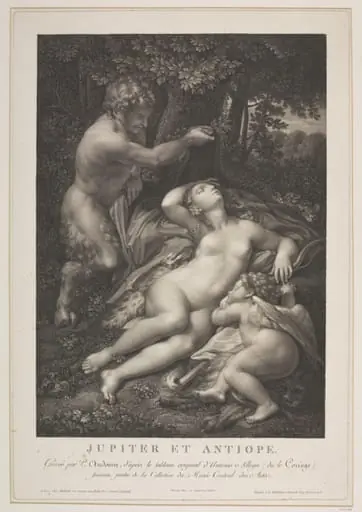 Jupiter as a Satyr, and Antiope
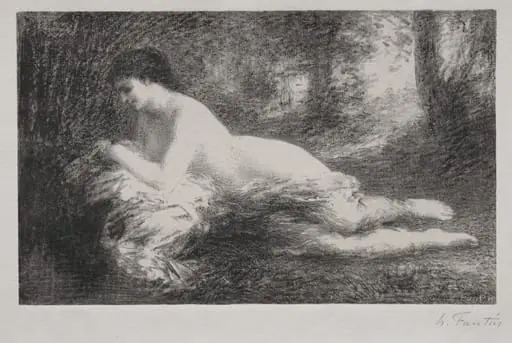 Réverie