Artwork
The Fairy of the Alps
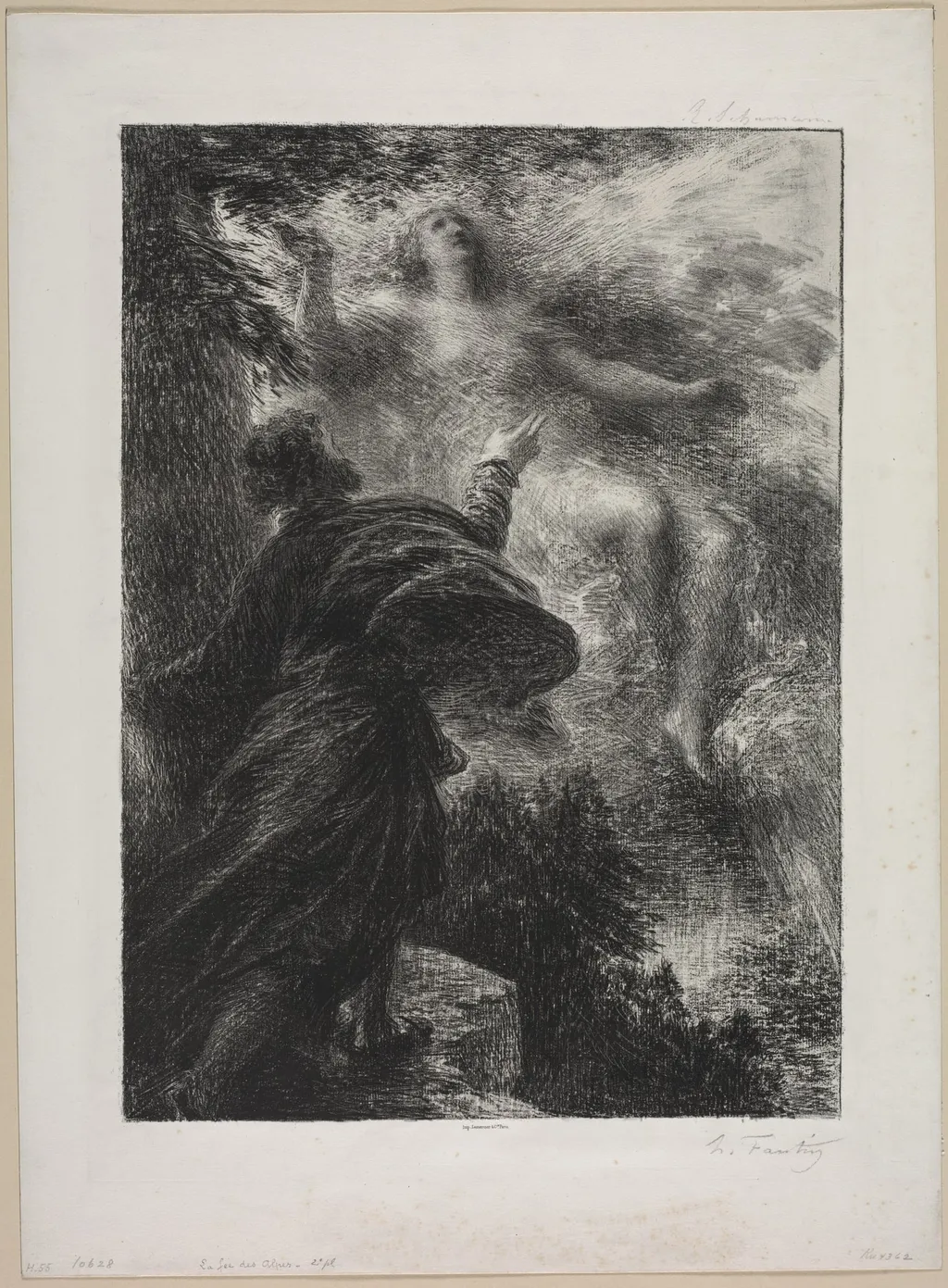
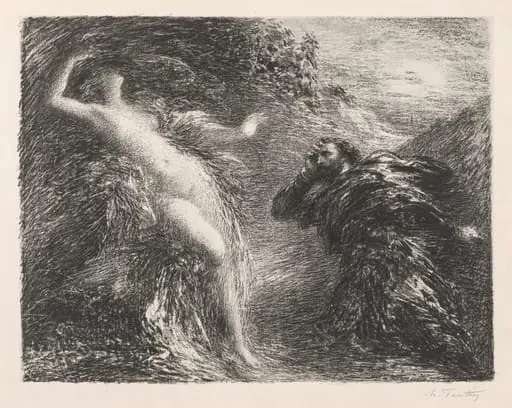
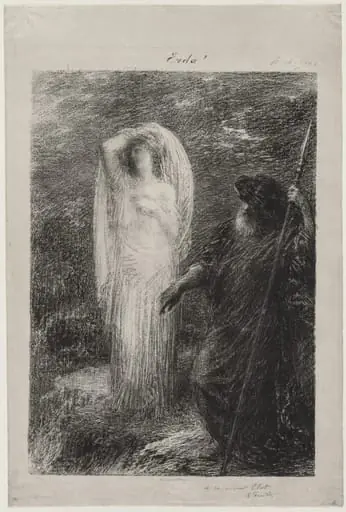
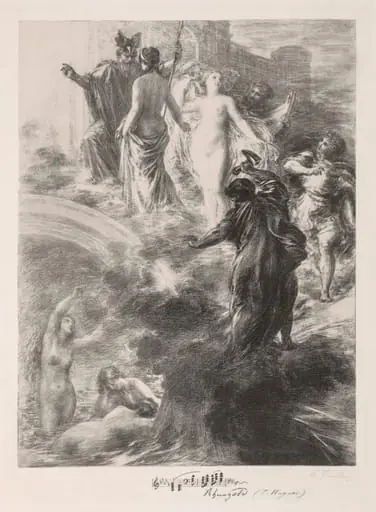
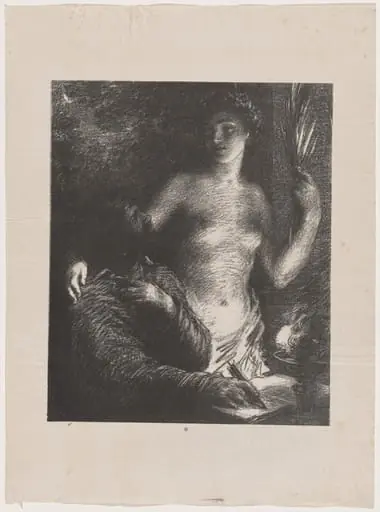
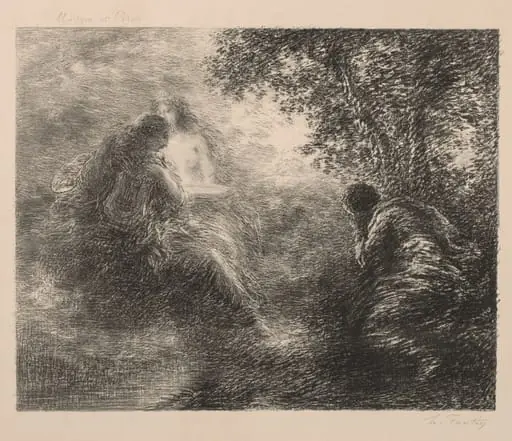
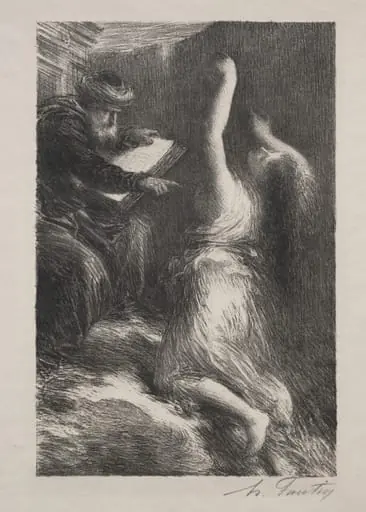
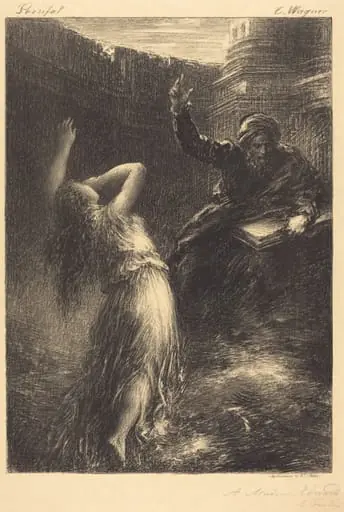
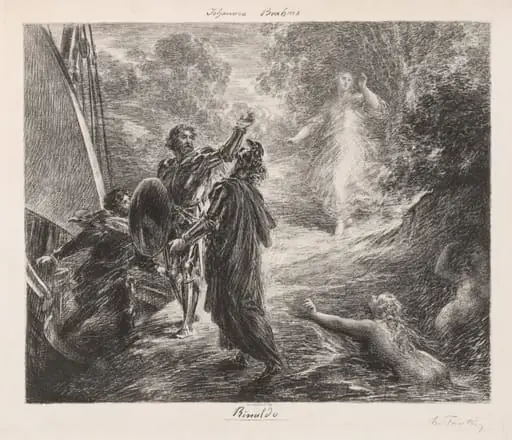
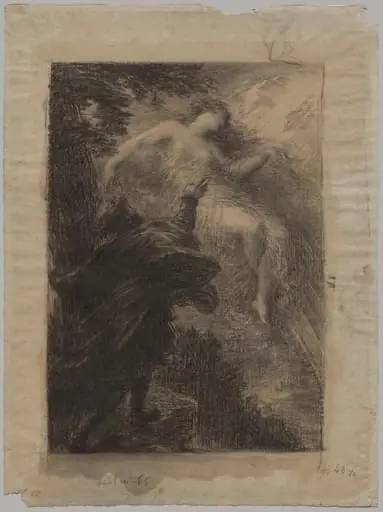
The Fairy of the Alps is a print by the Impressionist artist Henri Fantin-Latour. It dates from 1885 and is held in the collection of the Cleveland Museum of Art.
About this work
Overview
Its unfinished quality and atmospheric ambiguity suggest an experimental approach, capturing a fleeting impression rather than a defined narrative.
Created in 1885 by French artist Henri Fantin-Latour, *The Fairy of the Alps* is a lithographic print that departs from his more polished portraits and floral studies. Executed with rapid, expressive lines, the work appears as a spontaneous sketch rather than a refined composition. Its unfinished quality and atmospheric ambiguity suggest an experimental approach, capturing a fleeting impression rather than a defined narrative.
Subject & Meaning
The figure depicted is a shadowy, cloaked form with a winged hat, its face indistinct and body dissolving into the background. Though titled as a fairy, the image resists clear mythological identification. The ambiguity invites interpretation—perhaps a spirit of the mountains, a personification of nature’s mystery, or an internal vision. The lack of detail emphasizes mood over story, leaving meaning open to the viewer’s perception.
Technique & Style
Fantin-Latour employed loose, energetic lithographic lines to suggest form without definition. Areas of the print are left nearly blank, while others are densely inked to create contrast and movement. The rough texture and minimal shading evoke immediacy, as if the image was captured in a single gesture. This approach aligns with the expressive freedom seen in emerging modernist practices, prioritizing sensation over precision.
History & Provenance
The print entered the collection of the Cleveland Museum of Art, where it remains today. While not widely exhibited, it reflects Fantin-Latour’s lesser-known explorations beyond his formal portraiture. Its creation in 1885 places it within a period when the artist was increasingly engaged with printmaking, experimenting with techniques that allowed for greater spontaneity than his oil paintings permitted.
Context
In the mid-1880s, Fantin-Latour was navigating a shifting art world where realism gave way to more subjective modes of expression. Though not an Impressionist, his work here echoes their interest in transient effects and informal composition. The print’s sketch-like quality resonates with contemporary developments in graphic arts, where artists sought to capture the immediacy of perception over idealized form.
Legacy
Though not among Fantin-Latour’s most recognized works, *The Fairy of the Alps* illustrates his willingness to explore unconventional subjects and techniques. Its raw, evocative style influenced later generations interested in the expressive potential of printmaking. The piece stands as a quiet testament to the artist’s curiosity beyond the boundaries of his established reputation.
Artist & collection
Artist
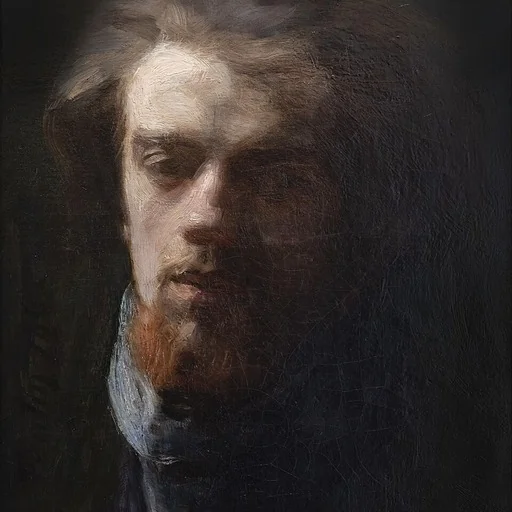
Ignace Henri Jean Theodore Fantin-Latour (French pronunciation: ; 14 January 1836 – 25 August 1904) was a French painter and lithographer best known for his flower paintings and group portraits of Parisian artists and writers.