Artwork
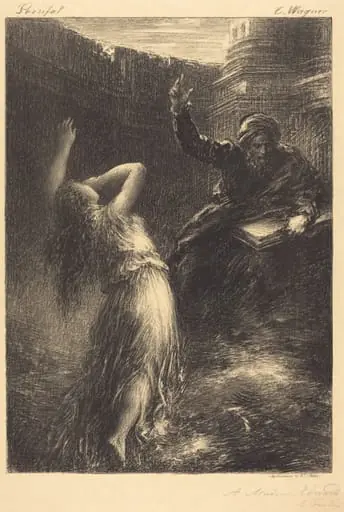
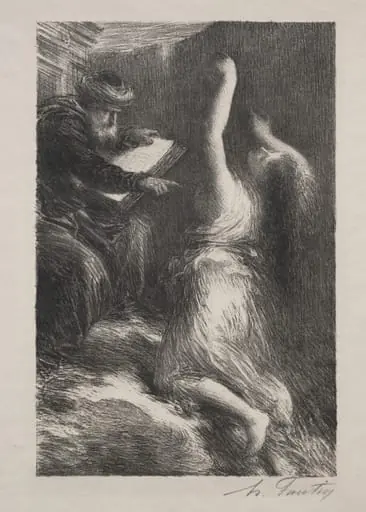
L'Evocation d'Erda
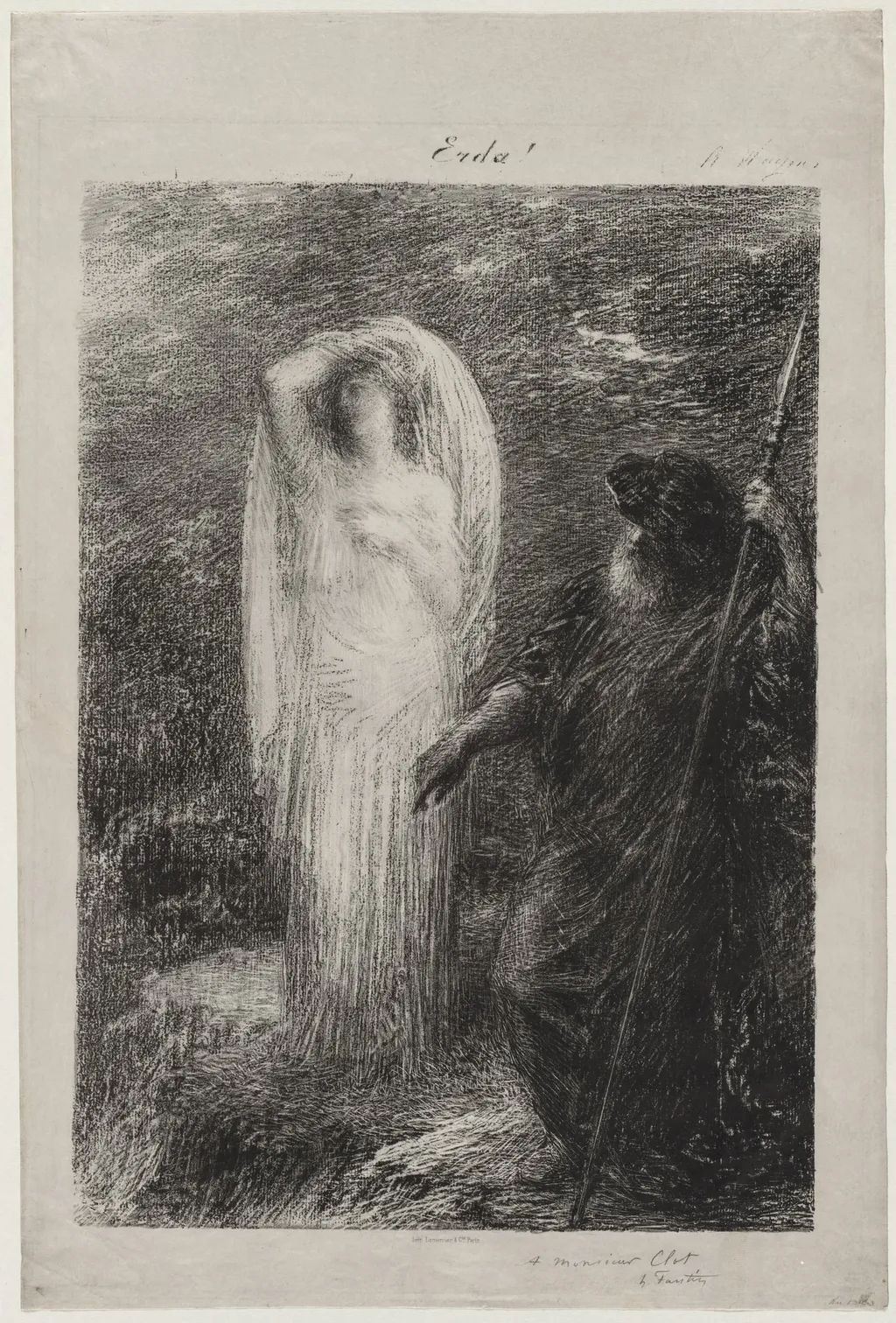
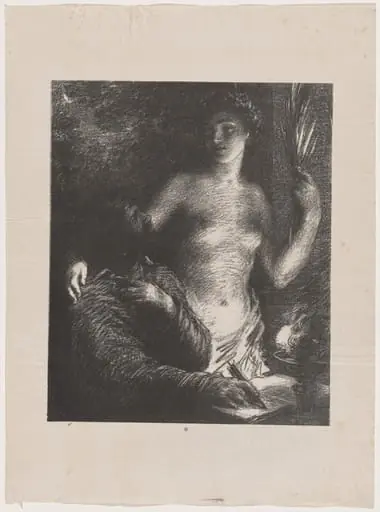
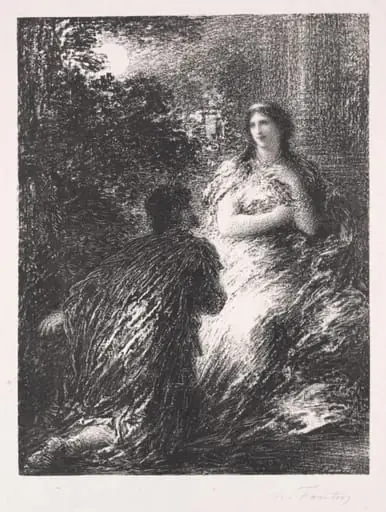
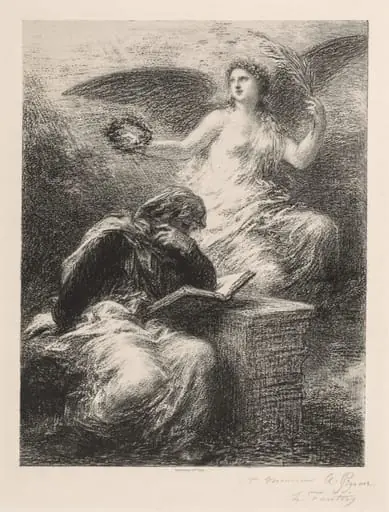
L'Evocation d'Erda is a print by the Impressionist artist Henri Fantin-Latour. It dates from 1885 and is held in the collection of the Cleveland Museum of Art.
About this work
Overview
Henri Fantin‑Latour’s 1885 print *L’Evocation d’Erda* belongs to the artist’s later period, when he turned away from the salon‑approved portraits and still‑lifes that had defined his early career. The work presents a shadowy, almost dream‑like scene that references mythological themes, a departure toward the Symbolist preoccupations of the 1880s.
Subject & Meaning
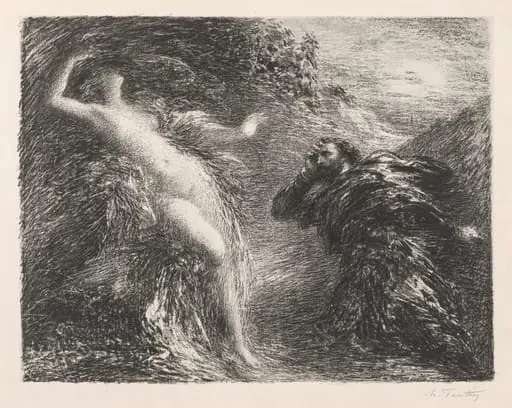
One figure, rendered in lighter tones, appears with flowing hair and a loose robe, arms outstretched as if invoking a force.
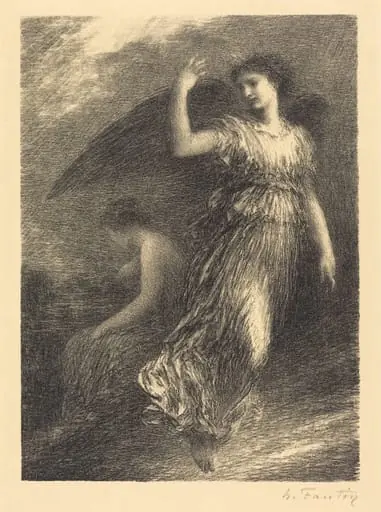
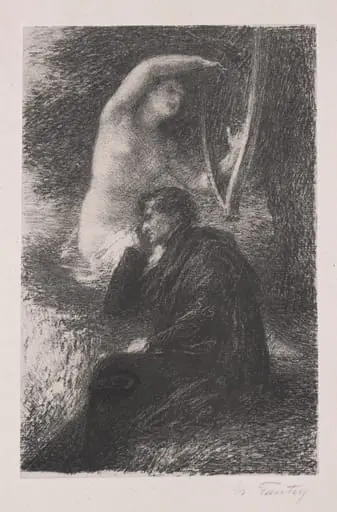
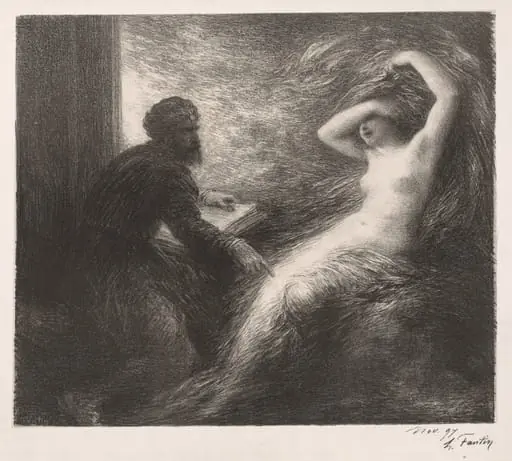
The composition features two figures in a dim interior that suggests a forest or storm‑filled sky. One figure, rendered in lighter tones, appears with flowing hair and a loose robe, arms outstretched as if invoking a force. The second, darker silhouette clutches a staff and leans forward, perhaps guiding or warning. The title evokes the earth goddess Erda, hinting at an allegorical invocation of nature’s power.
Technique & Style
Fantin‑Latour employs loose, sketch‑like lines and a limited palette, giving the print a raw, unfinished quality. The contrast between the blurred, ghostly face of the lighter figure and the concealed features of the darker one heightens the sense of mystery. The atmospheric background is rendered with vague brushwork that suggests trees or clouds without defining them, reinforcing the work’s symbolic ambiguity.
Context
Created during the rise of Symbolism in France, the piece reflects contemporary artists’ fascination with myth, the subconscious, and allegory. While Fantin‑Latour is better known for his meticulous still‑lifes and intimate group portraits of Parisian writers, *L’Evocation d’Erda* demonstrates his engagement with the broader artistic currents that questioned realism in favor of mood and inner meaning.
History & Provenance
The print was produced in 1885 and has since entered private collections before being documented in museum inventories. Its limited circulation reflects the artist’s occasional forays into printmaking, a medium he used to explore experimental subjects beyond his more widely exhibited oil paintings.
Artist & collection
Artist
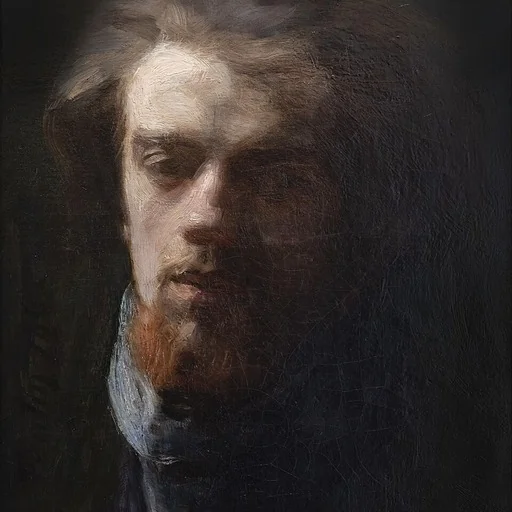
Ignace Henri Jean Theodore Fantin-Latour (French pronunciation: ; 14 January 1836 – 25 August 1904) was a French painter and lithographer best known for his flower paintings and group portraits of Parisian artists and writers.