Artwork
Still Life: Corner of a Table
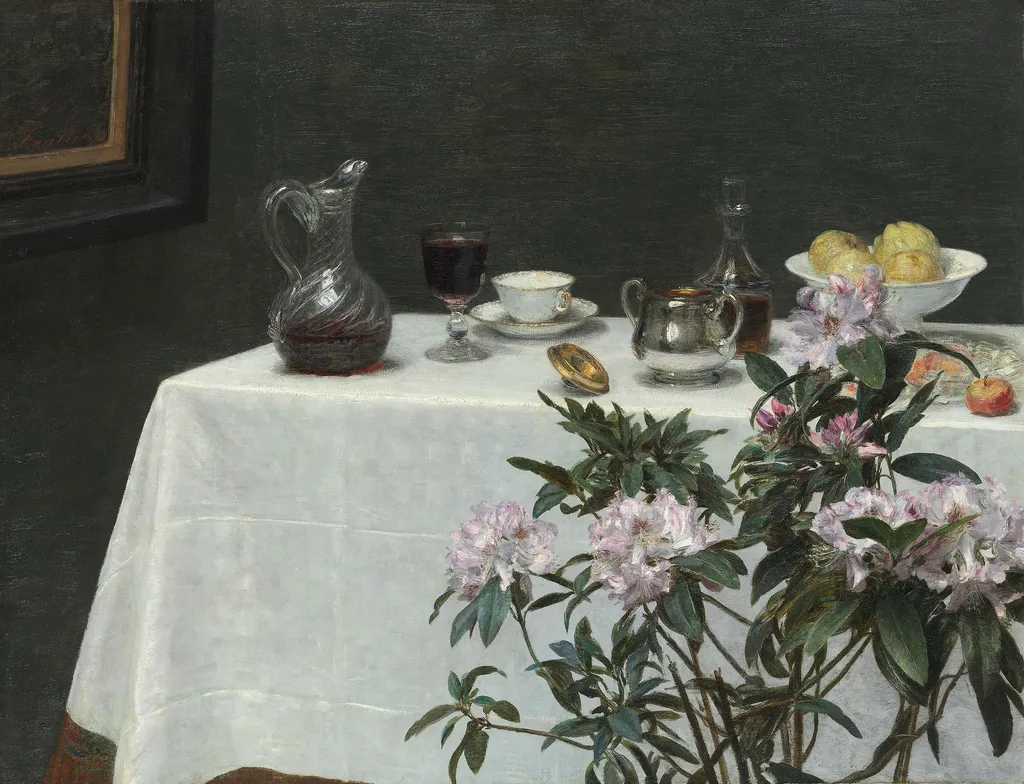
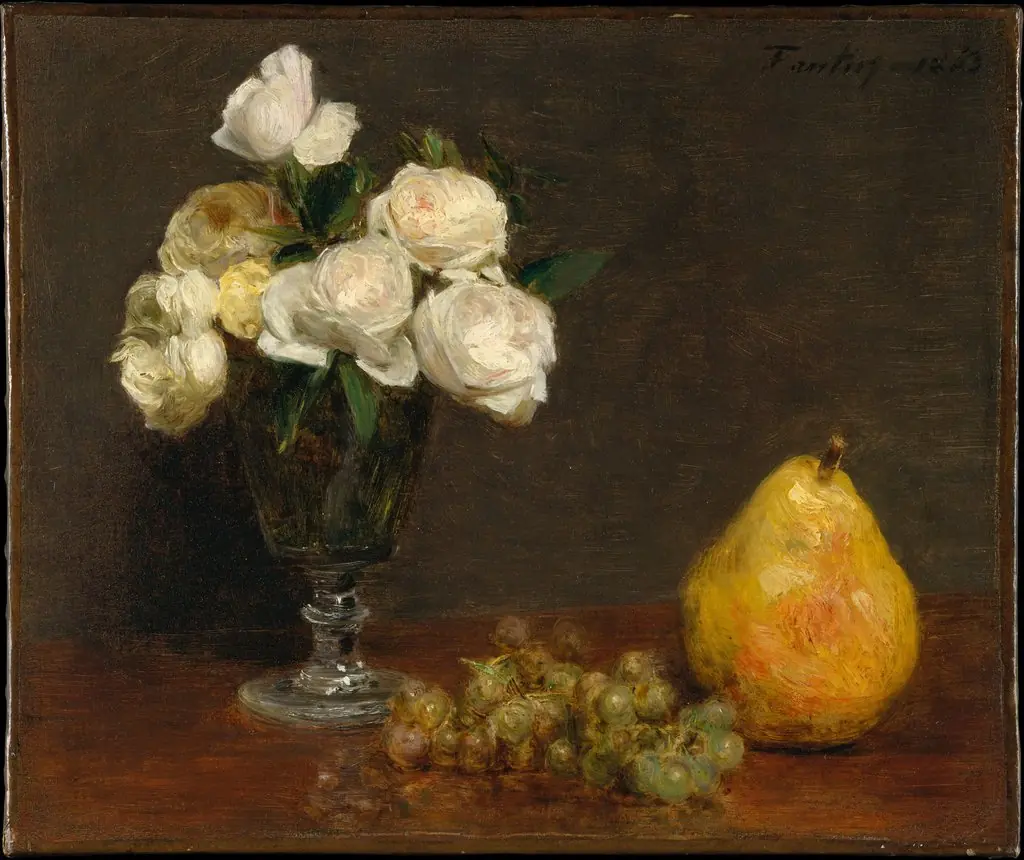
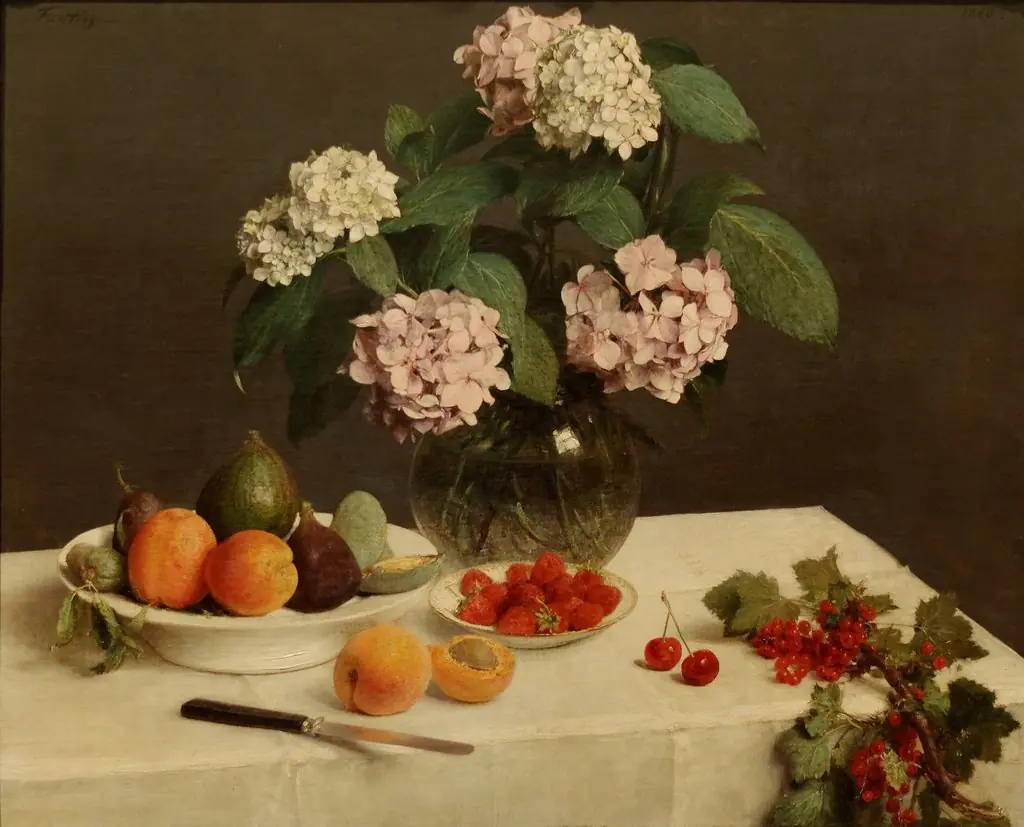
Still Life: Corner of a Table is an oil painting by the Impressionist artist Henri Fantin-Latour. It dates from 1873 and is held in the collection of the Art Institute of Chicago.
About this work
Overview
Painted in 1873, this oil on canvas work by Henri Fantin-Latour presents a quiet arrangement of domestic objects on a table.
Painted in 1873, this oil on canvas work by Henri Fantin-Latour presents a quiet arrangement of domestic objects on a table. The composition is deliberately restrained, focusing on ordinary items rendered with careful attention to form and texture. Unlike the loose brushwork of contemporaneous Impressionists, Fantin-Latour’s approach is precise and controlled, emphasizing stillness and material presence over atmospheric effect.
Subject & Meaning
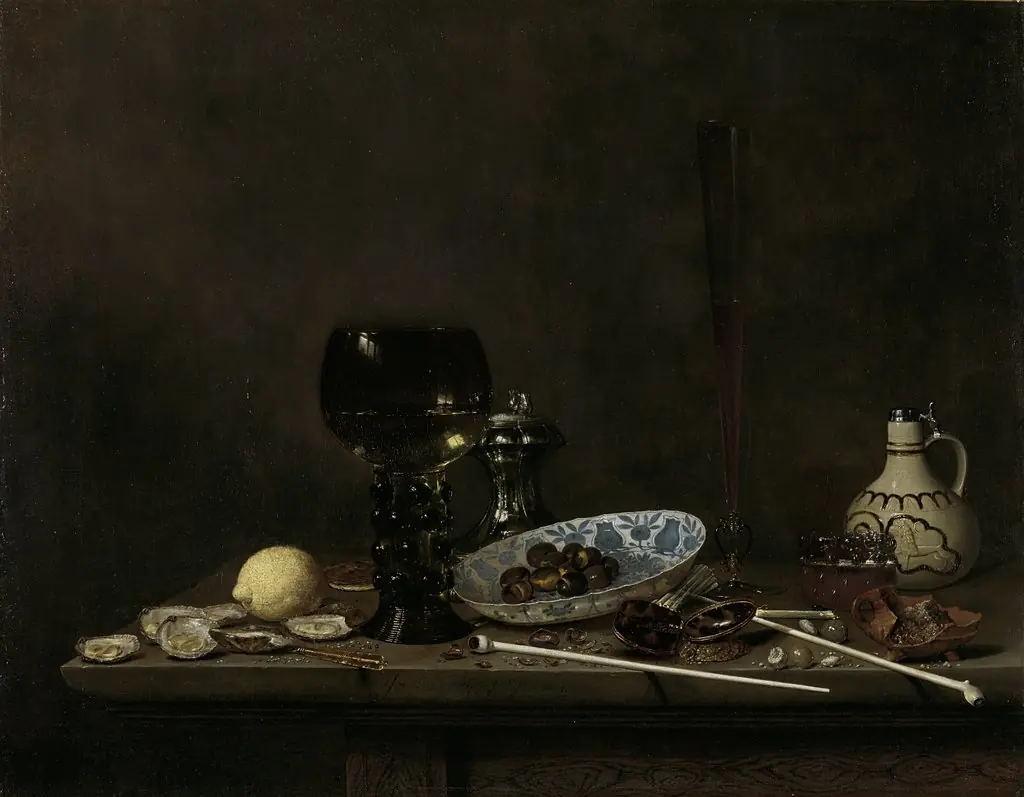
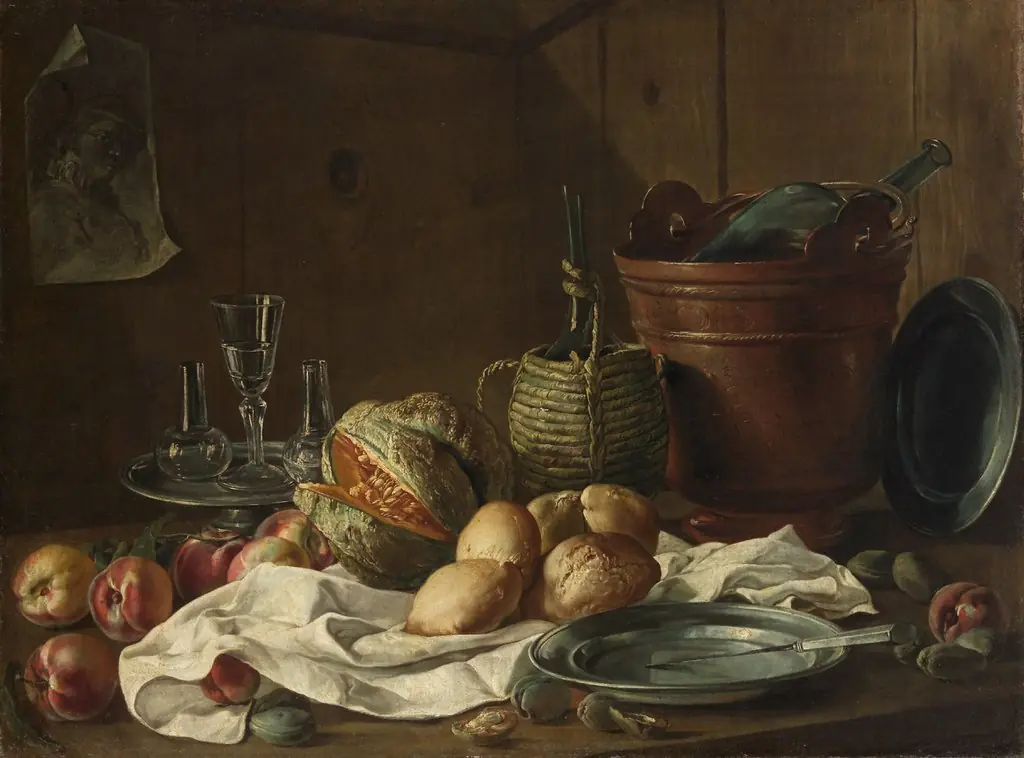
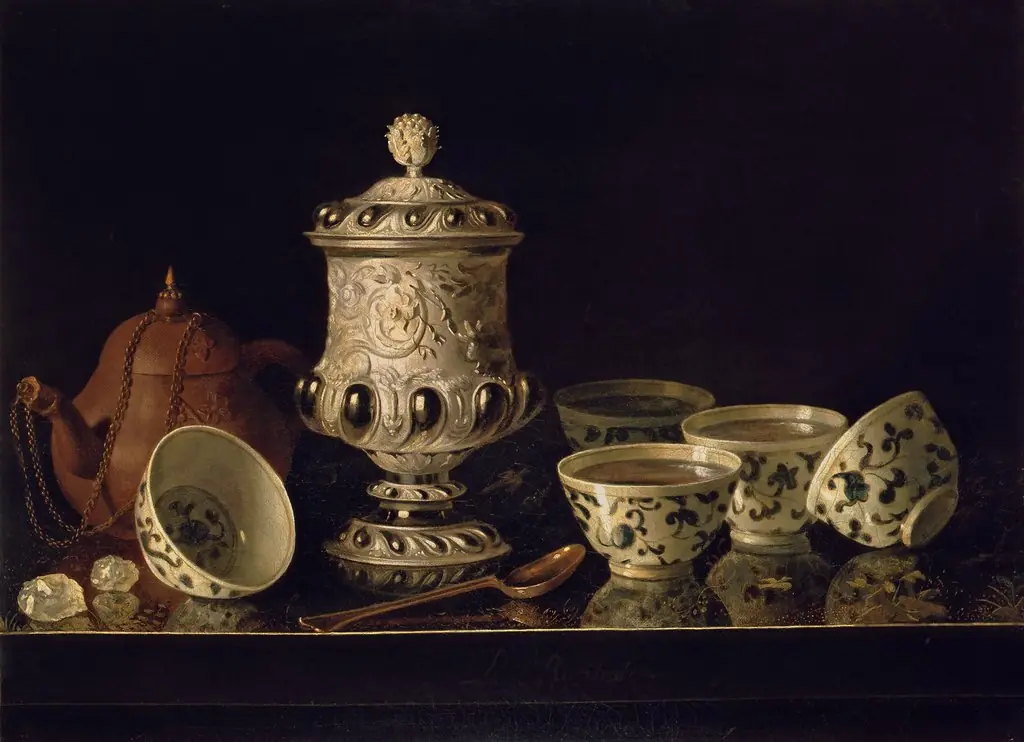
The scene includes a dark jug, a glass of red liquid, a teacup, a silver pitcher, a bowl of lemons, an apple, and spilling flowers. These items, common in 19th-century French households, suggest a moment after use—tea served, fruit left untouched. The flowers, vivid and nearly tumbling from the table, introduce a sense of fleeting life, contrasting with the solidity of the vessels and fruit, hinting at transience without overt symbolism.
Technique & Style
Fantin-Latour employs subtle chiaroscuro to model forms, using soft transitions between light and shadow to define volume. The dark background isolates the objects, enhancing their three-dimensionality. Brushwork is smooth and deliberate, with no visible strokes; surfaces of glass, metal, and fruit are rendered with near-photographic clarity. The composition is tightly framed, drawing focus to the table’s edge and the organic spill of petals beyond it.
History & Provenance
The painting entered the Art Institute of Chicago’s collection in the early 20th century, acquired as part of a broader interest in European still-life traditions. It has remained in the museum’s holdings since, consistently displayed as an example of French academic realism with roots in 17th-century Dutch still life. No significant alterations or restorations are documented in its provenance record.
Context
While Fantin-Latour was associated with Parisian avant-garde circles, including Manet and Whistler, his still lifes diverged from Impressionist trends. He favored controlled lighting and meticulous detail, aligning more with traditional academic values. This work reflects a quiet resistance to the era’s emphasis on light and movement, instead asserting the dignity of the static, the tangible, and the quietly observed.
Legacy
Though less celebrated than his group portraits, this still life exemplifies Fantin-Latour’s enduring commitment to precision and quiet observation. It influenced later realist painters who valued object integrity over expressive brushwork. The painting remains a reference point for studies in composition, material rendering, and the emotional resonance of everyday things in late 19th-century art.
Artist & collection
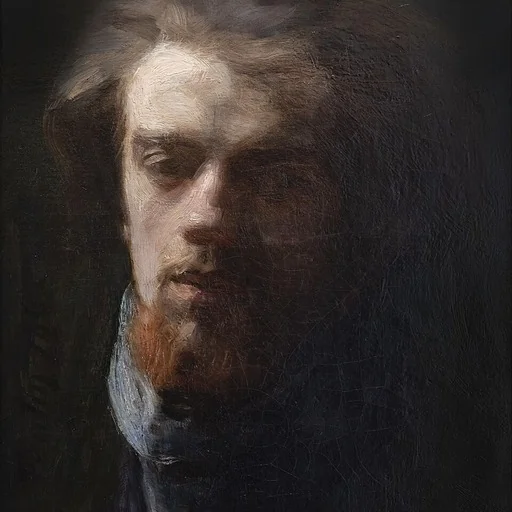
Artist
Ignace Henri Jean Theodore Fantin-Latour (French pronunciation: ; 14 January 1836 – 25 August 1904) was a French painter and lithographer best known for his flower paintings and group portraits of Parisian artists and writers.