Artwork
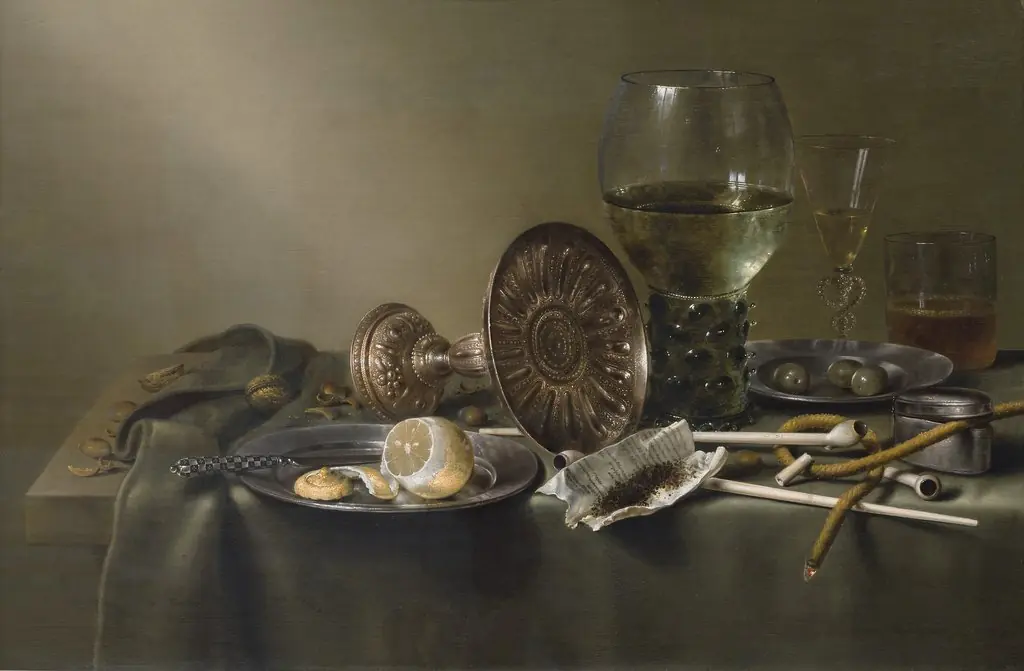
Still Life with Roemer, Salt Cellar, Tobacco, Lemon, and Olives
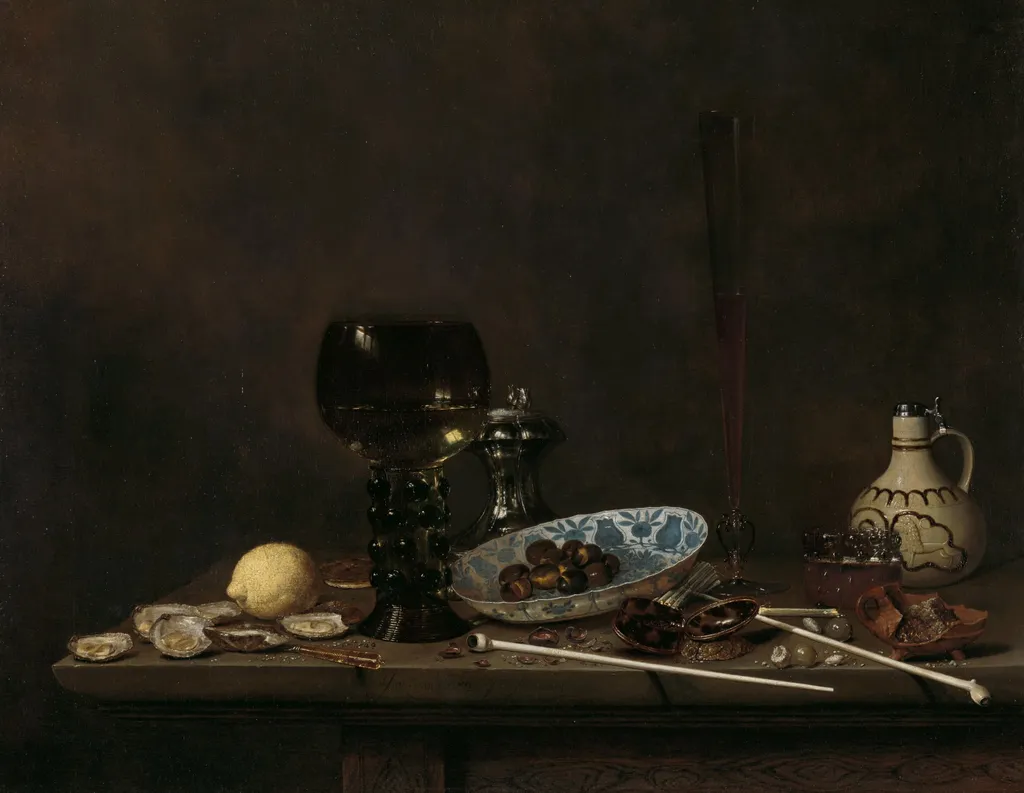
Still Life with Roemer, Salt Cellar, Tobacco, Lemon, and Olives is an unspecified painting by the Dutch Golden Age artist Jan Jansz van de Velde. It dates from 1651 and is held in the collection of the Rijksmuseum.
About this work
Overview
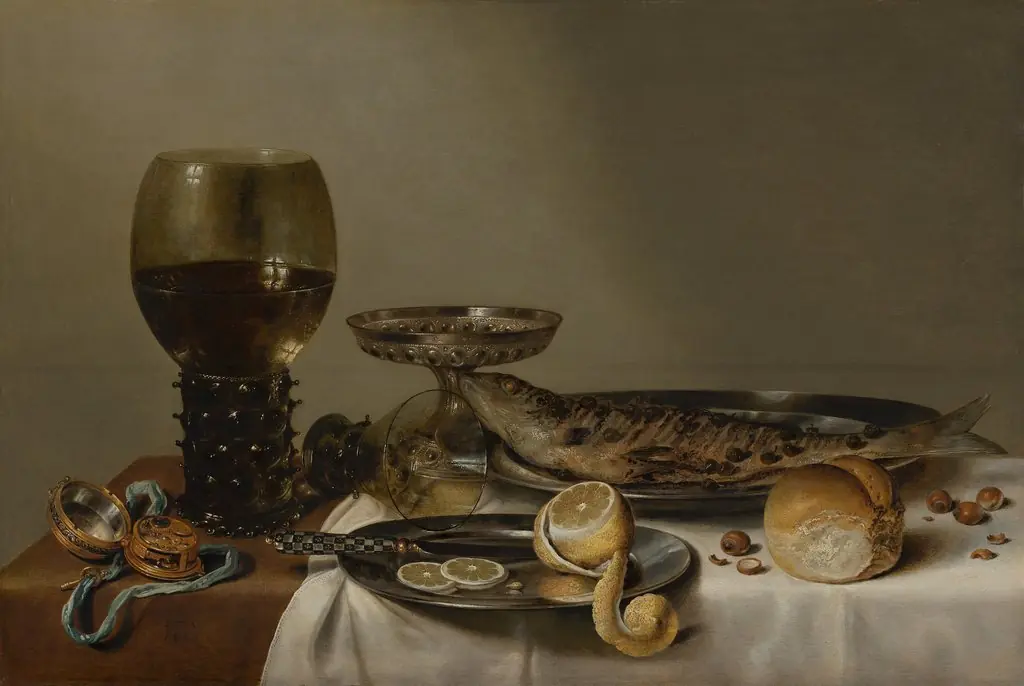
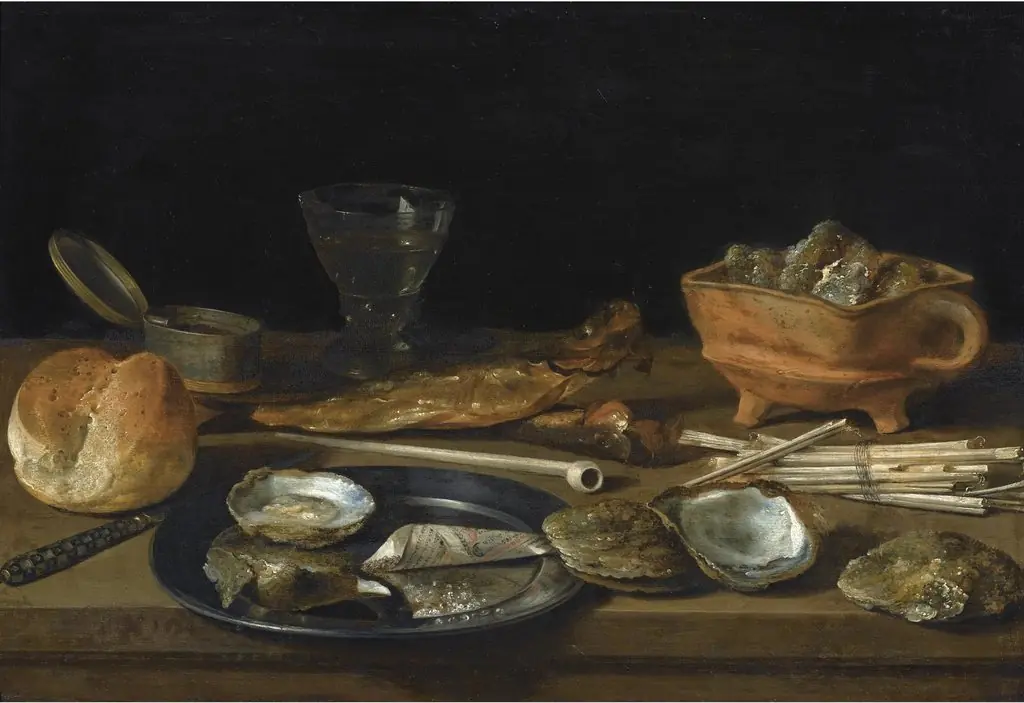
The composition presents a darkened tabletop supporting a glass goblet, a silver salt cellar, a smoking pipe, a peeled lemon, and a cluster of olives. Each object is rendered with careful attention to texture and material, forming a quiet yet elaborate arrangement that reflects the reach of Dutch mercantile networks in the early modern period.
Subject & Meaning
The selected items are not domestic staples but imported luxuries, symbolising the flow of commodities from overseas colonies to the Dutch Republic. The lemon and tobacco point to South American sources, while the salt, once sourced from Iberian ports, later arrived from Cape Verde and Brazil, underscoring the economic dependence on distant trade.
Technique & Style
The painter employs a restrained palette of muted shadows contrasted with the reflective surfaces of glass and metal, allowing the objects’ surfaces to catch light. Precise brushwork delineates the translucency of the goblet and the textured rind of the lemon, while the olives receive a subtle chiaroscuro that enhances their three‑dimensional presence.
History & Provenance
Created during the Dutch Golden Age, the work likely served a decorative function in a merchant’s residence, illustrating the owner’s access to exotic goods. The painting entered the Rijksmuseum’s collection in the 20th century, where it remains part of the institution’s holdings on Dutch still‑life painting.
Context
In the 17th century, the Dutch West India Company and other trading enterprises expanded maritime routes that linked Europe with the Americas and Africa. The influx of goods such as tobacco, salt, citrus fruits, and olives fueled economic growth, but it was also tied to colonial conquest and the exploitation of overseas territories.
Own this work as a print
Artist & collection
Artist
Jan Jansz van de Velde (1620–1662) was a Dutch artist, born in Haarlem.

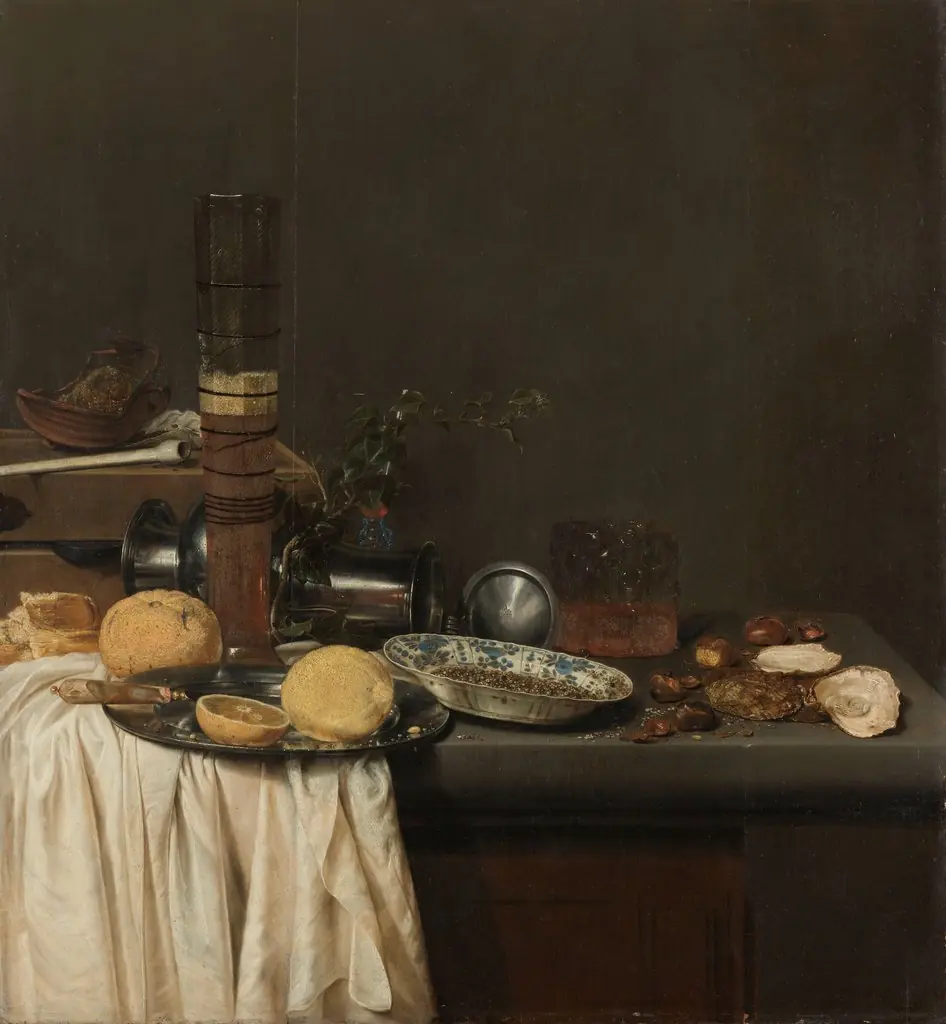 Still-life with a Tall Beer Glass
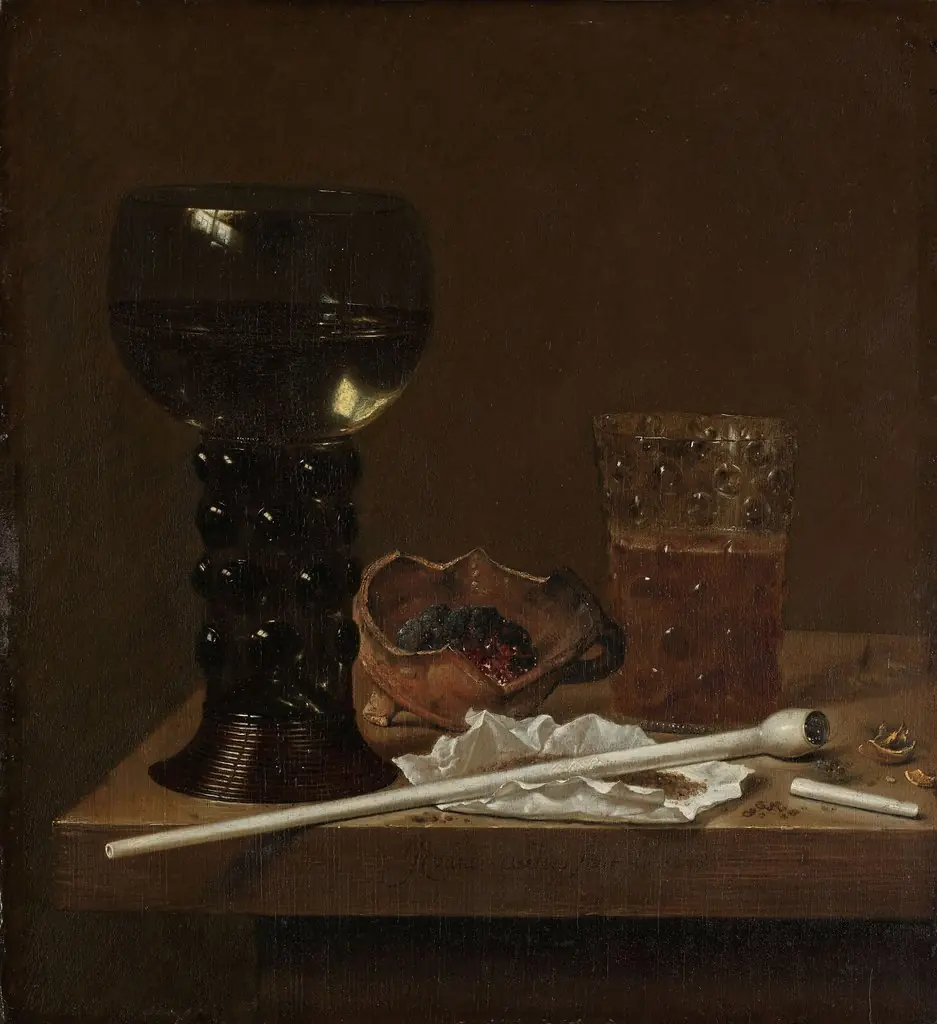 Still life with wineglass, beer glass and pipe
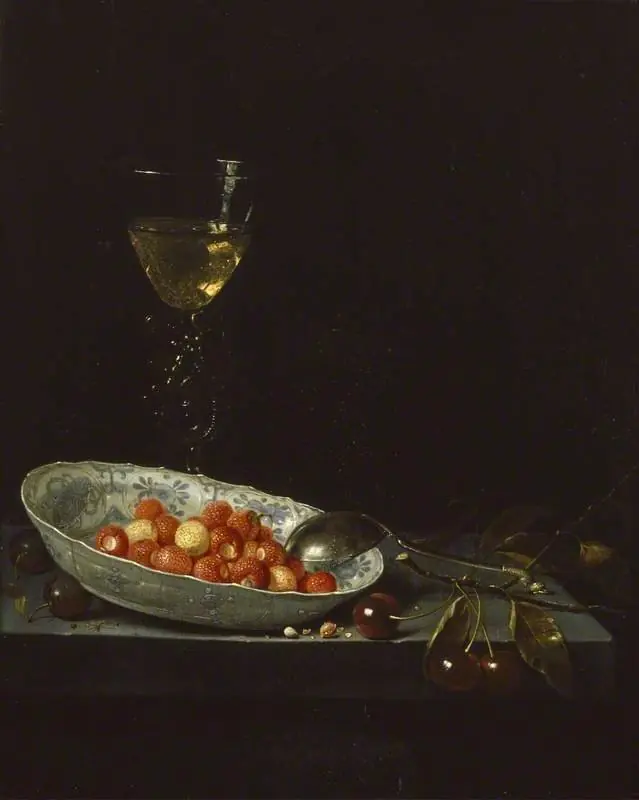 Still Life with Strawberries and Cherries
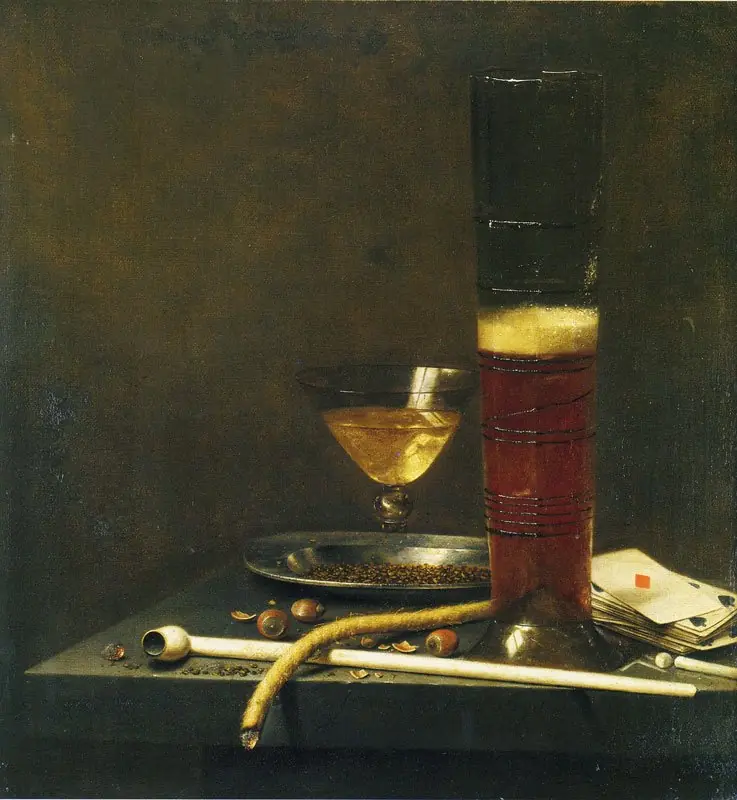 Glasses, Smoking Implements, and Cards
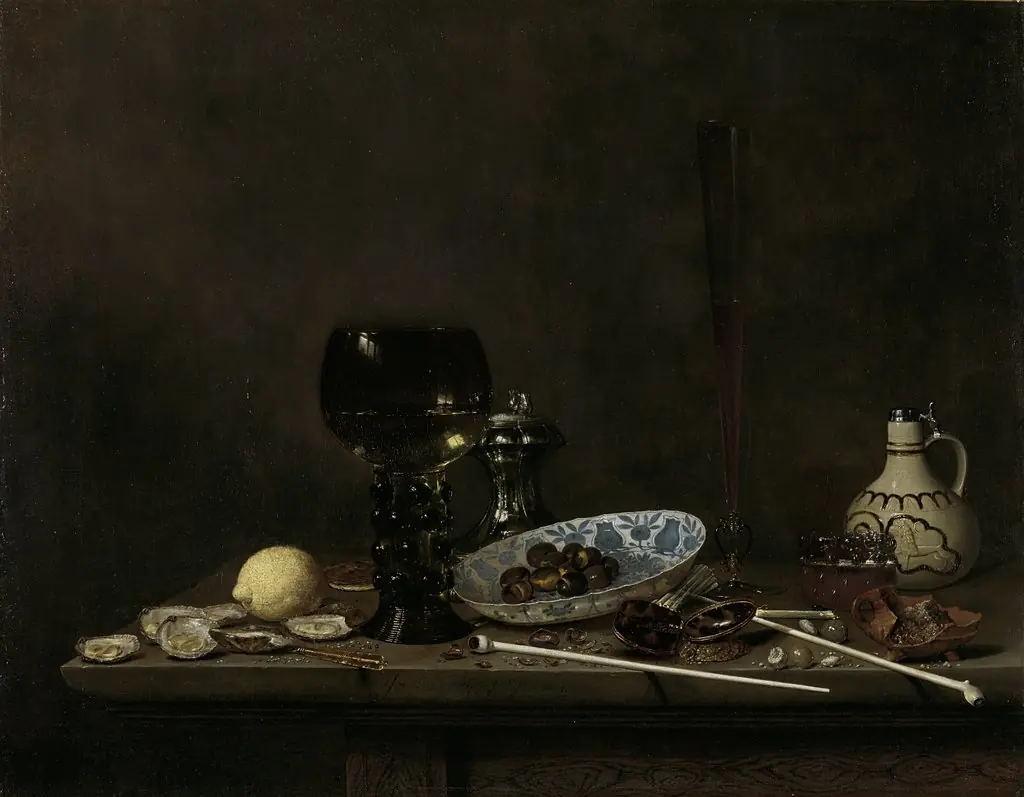 Still life with wineglass, flute, glass, earthenware jug and pipes
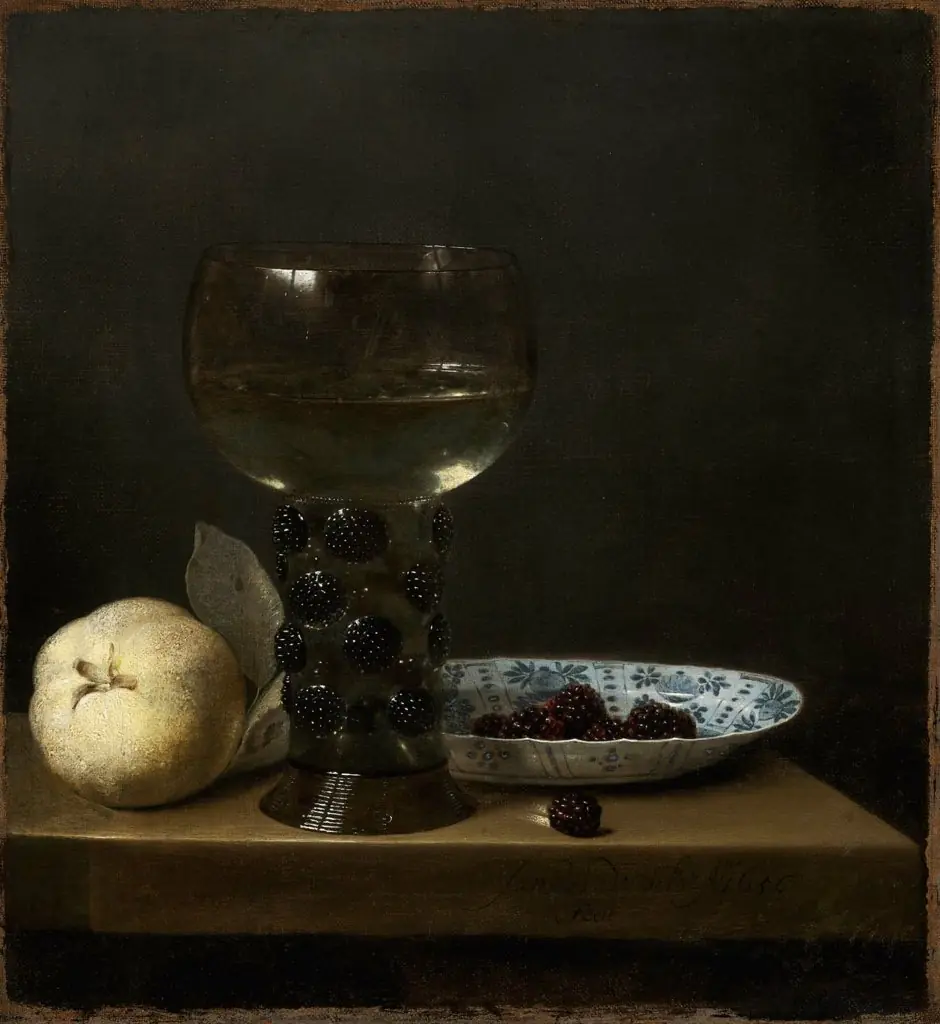 Still Life with Goblet and Fruit
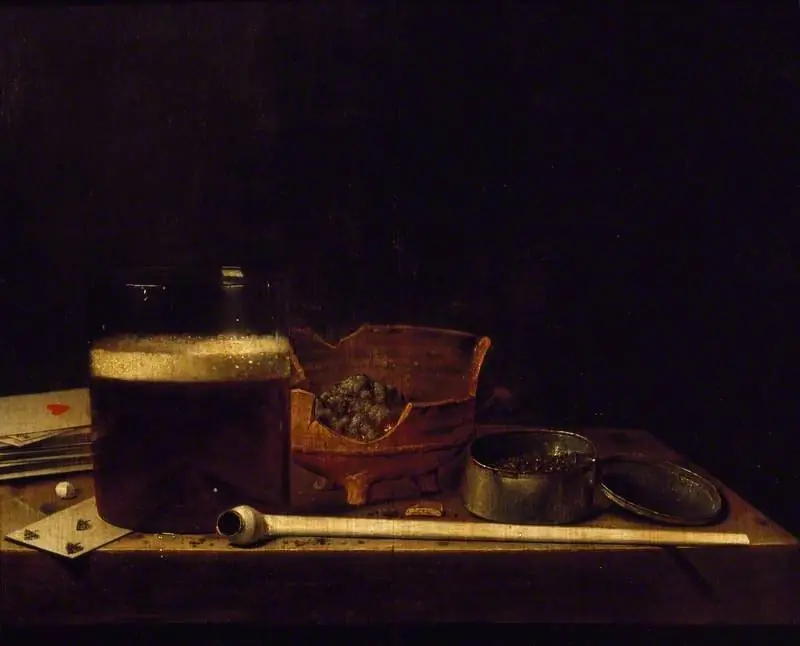 Still Life with a clay Pipe
 Still life with fruit and wine glass