Artwork
The Banks of the Loire
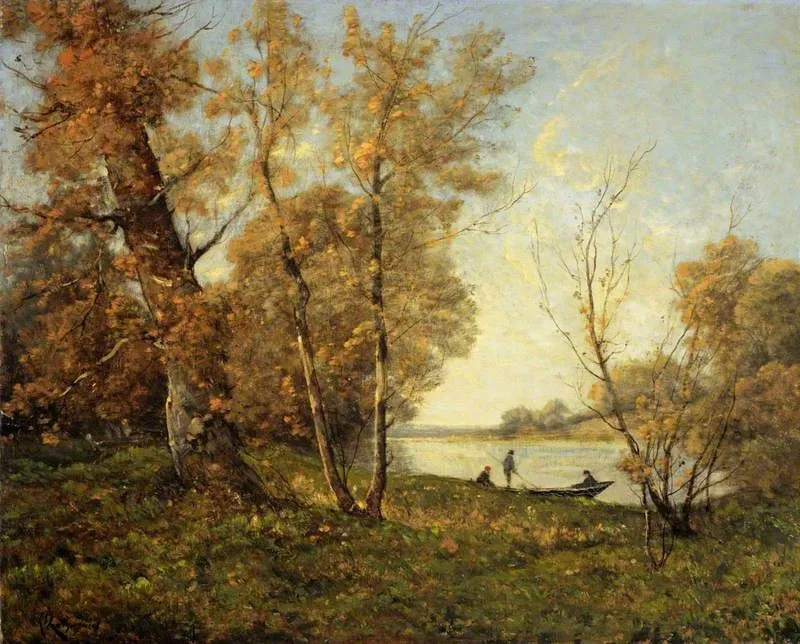
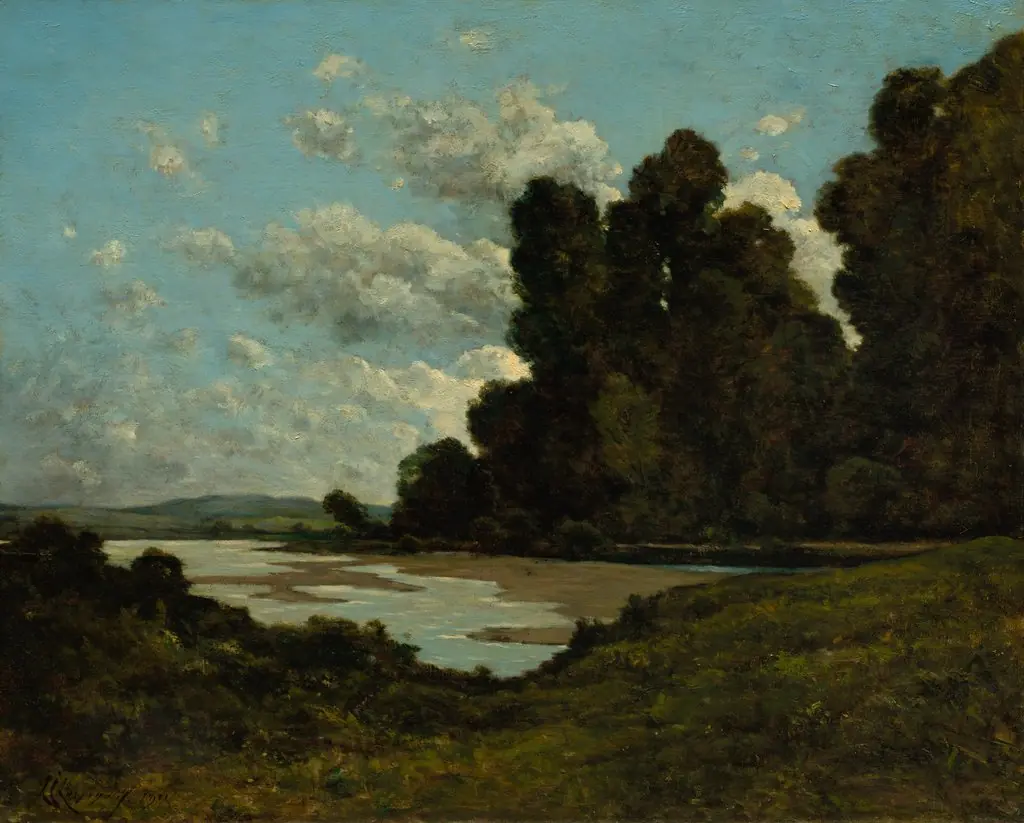
The Banks of the Loire is an oil painting by the Post-Impressionist artist Henri Harpignies. It dates from 1896 and is held in the collection of the National Galleries Scotland.
About this work
Overview
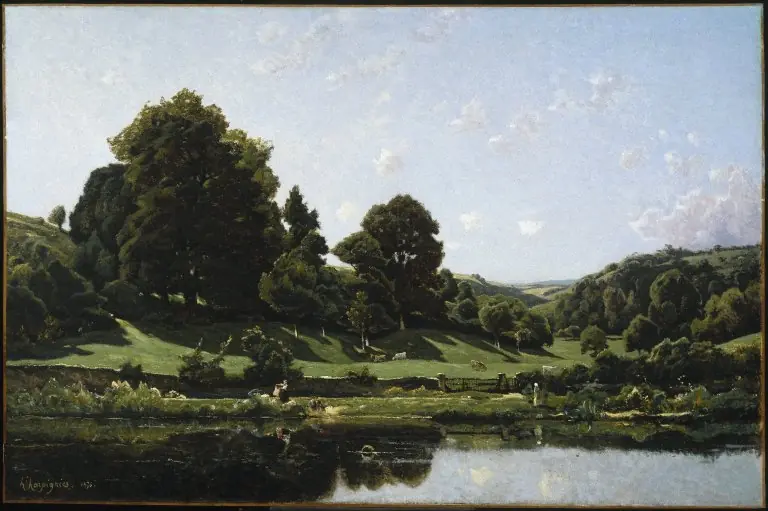
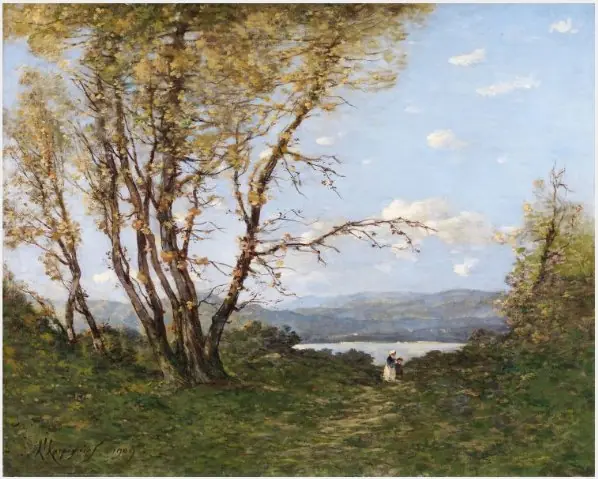
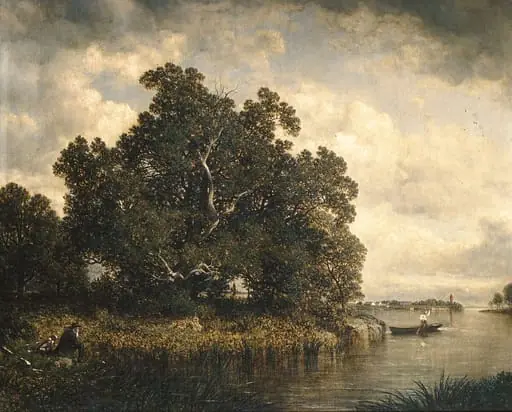
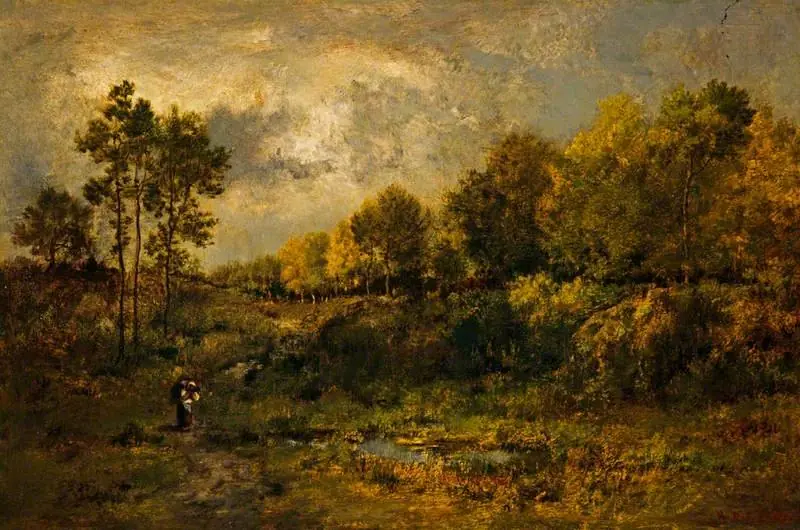
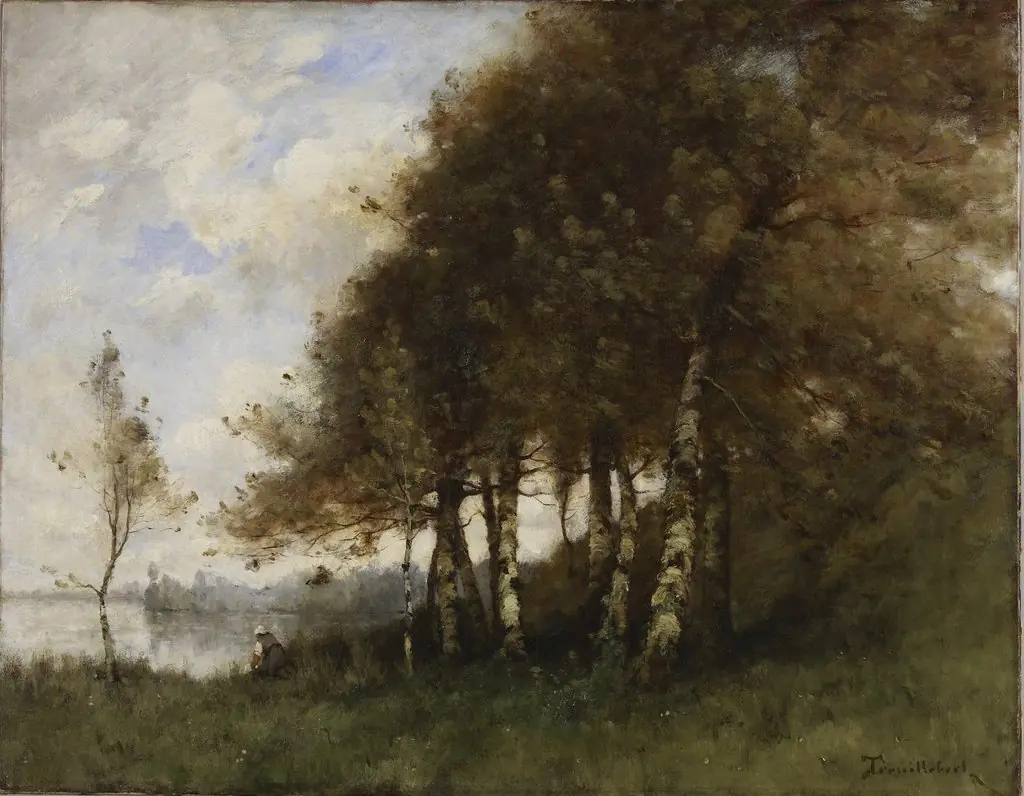
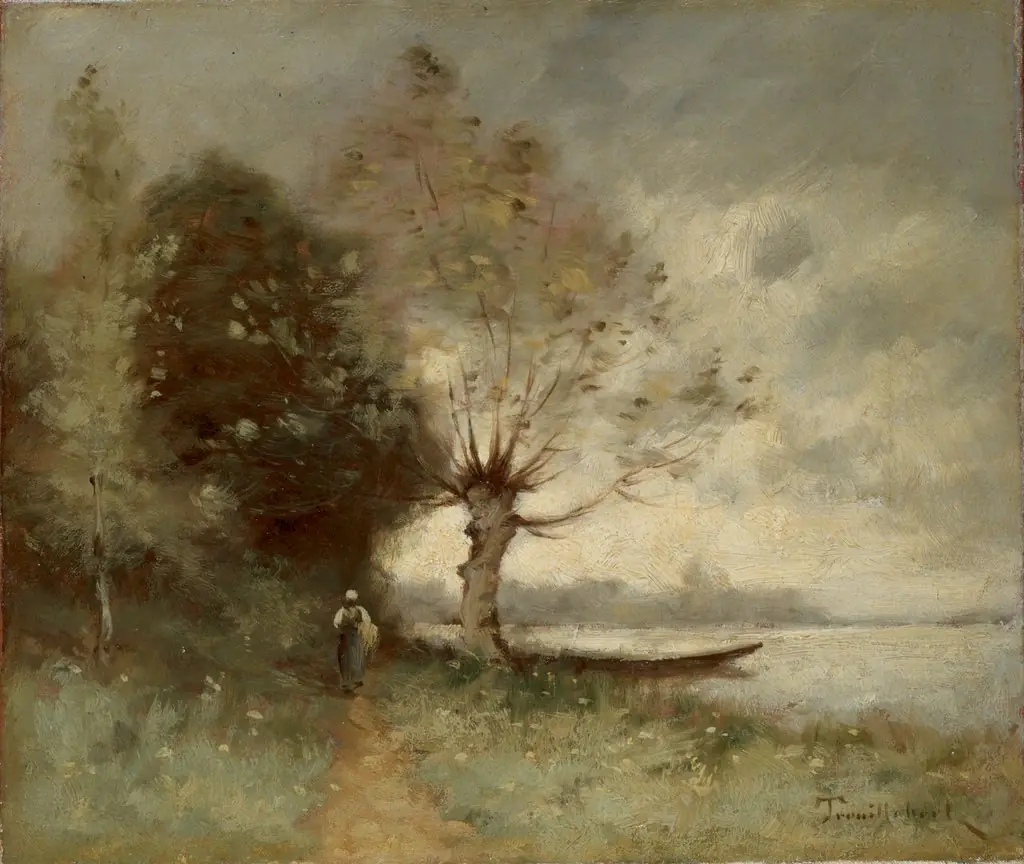
Henri Harpignies painted *The Banks of the Loire* in 1896. Executed in oil on canvas, the work presents a quiet stretch of the French river, its banks softened by a mix of leafless and leafy trees. A small boat with a few figures drifts in the foreground, while a pale sky stretches above, creating a scene of measured stillness.
Subject & Meaning
The composition captures a moment of everyday river life, emphasizing the interplay between water, foliage, and human presence. By juxtaposing barren trunks with verdant leaves, Harpignies suggests the seasonal transition along the Loire, while the modest boat hints at the gentle rhythm of rural activity, inviting contemplation of nature’s quiet cycles.
Technique & Style
Rendered in oil, the painting employs a restrained palette of greens, browns, and muted grays, allowing subtle variations of light to define form. Harpignies’ brushwork balances detail—particularly in the foliage and water reflections—with broader, softened passages in the sky, reflecting the naturalistic approach championed by the Barbizon school.
History & Provenance
After its completion, the canvas entered the collection of the Scottish National Gallery, where it remains on display. Harpignies, trained initially in Italy and later under Jean‑Alexis Achard, brought the Barbizon emphasis on direct observation to this work, situating it within the late‑19th‑century French landscape tradition.
Artist & collection
Artist
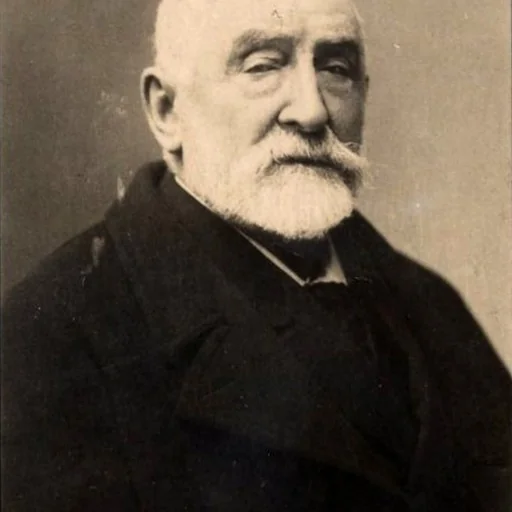
Henri-Joseph Harpignies (French pronunciation: ; June 28, 1819 – August 28, 1916) was a French landscape painter of the Barbizon school.