Artwork
Evening at Saint-Privé
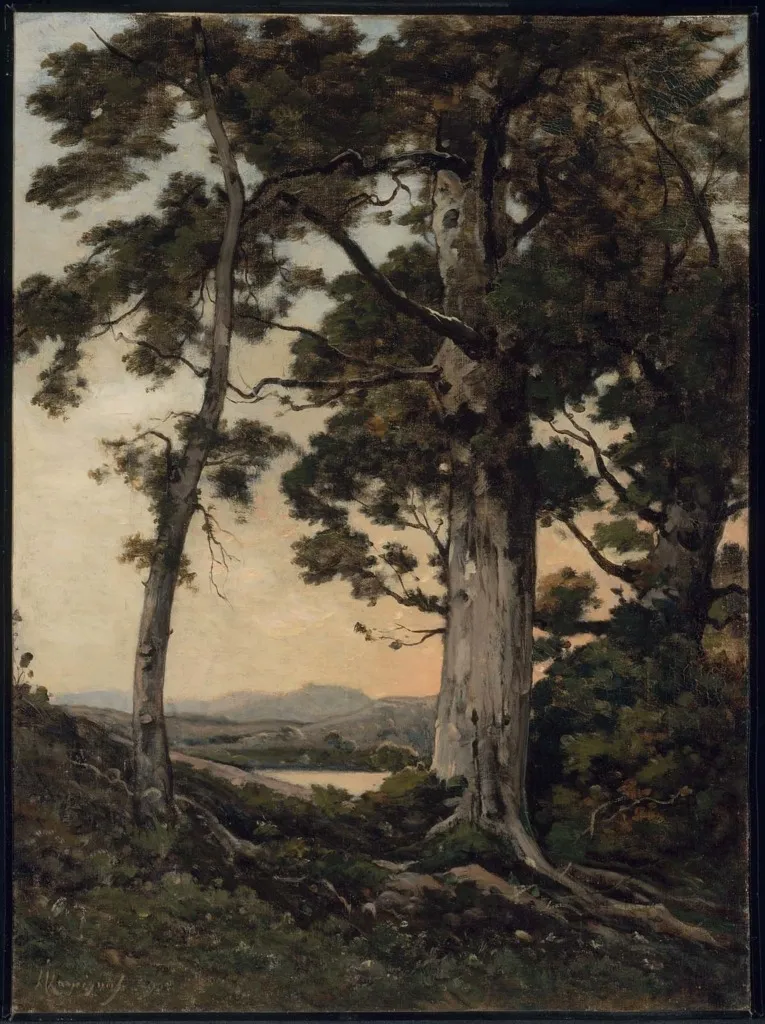
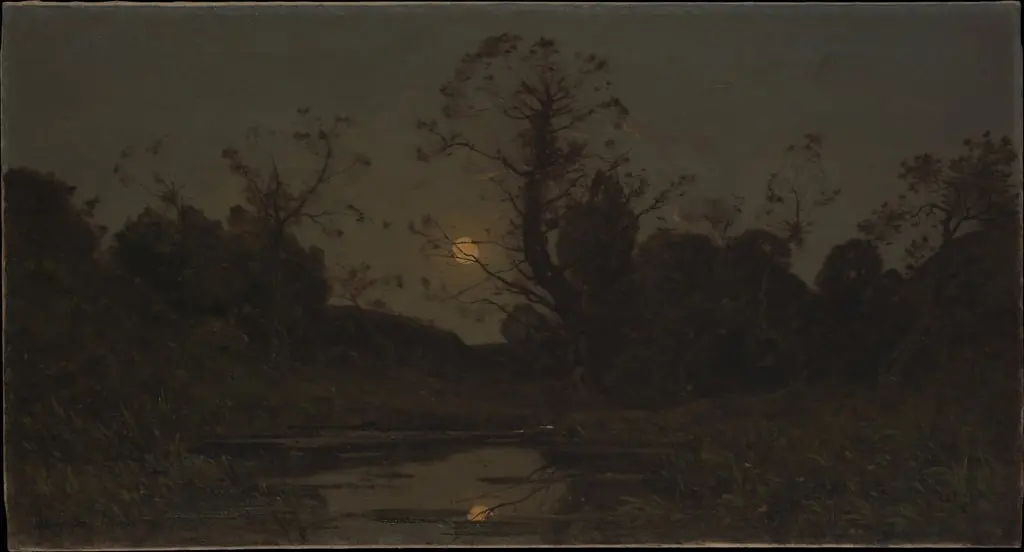
Evening at Saint-Privé is an oil painting by the Post-Impressionist artist Henri Harpignies. It dates from 1896 and is held in the collection of the Museum of Fine Arts Boston.
About this work
Overview
The work captures a quiet rural scene at twilight, reflecting the artist’s sustained interest in natural light and atmospheric effects.
Henri Harpignies painted *Evening at Saint-Privé* in 1896 using oil on canvas. The work captures a quiet rural scene at twilight, reflecting the artist’s sustained interest in natural light and atmospheric effects. Though linked to the Barbizon tradition, the painting’s tonal subtlety and emotional restraint align it with late 19th-century landscape practices that moved beyond strict realism toward more introspective renderings of the environment.
Subject & Meaning
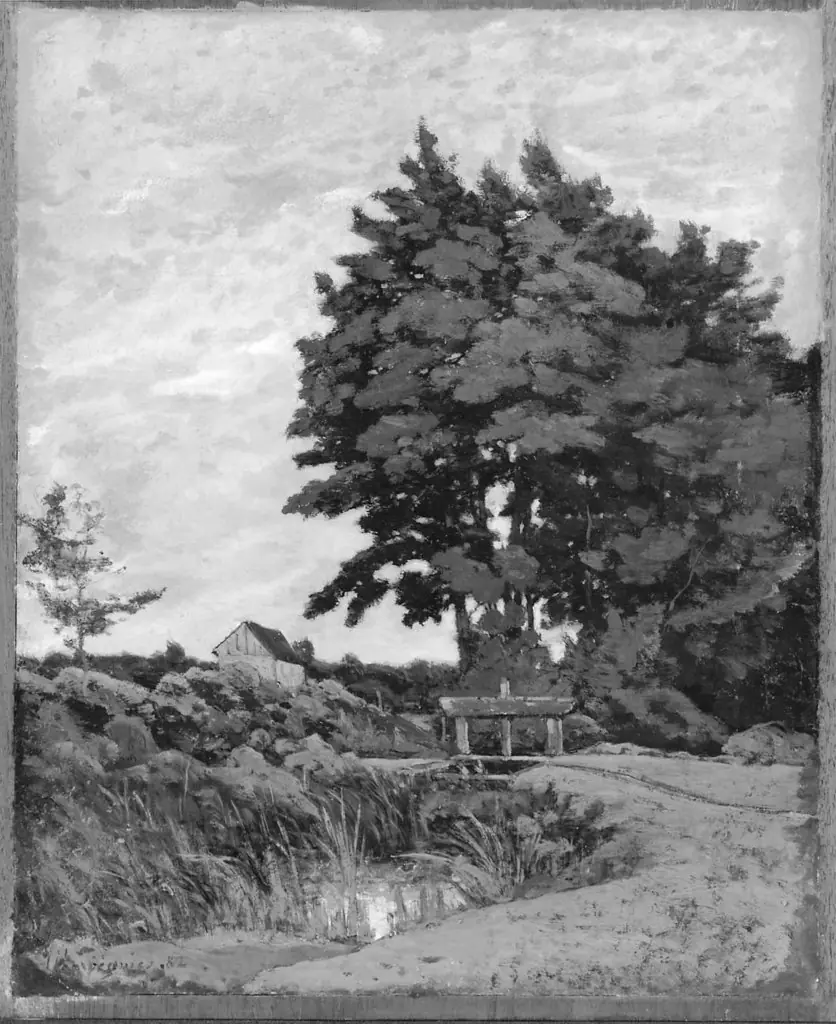
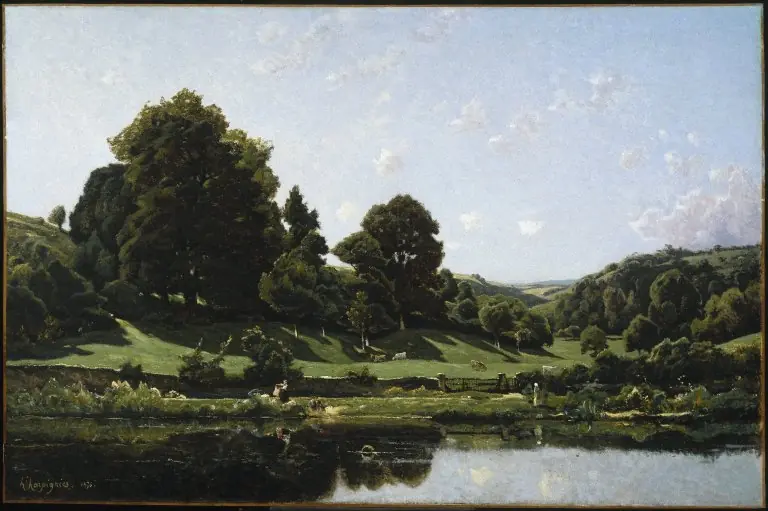
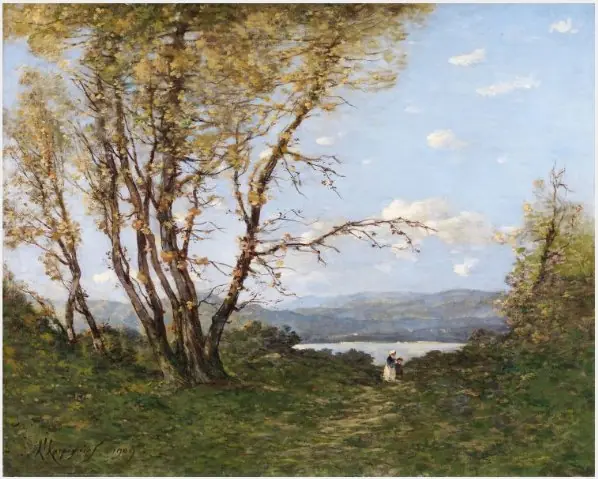
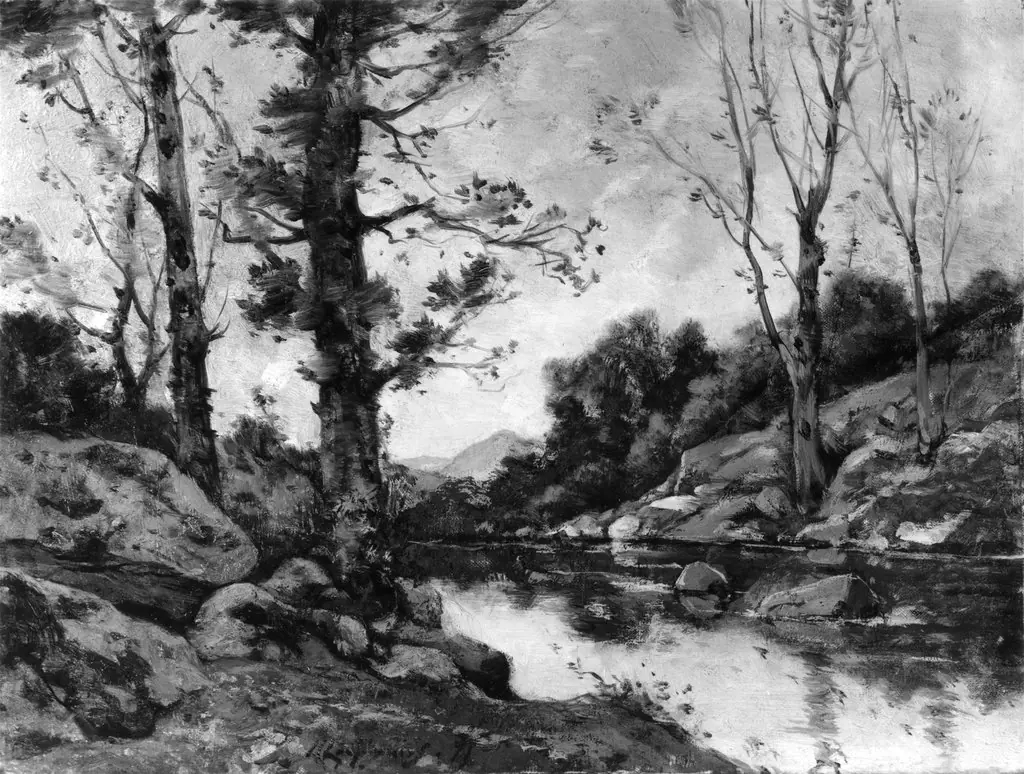
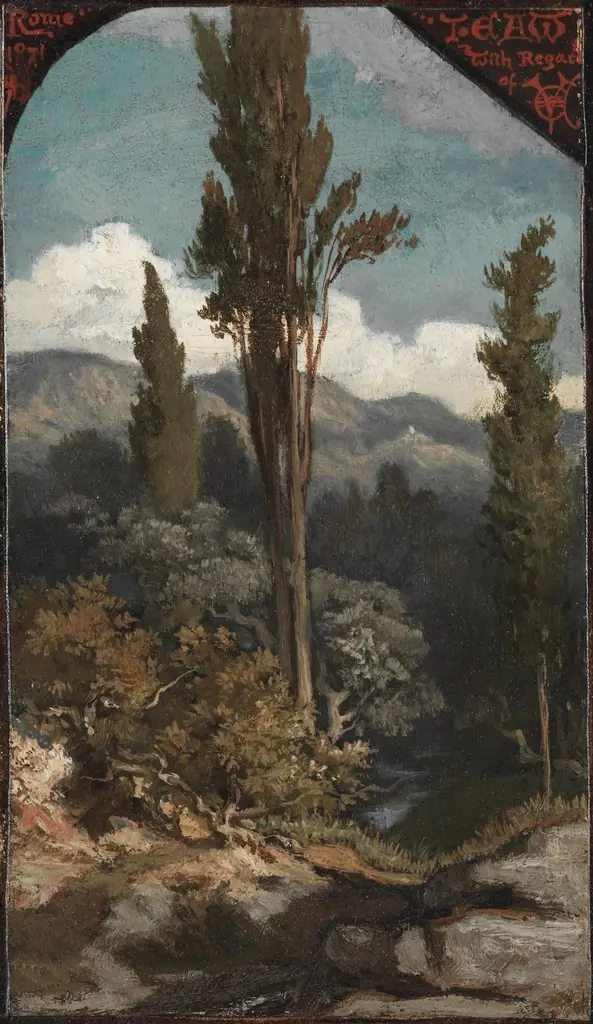
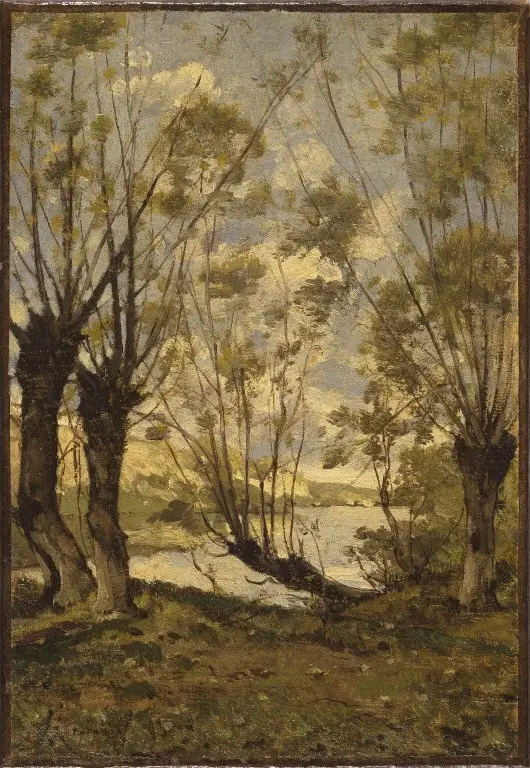
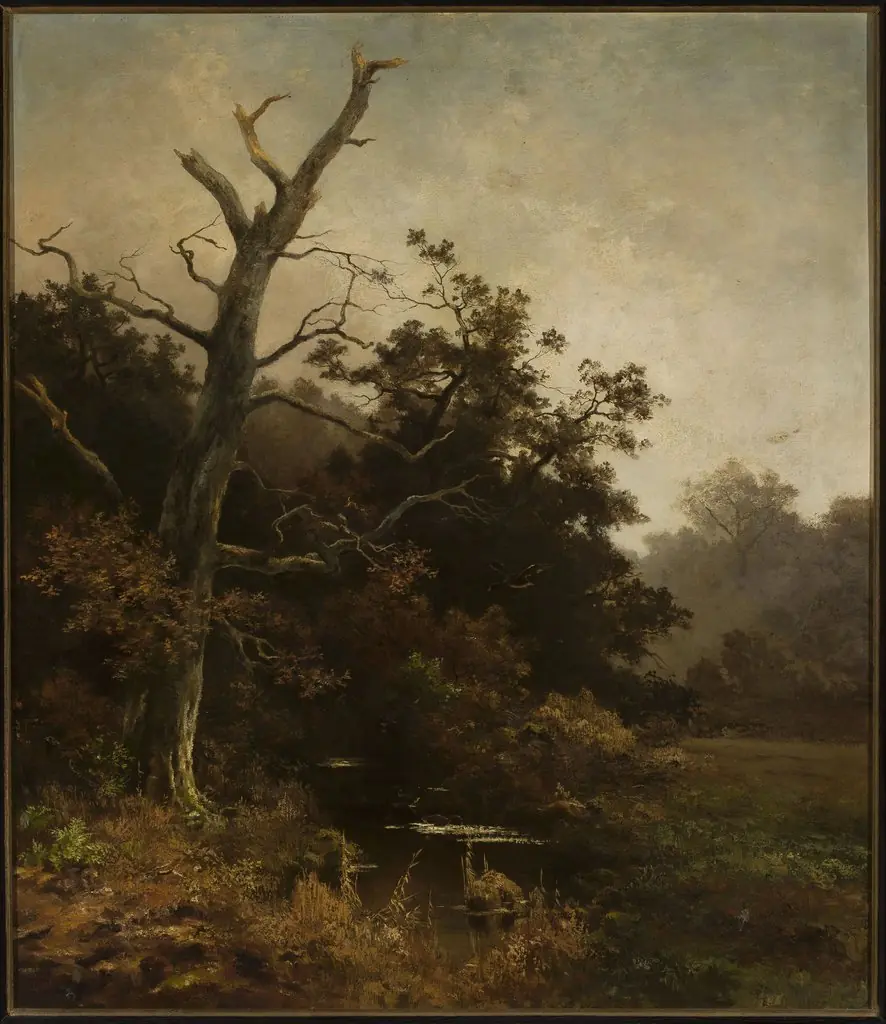
The painting presents a tranquil dusk landscape near Saint-Privé, a village in northern France. A solitary, large tree dominates the foreground, its gnarled form anchoring the composition. Behind it, a still body of water mirrors the fading sky, while the horizon dissolves into soft gradients of pink and gray. The scene evokes stillness and transition, suggesting the quiet passage of day into night without narrative or human presence.
Technique & Style
Harpignies employed layered oil glazes and deliberate brushwork to build depth and texture. The tree’s trunk and branches are rendered in muted browns and grays, contrasting with the luminous green of its foliage. The sky and water are blended with soft, feathery strokes, creating a hazy, atmospheric effect. Light is not sharply defined but diffused, enhancing the sense of quiet暮色 and spatial recession.
History & Provenance
The painting entered the collection of the Museum of Fine Arts, Boston, in the early 20th century, likely through a private acquisition or bequest. Harpignies, active throughout the latter half of the 19th century, was well-regarded in France for his landscapes, though his international recognition remained modest. The work’s survival and preservation reflect its status as a representative example of his mature style.
Context
Created in the final years of the 19th century, *Evening at Saint-Privé* emerged as industrialization transformed the French countryside. While many contemporaries turned to urban scenes or bold color experiments, Harpignies remained devoted to rural solitude and the nuanced effects of natural light. His work stood apart from Impressionism’s immediacy, favoring contemplative, structured compositions rooted in observation.
Legacy
Harpignies’s landscapes, including this one, are now seen as quiet bridges between the Barbizon School’s realism and the more subjective approaches of early modernism. Though not widely celebrated in his lifetime outside France, his careful rendering of atmosphere and mood influenced later generations of landscape painters who valued emotional resonance over spectacle.
Artist & collection
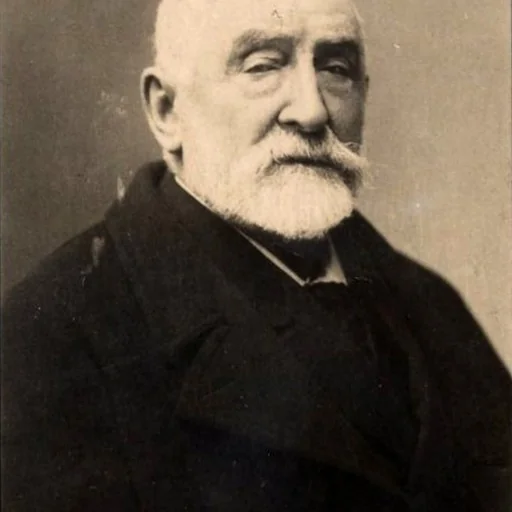
Artist
Henri-Joseph Harpignies (French pronunciation: ; June 28, 1819 – August 28, 1916) was a French landscape painter of the Barbizon school.