Artwork
Untitled
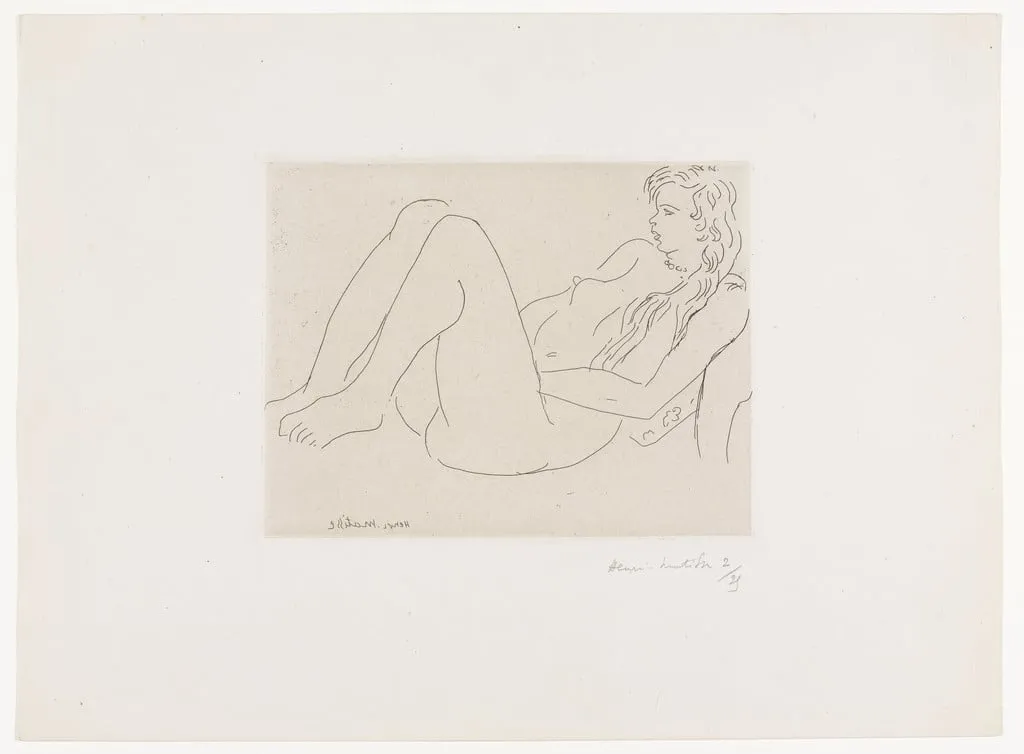
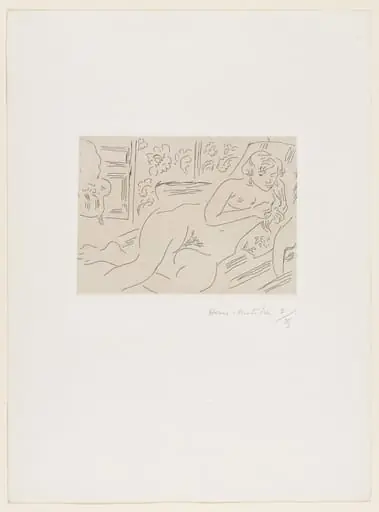
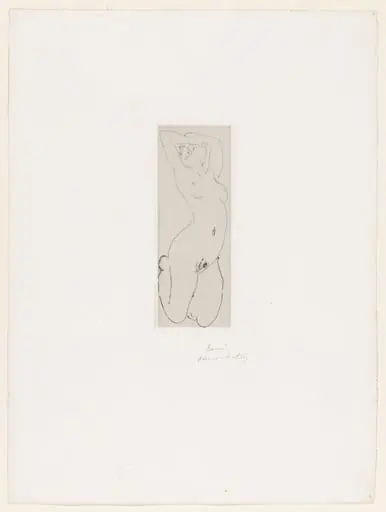
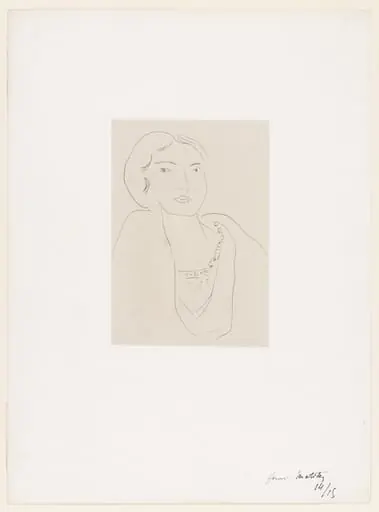
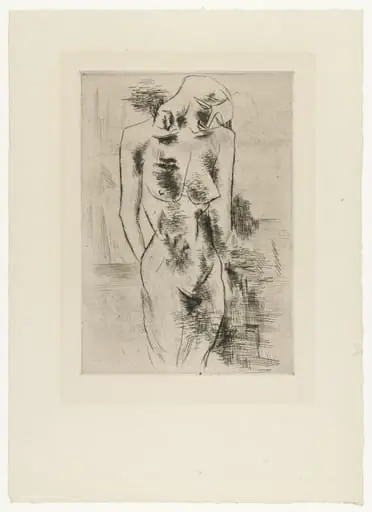
Untitled is an ink print by Henri Matisse. It dates from 1920 and is held in the collection of the Museum of Modern Art.
About this work
Overview
Though best known for painting, Matisse consistently engaged with printmaking, using its constraints to refine his draftsmanship.
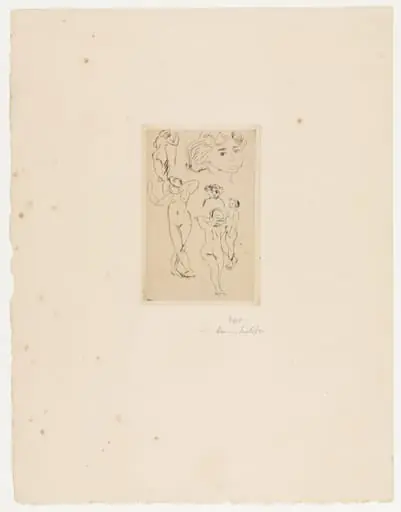
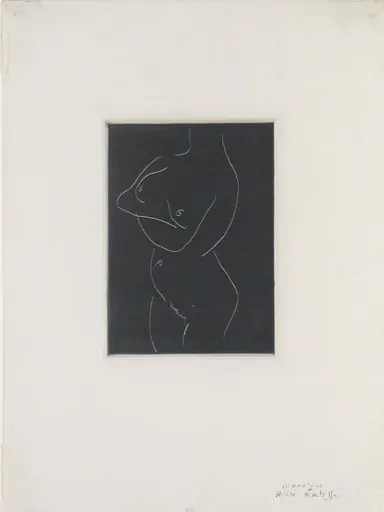
Created around 1920, this etching with chine collé by Henri Matisse belongs to a series of prints in which he explored the human form with reduced line and quiet intensity. Though best known for painting, Matisse consistently engaged with printmaking, using its constraints to refine his draftsmanship. The work is held in The Museum of Modern Art’s collection, reflecting its significance within his broader graphic output.
Subject & Meaning
The figure is a reclining nude, her body curved in a natural, unforced pose—legs bent, arms resting gently on her abdomen, head turned away. Her expression is subdued, almost meditative, with no overt drama or narrative. The simplicity of the pose suggests an interest in stillness and inner calm, aligning with Matisse’s pursuit of harmony over spectacle. The absence of context or detail invites contemplation of the form itself.
Technique & Style
Matisse employed etching to achieve fluid, continuous lines, enhanced by chine collé—a method of adhering thin paper to a heavier support for tonal contrast. The figure is rendered with minimal shading, relying on contour and negative space to define volume. The creamy background, likely the paper’s natural tone, frames the figure without distraction, emphasizing the economy of line and the quiet rhythm of the body’s curves.
History & Provenance
This print was made during a period when Matisse was deeply engaged with printmaking, following his earlier Fauvist experiments and preceding his cut-outs. It entered The Museum of Modern Art’s collection in the mid-20th century, part of a broader institutional effort to document modernist print practices. Its preservation reflects its role as a key example of Matisse’s graphic work outside his more famous paintings.
Context
In the early 1920s, Matisse was refining his approach to the human figure amid shifting artistic currents. While Picasso explored fragmentation, Matisse pursued clarity and balance. This etching aligns with his interest in Orientalist and classical motifs, filtered through a modern lens. The work shares affinities with his drawings and sculptures of the era, all emphasizing essential form over ornament.
Legacy
The print exemplifies Matisse’s belief that art could convey serenity through restraint. Its influence is visible in later 20th-century artists who valued line and simplicity over detail. As part of his print oeuvre, it underscores his commitment to multiple mediums and his ability to distill complex emotions into minimal visual language, leaving a quiet but enduring mark on modern printmaking.
Artist & collection
Artist
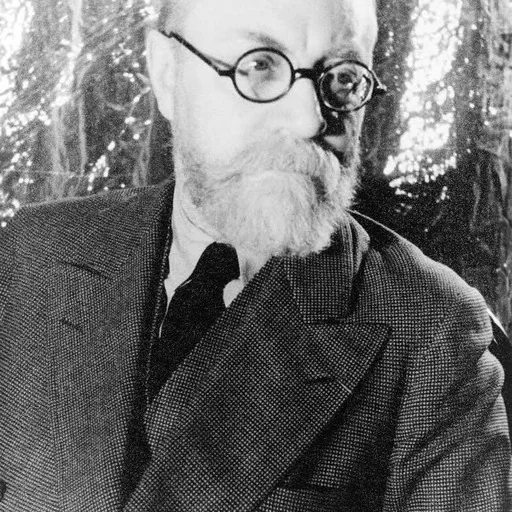
Henri Émile Benoît Matisse (French: ; 31 December 1869 – 3 November 1954) was a French visual artist, known for both his use of colour and his fluid and original draughtsmanship.