Artwork
Interior Scene with a Girl Reading
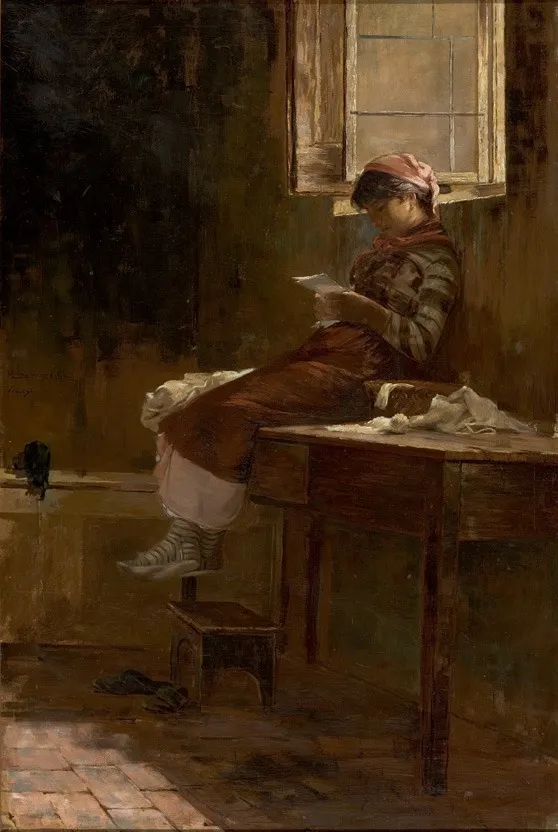
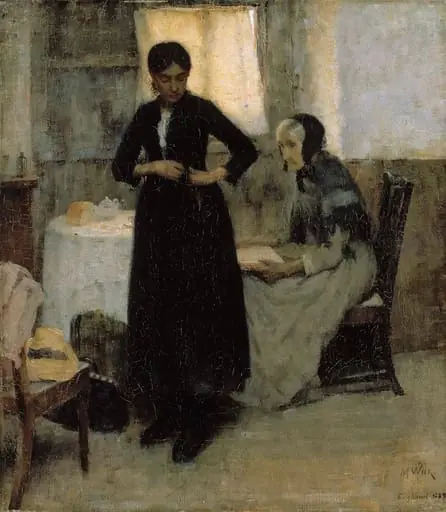
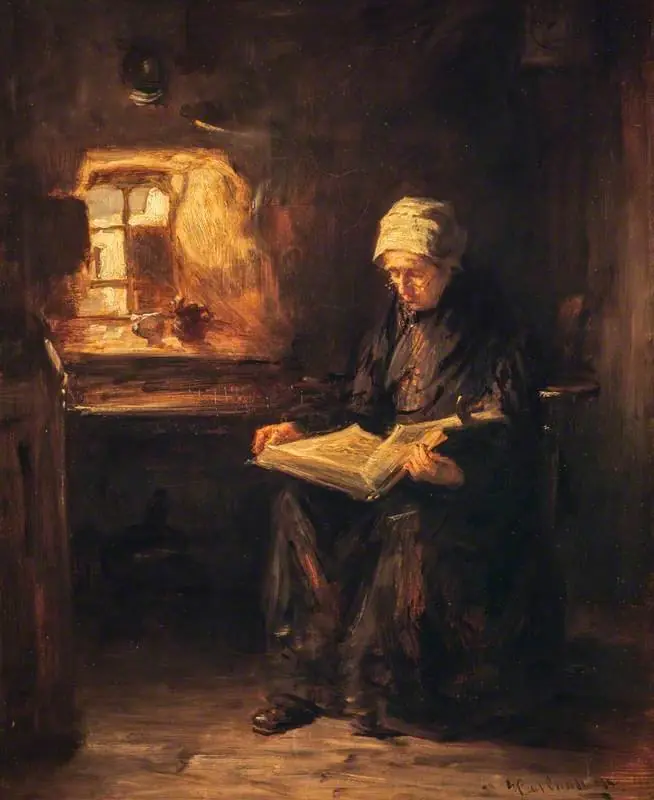
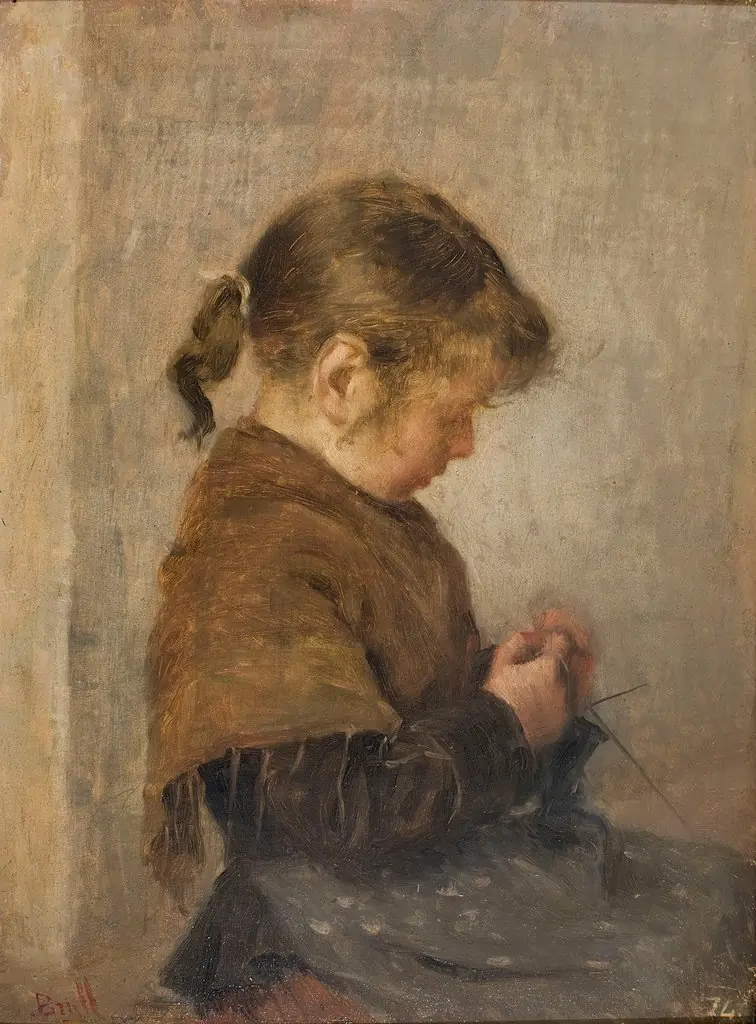
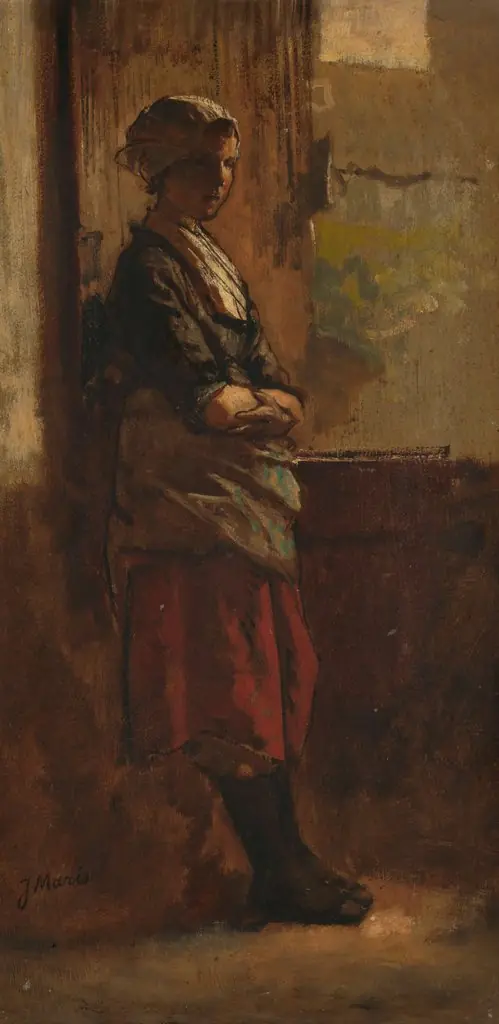
Interior Scene with a Girl Reading is an oil painting by the Realist artist Henrique Bernardelli. It dates from 1850 and is held in the collection of the São Paulo Museum of Art.
About this work
Overview
The scene avoids dramatic action, instead emphasizing stillness and introspection within a modest domestic setting.
Painted around 1850 by Henrique Bernardelli, this oil-on-canvas work captures a solitary moment of quiet focus. It is part of the collection at the São Paulo Museum of Art. The composition centers on a young girl absorbed in reading, rendered with subtle lighting and restrained detail. The scene avoids dramatic action, instead emphasizing stillness and introspection within a modest domestic setting.
Subject & Meaning
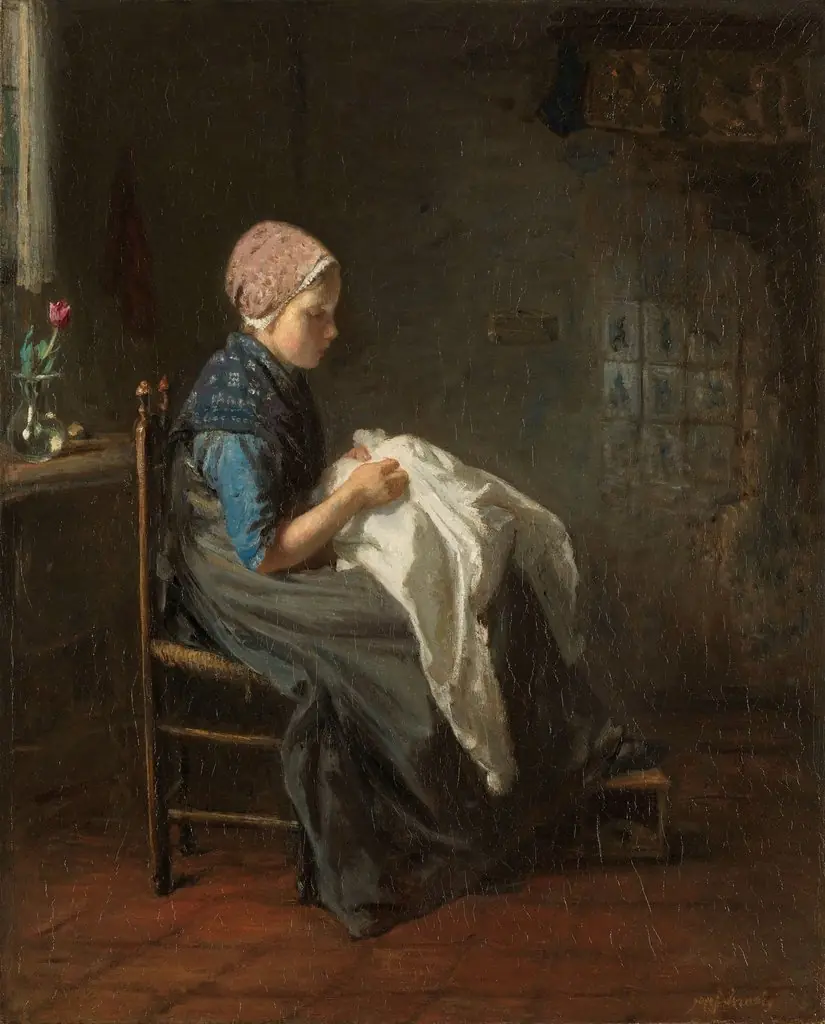
The girl, dressed in a striped shirt, brown skirt, and pink headscarf, sits cross-legged on a table, her feet resting on a low stool. Her concentration is evident in her posture and gaze, suggesting a private, personal ritual. The absence of other figures or narrative cues reinforces the intimacy of the moment. The act of reading becomes a silent act of inner life, inviting contemplation rather than storytelling.
Technique & Style
Bernardelli employs chiaroscuro to model form and define space, using a narrow band of light from a window to illuminate the girl’s face and hands. The surrounding areas recede into shadow, enhancing the sense of depth. Brushwork is restrained, with smooth transitions between tones. The use of glazing likely contributes to the muted, atmospheric quality, avoiding bright hues in favor of tonal harmony.
History & Provenance
The painting has remained in Brazil since its creation, eventually entering the collection of the São Paulo Museum of Art. While little is documented about its early ownership, its presence in the museum since the mid-20th century reflects its recognition as a representative work of 19th-century Brazilian genre painting. It has not been widely exhibited outside the country.
Context
Created during a period when Brazilian art was developing a distinct national identity, the work aligns with emerging interest in everyday domestic scenes. Unlike grand historical or religious subjects favored earlier, this painting reflects a shift toward intimate, observational realism. Bernardelli, trained in Europe, brought European techniques to Brazilian subjects, blending academic precision with local sensibility.
Legacy
The painting endures as an example of quiet, psychologically attuned genre painting in 19th-century Brazil. It contributes to the understanding of how artists depicted private life without sentimentality. While not widely known internationally, it holds significance within Brazilian art history for its restrained elegance and attention to ordinary moments of contemplation.
Artist & collection