Artwork
Greenhithe Pier
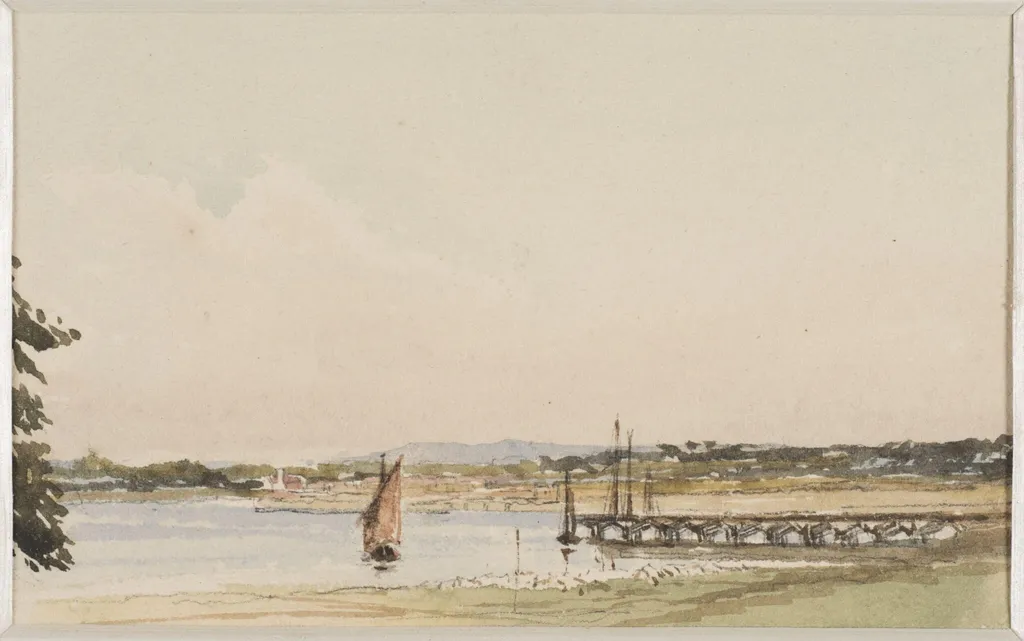
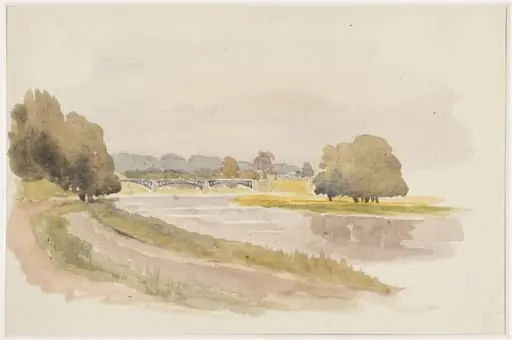
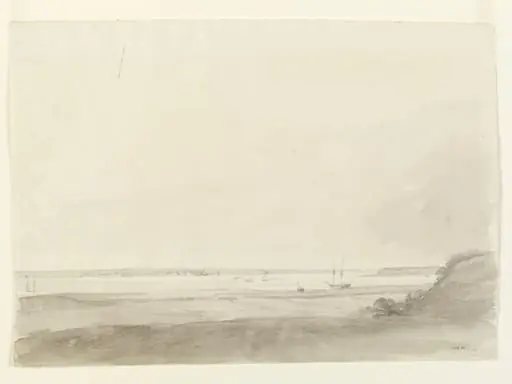
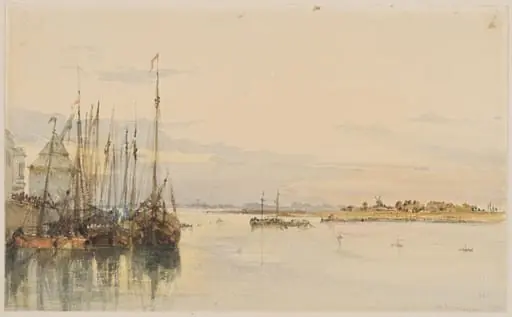
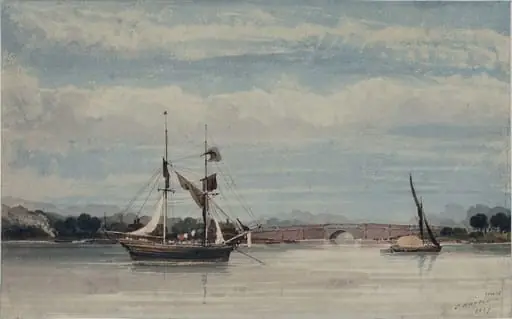
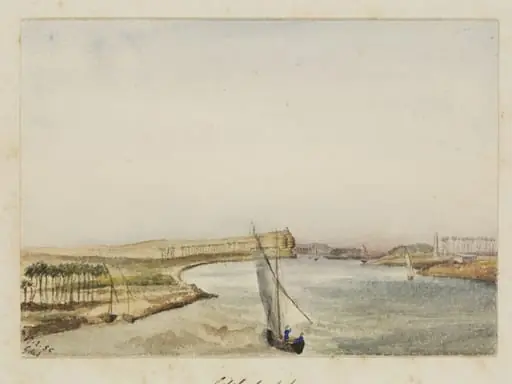
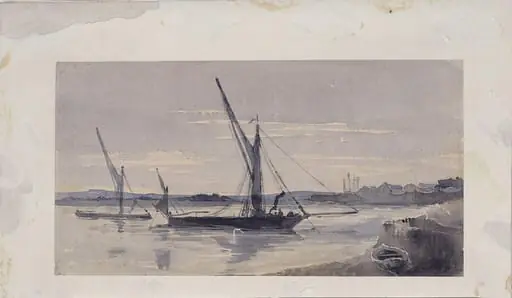
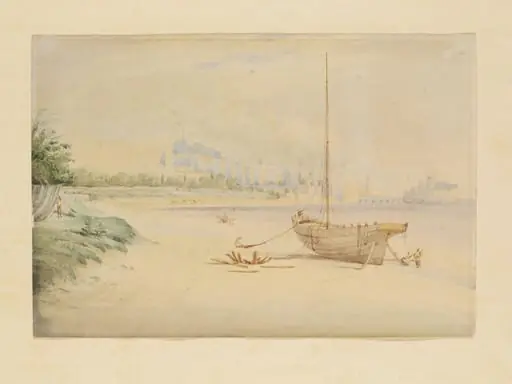
Greenhithe Pier is a drawing by the Romanticist artist Henry Cole. It dates from 1836 and is held in the collection of the Victoria and Albert Museum.
About this work
Overview
The work, modest in scale, captures a fleeting moment along the Thames through delicate washes of muted blues, greens, and earth tones.
This 1836 watercolour by Henry Cole presents a tranquil riverside scene at Greenhithe Pier. The work, modest in scale, captures a fleeting moment along the Thames through delicate washes of muted blues, greens, and earth tones. Inscribed on the reverse mount, the drawing bears the artist’s signature and title, marking its completion during a period of growing interest in English landscape subjects.
Subject & Meaning
The composition centres on a modest wooden pier extending into calm waters, where a single sailboat glides under a gentle breeze. The shoreline features a small bridge and a scattering of low buildings, suggesting a rural or semi-industrial setting. Rather than a formal study, the image evokes an unposed instant—wind stirring the sails, light reflecting off the river—conveying the quiet rhythm of life along the water’s edge.
Technique & Style
Cole employed fluid, economical brushwork to render the scene, allowing pigment to bleed and blend naturally. Loose, gestural lines define the water’s surface and the billowing sail, while subtle tonal shifts create depth without excessive detail. The restrained palette—soft blues, greens, and warm browns—enhances the work’s atmospheric quality, characteristic of early Victorian watercolourists who favoured suggestion over precision.
History & Provenance
Created in 1836, the drawing has remained in stable condition, its provenance traceable through inscriptions on the mount. Though its early ownership history is not extensively documented, the work reflects Cole’s engagement with British maritime and industrial landscapes during the 1830s. It forms part of a broader body of sketches and finished watercolours produced during this period of his career.
Context
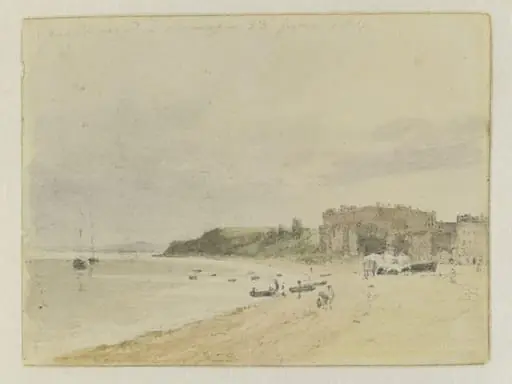
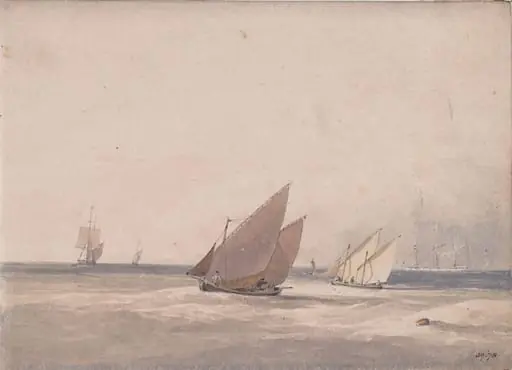
By the 1830s, watercolour had gained recognition as a distinct artistic medium in Britain, valued for its immediacy and expressive potential. Cole’s depiction of Greenhithe Pier aligns with contemporary interest in recording local scenery, whether rural, urban, or industrial. Such works often served as studies for larger compositions or as independent records of places undergoing social and economic change.
Artist & collection
Artist
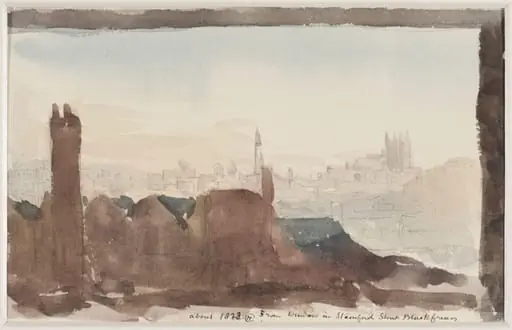
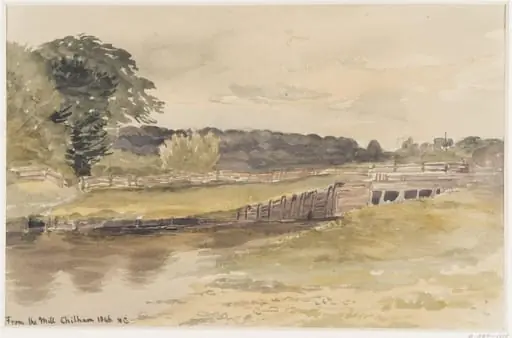
Henry Cole drew what he saw in mid-1800s Britain. Try his pencil sketch *From Window in Stamford Street, Blackfriars* (1828), a quiet city view over rooftops, or *From the Mill, Chilham* (1846), a riverside mill caught…