Artwork
Village along a River Estuary in Devon
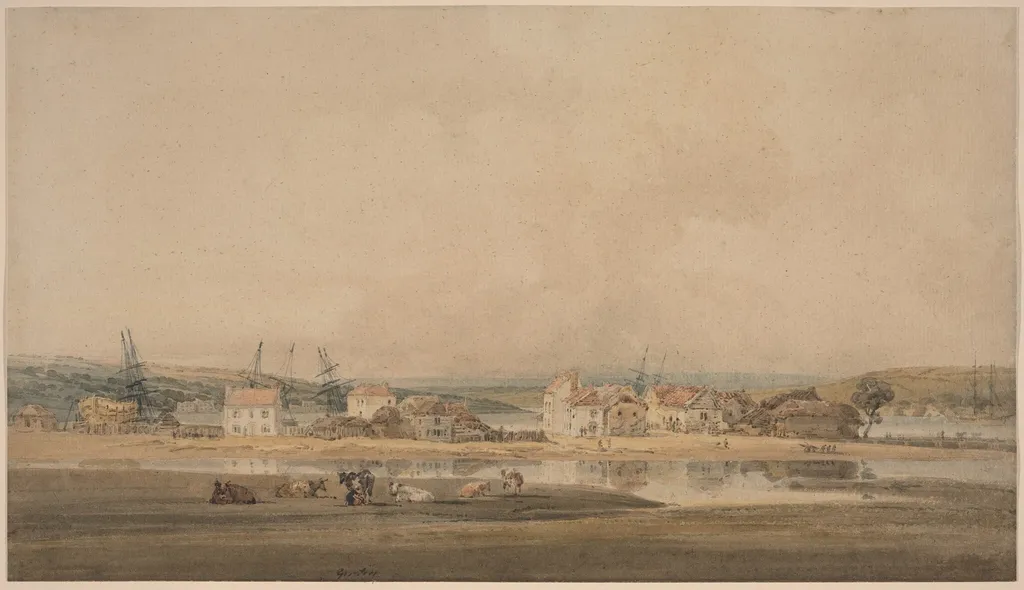
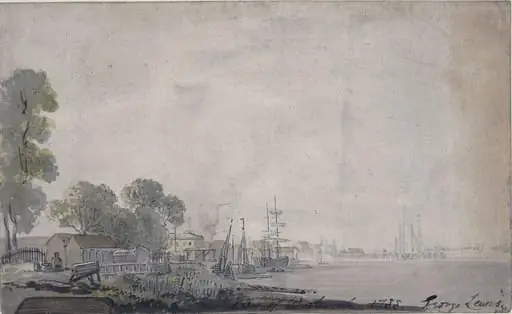
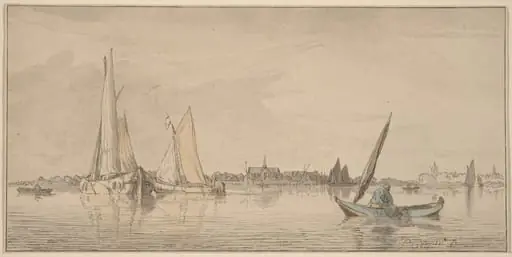
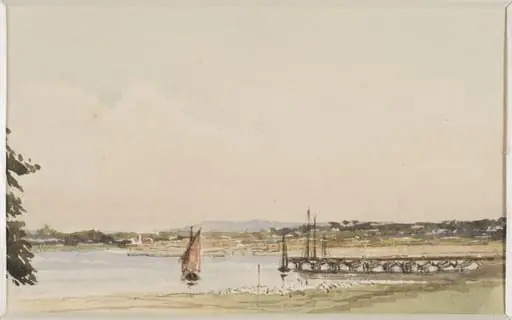
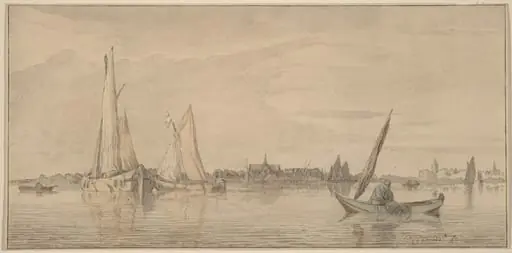
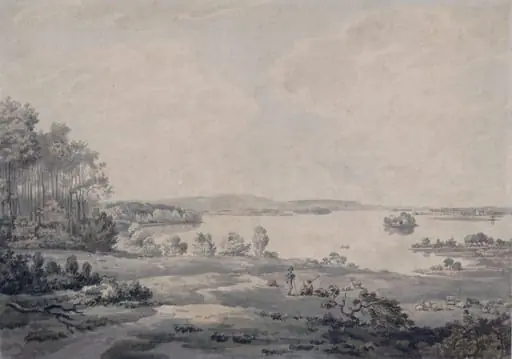
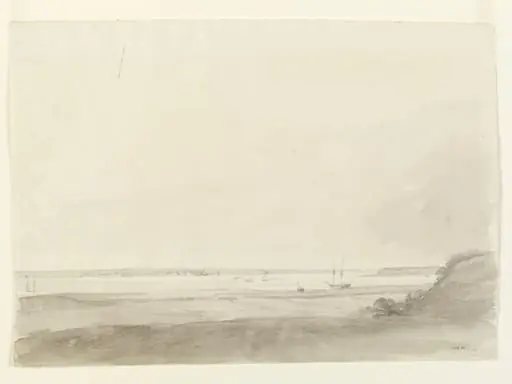
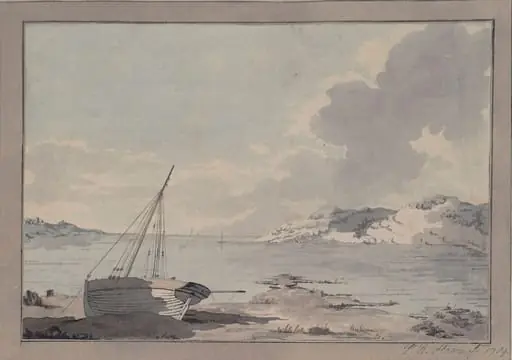
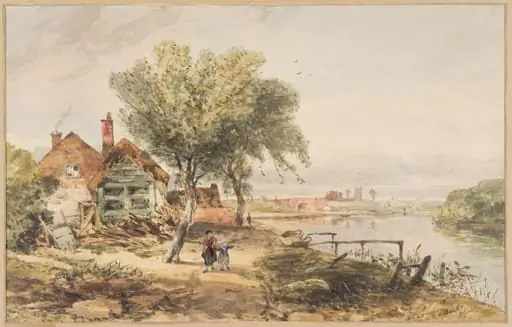
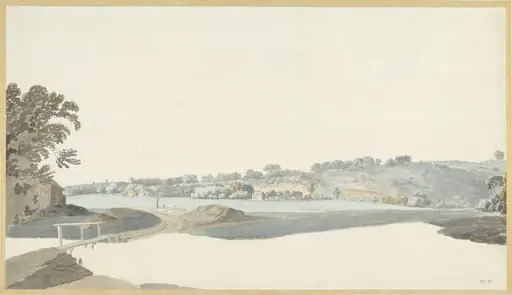
Village along a River Estuary in Devon is a graphite drawing by the Romanticist artist Thomas Girtin. It dates from 1798 and is held in the collection of the National Gallery of Art.
About this work
Overview
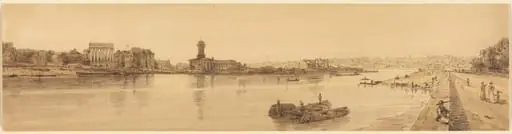
Thomas Girtin’s 1798 work, titled Village along a River Estuary in Devon, is a watercolor drawing executed on oatmeal‑toned paper. The piece records a modest settlement perched beside a winding river, its rooftops and streets nestled among low hills. Light clouds dominate the sky, lending the scene a tranquil atmosphere that reflects everyday rural life in late‑eighteenth‑century England.
Subject & Meaning
The composition captures a quiet riverside community, with a handful of boats drifting on the water and villagers engaged in routine activities. Figures and livestock appear in the foreground, underscoring the integration of human and natural elements. The work conveys a sense of calm continuity, emphasizing the harmonious relationship between the inhabitants and their landscape.
Technique & Style
Girtin employed watercolor over a graphite underdrawing, allowing the initial sketch to guide the delicate washes of pigment.
Girtin employed watercolor over a graphite underdrawing, allowing the initial sketch to guide the delicate washes of pigment. The oatmeal paper provides a warm, muted ground that softens the colors and enhances atmospheric effects. His handling of light and shadow creates a dreamy, almost lyrical quality, characteristic of the transitional style that bridges topographical precision and emerging Romantic sensibilities.
History & Provenance
Created in 1798, the drawing belongs to the later period of Girtin’s short career, during which he explored English scenery with increasing subtlety. While specific ownership records are limited, the piece has been documented in catalogues of Girtin’s oeuvre and is held in a public collection that focuses on British watercolors of the late eighteenth century.
Artist & collection