Artwork
Nimwegen
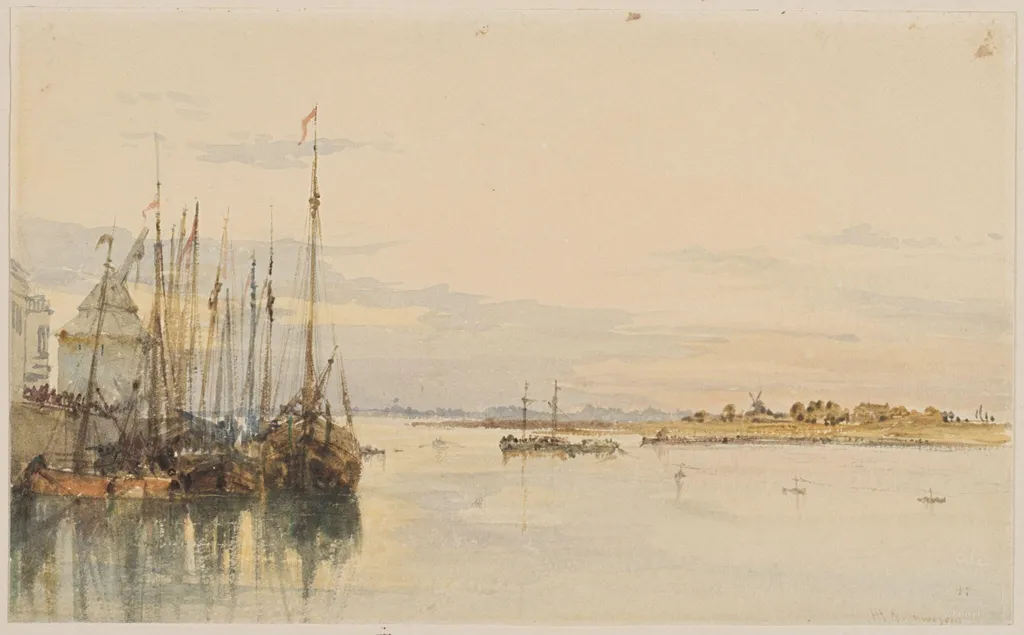
Nimwegen is a watercolor work on paper by the British Romanticist artist James Holland. It dates from 1837 and is held in the collection of the Victoria and Albert Museum.
About this work
Overview
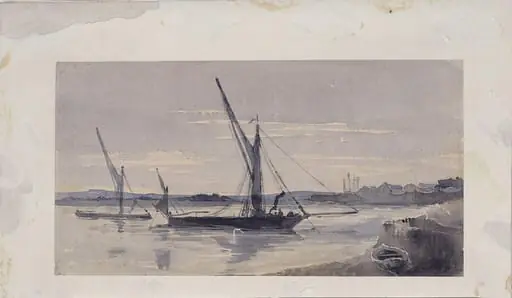
James Holland created this watercolour sketch in 1837, capturing the Dutch city of Nijmegen, then commonly spelled Nimwegen. The work is a modest, on-site study, executed with restrained brushwork and minimal detail. It reflects the artist’s interest in everyday landscapes rather than grand monuments, emphasizing atmosphere over precision.
Subject & Meaning
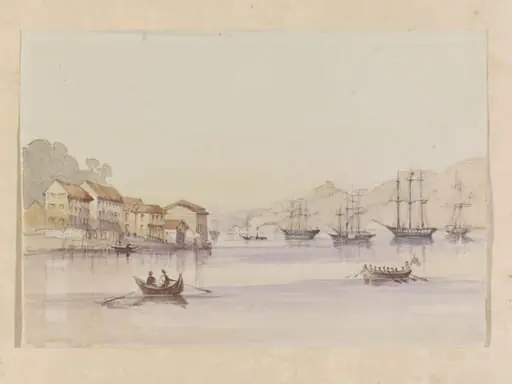
The scene portrays a tranquil harbor with tall-masted ships moored along a wooden pier, their flags gently moving in the wind. Behind them, low windmills rise from the flat terrain, suggesting the region’s agricultural and commercial character. The quiet, unpopulated setting conveys a sense of stillness, possibly reflecting the city’s role as a quiet port rather than a bustling center.
Technique & Style
Holland employed light, fluid washes to suggest air and water, allowing the paper’s texture to contribute to the luminosity. The water’s surface is rendered with near-mirror stillness, while buildings and masts are outlined with faint, economical strokes. The pale sky and muted tones reinforce the sketch’s delicate, spontaneous quality, typical of topographical watercolours of the period.
History & Provenance
Created during Holland’s travels in the Netherlands, the sketch likely served as a personal record or preparatory study. It remained in private hands until entering a public collection, though its exact provenance before institutional acquisition is not fully documented. Its survival reflects the growing 19th-century interest in preserving travel sketches as cultural artifacts.
Context
In the 1830s, British artists frequently visited the Low Countries to sketch landscapes and ports, drawn by their picturesque waterways and historic architecture. Holland’s work aligns with this trend, participating in a broader movement that valued observational drawing over idealized composition. Nijmegen, though not a major tourist destination, offered a quiet example of Dutch maritime life.
Legacy
This watercolour contributes to a body of work that documents regional Dutch scenes through the eyes of foreign observers. While not widely exhibited, it remains a representative example of 19th-century British watercolour practice. Its preservation in museum collections underscores its value as a historical record of place and technique.
Artist & collection
Artist
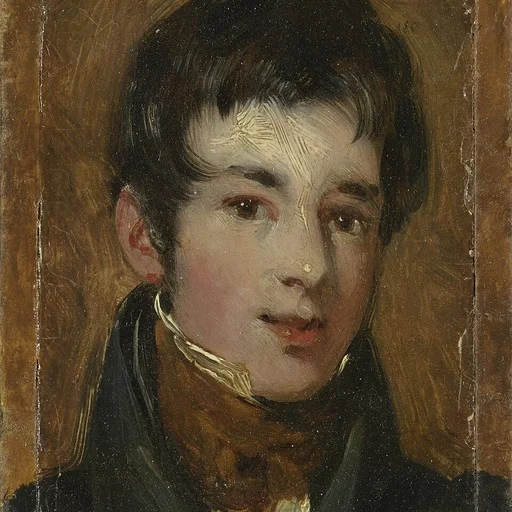
James Holland (18 October 1799 – 12 February 1870) was an English painter of flowers, landscapes, architecture, marine subjects, and a book illustrator.

 Coast Scene: Sunset
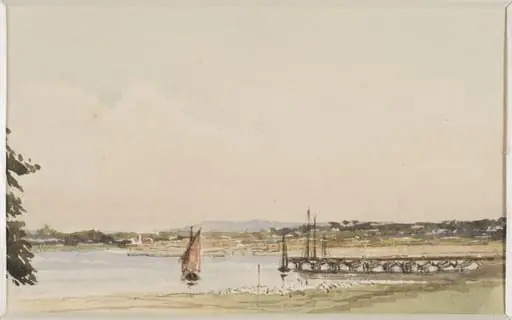 Greenhithe Pier
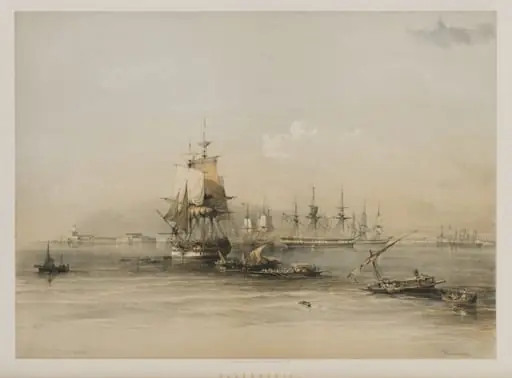 Egypt and Nubia, Volume III: Alexandria
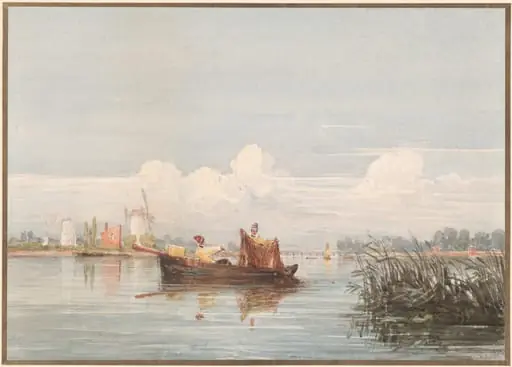 The Thames at Battersea
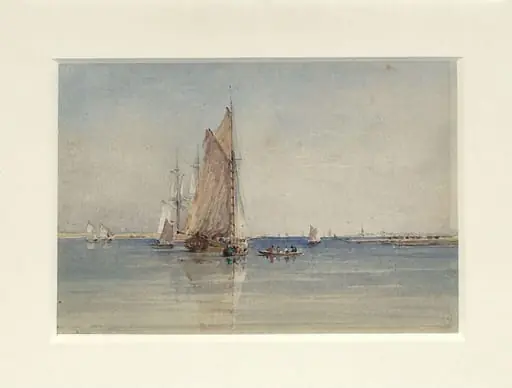 The Thames, Off Gravesend
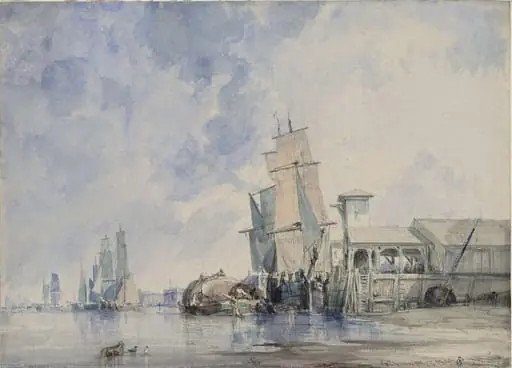 On the Thames
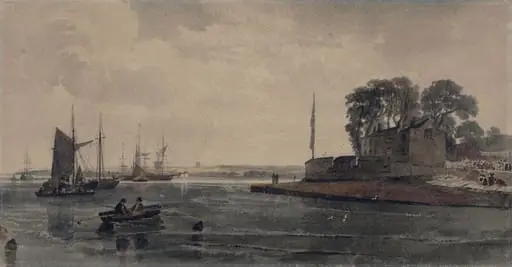 Cowes Castle
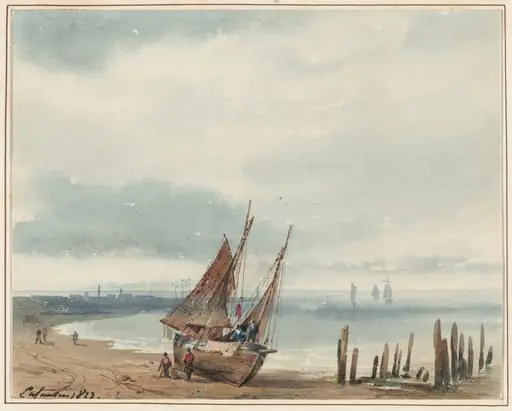 Coastal View in Normandy, with a Beached Boat
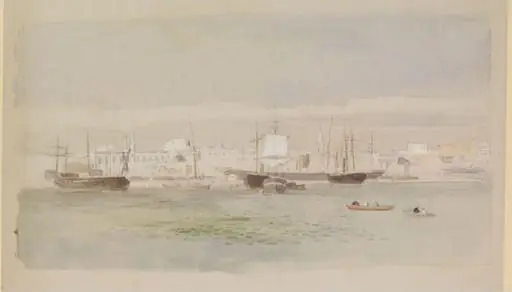 Shipping in Alexandria Harbour
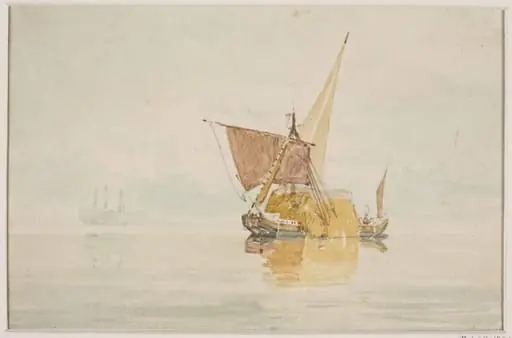 Sea-piece with a hay-barge
 View of the Bosphorus with warships
 St. Jean dAcre from the Sea