Artwork
Titania, Bottom and the Fairies
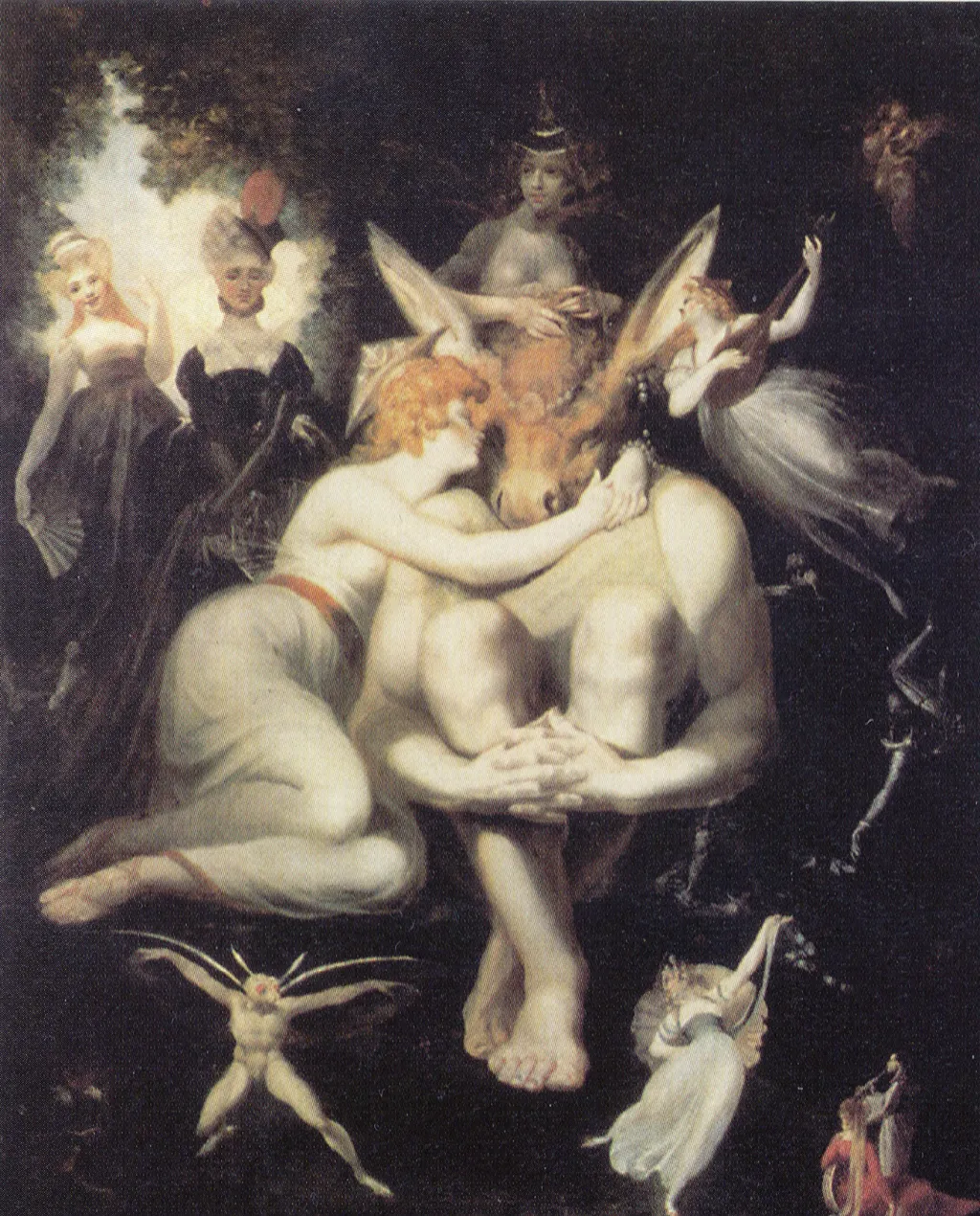
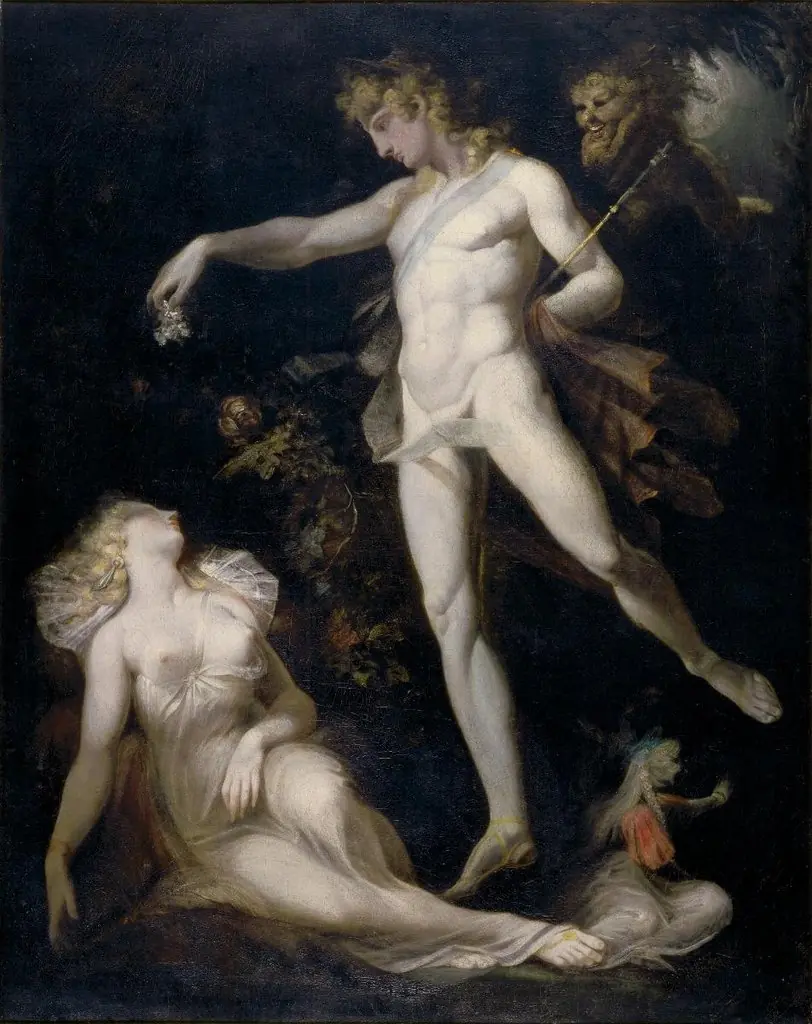
Titania, Bottom and the Fairies is an oil painting by the British Romanticist artist Henry Fuseli. It dates from 1797 and is held in the collection of the Kunsthaus Zürich.
About this work
Overview
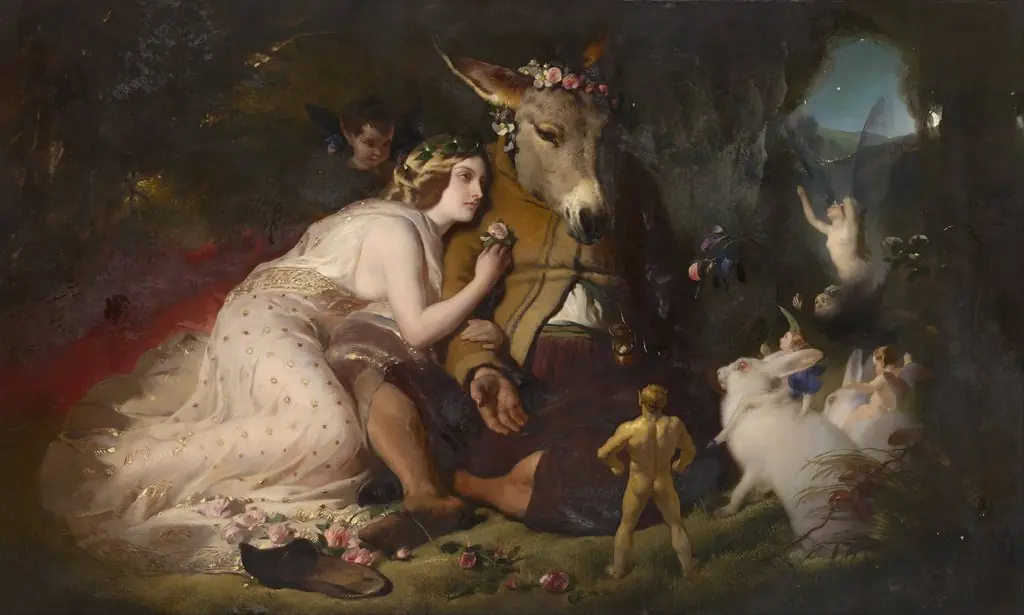
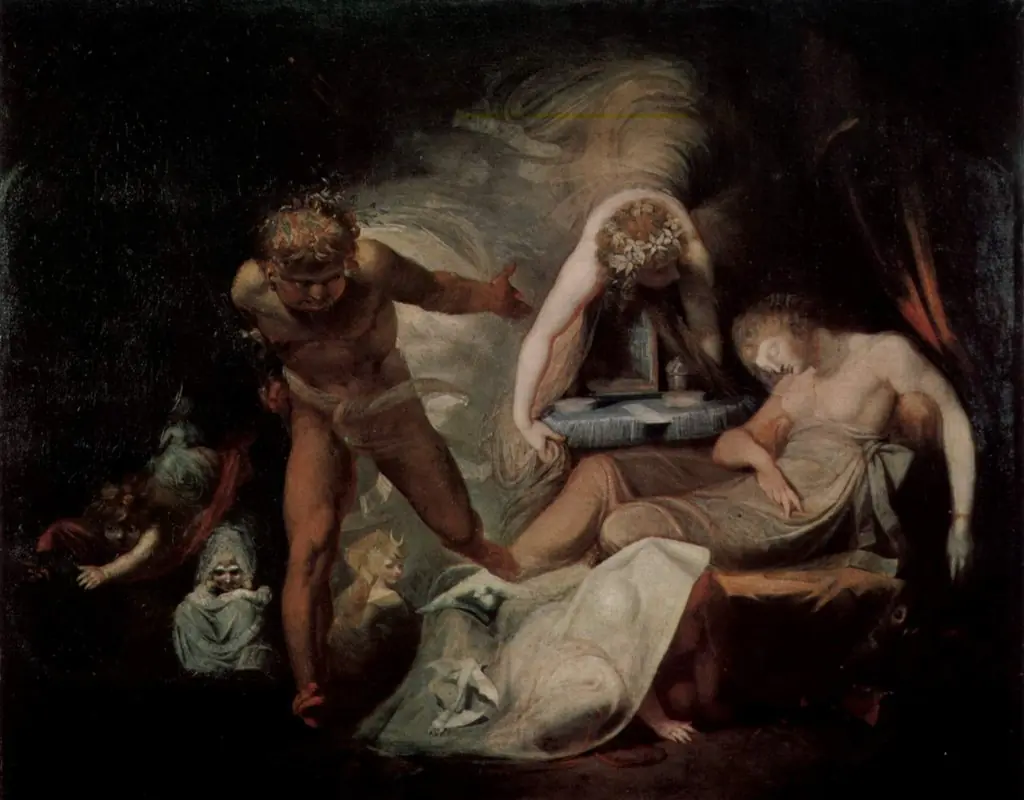
Henry Fuseli's 1797 oil painting, Titania, Bottom and the Fairies, captures a fantastical scene featuring intertwined figures set against a dark, swirling backdrop. The central composition revolves around a pale-skinned woman embracing a man with a donkey's head, surrounded by hovering, winged creatures in muted tones punctuated by occasional bright accents.
Subject & Meaning
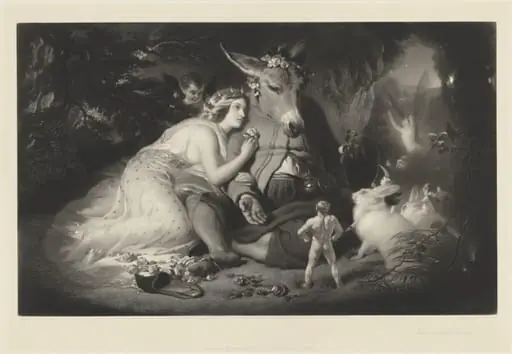
The painting illustrates a pivotal moment from Shakespeare's A Midsummer Night's Dream, where Titania, under a magical spell, embraces Nick Bottom, who has been transformed with a donkey's head. The entwined figures and watching fairies convey a sense of enchantment and the blurred lines between reality and dream.
Technique & Style
Fuseli employs chiaroscuro to dramatic effect, leveraging strong contrasts between light and dark to emphasize the emotional intensity of the scene. Soft, watchful fairy faces and the dreamy, lost expression of Titania contrast with Bottom's surprise, adding depth to the narrative.
History & Provenance
Created in 1797, the painting is part of the collection at the Kunsthaus Zürich, highlighting Fuseli's contribution to Romantic-era interpretations of literary themes.
Context
This work reflects Fuseli's fascination with Shakespearean subjects and the broader Romantic interest in the emotional, the irrational, and the world of dreams and mythology.
Artist & collection
Artist
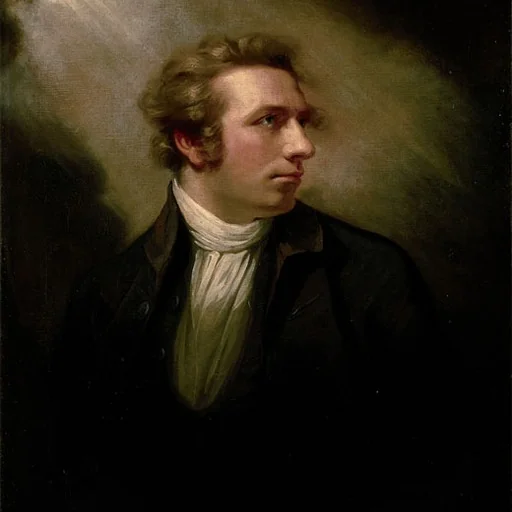
Henry Fuseli was a Swiss painter, draughtsman, and writer on art who spent much of his career in Britain.