Artwork
Midsummer Night's Dream
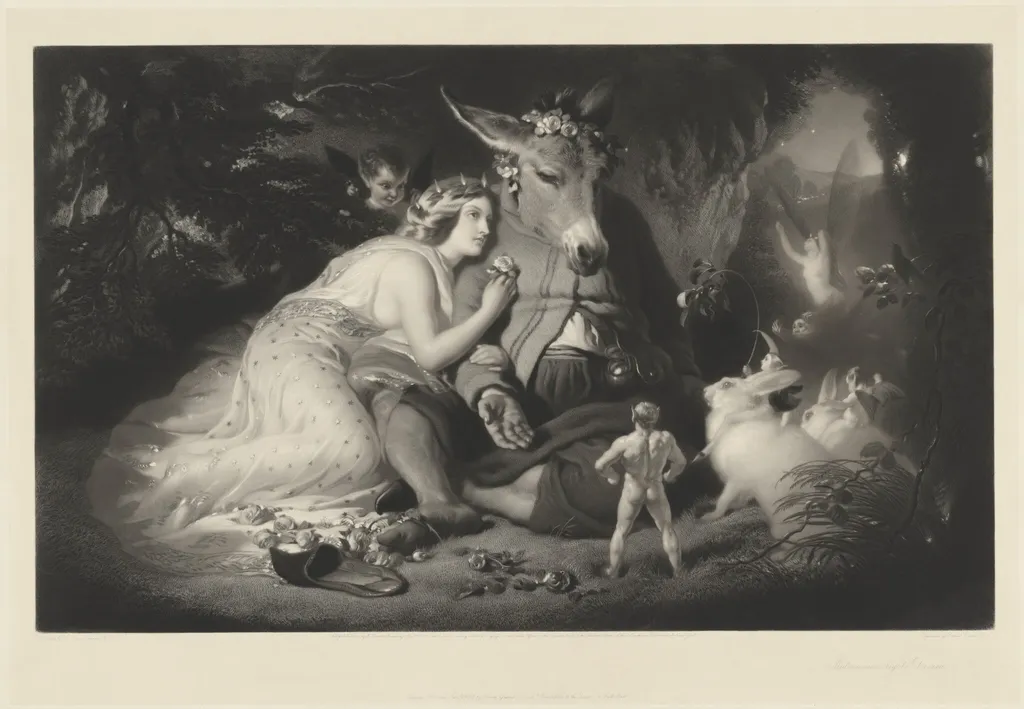
Midsummer Night's Dream is an ink print by the Impressionist artist Samuel Cousins. It dates from 1856 and is held in the collection of the National Gallery of Art.
About this work
Overview
Samuel Cousins’ 1856 mezzotint, titled Midsummer Night’s Dream, presents a nocturnal tableau rendered on laid paper. The composition centers on a woman in a white gown seated beside a donkey adorned with a wreath, while a child, a rabbit, and a distant boy populate the surrounding forest scene. A winged figure hovers above, contributing to the work’s fairy‑tale atmosphere.
Subject & Meaning
The print evokes a pastoral myth, likely alluding to Shakespeare’s play or folk narratives, through its inclusion of a serene woman, a crowned donkey, and a celestial being. The gentle holding of a flower and the calm demeanor of the animal suggest themes of innocence and harmony within a dreamlike night setting.
Technique & Style
Cousins employs the mezzotint process, exploiting its capacity for smooth tonal gradations to model forms and create atmospheric depth. The soft lighting and blended shadows achieve a chiaroscuro effect, while the fine lines of the laid paper surface enhance the delicate rendering of foliage and figures.
History & Provenance
Created in the mid‑nineteenth century, the print reflects Cousins’ reputation as a leading reproductive engraver of his era. It was issued as a single‑sheet work and later entered several European private collections, though specific ownership records remain limited.
Context
During the 1850s, British printmakers frequently explored literary and theatrical subjects, catering to a market eager for affordable reproductions of popular narratives. Cousins’ choice of a nocturnal, fairy‑tale scene aligns with contemporary tastes for romanticized, sentimental imagery.
Artist & collection


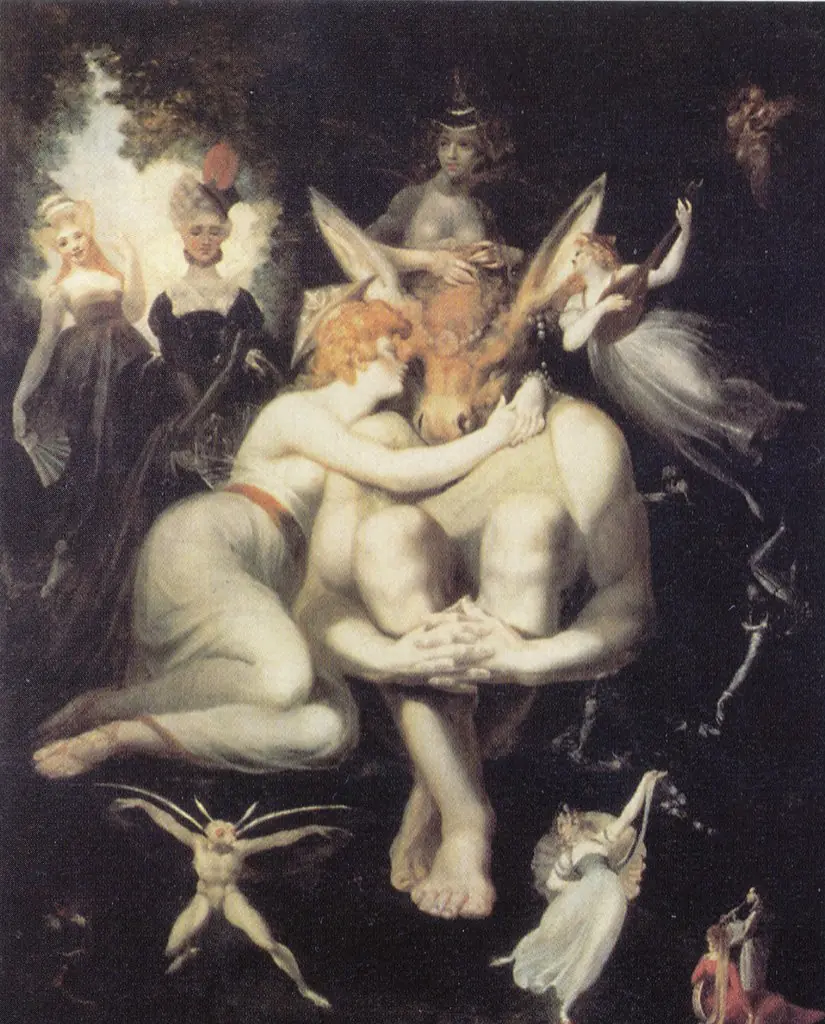 Titania, Bottom and the Fairies
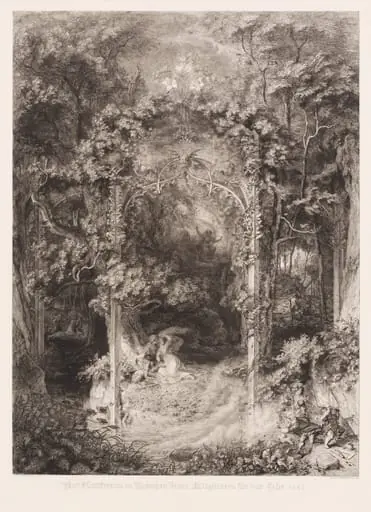 Das Waldfräulein (The Lady of the Forest)
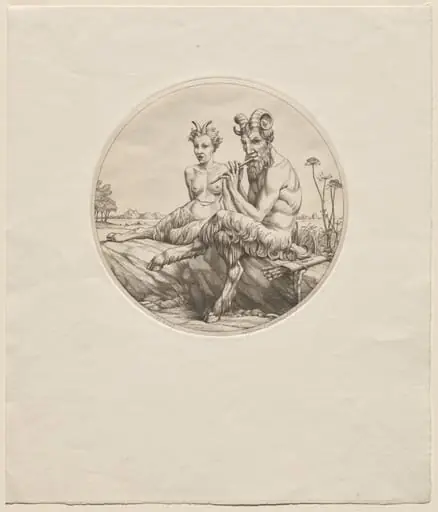 Two Satyrs
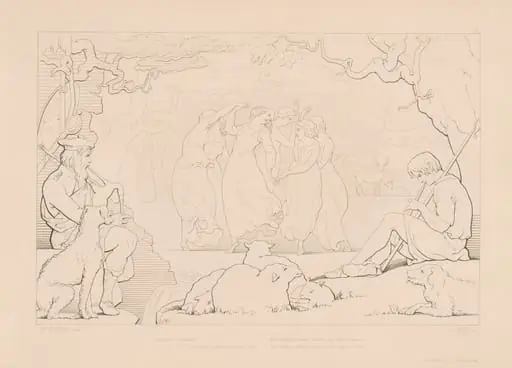 Delightful Wyoming!
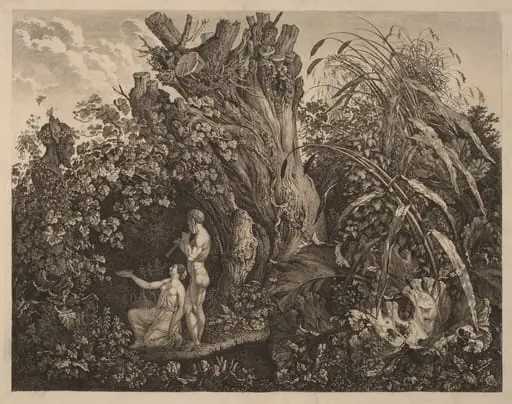 An Offering to Pan
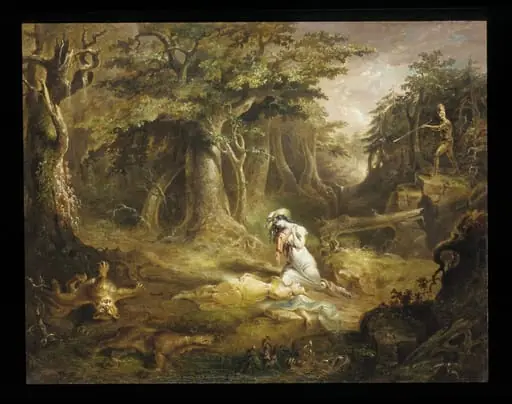 Leatherstocking's Rescue
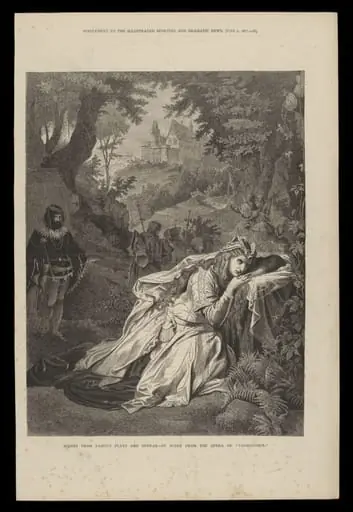 H Beard Print Collection
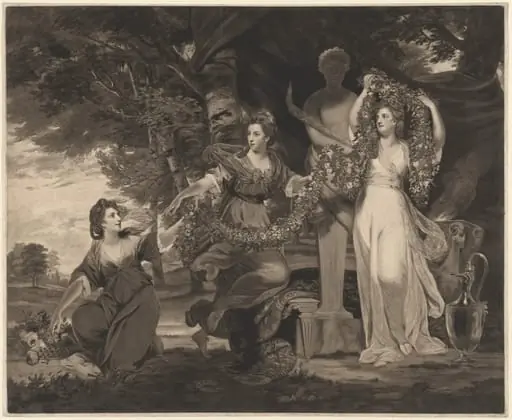 A Sacrifice to Hymen (Three Daughters of Sir William Montgomery)
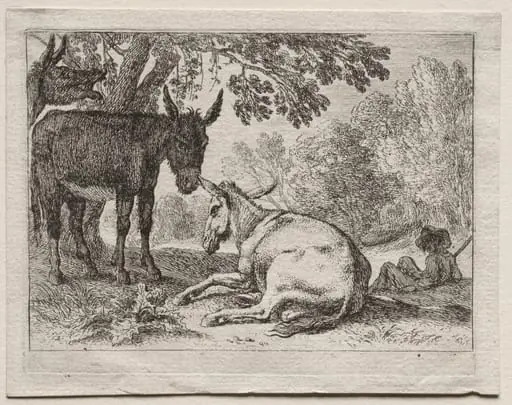 Animals in Landscapes: Donkeys
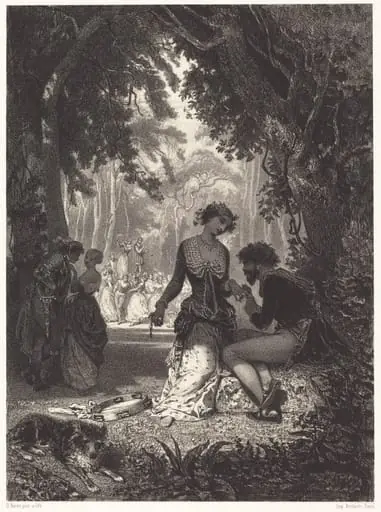 Italian Dancers
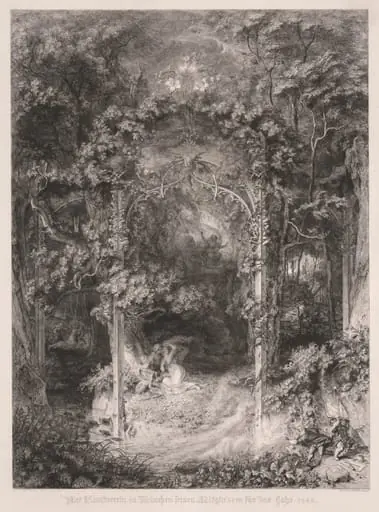 The Forest Maiden
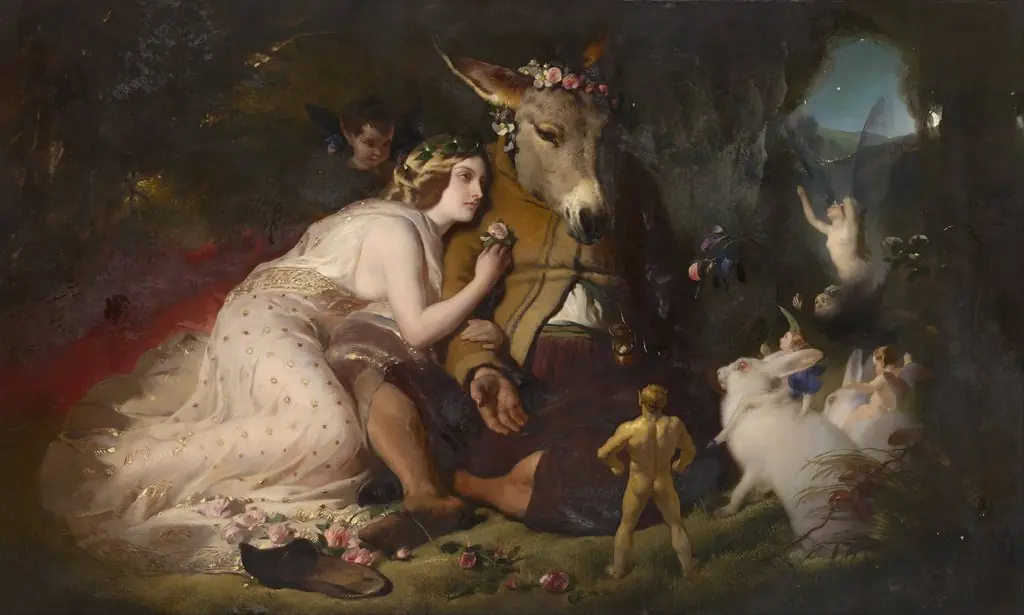 Scene from A Midsummer Night's Dream