Artwork
Interior of a Mosque, Cairo
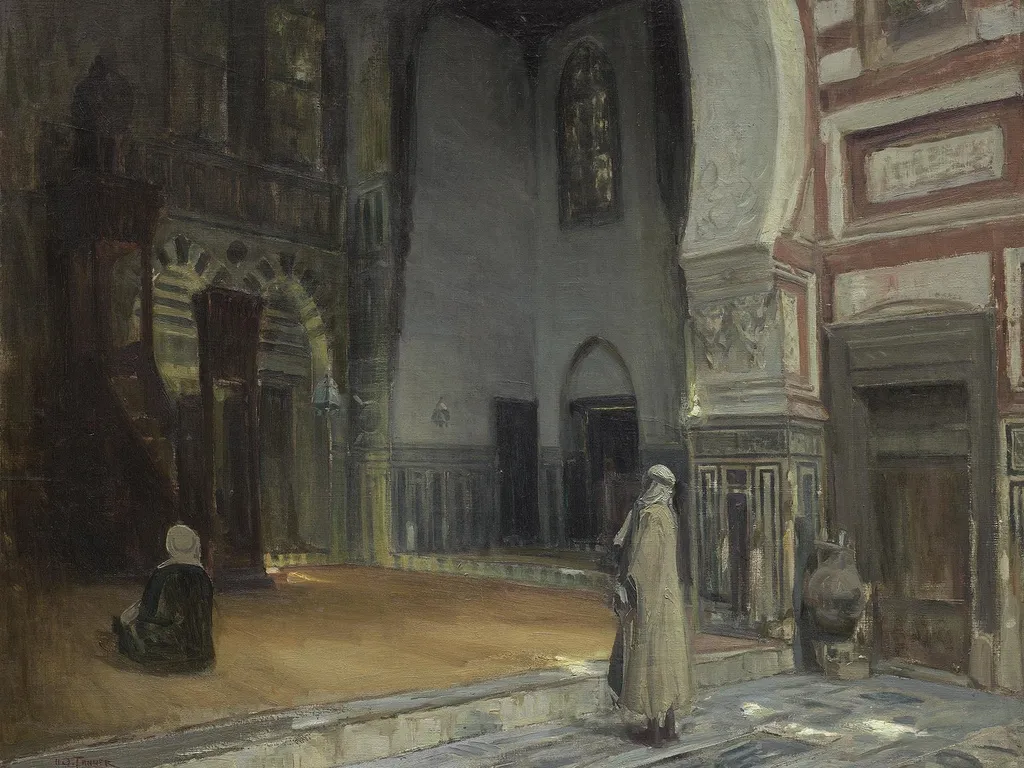
Interior of a Mosque, Cairo is an oil painting by the Impressionist artist Henry Ossawa Tanner. It dates from 1899 and is held in the collection of the Museum of Fine Arts Boston.
About this work
Overview
Tanner’s focus on quiet human presence within sacred space distinguishes the piece from more ornamental or documentary approaches to Islamic architecture.
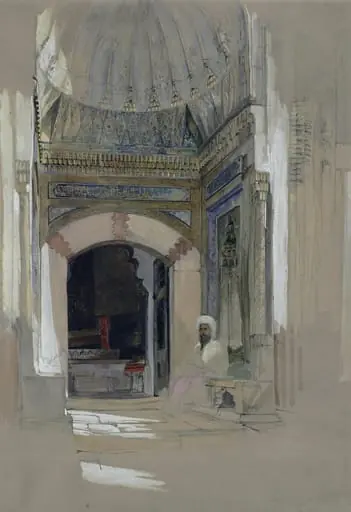
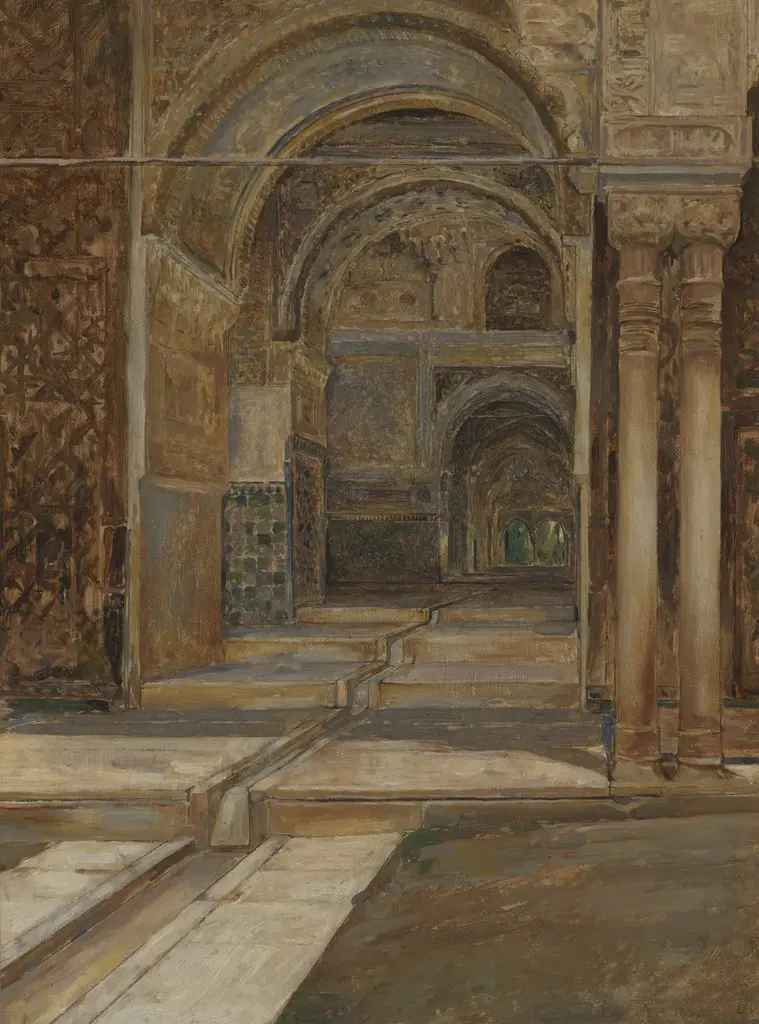
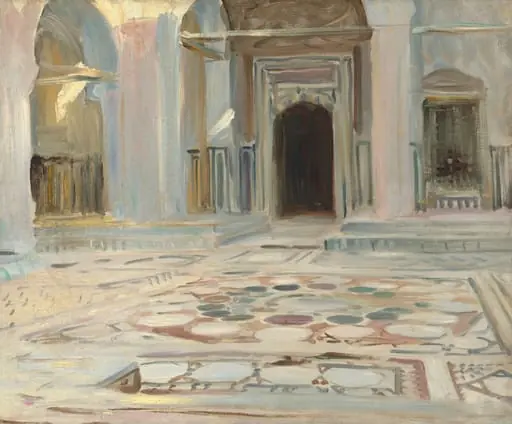
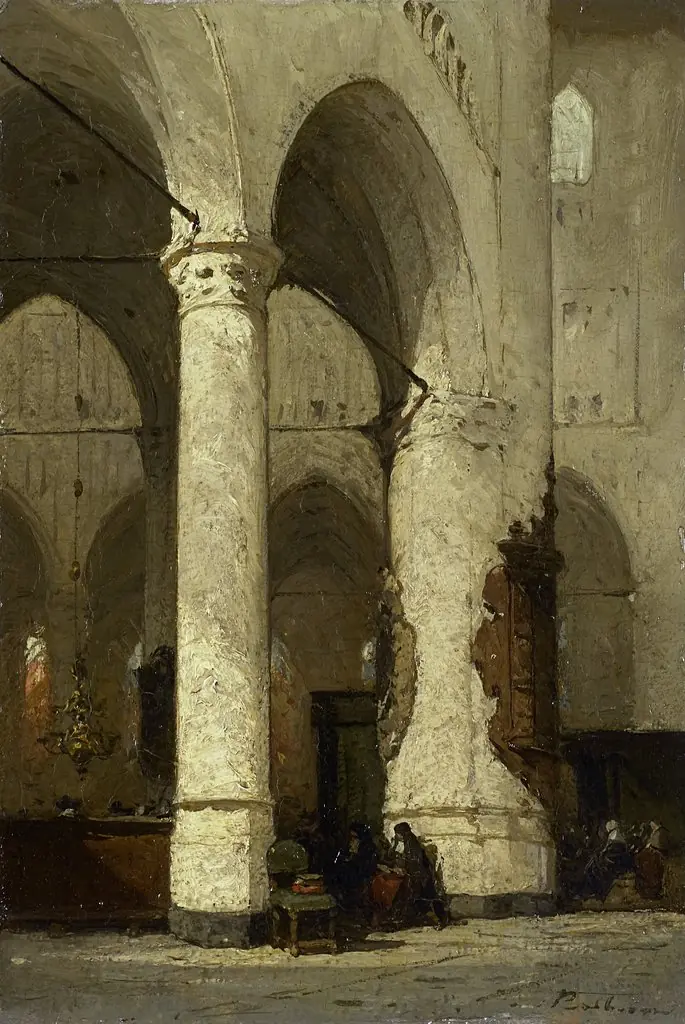
Painted in 1899 by Henry Ossawa Tanner, this oil work captures the interior of a mosque in Cairo. It is part of the permanent collection at the Museum of Fine Arts, Boston. The composition emphasizes stillness and spatial depth, rendered through careful attention to light and architectural form. Tanner’s focus on quiet human presence within sacred space distinguishes the piece from more ornamental or documentary approaches to Islamic architecture.
Subject & Meaning
Two figures, both turned away from the viewer, inhabit the space: one standing near the foreground, another seated on the floor. Their anonymity and posture suggest private devotion rather than public ritual. The absence of faces and the subdued activity invite reflection on solitude and spiritual introspection. The mosque becomes less a specific location and more a universal setting for contemplation, stripped of overt symbolism.
Technique & Style
Tanner employs chiaroscuro to model the interior’s volume, with soft daylight filtering through arched windows and casting gentle gradients across stone surfaces. The walls, richly patterned with carved geometric designs, are rendered with restrained detail, avoiding ornamental overload. Brushwork is smooth and deliberate, enhancing the hushed atmosphere. Color is muted—ochres, grays, and off-whites—reinforcing the sense of quiet reverence.
History & Provenance
Tanner painted this work during a period of travel in North Africa, following his earlier studies in Paris. He was drawn to the spiritual atmosphere of Islamic spaces, which contrasted with the religious imagery of his American upbringing. The painting entered the Museum of Fine Arts, Boston, in the early 20th century, where it has remained in public view, representing Tanner’s engagement with cross-cultural themes beyond his African American identity.
Context
In the late 19th century, Western artists increasingly turned to the Middle East as a subject, often through exoticizing lenses. Tanner’s approach diverged by avoiding spectacle and instead emphasizing stillness and human presence. His depiction aligns with a growing interest in authentic spiritual experience, influenced by his own religious convictions and his time spent among Muslim communities in Egypt.
Legacy
This painting stands as a quiet counterpoint to the orientalist trends of its era. Tanner’s sensitivity to light, space, and quiet dignity influenced later artists interested in transcultural spirituality. Its enduring presence in a major American museum underscores its role in broadening the scope of American art beyond national or racial boundaries, affirming universal themes of reverence and solitude.
Own this work as a print
Artist & collection

Artist
Henry Ossawa Tanner (June 21, 1859 – May 25, 1937) was an American artist who spent much of his career in France.