Artwork
Grapes and Olives
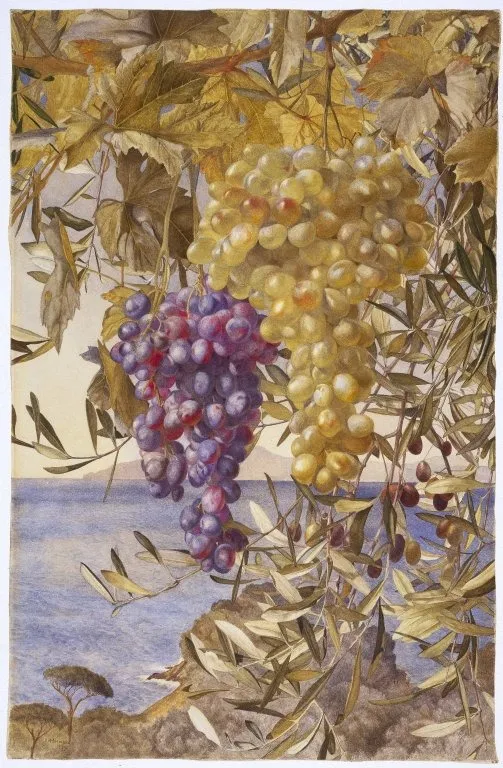
Grapes and Olives is a watercolor painting by Henry Roderick Newman. It dates from 1890 and is held in the collection of the Brooklyn Museum.
About this work
Overview
It belongs to the Brooklyn Museum’s collection and reflects his sustained interest in naturalistic still lifes.
Created in 1890, *Grapes and Olives* is a watercolor painting by American artist Henry Roderick Newman. It belongs to the Brooklyn Museum’s collection and reflects his sustained interest in naturalistic still lifes. Newman, who lived and worked extensively in Florence, applied meticulous observation to everyday botanical forms, favoring watercolor for its capacity to capture subtle tonal shifts and delicate textures.
Subject & Meaning
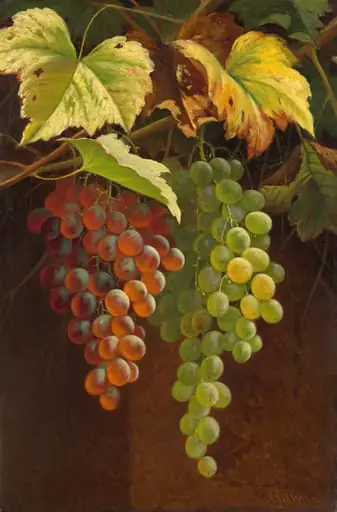
The painting presents a cluster of grapes and olives suspended from a vine, rendered with close attention to their natural arrangement. No symbolic or narrative context is overt; the focus lies in the quiet presence of the fruit and foliage. The composition invites contemplation of organic form, weight, and growth, aligning with a broader 19th-century interest in nature as a subject worthy of patient study.
Technique & Style
Newman employed watercolor with precision, layering translucent washes to model the glossy skin of grapes and the matte surface of olives. Individual berries are distinguished by variations in hue—from deep purple to pale green—and rendered with fine brushwork that suggests their spherical form and attachment points. The leaves are rendered with crisp edges and veined detail, reflecting Pre-Raphaelite influence in their heightened realism.
History & Provenance
The painting entered the Brooklyn Museum’s collection following Newman’s career, which spanned the late 19th and early 20th centuries. While little is documented about its immediate post-creation history, its preservation in a major American institution underscores its recognition as a representative example of American watercolor practice during a period when the medium gained increasing artistic credibility.
Context
Newman’s work emerged amid a revival of interest in watercolor in the United States, paralleling European traditions of botanical illustration. His time in Florence exposed him to Italian Renaissance techniques and the Pre-Raphaelite emphasis on detail, which he adapted to American subjects. *Grapes and Olives* reflects this transatlantic dialogue, merging European discipline with a distinctly quiet American sensibility.
Legacy
Though not widely exhibited today, the painting remains a quiet testament to Newman’s dedication to observational painting. It contributes to the understanding of American watercolorists who, outside the mainstream of Impressionism, pursued realism through controlled technique and intimate subject matter. Its presence in the Brooklyn Museum ensures continued access for study and appreciation.
Artist & collection
Artist
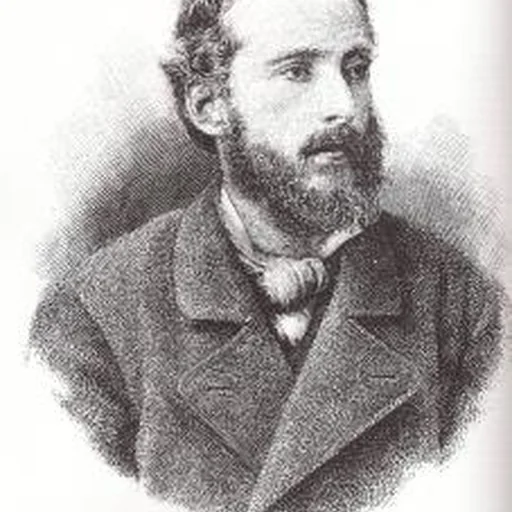
Henry Roderick Newman (March 4, 1843 Easton, New York - December 1, 1917, Florence, Italy) was an American landscape and still-life painter, influenced by the Pre-Raphaelite style.