Artwork
Abu Simbel
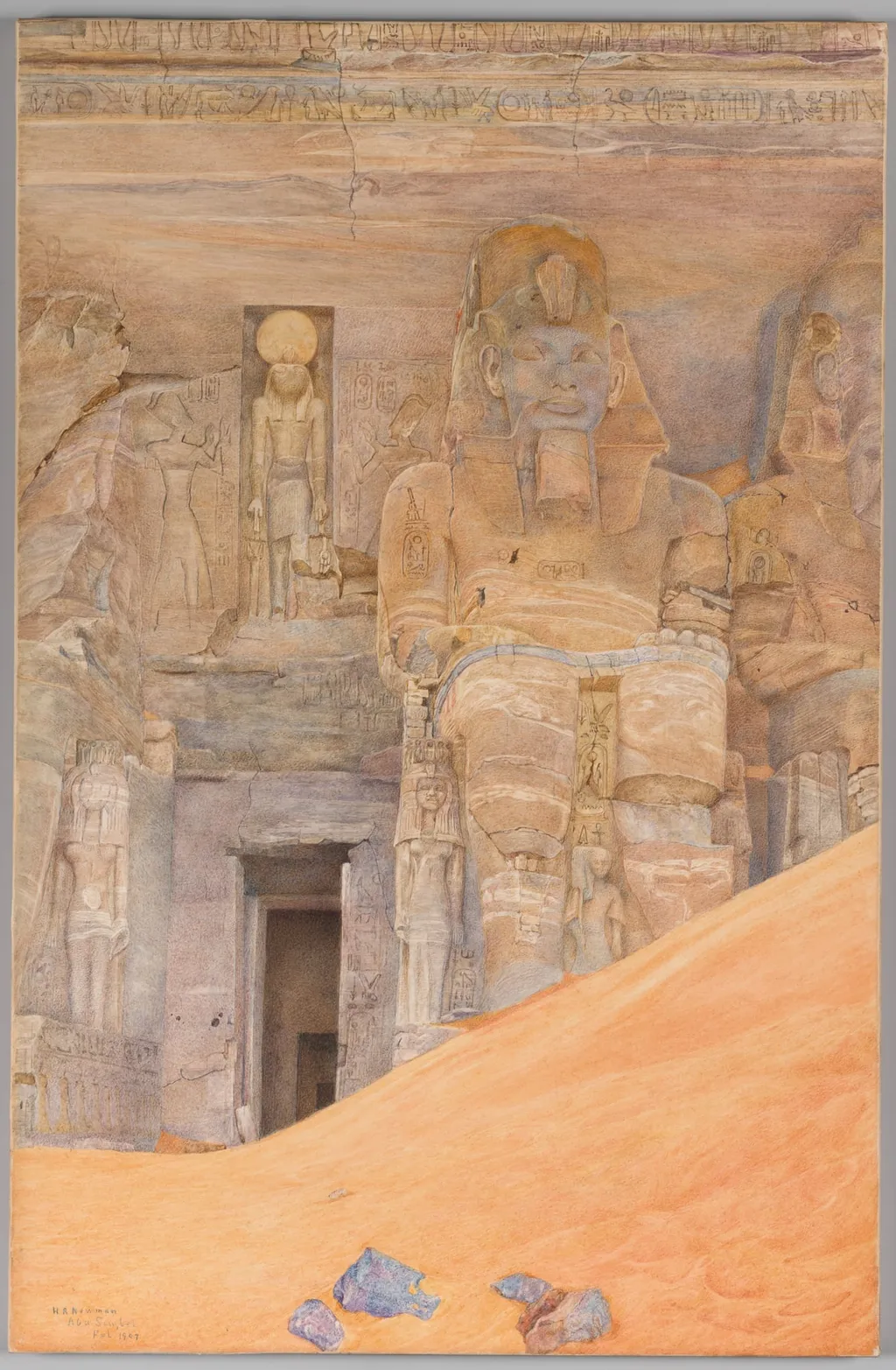
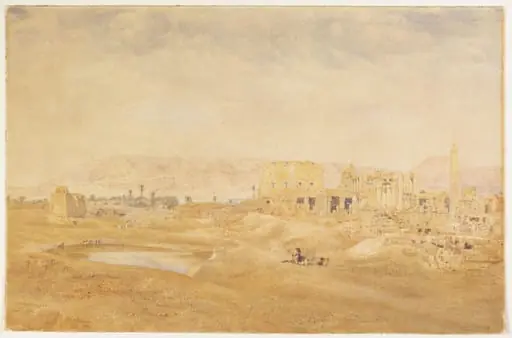
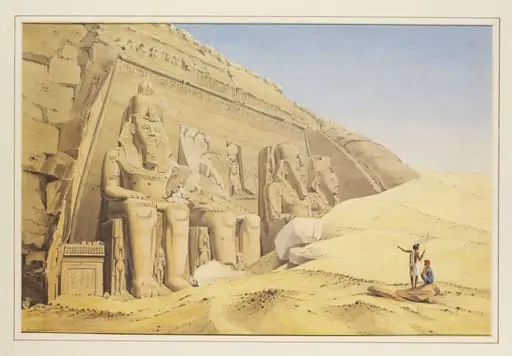
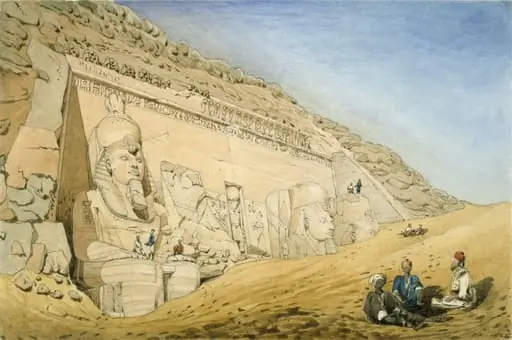
Abu Simbel is a drawing by Henry Roderick Newman. It dates from 1907 and is held in the collection of the Cleveland Museum of Art.
About this work
Overview
Newman focused on the interplay of light and surface, using delicate, repetitive marks to convey the texture of weathered stone and surrounding desert.
This watercolor by Henry Roderick Newman depicts the Abu Simbel temples as they appeared in the early 20th century, decades after their excavation. Created between 1894 and 1913, the work is part of a series documenting the site’s monumental architecture. Newman focused on the interplay of light and surface, using delicate, repetitive marks to convey the texture of weathered stone and surrounding desert.
Subject & Meaning
The drawing centers on the colossal statues carved into the cliff face, their forms partially obscured by accumulated sand. Rather than emphasizing grandeur, Newman captures the quiet endurance of the monuments—half-revealed, softened by time. The composition suggests a moment of stillness, where nature and human creation coexist in gradual, silent transformation.
Technique & Style
Newman employed a method of fine, layered dots and stippled strokes to render the desert’s luminous tones and the rock’s granular surface. Unlike pointillism’s vibrant color contrasts, his approach is subdued, relying on tonal gradations to suggest the harsh, shifting light of the Nile Valley. The technique evokes the slow accumulation of sand and the erosion of stone over centuries.
History & Provenance
The Abu Simbel temples were uncovered in 1813 by Johann Ludwig Burckhardt and later fully excavated by Giovanni Battista Belzoni. Newman visited the site after these efforts, producing multiple studies during travels in Egypt. This watercolor, made around 1910, reflects his sustained interest in the temples’ altered state following excavation and exposure to the elements.
Context
In the late 19th and early 20th centuries, Western artists and archaeologists increasingly documented ancient Egyptian sites as part of a broader cultural fascination. Newman’s work aligns with this trend but diverges in its quiet, observational tone—prioritizing atmospheric effect over archaeological precision or romanticized grandeur.
Legacy
Newman’s Abu Simbel drawings remain notable for their restrained aesthetic and sensitivity to environmental texture. While not widely exhibited, they offer a quiet counterpoint to more dramatic depictions of ancient ruins. His method of rendering light on stone influenced later topographical artists interested in the subtleties of desert landscapes and eroded monuments.
Artist & collection
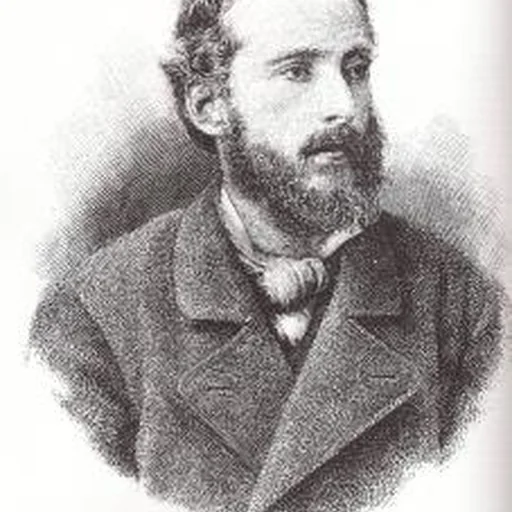
Artist
Henry Roderick Newman (March 4, 1843 Easton, New York - December 1, 1917, Florence, Italy) was an American landscape and still-life painter, influenced by the Pre-Raphaelite style.