Artwork
Karnak
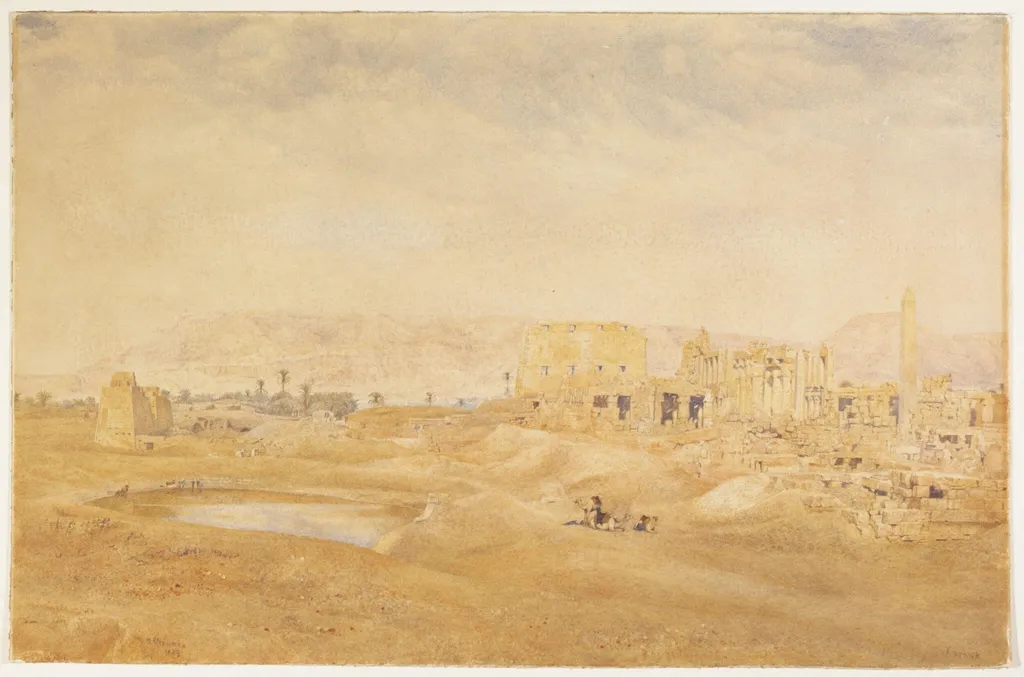
Karnak is a watercolor work on paper by the American Impressionist artist Henry Roderick Newman. It dates from 1889 and is held in the collection of the Victoria and Albert Museum.
About this work
Overview
Henry Roderick Newman created this watercolour in 1889, capturing a quiet moment at the ancient site of Karnak in Egypt.
Henry Roderick Newman created this watercolour in 1889, capturing a quiet moment at the ancient site of Karnak in Egypt. The work was acquired for £3 from G. Norman of Westbourne Grove, a transaction noted by Rodney Searight. Its modest scale and medium reflect a personal, observational approach rather than a grand commission, aligning with 19th-century travel sketches made by artists documenting foreign landscapes.
Subject & Meaning
The scene presents the ruins of Karnak under a muted sky, with palm trees framing the distant stone structures. A solitary figure sits in the foreground, possibly sketching, suggesting contemplation or documentation. The stillness of the composition and the absence of human activity beyond this one figure evoke a sense of time suspended, emphasizing the quiet endurance of ancient monuments against the desert’s stillness.
Technique & Style
Newman employed delicate watercolour washes to render soft gradients in the sky and water, with minimal detail in the ruins to suggest age and erosion. The reflection in the foreground pool mirrors the clouds, reinforcing the calm atmosphere. Brushwork is restrained, avoiding sharp lines; instead, subtle tonal shifts guide the eye from foreground to horizon, creating depth without dramatic contrast.
History & Provenance
The painting was purchased in 1889 from G. Norman, a dealer in Westbourne Grove, London, for three pounds — a modest sum indicating its status as a personal study rather than a commercial piece. Its subsequent history is not fully documented, but its survival suggests it remained in private hands, possibly within circles connected to Newman’s network of artists and travellers.
Context
In the late 19th century, European artists and scholars increasingly traveled to Egypt following archaeological discoveries and improved access. Newman’s work reflects this trend — not as a record for science, but as a quiet, intimate response to the landscape. His focus on solitude and atmosphere aligns with broader aesthetic currents that valued mood over spectacle in landscape representation.
Legacy
Though not widely exhibited or reproduced, the watercolour endures as a personal testament to Newman’s engagement with Egypt’s ancient sites. It contributes to a quieter strand of Orientalist art — one that prioritizes stillness and observation over exoticism. Its preservation offers insight into how individual artists responded to historical landscapes beyond official narratives.
Artist & collection
Artist
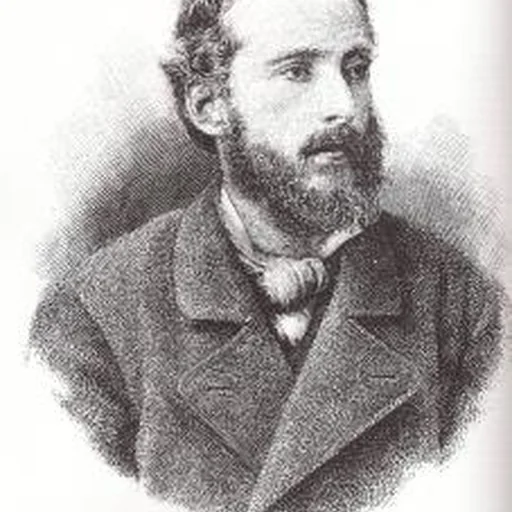
Henry Roderick Newman (March 4, 1843 Easton, New York - December 1, 1917, Florence, Italy) was an American landscape and still-life painter, influenced by the Pre-Raphaelite style.

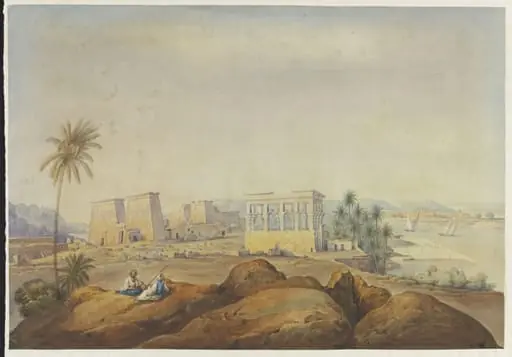 The Temple of Isis and Kiosk of Trajan on the Island of Philae
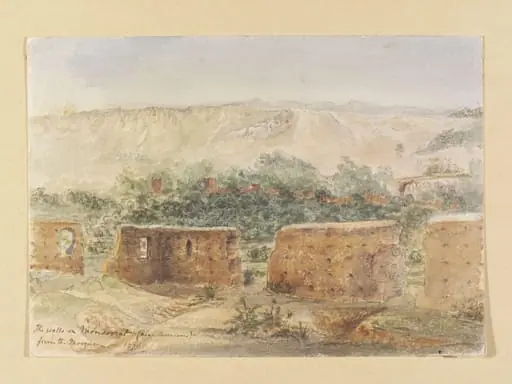 The walls on Monsoorat (near Tlemcen) from the Mosque
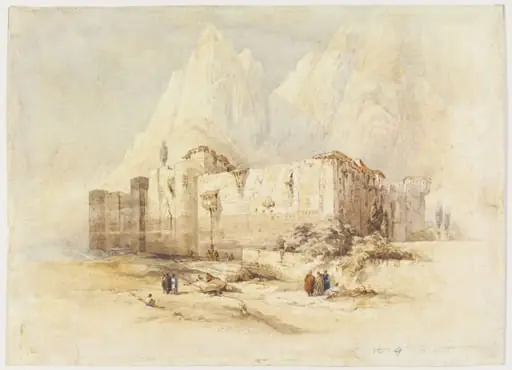 Convent of St Catherine, Mount Sinai
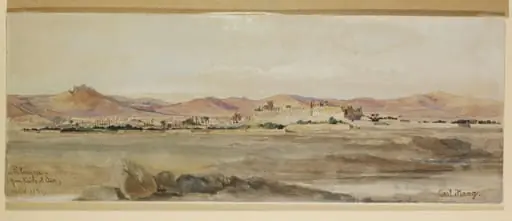 Palmyra (from Kasr el Ain)
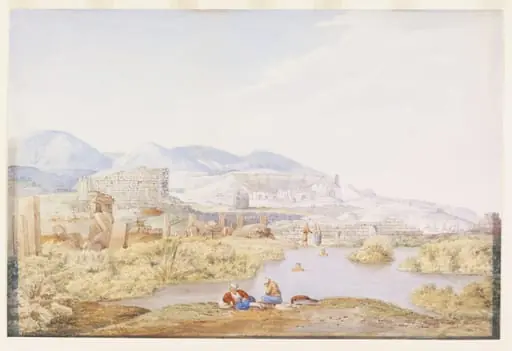 Hierapolis - Natural Hot Spring. Phrygia
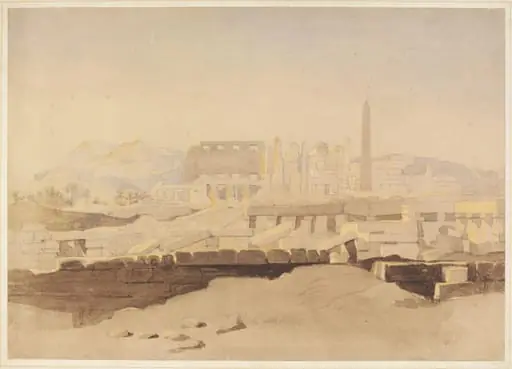 Temple at Carnak: Thebes
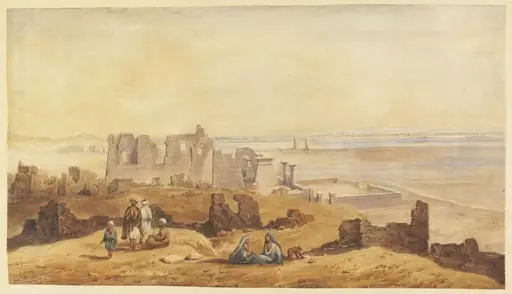 Luxor: the West Bank, with the Temple of Ramesses III at Madinat Habu; looking east towards the Nile
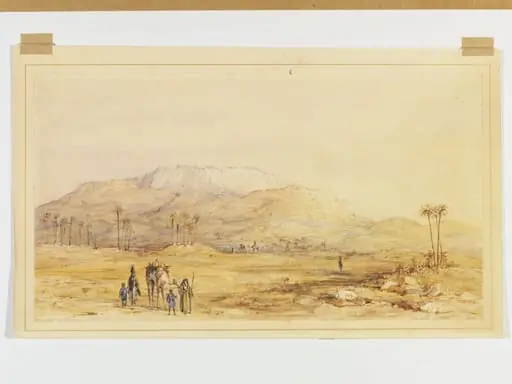 Pyramid of Abu Roash from the Village of Kerdassy
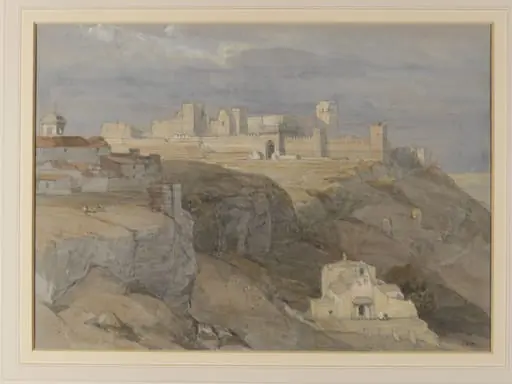 The Alcazar of Carmona, Andalusia
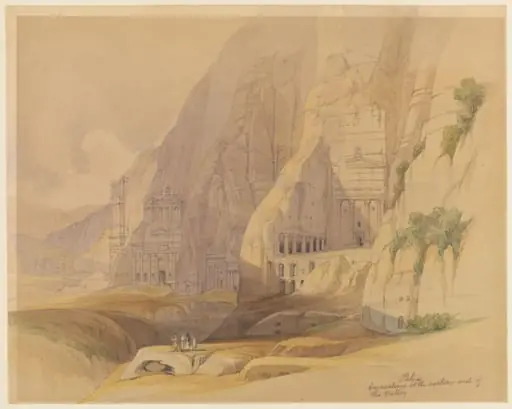 Petra Excavations at the eastern end of the Valley
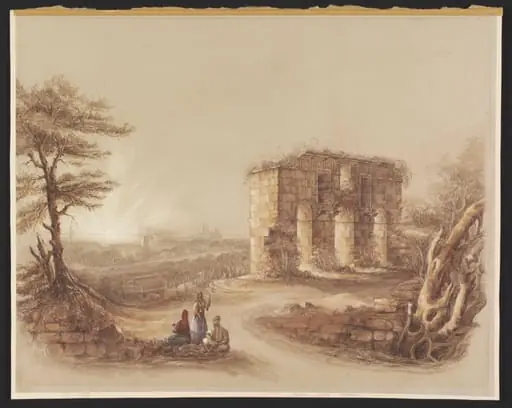 Monumental Gateway, Patara, Turkey
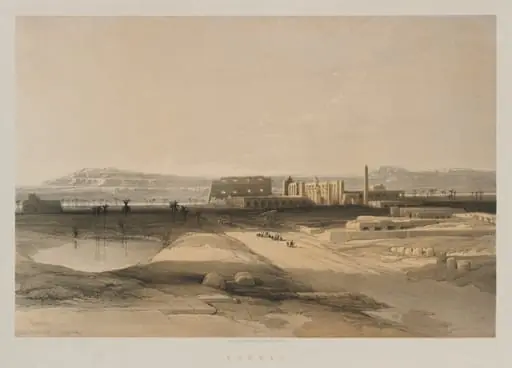 Egypt and Nubia, Volume II: Karnak