Artwork
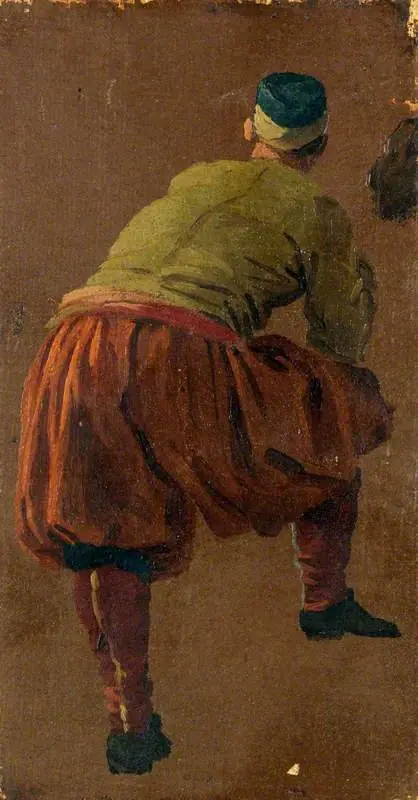
A Kneeling Boy with a Sash
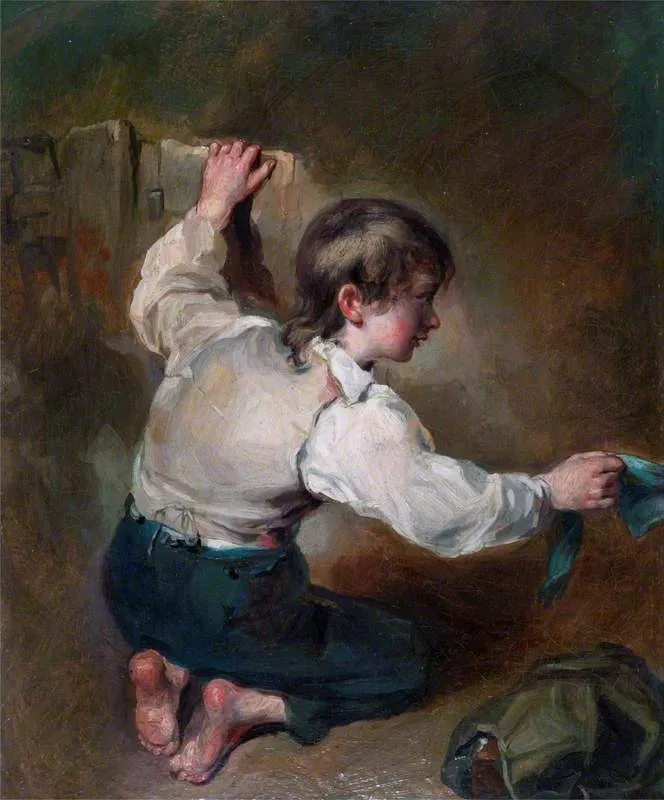
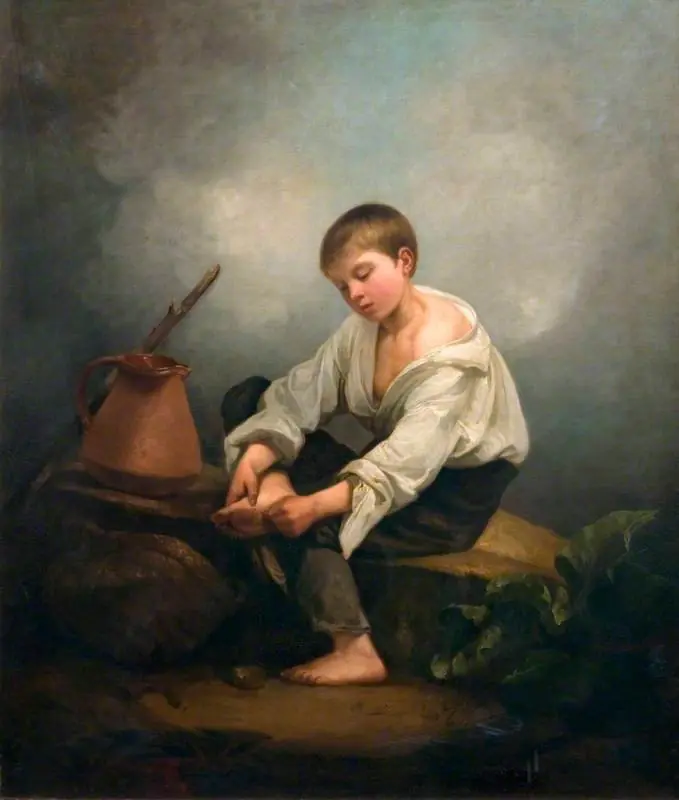
A Kneeling Boy with a Sash is an unspecified painting by Henry Walton. It dates from 1844 and is held in the collection of the Victoria and Albert Museum.
About this work
Overview
Painted around 1844 by Henry Walton, this small-scale oil work portrays a young boy in a moment of stillness. The figure is rendered with quiet intimacy, positioned against a softly modeled earth-toned background. The painting is part of the Victoria and Albert Museum’s collection, where it is recognized for its subtle emotional tone and attention to everyday gesture rather than grand narrative.
Subject & Meaning
The boy, barefoot and dressed in simple garments, holds a blue sash in one hand while raising the other, as if preparing to hang it.
The boy, barefoot and dressed in simple garments, holds a blue sash in one hand while raising the other, as if preparing to hang it. His downward gaze and turned head suggest introspection, not labor or duty. The absence of context or setting invites interpretation of the moment as private and unscripted, perhaps capturing a pause in routine, emphasizing vulnerability and quiet dignity over theatricality.
Technique & Style
Walton employs chiaroscuro to model the boy’s form with gentle contrast, enhancing the three-dimensionality of his limbs and face. The brushwork is restrained, favoring soft transitions over sharp detail, particularly in the fabric of the sash and the texture of the shirt. Warm, muted tones unify the composition, directing focus to the boy’s posture and the sash as the central motif of quiet action.
History & Provenance
The painting entered the Victoria and Albert Museum’s collection in the 19th century, likely through acquisition or donation tied to Walton’s circle. Its modest scale and unassuming subject suggest it was not commissioned for public display but may have served as a study or personal work. No definitive records of prior ownership exist, though its preservation indicates early recognition of its technical refinement.
Context
Created during a period when British portraiture increasingly favored domestic and genre scenes, Walton’s work aligns with a broader shift toward intimate, psychologically nuanced depictions of ordinary life. While not overtly political or symbolic, the painting reflects contemporary interest in childhood as a subject worthy of quiet observation, distinct from idealized or aristocratic portrayals.
Legacy
Though not widely reproduced or celebrated in major art historical narratives, the painting endures as an example of 19th-century British sensitivity to private moments. Its preservation in a major museum underscores its value as a study in restraint, light, and emotional subtlety, offering insight into the quieter currents of Victorian visual culture beyond grand historical themes.
Artist & collection