Artwork
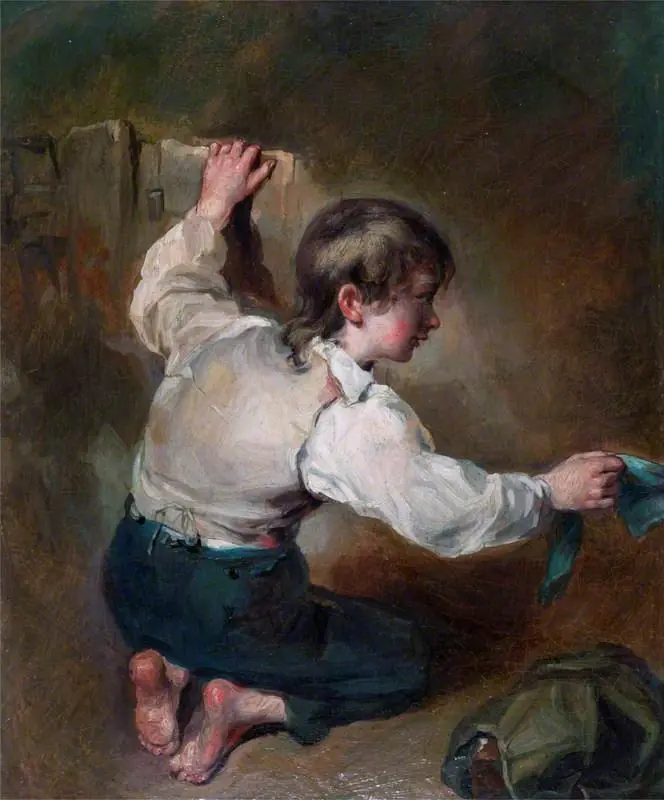
A Boy Extracting a Thorn from His Foot
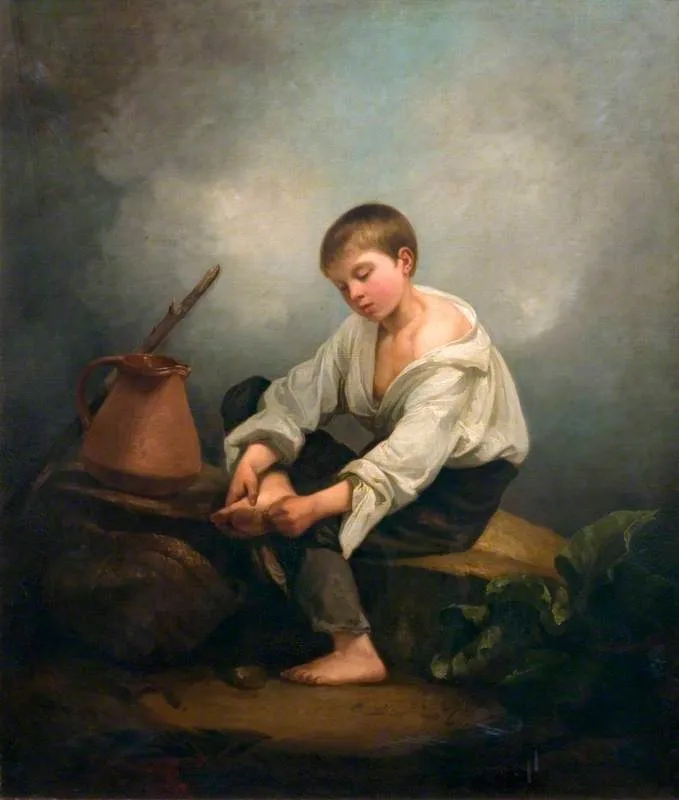
A Boy Extracting a Thorn from His Foot is an oil painting by Thomas Barker. It dates from 1810 and is held in the collection of the Victoria and Albert Museum.
About this work
Overview
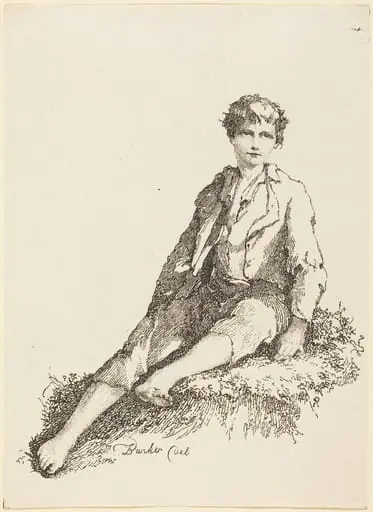
Painted in 1810 by Thomas Barker, this oil work depicts a young boy in quiet focus as he removes a thorn from his bare foot.
Painted in 1810 by Thomas Barker, this oil work depicts a young boy in quiet focus as he removes a thorn from his bare foot. Rendered with restrained detail, the scene unfolds outdoors near a simple rock and a large ceramic jug. The painting resides in the Victoria and Albert Museum, where it stands as an example of early 19th-century British genre painting, capturing an unidealized moment of daily life.
Subject & Meaning
The boy’s downward gaze and tense posture suggest physical discomfort and concentrated effort. His bare feet and simple clothing imply rural labor or modest means, while the absence of adult figures emphasizes solitude and self-reliance. The jug, likely used for water, anchors the scene in domestic routine, transforming a minor injury into a quiet meditation on endurance and personal responsibility.
Technique & Style
Barker employs soft brushwork and muted tones to convey texture and natural light. The boy’s billowing white shirt contrasts with the earthy hues of his trousers and the surrounding stones, drawing attention to his form. The composition is informal yet balanced, with the jug and rock framing the figure without distraction. The handling of light and fabric recalls the gentle realism of Thomas Gainsborough, though without his aristocratic polish.
History & Provenance
The painting was completed in 1810 and entered the Victoria and Albert Museum’s collection in the 19th century. It has remained in public ownership since, with no documented private sales or significant alterations. Its preservation reflects institutional interest in domestic genre scenes from the period, particularly those depicting rural youth with psychological nuance.
Context
In early 19th-century Britain, depictions of working-class children were gaining traction among artists seeking authenticity over idealization. Barker’s work aligns with this trend, avoiding sentimentality in favor of observational detail. While not overtly political, the painting quietly participates in a broader cultural shift toward valuing ordinary lives as worthy subjects of art.
Legacy
Though Barker is less known than contemporaries like Gainsborough, this painting endures as a quiet example of empathetic genre painting. Its restrained emotion and attention to physical detail influenced later artists interested in unadorned portrayals of childhood. It remains a reference point in studies of British realism outside the academic tradition.
Artist & collection

![Figures in a Landscape [recto], by Thomas Barker](https://artifactworldgallery.com/img/thomas-barker--figures-in-a-landscape-recto--389a2c7e3e861324-w320.webp)
![Figures in a Landscape [verso], by Thomas Barker](https://artifactworldgallery.com/img/thomas-barker--figures-in-a-landscape-verso--f990b8d4da80a5bc-w320.webp)