Artwork
Florizel and Autolycus changing garments
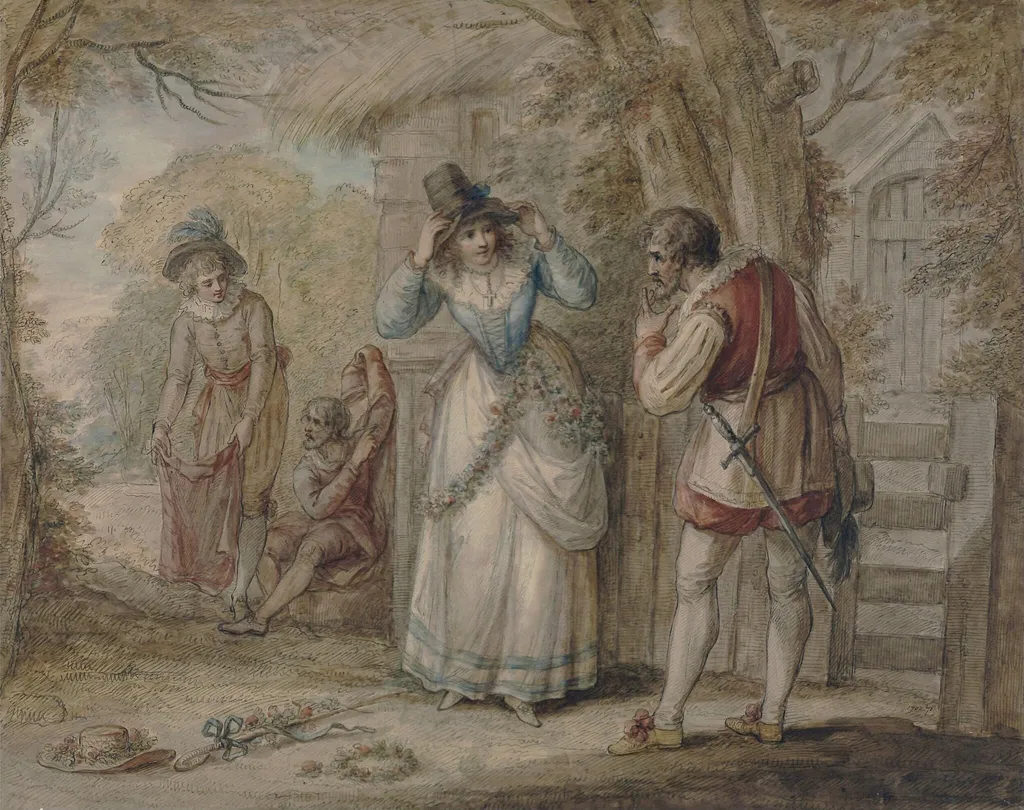
Florizel and Autolycus changing garments is a watercolor work on paper by the Rococo painting artist Henry William Bunbury. It dates from 1770 and is held in the collection of the Victoria and Albert Museum.
About this work
Overview
Four figures are present, their postures and attire suggesting informal interaction rather than theatrical performance.
This 1770 watercolour by Henry William Bunbury depicts a moment from Shakespeare’s 'A Winter’s Tale,' capturing Florizel and Autolycus in the act of swapping clothes. Rendered in delicate washes, the scene unfolds outdoors beneath trees and near a wooden fence. Four figures are present, their postures and attire suggesting informal interaction rather than theatrical performance. The soft palette and loose brushwork convey a sense of quiet spontaneity.
Subject & Meaning
The scene illustrates the disguise exchange between Florizel, a prince in disguise, and Autolycus, a rogue peddler, as they prepare to blend into rural society. The woman adjusting her hat and the boy crouching nearby imply a casual, almost domestic atmosphere. Bunbury emphasizes the absurdity and humor of the moment rather than its dramatic stakes, aligning with the play’s pastoral comedy tone through understated gestures and everyday details.
Technique & Style
Bunbury employed light, transparent watercolour washes to achieve a gentle, atmospheric effect. The muted greens and browns of the background recede softly, allowing the figures’ clothing—particularly the red vest and white garments—to stand out without harsh contrast. Delicate lines define forms, and the absence of heavy detail reinforces the sketch-like immediacy, characteristic of 18th-century British watercolour traditions focused on observation over grandeur.
History & Provenance
Created in 1770, the work is part of Bunbury’s series of literary illustrations, reflecting contemporary interest in Shakespearean themes among British artists. It entered the Victoria and Albert Museum’s collection through established donation channels typical of the 19th century. No significant alterations or reworkings are recorded, and its condition remains consistent with its original watercolour technique and preservation practices of the period.
Context
In late 18th-century England, illustrated scenes from Shakespeare were popular in domestic and artistic circles. Bunbury’s work fits within a broader trend of translating literary narratives into intimate, accessible images for private viewing. Unlike grand historical paintings, his approach favored charm and narrative nuance, appealing to middle-class audiences who valued wit and subtle storytelling over spectacle.
Legacy
Bunbury’s watercolour remains a modest but representative example of literary illustration from the period. It reflects how Shakespeare’s plays were absorbed into everyday visual culture, not through monumental depictions but through quiet, humanized moments. While not widely reproduced, it continues to be studied for its sensitivity to character and its contribution to the evolution of British watercolour as a medium for narrative expression.
Artist & collection
Artist
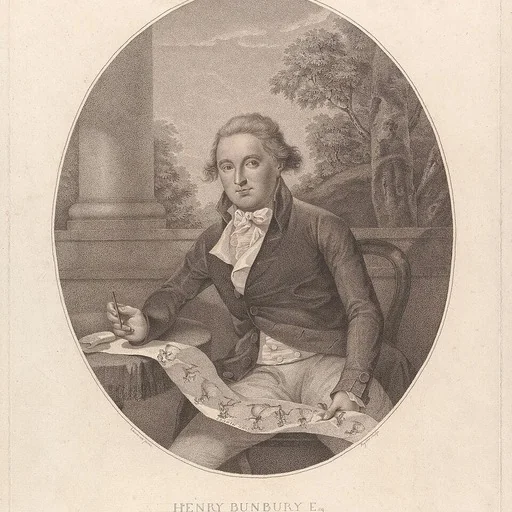
Henry William Bunbury (1 July 1750 – 7 May 1811) was an English caricaturist. The second son of Sir William Bunbury, 5th Baronet (see Bunbury baronets), of Mildenhall, Suffolk, he came of an old Norman family. He was…

 Pierre du Terrail, Chevalier de Bayard
 Courtship
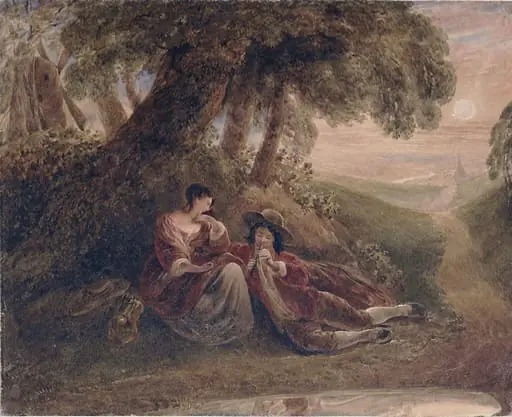 Lovers
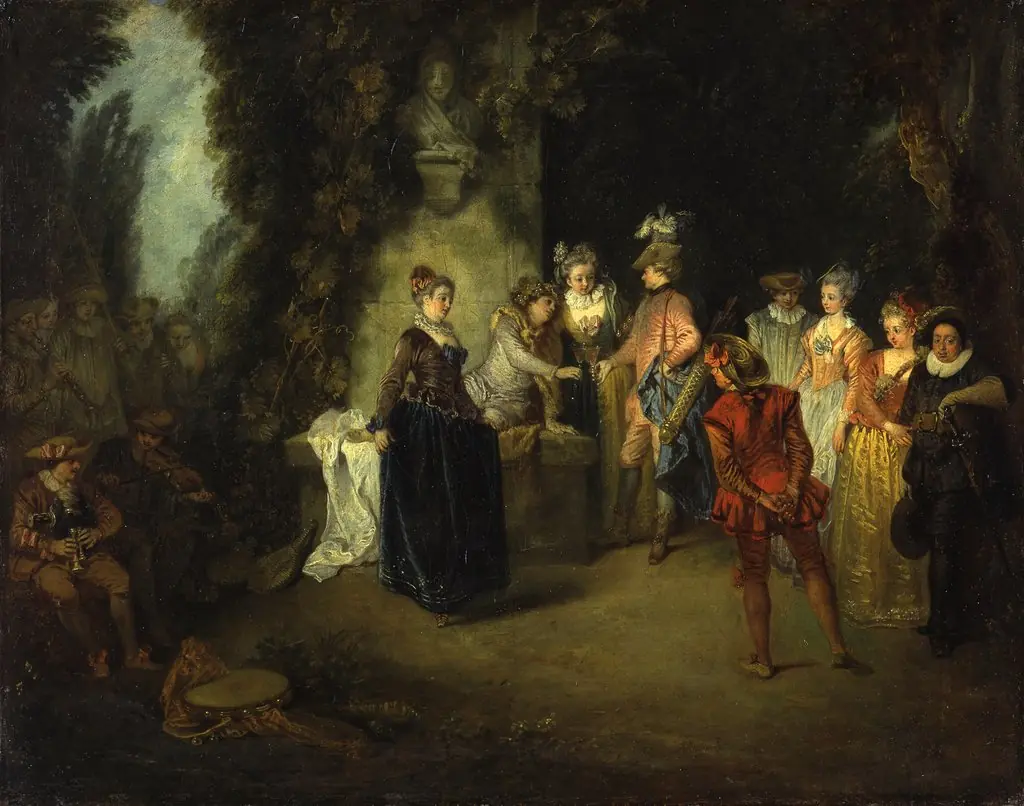 Love in the French Theatre
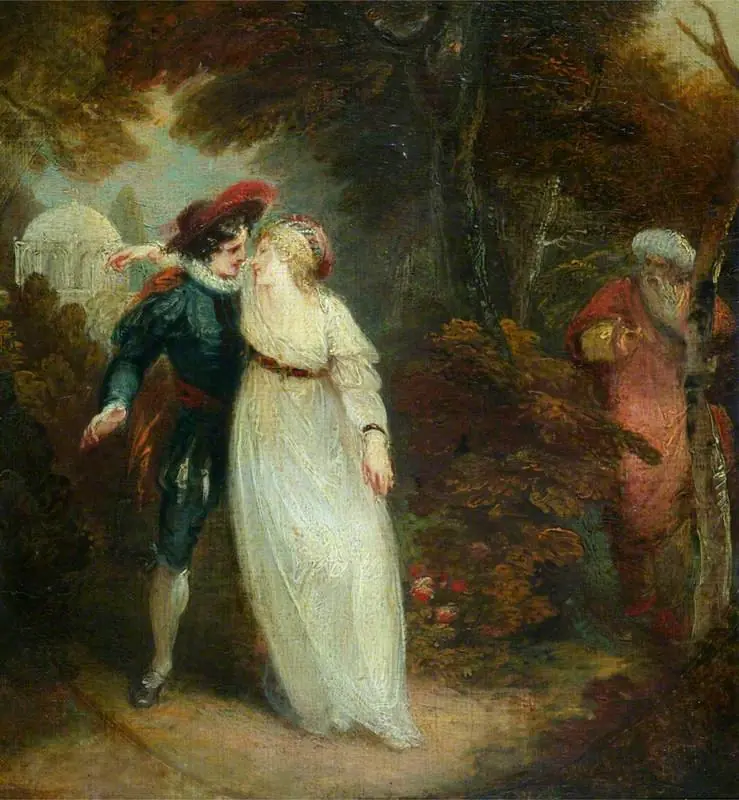 Zoraida, Discovered by Her Father, Agimorato, in the Arms of Rui Pérez de Viedma (from Cervantes' 'Don Quixote', Part I, Chapter 14)
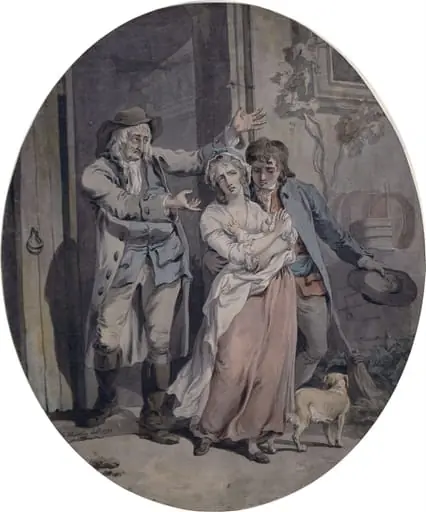 The Dismissal
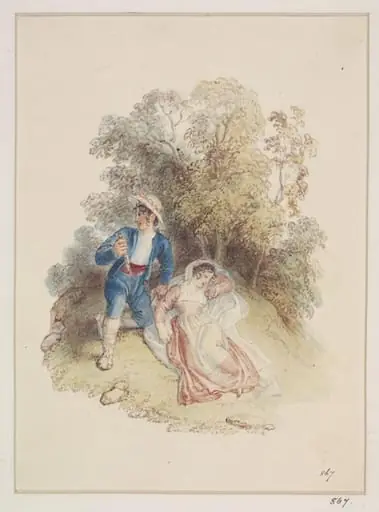 The Young Robber
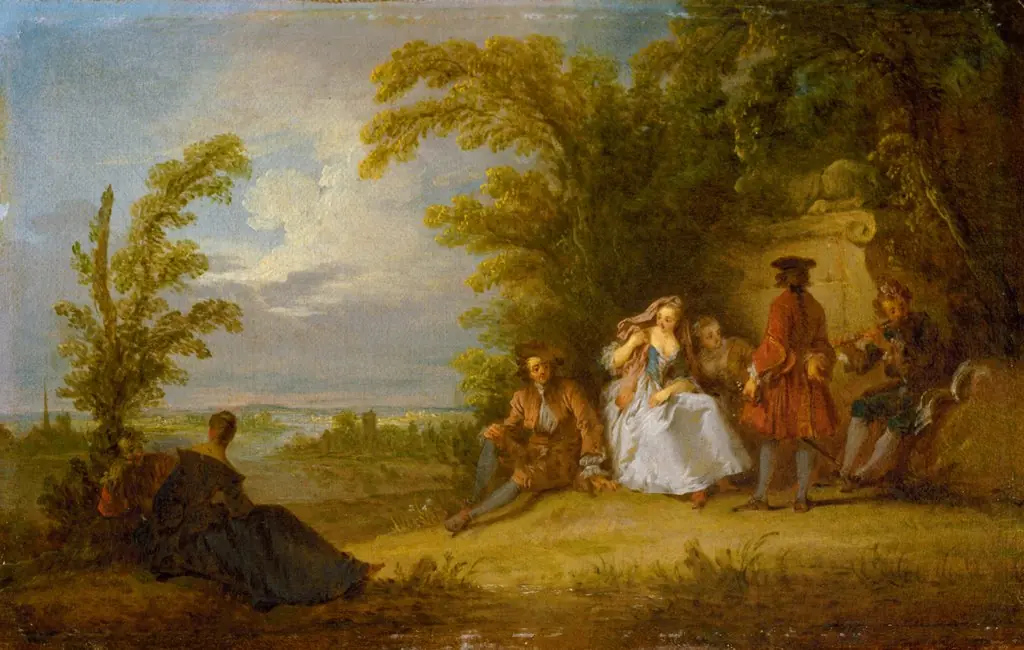 Fête Champêtre
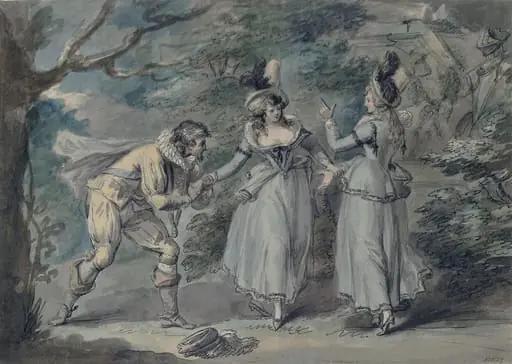
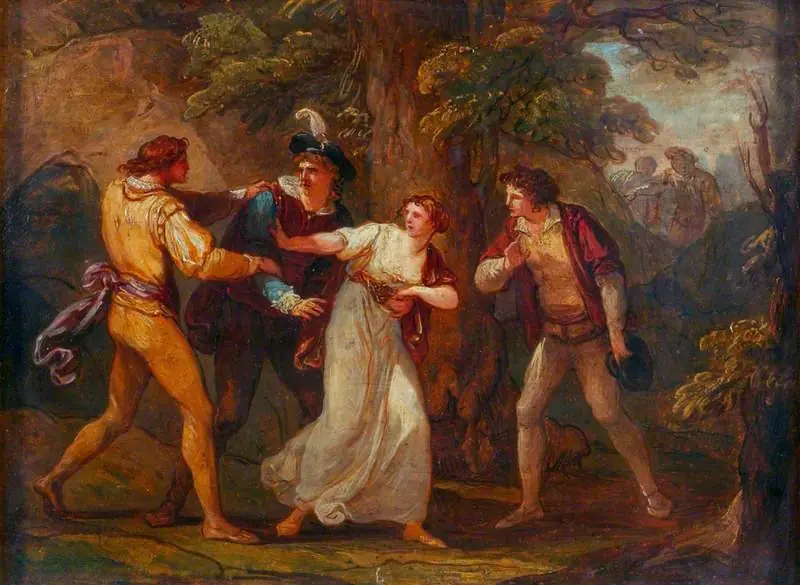 Sketch for 'The Two Gentlemen of Verona' (Act II, Scene 3 of the play by William Shakespeare)
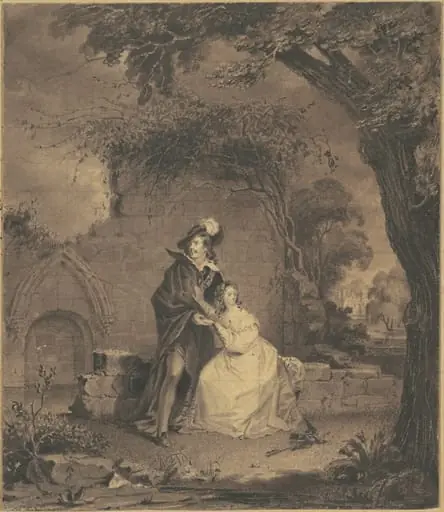 The Bride of Lammermoor
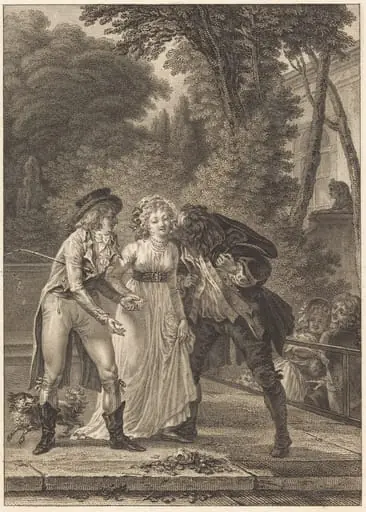 Le baiser rendu: Le baiser rendu