Artwork
The Bride of Lammermoor
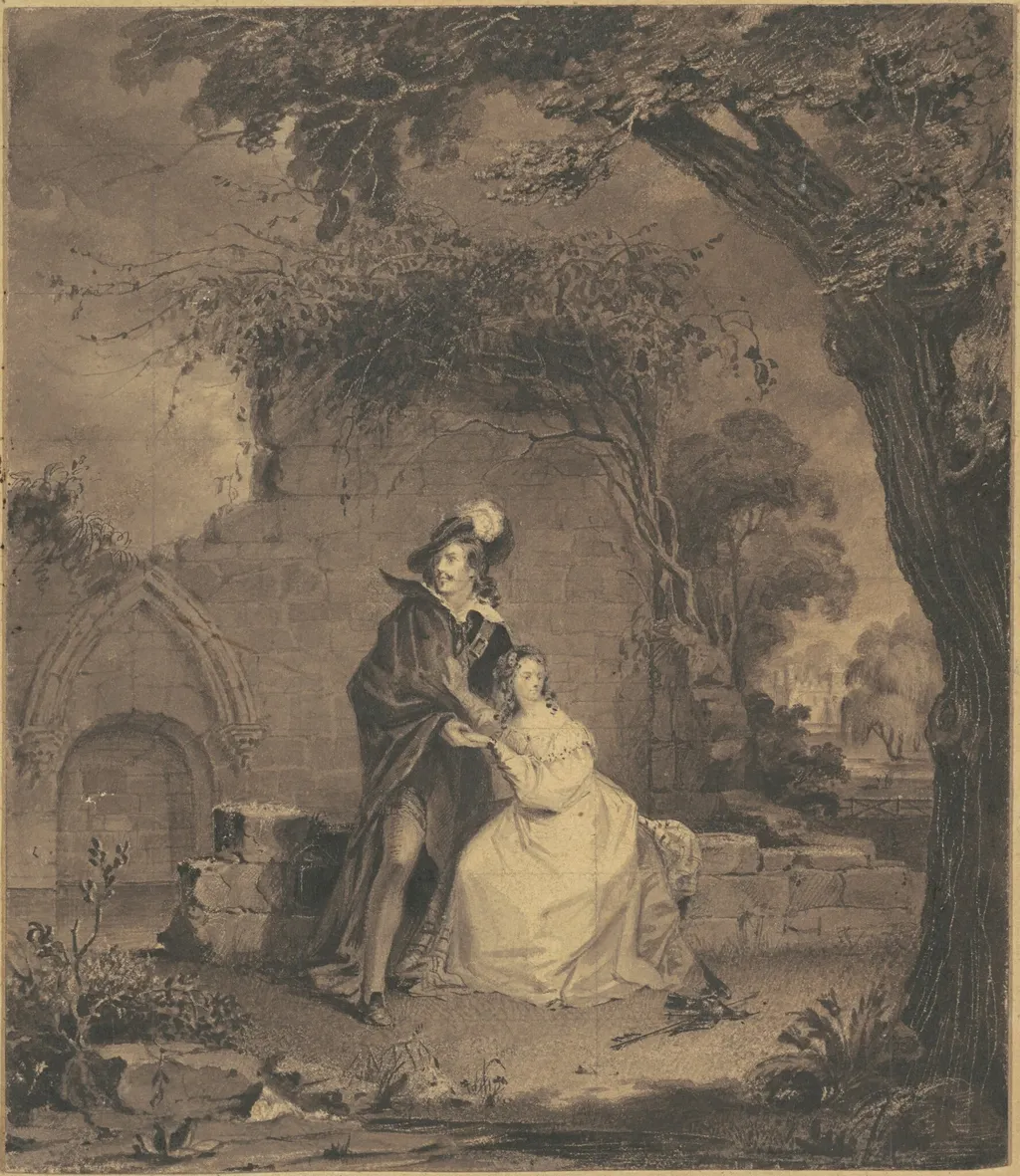
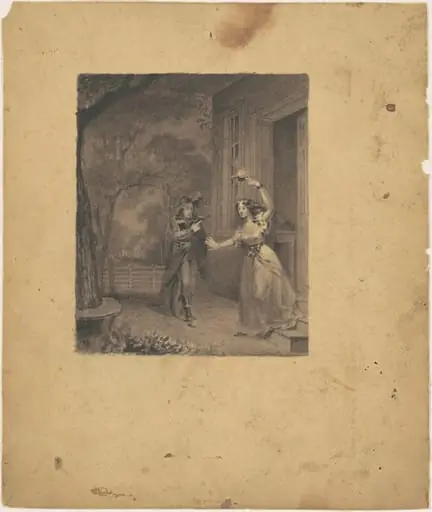
The Bride of Lammermoor is an ink drawing by the Romanticist artist James Goodwyn Clonney. It dates from 1836 and is held in the collection of the National Gallery of Art.
About this work
Overview
Created around 1836 by James Goodwyn Clonney, this drawing is a small-scale work in pen, ink, wash, and graphite on wove paper.
Created around 1836 by James Goodwyn Clonney, this drawing is a small-scale work in pen, ink, wash, and graphite on wove paper. It belongs to a phase in American art when genre scenes began to replace portraiture as a vehicle for social observation. Clonney, trained in both painting and lithography, favored intimate compositions that captured quiet moments in daily life, often with understated narrative depth.
Subject & Meaning
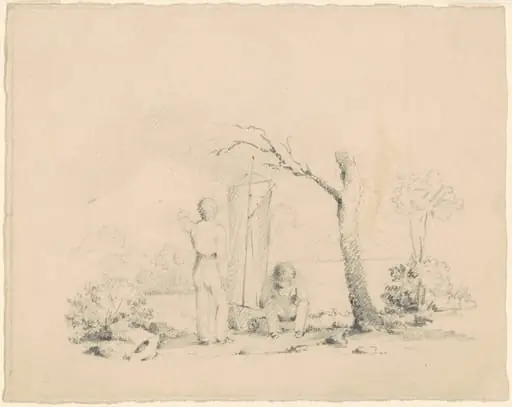
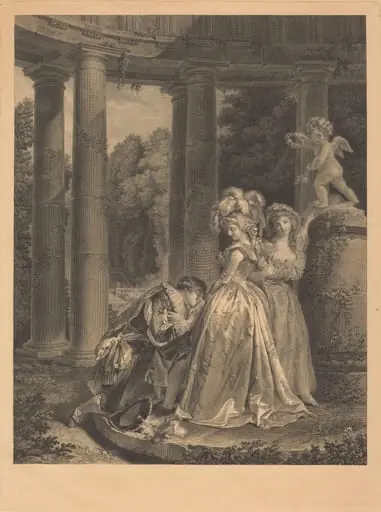
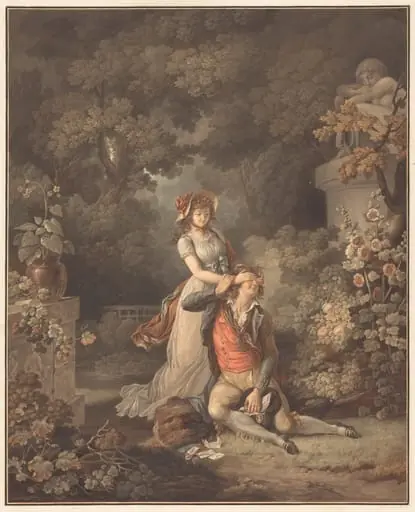
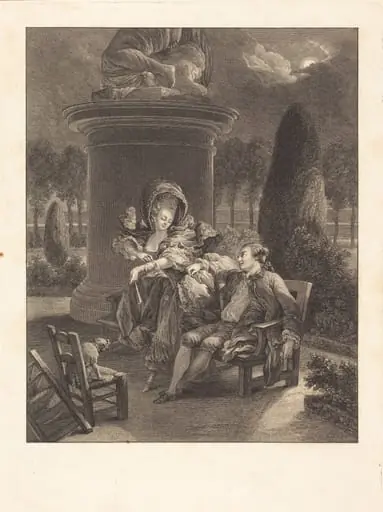
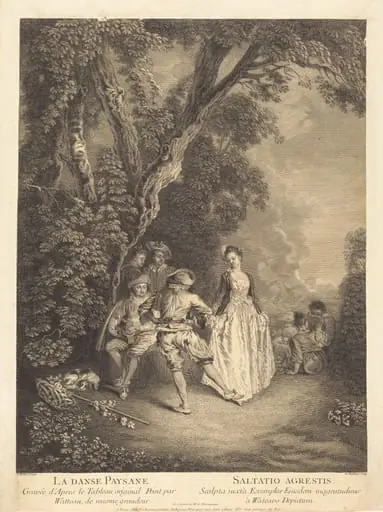
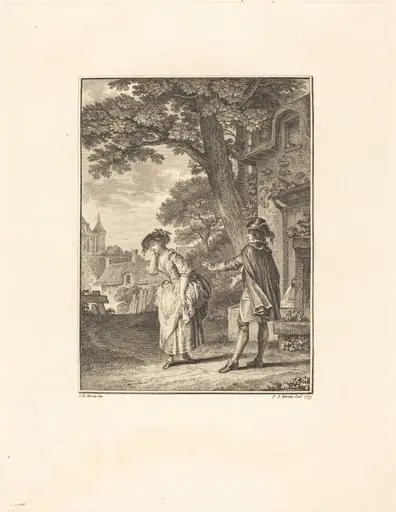
The scene depicts a man and woman near a stone archway, their postures suggesting a moment of quiet connection. The woman, dressed in a light gown, sits on a low wall while the man, in a dark coat and broad hat, holds her hand. Though titled after a literary tragedy, the image avoids overt drama, instead offering a restrained, possibly romantic or farewell encounter. The ambiguity invites interpretation without prescribing a single narrative.
Technique & Style
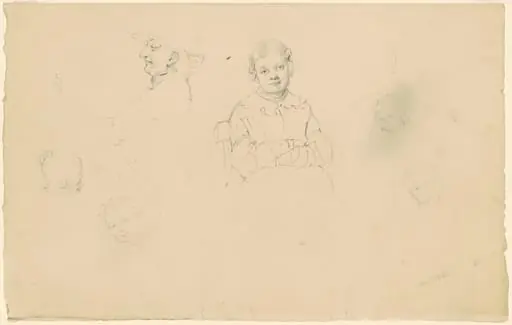
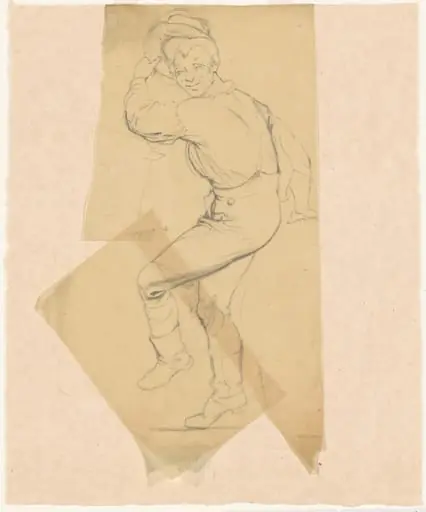
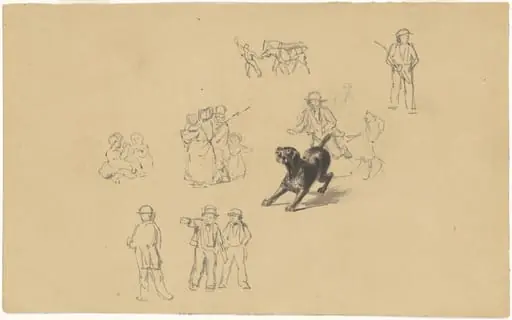
Clonney employed rapid, sketch-like lines and layered washes to suggest form and texture without finishing details. Cross-hatching defines shadows on the man’s coat and the stone arch, while graphite adds subtle tonal variation. The background is minimally rendered—trees and a distant structure emerge as faint silhouettes. The work reads as a preparatory study, prioritizing atmosphere and gesture over polished execution.
History & Provenance
The drawing is attributed to Clonney’s early career, during which he produced numerous small works for reproduction as lithographs. Its survival as a standalone drawing suggests it may have been retained as a personal study or presentation piece. No documented exhibition or ownership history prior to the 20th century is known, though its style aligns with American drawings from the 1830s–40s.
Context
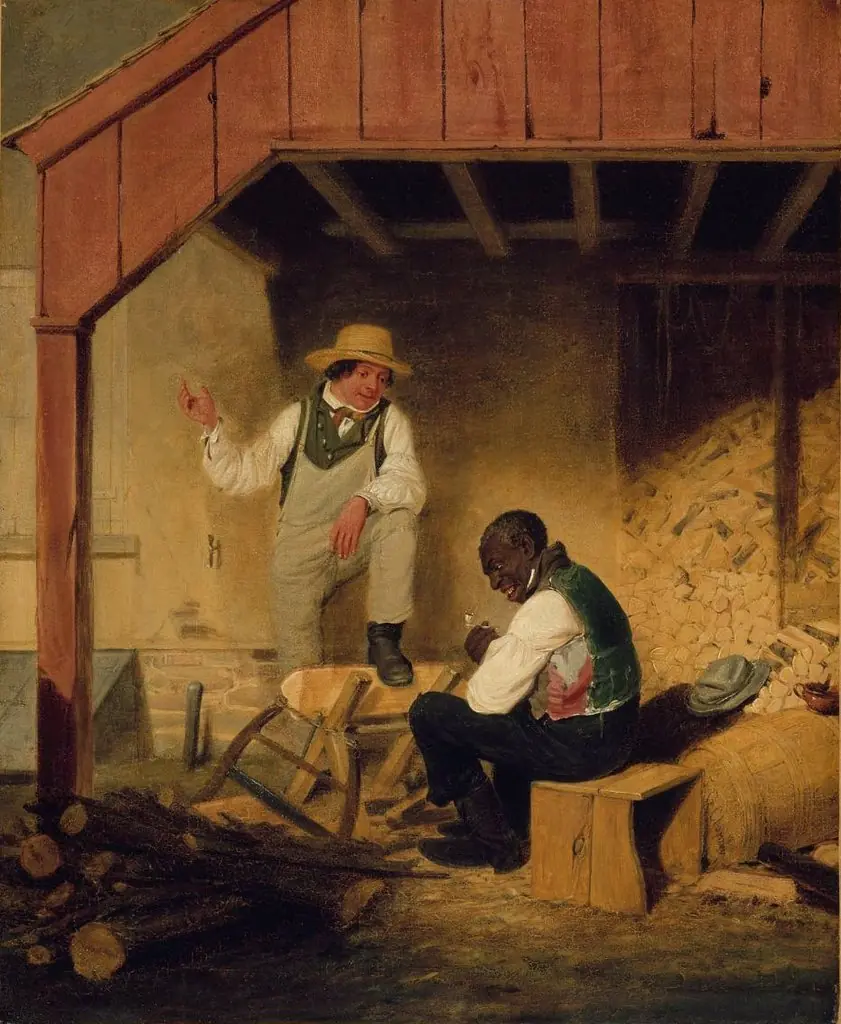
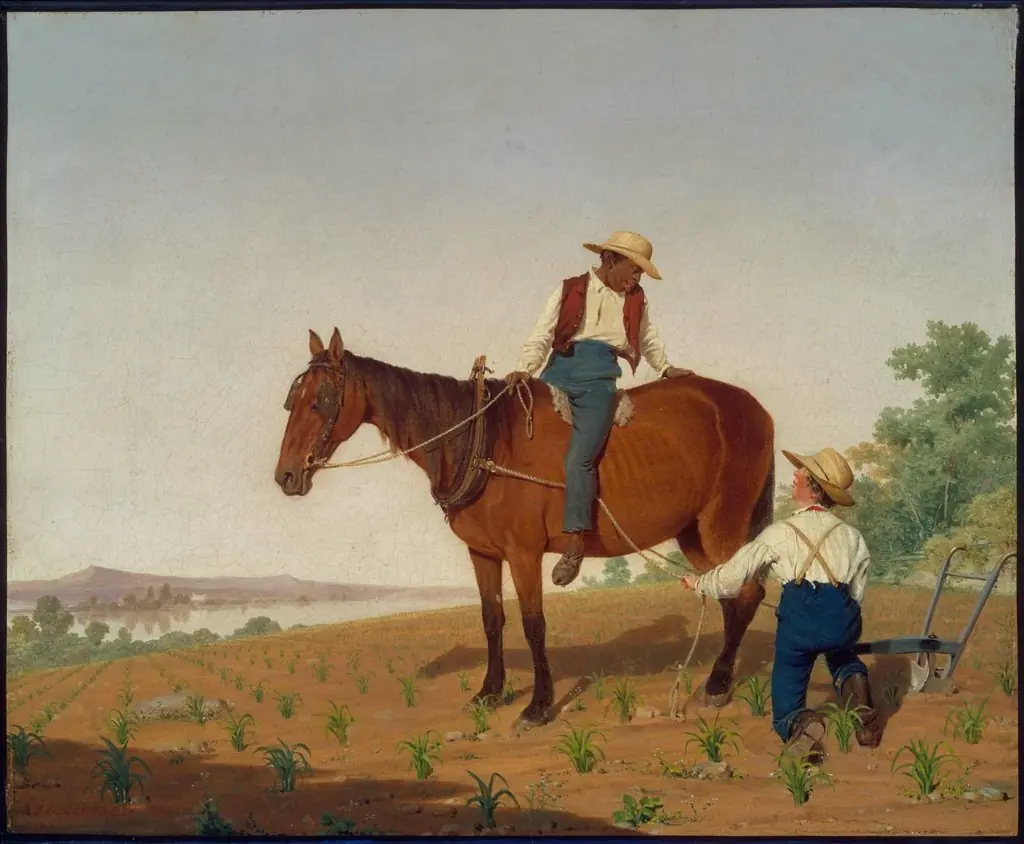
In the 1830s, American artists increasingly turned to genre subjects to reflect national identity beyond elite portraiture. Clonney’s work, though modest in scale, contributed to this shift by portraying ordinary figures in naturalistic settings. His interest in social nuance—seen elsewhere in depictions of racial integration—hints at broader cultural conversations about class and morality in antebellum America.
Legacy
Though Clonney is not widely remembered today, this drawing exemplifies the quiet ambition of mid-19th-century American draftsmen who used minimal means to evoke emotional resonance. His integration of literary references with everyday scenes influenced later genre painters seeking narrative depth without theatricality. The work remains a quiet testament to the value of sketch-based observation in American art.
Artist & collection
Artist
James Goodwyn Clonney (28 December 1812, Liverpool (?) – 7 October 1867, Binghamton, NY) was an English-born American genre painter and lithographer.