Artwork
Zoraida, Discovered by Her Father, Agimorato, in the Arms of Rui Pérez de Viedma (from Cervantes' 'Don Quixote', Part I, Chapter 14)
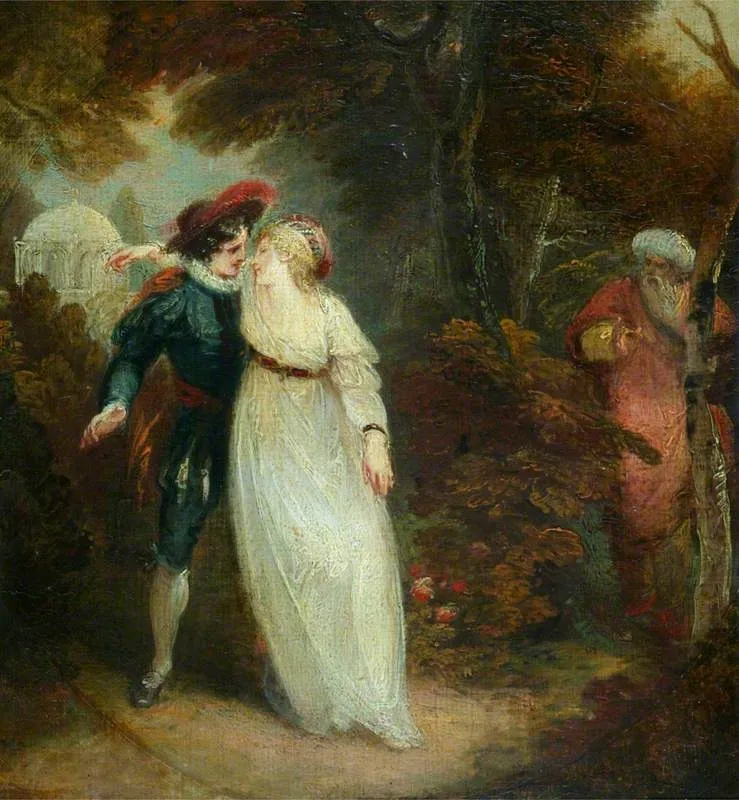
Zoraida, Discovered by Her Father, Agimorato, in the Arms of Rui Pérez de Viedma (from Cervantes' 'Don Quixote', Part I, Chapter 14) is an oil painting by Thomas Stothard. It dates from 1804 and is held in the collection of the Victoria and Albert Museum.
About this work
Overview
Executed on canvas, the work reflects Stothard’s interest in literary subjects and his role as a British illustrator of the late 18th and early 19th centuries.
Thomas Stothard’s 1804 oil painting illustrates a moment from Chapter 14 of Cervantes’ Don Quixote, depicting Zoraida’s discovery by her father, Agimorato, as she is held by Rui Pérez de Viedma. Executed on canvas, the work reflects Stothard’s interest in literary subjects and his role as a British illustrator of the late 18th and early 19th centuries. It is part of the Victoria and Albert Museum’s collection, where it remains a quiet example of narrative painting rooted in literary tradition.
Subject & Meaning
The scene captures the emotional rupture of Zoraida’s escape from her father’s Muslim household to join Christian Spain, now interrupted by his sudden reappearance. Her white garment contrasts with the darker robes of the two men, symbolizing purity amid conflict. Agimorato’s presence signifies familial authority and cultural rupture, while Rui’s grip suggests both rescue and entanglement. The moment is not one of violence but of stunned hesitation, emphasizing moral ambiguity over dramatic climax.
Technique & Style
Stothard employs soft modeling and restrained chiaroscuro to define the figures against a muted, atmospheric background of trees and a distant structure. The composition is tightly focused on the three central figures, with gestures subtly conveying tension rather than theatricality. The white dress of Zoraida draws the eye, while the darker tones of the men anchor the scene in gravity. Brushwork is precise but not overly detailed, favoring clarity of narrative over ornamental flourish.
History & Provenance
Painted around 1804, the work emerged during a period when British artists increasingly turned to literary sources for subject matter. Stothard, known for his illustrations and engravings, produced this painting as part of a broader engagement with Cervantes’ text. It entered the Victoria and Albert Museum’s collection in the 19th century, likely through acquisition or donation, and has remained in public care since, reflecting its status as a documented example of Romantic-era literary illustration.
Context
In early 19th-century Britain, Cervantes’ Don Quixote was widely read and admired, inspiring visual interpretations that emphasized its human and moral dimensions. Stothard’s painting aligns with a trend of illustrating literary scenes for educated audiences, often avoiding overt satire in favor of emotional resonance. The depiction of Zoraida’s cross-cultural dilemma also subtly engaged contemporary debates about religion, identity, and empire, though without explicit political commentary.
Legacy
Though not widely exhibited today, the painting endures as a representative work of British literary illustration from the Romantic period. It exemplifies how artists translated prose into visual narrative with restraint and psychological nuance. Stothard’s approach influenced later illustrators who sought to capture literary moments without melodrama, preserving the quiet complexity of Cervantes’ characters for subsequent generations.
Artist & collection
Artist
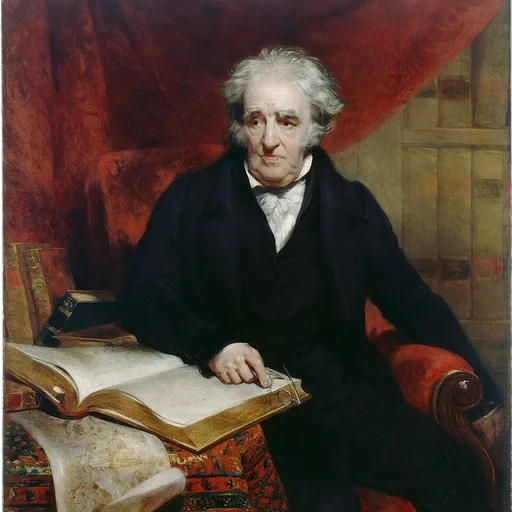
Thomas Stothard (17 August 1755 – 27 April 1834) was a British painter, illustrator and engraver.

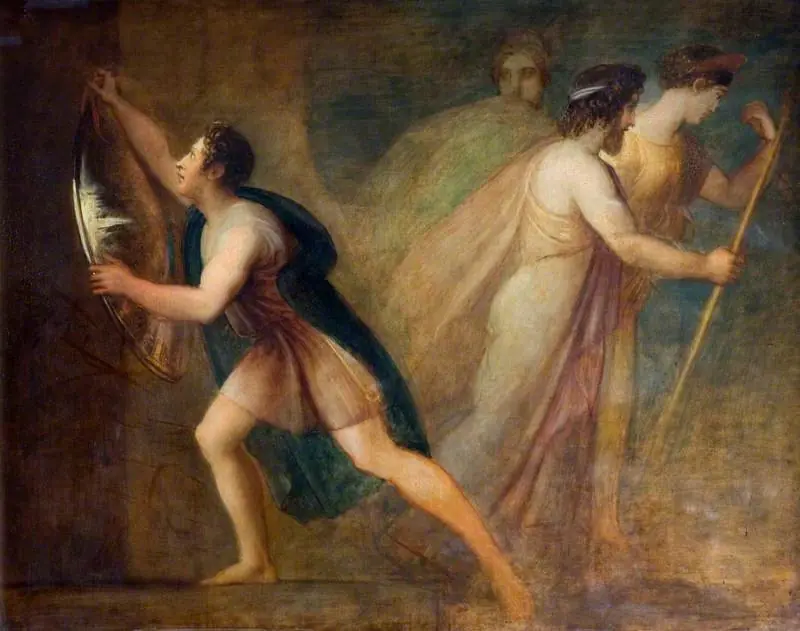 Orestes Hanging up the Shield of Agamemnon
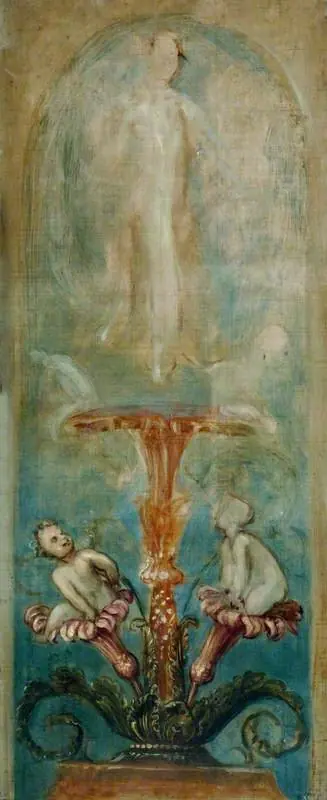 Arabesque Decoration with a Female Figure (sketch)
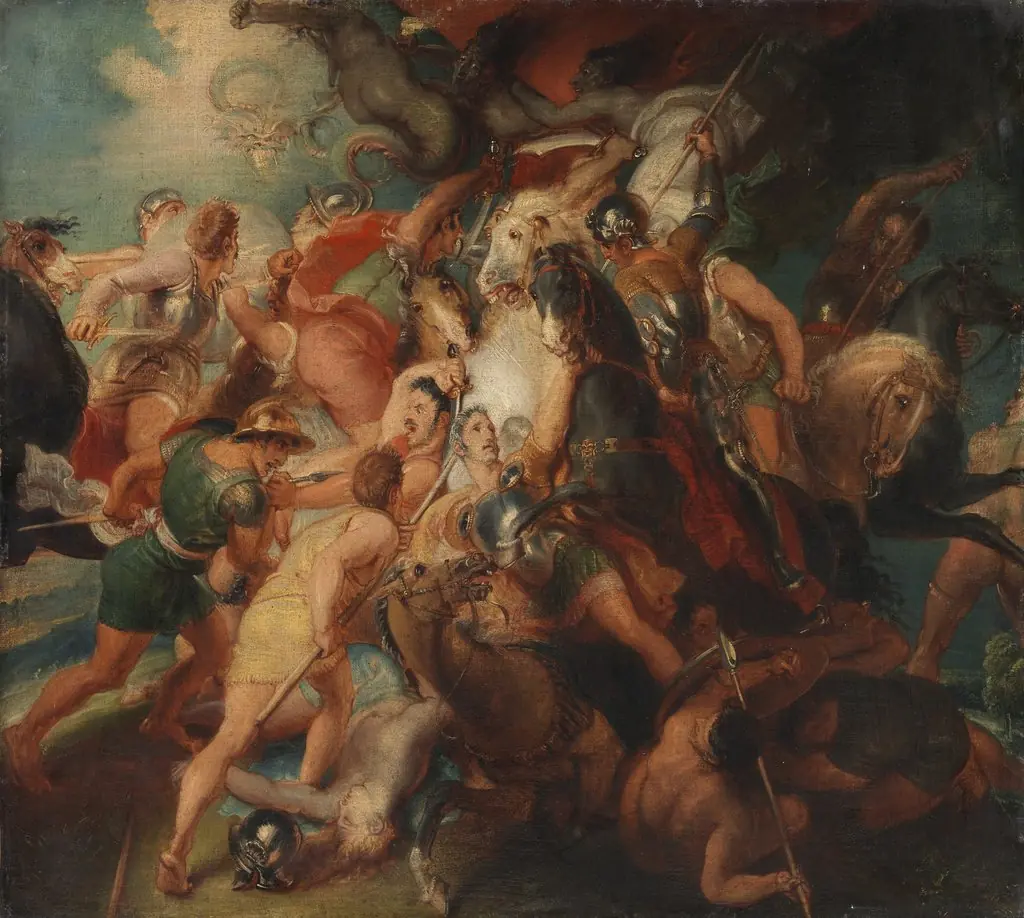 The Horrors of War, Sketch for Burghley House Mural
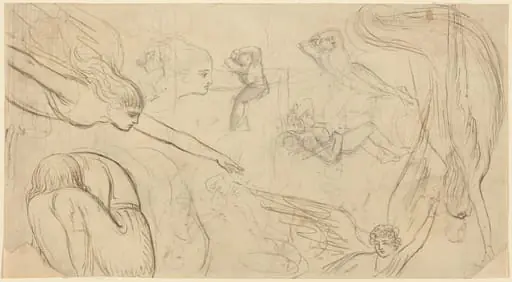 Sheet of Studies with Angels and Cowering Figures (Illustration for Macklin's Bible?)
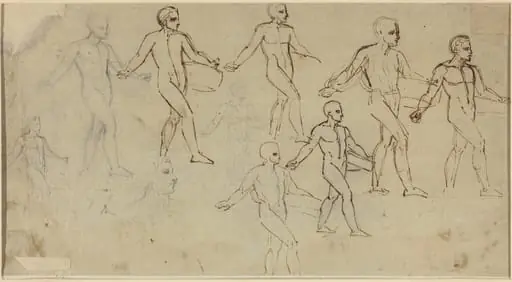 Studies of a Sower (Illustration for Thomson's _Seasons_)
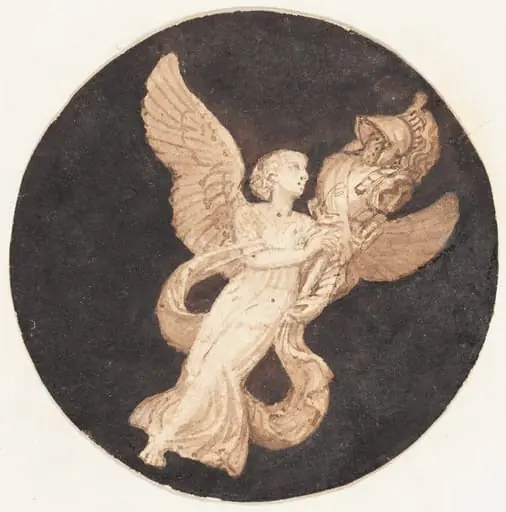 Vignette for a Title Page: "Winged Victory"
![Design for a Book Illustration of Circe and Odysseus [recto], by Thomas Stothard](https://artifactworldgallery.com/img/thomas-stothard--design-for-a-book-illustration-of-circe-and-odysseus-recto--5bd59a6f73de4838-w320.webp) Design for a Book Illustration of Circe and Odysseus [recto]
Design for a Book Illustration of Circe and Odysseus [recto]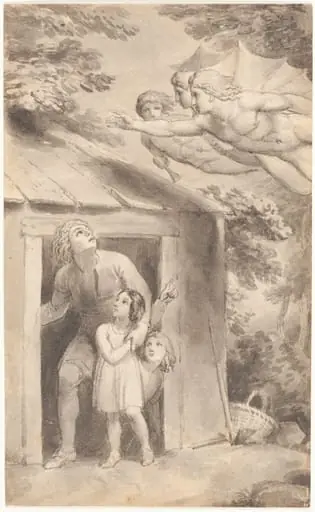 Peter and His Children Visited by Three Flying Figures
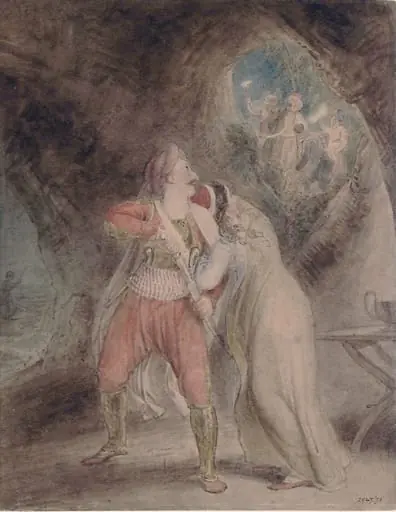 Selim discovered with Zuleika by Giaffir and his men
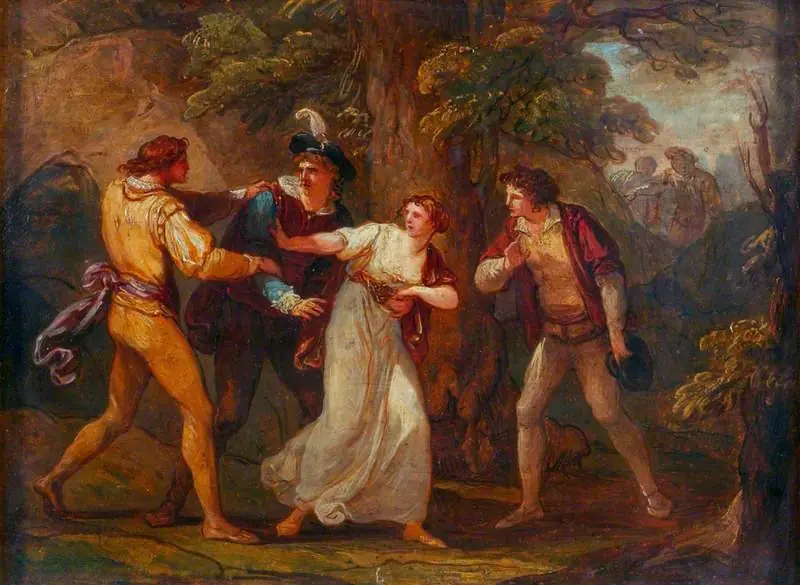 Sketch for 'The Two Gentlemen of Verona' (Act II, Scene 3 of the play by William Shakespeare)
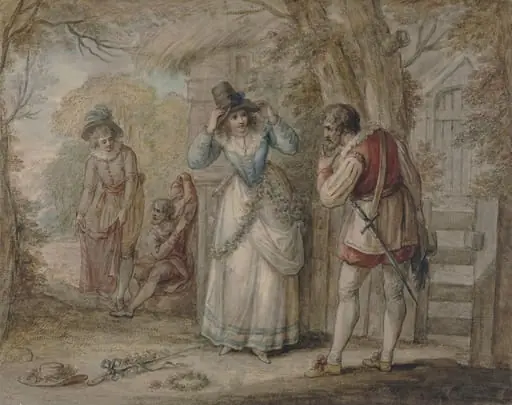 Florizel and Autolycus changing garments
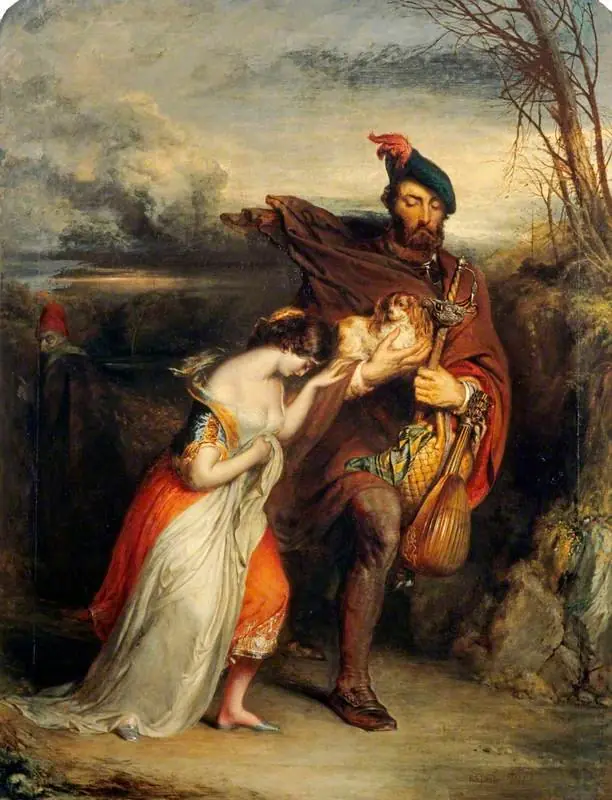 The Gow Chrom Reluctantly Conducting the Glee Maiden to a Place of Safety (from Scott's 'The Fair Maid of Perth')
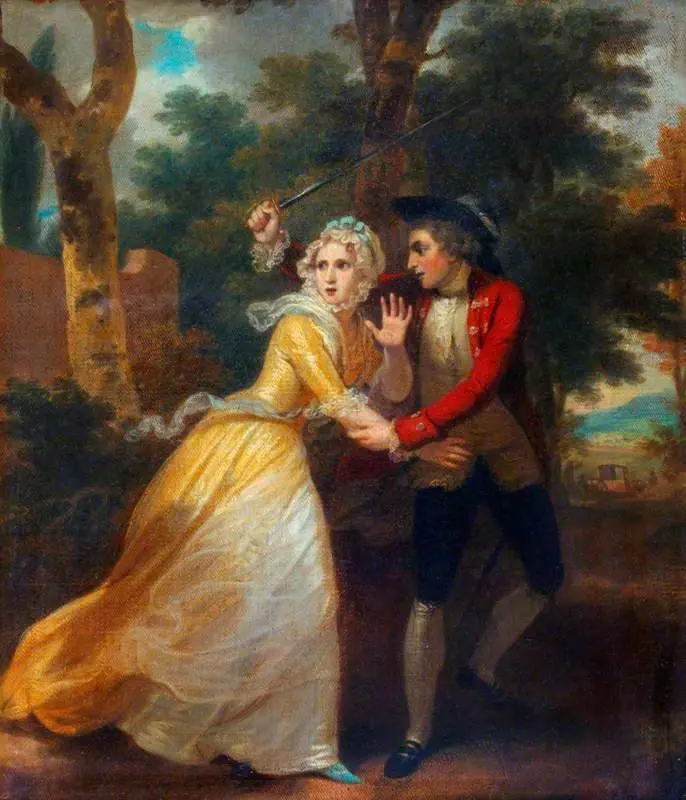 The Elopement (from Richardson's, 'Clarissa', book I, letter 94)
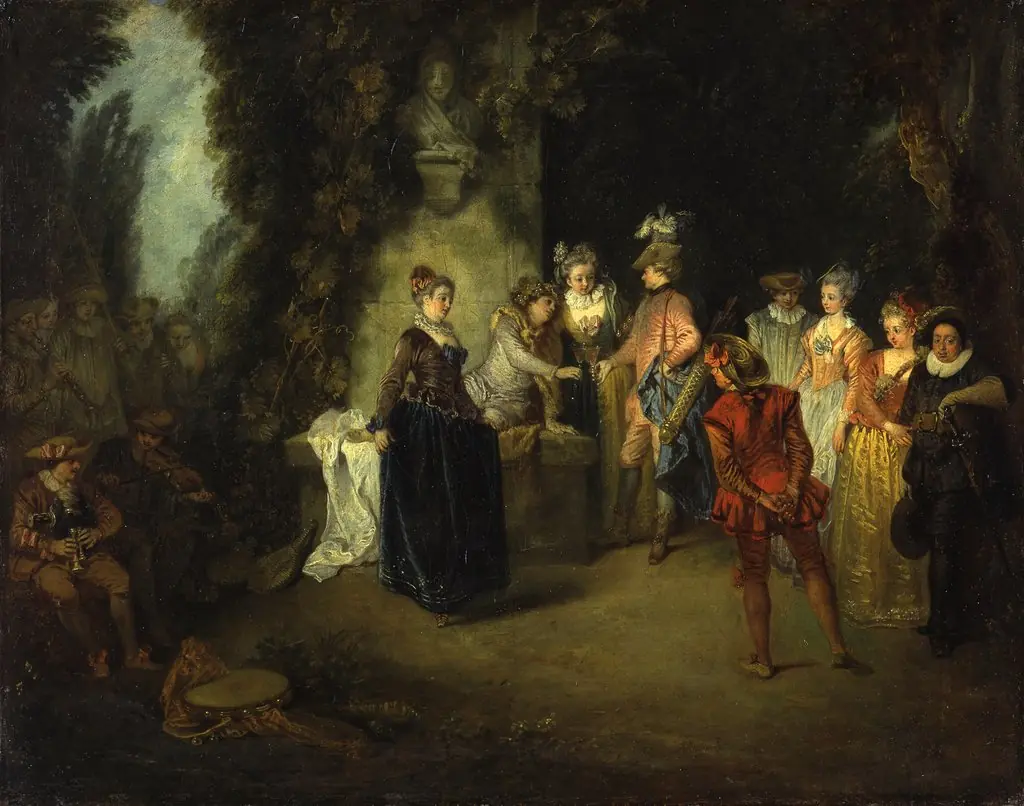 Love in the French Theatre
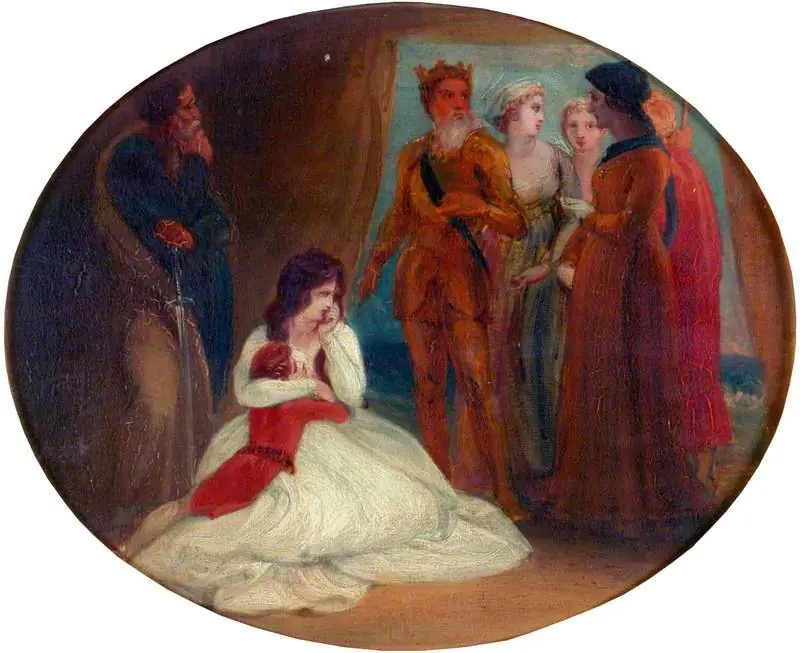 Constance and Arthur (from William Shakespeare's 'King John', Act III, Scene 1)
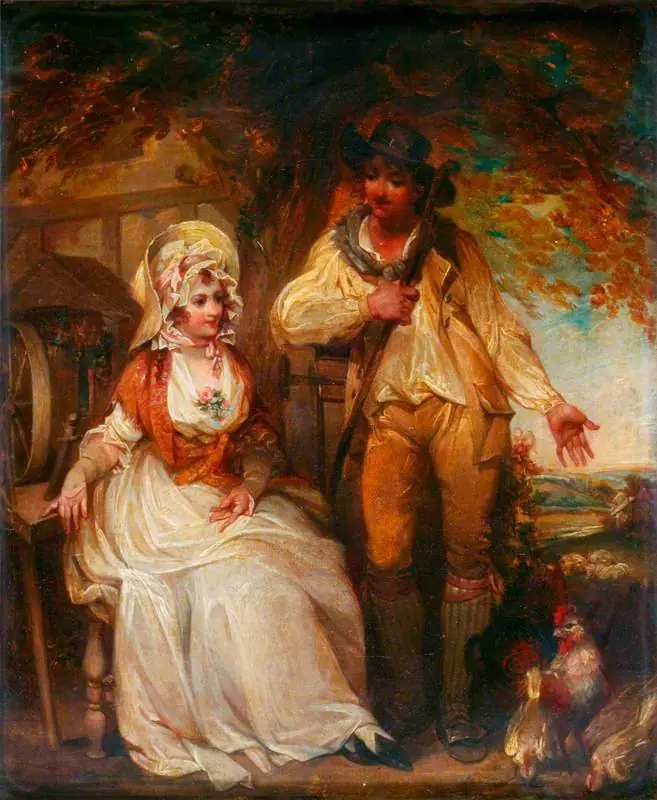 Courtship
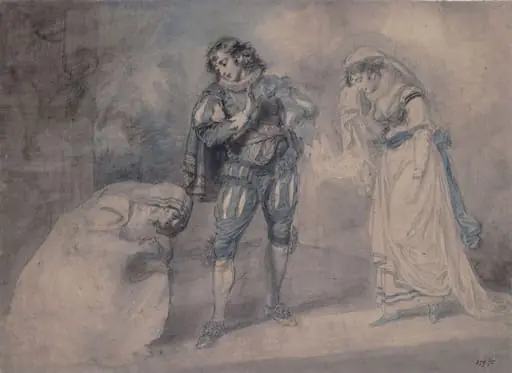 Pierre du Terrail, Chevalier de Bayard
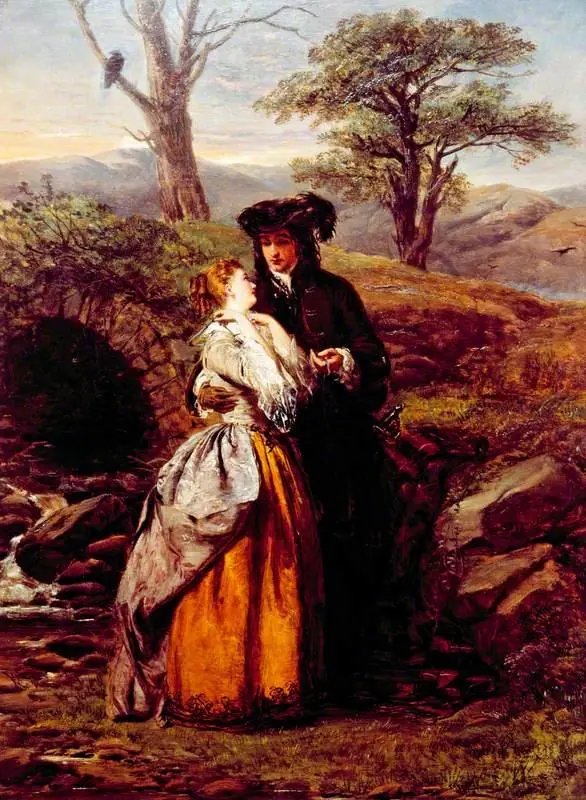 The Bride of Lammermoor (from Sir Walter Scott's novel)
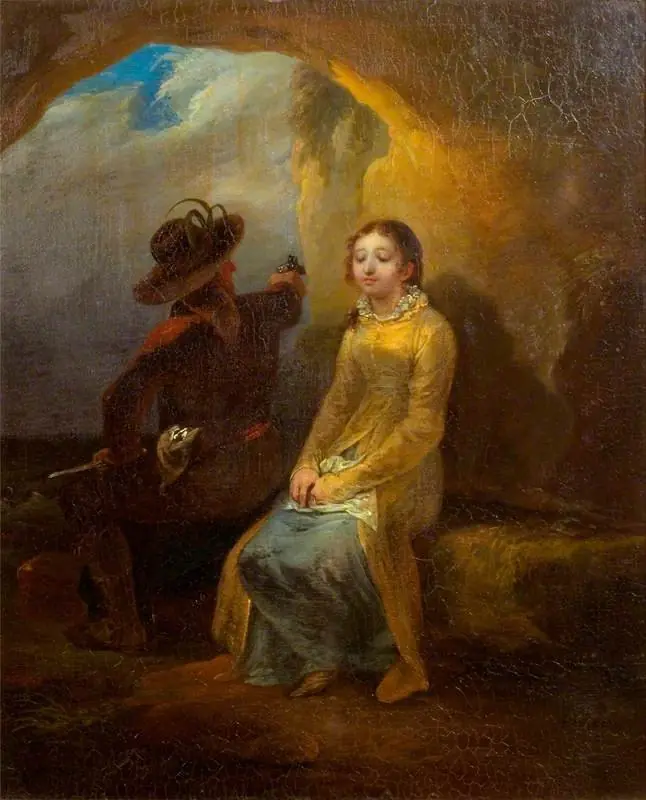 The Captive
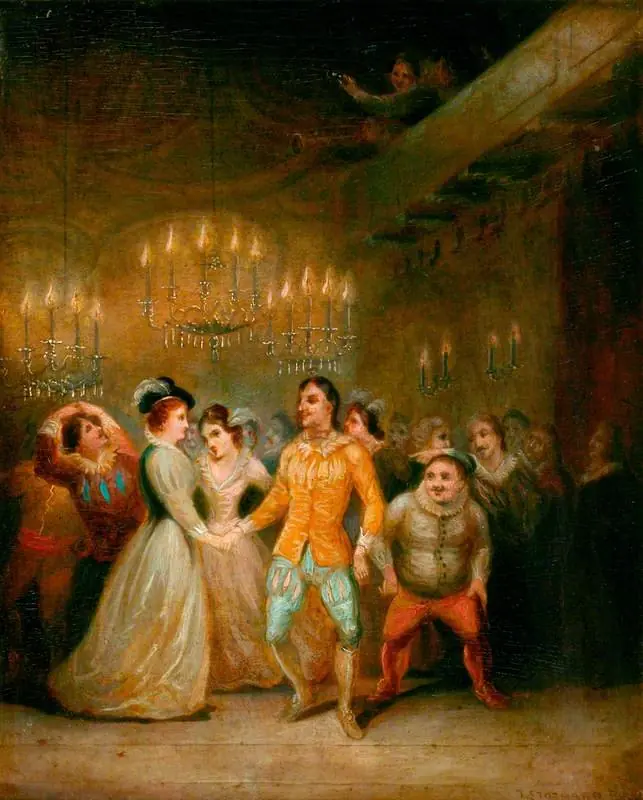 Scene from Cervantes' 'Don Quixote' (Part II, Chapter 31)